

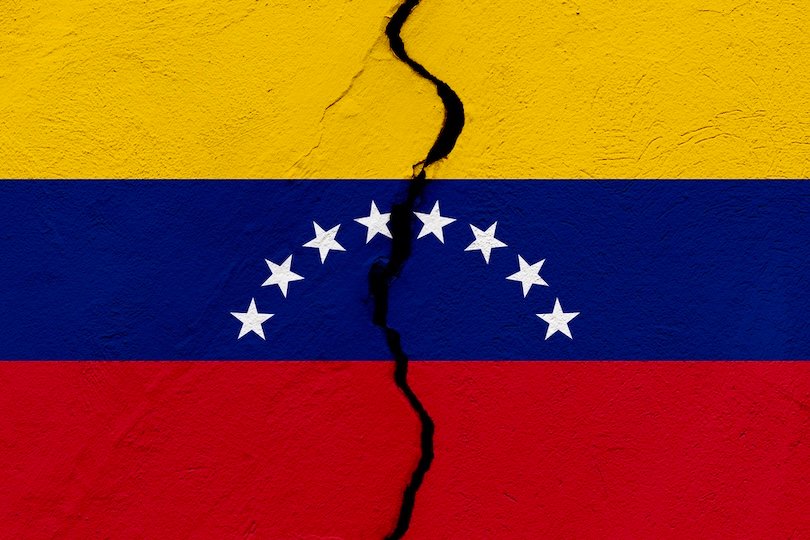
After the ground stopped shaking, Venezuela’s interim president, Delcy Rodríguez, went on state television not to mourn the dead or rally the living, but to accuse her opponents of running “media laboratories” to turn grief into unrest. And she issued a sinister warning: “there will be no social uprising here”. It was a revealing reflex – the language of rulers contemplating not the rubble, but the political ground beneath it. She was right to be wary as Latin American experiences of disasters are known to shift political trajectories. But rarely in the simple way of protest slogans.
It is tempting to hope that big disasters may topple bad governments. They mostly do not, at least not directly. Mexico’s devastating 1985 earthquake did not start a revolution; the ruling party clung on for another fifteen years. What disasters do is subtler and, for unelected or fragile governments, more dangerous. Because a major catastrophe constitutes a “critical juncture” obliging a state to reveal, before its whole population and in real time, what it is actually capable of doing and whom it actually serves. It converts the abstract question of legitimacy into a visible, unforgiving performance test. What follows next depends on how it scores.
The historical record offers two opposing scripts with Venezuela containing ingredients of both. The first is de-legitimisation, and its archetypical example is Managua, 1972. When an earthquake flattened Nicaragua’s capital, Somoza’s regime survived the tremor but not what it exposed. It treated international relief as a private business opportunity and the sight of an entrenched elite feeding on a national tragedy united ordinary citizens and communities against them. That set in train the revolution that ended his dynasty seven years later.
Mexico City (1985) is the gentler variant: when the state’s earthquake response proved slow and uncertain, ordinary citizens dug their neighbours from the ruins. That civic awakening seeded an opposition that eventually broke one-party rule. The pattern is consistent: a politicised or incompetent response, a population that saves itself, and a hidden or dishonest death toll, together corrode a regime’s right to govern.
The second script is survival through control rather than competence. Turkiye’s experience is instructive. The 1999 Marmara earthquake discredited the old political class and helped lift Recep Tayyip Erdogan to power. He absorbed the lesson so thoroughly that after the 2023 earthquake, he won re-election months later by seizing the reconstruction narrative although his party lost ground. It appears that authoritarian resilience rests less on a state’s capacity to perform than on its ability to manage failure by suppressing dissent. A government that controls the aid, the airwaves and the body count can ride out a catastrophe even if its performance is questioned.
A harder caution underlies both scripts. A study of 185 countries found that earthquakes complicate internal conflicts. This was evident with the contrasting consequences of the 2004 Indian Ocean Earthquake-Tsunami. In Indonesia, Aceh militant separatists and the Jakarta government ceased hostilities to allow rescue efforts, leading eventually to permanent peace. In Sri Lanka, the Tamil Tigers took advantage of Colombo’s diversion of its military towards relief operations to boost its insurgency.
Immediate humanitarian solidarity triggered by shared shock and adversity is rarely sustained, and more exceptional still is when that transforms into peace. That was Colombia’s tragic experience after the 1999 quake that was hallmarked by looting, aid mismanagement, and deepened insecurity. That provided rebels with the excuse to continue their bitter decades-long struggle.
Evidence also indicates that higher intensity quakes in impoverished dense populations can intensify existing crises because of sudden increased competition for scarce relief, especially when aid delivery is perceived as inefficient or biased. Unfortunately, that is why Venezuela’s profile is currently so ‘combustible’. Eight million people already needed humanitarian aid after many years of authoritarian mis-governance and economic sanctions and the twin earthquakes added 1.8 million more.
The government is not merely unpopular – two-thirds of frustrated Venezuelans disapproving of its earthquake response – but also arguably unlawful. Under its constitution, a president’s temporary absence may last 180 days, after which absolute absence must be declared and elections called. Nicolás Maduro was seized by US forces on 3 January 2026. When the clock ran out on 3 July, the Supreme Court did not call for a vote but reached for “forced absence,” a term the constitution does not contain. That keeps the unelected Trump-supported Ms Rodríguez in place.
Into that contention the earthquake has poured its verdict with more of the suffering citizenry wanting elections than reconstruction – on top of the doubling of anti-government protests this year. The ‘Managua factors’ are present: a restricted, allegedly bribe-seeking response; an undercounted toll; and a citizenry that did its own rescuing and knows it. And yet the Turkish script is equally available. An authoritarian government can turn aid queues and reconstruction contracts into patronage, invoke the emergency to defer the vote it owes, and — as Ms Rodríguez’s television performance suggests — recast honest reporting as foreign subversion.
Meanwhile, the Venezuelan opposition’s position is also fragile: Nobel Laureate María Corina Machado may be the country’s most trusted figure but hitching her bandwagon to Washington’s exposes her to the charge of opportunism and leaves her hostage to the American mood. The very United States now supplying the logistical backbone of post-quake relief is also the “de facto guarantor” of the transition. That is a critically formative role which could either midwife free and fair elections or prop a compliant puppet regime that provokes a nationalist backlash.
Reconstruction will be even more politically loaded. Looking back at the 2010 earthquakes, Chile rebuilt through a competent state within years. But, in Haiti, aid routed around a broken government entrenched its weakness that lasts to the present day. Venezuela now faces that fork in acute form. Because its state has forfeited trust, relief is flowing around it: unavoidable today, corrosive tomorrow. Whether the country rebuilds institutions or sinks deeper into dependency will shape its politics for long after the last body is recovered.
Which script will Venezuela follow? The answer is not yet written, and four things will determine what history records. First, whether the response is seen to improve rapidly or leaves yet more people seething with disappointment. Second, whether the dead are counted honestly as also the losses of the survivors for whatever compensation may come. Third, whether the citizens who dug out their neighbours find political voice or a prison cell when airing their grievances. Fourth, whether Venezuela’s foreign guarantor uses its leverage to deliver a ballot or entrench its own compliant protégé.
Earthquakes do not, on their own, make revolutions or democracies. But they strip away the pretences behind which weak and contested governments shelter, and hand grieving people the hard clarity of seeing their rulers tested. Venezuela’s rubble will get cleared, even if later than sooner. But its future will clarify only when Venezuelans are allowed to find their own expression that does not get buried, like so much else, beneath official finessing.
