

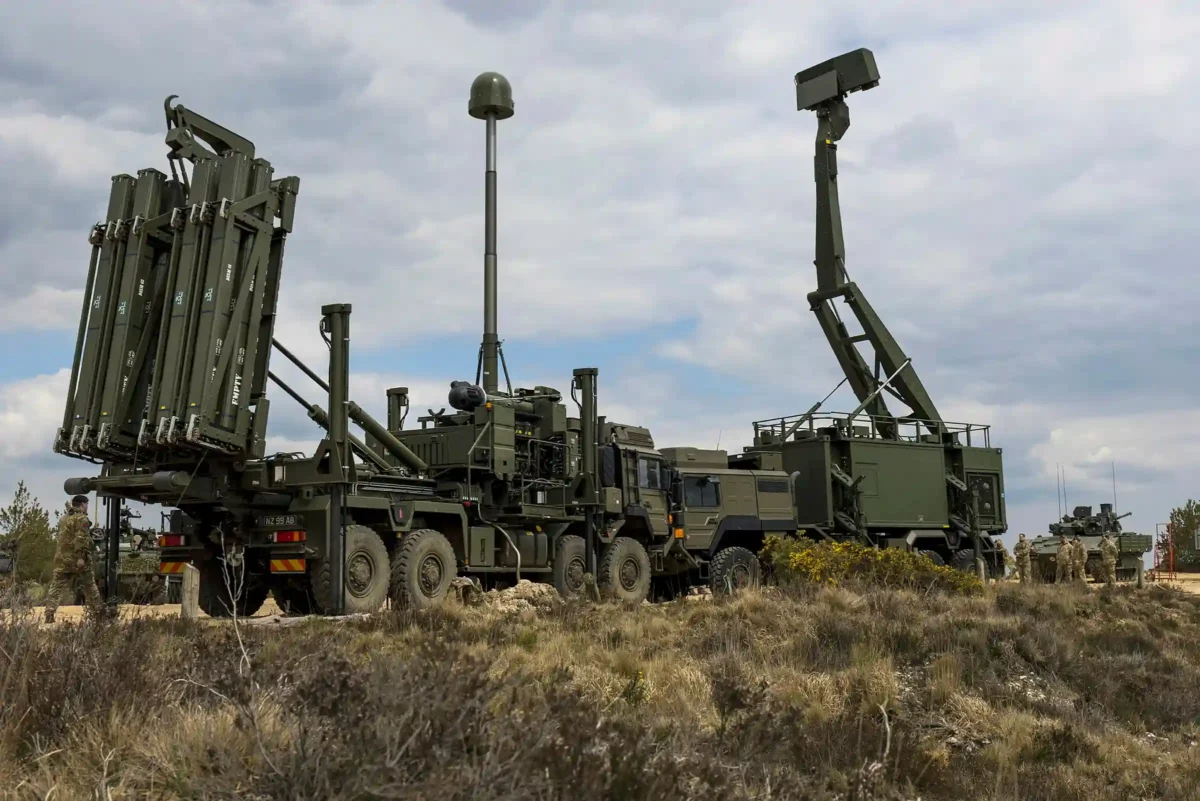
Defense Feeds, London – UK doubles Sky Sabre air defense force under a new modernization effort that will see the British Army receive six additional launchers and six command-and-control centers by 2027.
The expansion is designed to significantly increase the country’s ground-based air defense capacity as London responds to a rapidly changing security environment and the growing threat posed by missiles, drones and low-flying aircraft.
The procurement follows recommendations outlined in the UK’s Strategic Defence Review, which places renewed emphasis on strengthening homeland defense while improving the military’s ability to support NATO operations across Europe. By increasing the number of operational Sky Sabre units, Britain aims to provide more flexible protection for deployed forces and critical infrastructure.
UK Doubles Sky Sabre Air Defense Force Through Fleet Expansion
The decision to UK doubles Sky Sabre air defense force marks one of the most significant investments in British ground-based air defense in recent years. The additional launchers and command centers will expand the Army’s ability to deploy the system across multiple locations simultaneously rather than concentrating assets within a limited number of batteries.
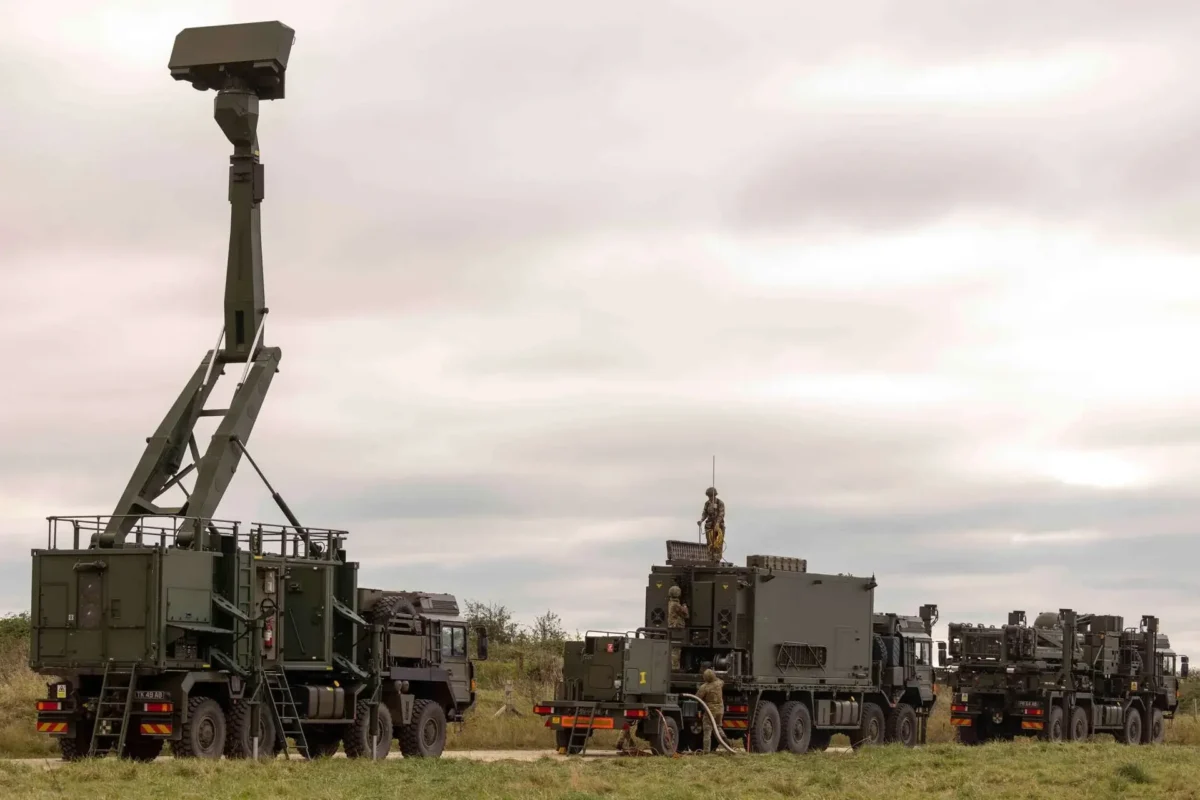
Sky Sabre combines the MBDA Common Anti-air Modular Missile (CAMM), high-performance surveillance radar and an advanced command-and-control architecture capable of tracking and engaging multiple aerial threats at the same time. The system replaced the Rapier air defense system and represents a major leap in detection, target processing and engagement capabilities.
Unlike earlier generations of short-range air defense, Sky Sabre is designed to respond to a diverse range of modern threats, including cruise missiles, helicopters, combat aircraft and increasingly sophisticated unmanned aerial systems. The expansion will provide commanders with greater operational flexibility while improving the resilience of Britain’s air defense network.
The procurement also strengthens the Army’s ability to distribute its air defense assets, reducing dependence on a smaller number of systems and making deployments more adaptable to changing operational requirements.
Growing Air Threats Are Driving Investment
The decision to UK doubles Sky Sabre air defense force reflects a broader shift taking place across Europe as militaries reassess the importance of ground-based air defense.
Recent conflicts have demonstrated that drones, precision-guided missiles and long-range strike weapons can threaten military bases, logistics hubs and civilian infrastructure far behind the front lines. As these technologies become more accessible and more capable, countries are placing renewed emphasis on layered defensive networks capable of detecting and intercepting threats before they reach their targets.
For the United Kingdom, strengthening ground-based air defense also supports its role within NATO. British forces regularly participate in multinational exercises and forward deployments, where mobile air defense systems are increasingly viewed as essential for protecting maneuver forces and sustaining operational freedom.
The additional command centers announced as part of the program are equally important. Modern air defense relies not only on missile launchers but also on sophisticated battle management systems that integrate radar data, identify threats and coordinate engagements across multiple units in real time.
A Broader Modernization Strategy for British Forces
The expansion of Sky Sabre fits within a wider effort to modernize the British Army for future high-intensity operations. Alongside investments in long-range fires, digital communications and autonomous technologies, improving air defense has become a central priority as the character of warfare continues to evolve.
From an industrial perspective, the procurement reinforces continued investment in European defense manufacturing and missile production. It also supports the long-term development of the CAMM family, which has attracted growing international interest due to its modular design and compatibility with both land-based and naval air defense systems.
Operationally, a larger Sky Sabre fleet provides greater flexibility for homeland protection while allowing Britain to contribute more capable air defense assets to NATO missions abroad. Instead of relying on a limited number of deployable batteries, commanders will have more options to protect dispersed forces and critical infrastructure during complex operations.
The decision to UK doubles Sky Sabre air defense force ultimately reflects a changing strategic landscape where air threats are becoming more diverse, more frequent and more difficult to counter.
By expanding both launcher capacity and command-and-control infrastructure, the British Army is positioning itself to meet those challenges with a more resilient and adaptable ground-based air defense network that can support national security objectives well beyond 2027.
