

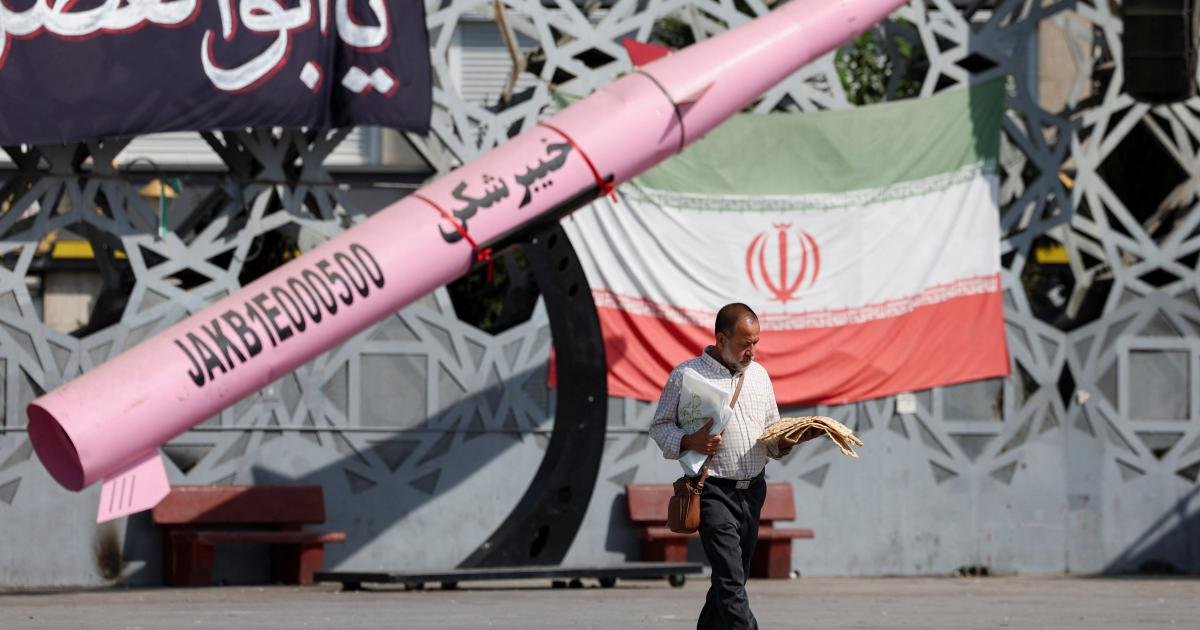
The United States has resumed attacks on Iran. The memorandum of understanding that Tehran and Washington struck last month in Switzerland, hanging by a thread for weeks, has finally fallen apart. “I think it’s over,” U.S. President Donald Trump said on July 8. “I don’t want to deal with [Iran] anymore.”
That the memorandum collapsed is not surprising. Iran and the United States had divergent interpretations of the agreement’s provisions, particularly those governing the Strait of Hormuz. Tehran believed that it had promised, in the words of the memorandum, to “make arrangements using its best efforts for the safe passage of commercial vessels with no charge, for 60 days only.” It also thought that it and Oman would “define the future administration and maritime services in the Strait of Hormuz,” along with other Persian Gulf states. Washington, however, believed that Iran had agreed to unconditionally allow free passage through the strait, and that the United States did not need to respect whatever arrangements Iran established. The deal could never survive such dissonance. Renewed military confrontation was less a question of if than of when.
Still, it is neither in Iran’s nor the United States’ interests to perpetuate the war. Although the Iranian people and armed forces have defended their country against two nuclear-armed powers, they still see the conflict as one imposed on them, a clash that they were never eager to begin. Washington, meanwhile, is distracting itself from its main geopolitical objective. For more than a decade, successive U.S. administrations have shared the overarching goal of reducing their country’s long-term burden in West Asia to focus on the Indo-Pacific, initiating what various officials have called a “pivot to Asia.” Washington’s past policies involving Iran—including the 2015 nuclear agreement, the Abraham Accords (in which several Arab states normalized relations with Israel after U.S.-brokered negotiations, creating a solid block against Iran and effectively outsourcing much of the United States’ regional role to Israel), its June 2025 attacks on the country, and the war it launched in February—are all instruments it has employed to achieve this end. But as the current conflict makes clear, Washington cannot eliminate the Iranian government. Only diplomacy, a new peace agreement, and a new security framework produced by regional states and for regional states will allow the United States to turn its attention elsewhere.
STRAIT TALK
The military confrontations of the past year did more than test the capabilities of Iran, Israel, and the United States. They challenged long-standing assumptions about coercion, deterrence, and the future of West Asia. The United States and Israel initiated recent conflicts with Iran on the assumption that sustained military pressure could either coerce Tehran into submission or trigger the collapse of the Islamic Republic. Instead, they found themselves stalled in a strategic quagmire. None of their actions, including the unprecedented attacks on Iran’s political and military leadership and the significant damage done to the country’s infrastructure, forced Tehran to pivot. Its territorial integrity and political system have endured, proving the resilience of the Iranian nation and its capacity to defend its sovereignty even in the most extreme circumstances.
External powers must grasp this fact and understand its implications. Iran’s ability to withstand sustained military pressure has made it harder to exclude Tehran from any future regional security architecture. That includes, first and foremost, Iran’s pivotal role in safeguarding the passage of energy supplies and commercial shipping through the Strait of Hormuz. Tehran has again closed off most access to the strait—which many Western analysts have interpreted as evidence that Iran is a hostile power that wants to engage in economic coercion, the disruption of global oil markets, and the curtailing of freedom of navigation. But Iran has disrupted energy markets for a very particular strategic reason: to force the United States and its partners to end their campaign to destroy Iran.
The war, in other words, has compelled Iran to now view the strait as an existential matter of its own security. Before large-scale hostilities began at the end of February, Iran generally tolerated navigation through the waterway without interference, even though U.S. sanctions—aided by Washington’s partners—meant that Iran could not access many of the goods passing through the strait. American sanctions effectively closed the Strait of Hormuz to Iranian commerce while leaving it open for almost everyone else. U.S. and Israeli attacks have ended that tolerance, both among Iran’s military commanders and, more important, among the vast majority of its population. Today, the overriding Iranian objective in the strait is to ensure that adversaries cannot exploit the waterway to prepare, facilitate, or sustain coercion against Iran, whether that coercion be military, political, or economic in nature. The previously accepted distinction between commercial traffic and military transit has been blurred. In peacetime, international maritime law shapes expectations. But in wartime, even the international laws of war prioritize national survival.
If it wants peace, the United States must look at the role of Israel.
Iran now operates under the conviction that maritime routes cannot be politically neutral if they facilitate the transport of weapons systems, aircraft components, intelligence assets, or logistical support for the United States and its regional partners. Because weapons and technologies that later struck Iranian territory, infrastructure, and civilians traveled through the Strait of Hormuz, Iranian policymakers are well within their rights to restrict the flow of traffic as long as the war persists, as long as economic coercion against Iran continues, and as long as efforts to undermine Iran’s right to safeguard its interests in the strait are being actively pursued. It is simply too hard for Tehran to determine which ships are carrying commercial goods and which are transporting materials that threaten Iran’s right to exist. Maritime movements in the Persian Gulf need to be understood in terms of the rules of armed conflict and strategic intent, rather than in terms of the rules that govern times of peace.
Still, for Tehran, the leverage afforded by the strait is fragile. If Iran repeatedly threatens maritime traffic, it could turn much of the world against it. A sustained closure might also lead to accelerating international investments in pipelines, ports, and logistical land corridors that bypass the waterway altogether. Should global markets successfully diversify away from the strait, Iran will no longer be able to use its potential closure as a deterrent. Tehran must thus exercise restraint, just as other states must refrain from economic, political and military measures that would be detrimental to Iran’s interests in the strait. Those include the imposition of sanctions that would effectively prevent Iran from benefiting from freedom of navigation, building a diplomatic coalition against Iran, or shipping military hardware detrimental to Iranian security through the strait’s waters. The best way to accomplish these tasks would be to set up a regional security network that builds confidence among the Persian Gulf’s coastal states through dialogue and cooperation. This approach would bring an end to the destabilizing military presence and adventurism of outside powers by removing the raison d’être for their presence. As stipulated in the memorandum, Iran and Oman will “define the future administration and maritime services in the Strait of Hormuz in discussion with other Persian Gulf littoral states in line with the applicable international law and the sovereign rights of coastal states of the Strait of Hormuz.”
HARD BARGAIN
The Strait of Hormuz remains a crucial flash point. But it is hardly the only source of tension between Tehran and Washington. To put a stop to the fighting, Iran and the United States need to manage their broader differences.
The aims of each should be modest: Tehran and Washington cannot be friends. The recent wars, in which the United States and Israel murdered Iran’s supreme leader, its senior commanders, and innocent schoolchildren, have deepened the country’s historical wounds. These grievances will not be forgotten or forgiven, but they need not result in continued fighting or escalation. The key will be ensuring that future diplomatic engagements, unlike past ones, pragmatically manage differences. U.S.-Iranian disputes are sometimes the product of foundational identity differences that require clarifying dialogue. Other times, they are the product of mutual suspicion that hampers shared cooperation over tactical interests. Sometimes, they are negotiable policy issues that are suited for strategic compromise. To move forward, both countries will need to distinguish between existential values and shared, transactional goals while not engaging in futile quests to acquire more leverage.
A realistic U.S.-Iran security arrangement will ultimately require a mutual nonaggression framework that stops disputes over identity from leading to violence. Tehran and Washington could then coordinate on their overlapping challenges, such as stabilizing Afghanistan, countering drug trafficking, and managing migration. The United States would recognize Iran’s territorial integrity, remove terrorism designations from Iran and its agencies, and permanently lift all sanctions. Washington would also commit to helping Iran rebuild from the devastation caused by its aggression, as it promised to in the memorandum by setting up a $300 billion investment fund for the country. In exchange, Iran would agree to permanent nuclear nonproliferation guarantees—such as ratifying the International Atomic Energy Agency Additional Protocol, which grants IAEA inspectors additional access to a state’s nuclear facilities. Iran might legally codify the late Iranian Supreme Leader Ayatollah Ali Khamenei’s fatwa against nuclear weapons.
If it wants peace, the United States must look at the role of Israel. Beyond initiating the first war against Iran in June 2025 and persuading Trump to join in starting the second, successive Israeli governments have consistently opposed U.S. initiatives that sought to reduce tensions and stabilize West Asia, including the 2015 nuclear deal and the recent memorandum of understanding. Any effort to prevent renewed conflict must therefore reckon with this spoiler, whose desire to keep fighting—irrespective of the costs—runs counter to the interests of the United States. Israel’s behavior not only prevents peace with Iran; it also destabilizes all of West Asia. Through its expansion of occupied settlements, its genocide in Gaza, and its devastation of Lebanon, Israel has demonstrated repeatedly that it wants to sow chaos throughout the region to sustain its military dominance.
It will fall to the United States and its partners to address this persistent source of instability. Both Trump and U.S. Vice President JD Vance committed themselves in paragraph one of the memorandum to “ensuring the territorial integrity and sovereignty of Lebanon.” At the same time, however, U.S. Secretary of State Marco Rubio started an active campaign to undermine that provision while visiting the region last month, in part by engaging in heavy-handed efforts to coerce the Lebanese government into a one-sided agreement with Israel while Israel continues to occupy parts of Lebanon. The administration’s inconsistencies, and its indifference to the daily plight of the Palestinian people, must end. Washington must instead start placing real pressure on Israel.
NO WEAK LINKS
Israel is hardly the only actor that could affect the success of a peace deal between Tehran and Washington. Iran and its immediate neighbors in the Persian Gulf would be well advised to devise a plan that ends their decades of tension—which started with the 1980–88 Iran-Iraq war and has continued to this day, to everyone’s detriment. That means West Asia must move away from a security model that relies on foreign powers, a tendency that has brought U.S. forces into the region and led to continued conflict. For years, this approach has been disastrous, as the Iraqi invasion of Kuwait following the Iran-Iraq war first showed and recent hostilities have further illustrated. Trying to outsource security to global powers cannot deliver genuine safety, let alone the stability required for sustainable economic development.
West Asia’s countries should instead start better integrating among themselves so that the strength of each state reinforces the stability of all the others. Iranians have already proposed several of the building blocks for this kind of order. As vice president in 2024, I called for establishing an institutionalized dialogue among regional states premised on mutual respect, nonintervention, and eventually, nonaggression arrangements. It would feature confidence-building measures, such as humanitarian assistance programs in conflict zones, joint counterterrorism initiatives, and collaborative media campaigns that promote coexistence. I also proposed a regional nuclear network, including an enrichment consortium devoted exclusively to the peaceful application of nuclear science. Its members would pool regional expertise, promote scientific collaboration, and reinforce confidence through cooperative verification arrangements that ensure no member pursues nuclear weapons. China and Russia, together with the United States, could help establish such a fuel enrichment consortium with Iran and interested neighbors in the Persian Gulf, which should then become the sole fuel enrichment facility for West Asia.
To make sure each country’s success helps the others, West Asian governments will want to create an integrated regional economic ecosystem. They might, for example, set up a West Asia development fund that finances postconflict reconstruction, healthcare, education, and critical infrastructure. Seamless regional connectivity—transnational railways, energy pipelines, digital infrastructure, and maritime routes—could facilitate the movement of capital and goods. Other joint institutions could help West Asian states tackle shared existential threats, such as climate change and water scarcity.
If this region can build meaningful, shared institutions, it could experience unprecedented development. It possesses abundant natural resources, deep-rooted civilizations, and youthful, educated populations. Iran alone brings a vast landmass, advanced scientific expertise, and world-class human capital. The Arab states offer unparalleled financial, investment, and management capacity, together with global commercial networks. Pakistan and Turkey contribute significant industrial capabilities and geopolitical heft.
None of this will be easy, given the decades of mistrust and suspicion within the neighborhood, including among some of the Arab states and between those states and Iran. But West Asia need not remain a prisoner of its violent past. The recent wars have demonstrated not only the catastrophic costs of military confrontation but also the limits of what coercion can accomplish. Both Washington and the Arab countries must accept that Iran is a permanent feature of the regional landscape and that the neighborhood cannot achieve stability by excluding it. At the same time, Iran must match its newly affirmed confidence with a readiness to extend a hand of friendship to its neighbors and pursue security through cooperation as well as through deterrence. And the whole world must recognize that lasting stability cannot be imported to West Asia from outside or imposed by force. It must be constructed by the peoples and states of the region themselves.
Loading…
