

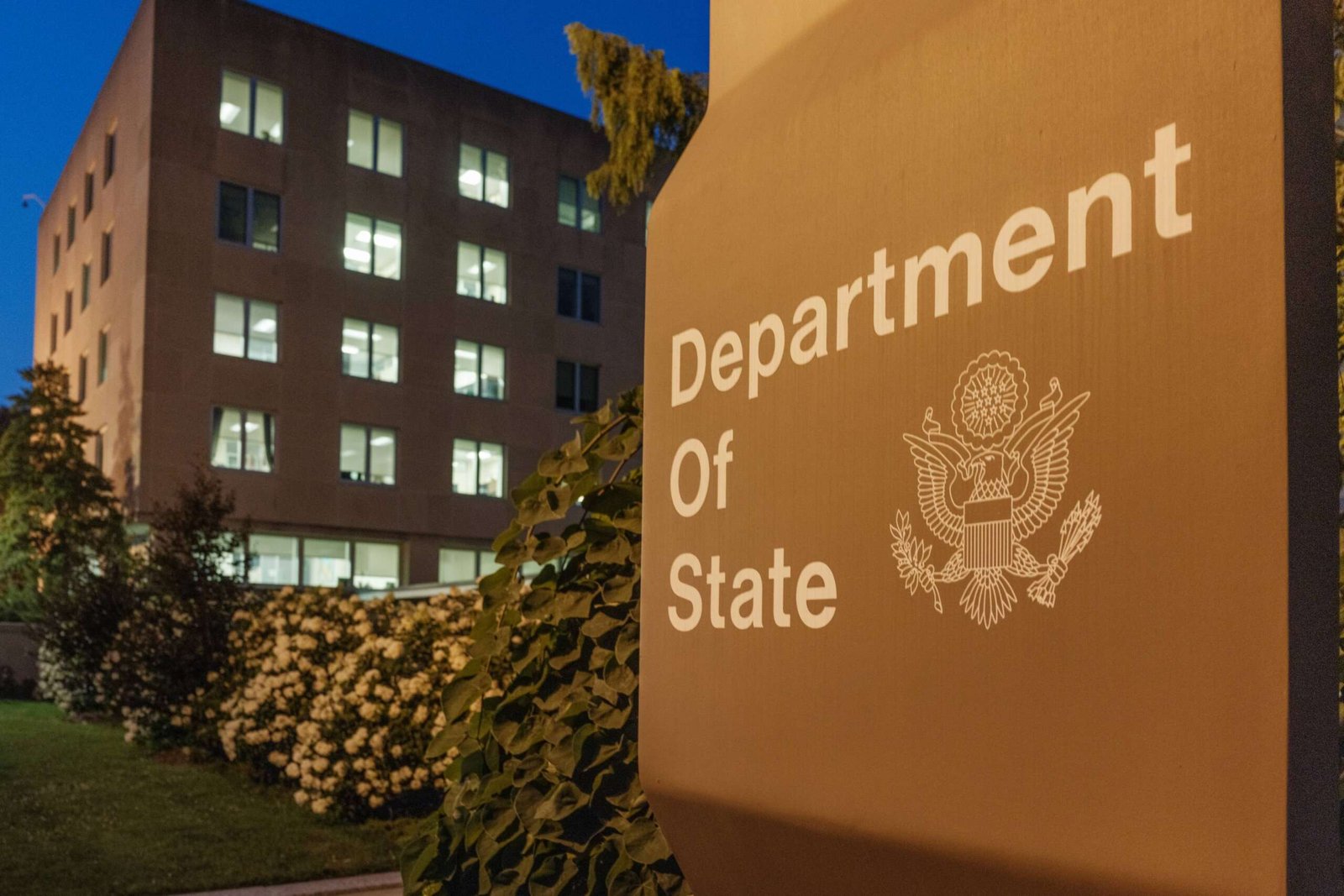
The State Department, a year after widespread layoffs, is back in hiring mode, recruiting applicants for many of the same positions it eliminated last summer.
Many of the nearly 1,350 former State Department employees who received reduction in force memos last summer are still looking for new jobs. Laid-off former employees who spoke to Federal News Network said the department hasn’t reached out to them as part of its hiring surge. Those who have applied for new jobs at the State Department say they haven’t heard anything back.
Because agencies conduct a RIF to eliminate positions, not people, they are supposed to give priority consideration to recently laid-off employees for competitive service jobs when they begin to hire again post-RIF.
Former State Department officials warn the agency can’t replace the institutional knowledge it lost with new hires, and that the agency has less capacity to carry out its diplomatic mission than it did a year ago.
‘Shooting ourselves in the foot over and over again’
Maryum Saifee, a Foreign Service officer for 17 years who received a RIF notice last year, was working on getting the State Department’s tech diplomacy “training float” concept off the ground.
First championed by former Secretary of State Colin Powell, the training float was modeled after the military as a blueprint for ongoing training and upskilling of the diplomatic workforce. The State Department would have a cohort of civil and Foreign Service officers spend a year at top universities across the country learning about how artificial intelligence, biotechnology, quantum computing and cybersecurity intersected with their diplomatic mission.
Former Secretary of State Antony Blinken also backed the training float as part of a broader plan to prepare the State Department workforce for emerging threats.
Saifee said the RIFs came just before the project’s expected launch, and that the work was scrapped after much of the team was laid off.
“The whole thing turned to dust overnight,” she said.
Among her assignments, Saifee worked in the State Department’s Bureau of Cyberspace and Digital Policy, which still exists but is in a severely hollowed-out state.
“There is great power competition, and technology is part of it. Whoever dominates in technology shapes the rules of the game for everyone,” she said. “We seem to be shooting ourselves in the foot over and over again.”
Before getting her RIF notice, Saifee was recruited to work with the State Department’s chief AI officer. One of the big projects she was working on was to expand StateChat, a large-language model that’s been widely adopted across the department’s workforce.
“The idea was to take all the cables, all this knowledge – even declassified cables – to put everything into this data set repository that would be non-public but use it to write cables. That’s all gone,” Saifee said. “Most of that office took the Fork in the Road.”
Days after sending the RIF notices, Michael Rigas, the deputy secretary of state for management and resources, told the House Foreign Affairs Committee that it “was the most complicated reduction in force that the federal government has ever seen.”
RIFs can take about a year or more to complete, but the Trump administration carried out layoffs at the State Department – and many other agencies – in a matter of months.
‘It’s not really reform, it’s just destruction’
Larry André, a former USAID and State Department official who served for more than 30 years as the ambassador to Somalia, Djibouti and Mauritania, now a professor at the University of Texas at Austin’s Lyndon B. Johnson School of Public Affairs, said it’s normal for both agencies to reorganize and close offices that have outlived their usefulness.
But André said the State Department cut too many positions too quickly — and that in that hasty process, some of the agency’s top performers lost their jobs, while poor-performing staff kept theirs.
“The State Department and USAID both required reforms, but this is kind of burning down the village to save the village. And that sets us back. It’s not really reform, it’s just destruction,” he said. “The numbers were way too large. It should have been an initial cut, and then you see how it’s going, and then you can do another cut if you need to. But it was very draconian in the number. And how it was done was truly dysfunctional.”
The day the State Department sent RIF notices, several employees received a follow-up email, saying they had received notices in error, and that they could still keep their jobs.
“That shows you how the process was so flawed, and taken in like an emergency situation. There was no emergency. It could have been done in a more well-thought-out and consultative fashion, which it wasn’t,” André said.
The Foreign Service, as part of its annual performance evaluation process, ranks top performers who are recommended for promotion, and identifies poor-performing employees who are recommended for removal. But instead of following that list, the State Department sent RIF notices to Foreign Service officers who were temporarily based in the United States.
“We have a list of poor performers. That seems to have not been accessed. Instead, you got some of the top performers eliminated, and some of the poor performers were kept on. It was like a game of musical chairs. If you were in the wrong chair, then you were gone, no matter what your level of proven performance was,” André said.
‘How do we get the right people in the door?’
In April, the State Department rolled out a recruitment campaign to join the Foreign Service. Before that rollout, a senior official told House lawmakers that the department had no plans to reinstate laid-off employees or staff who remain on paid administrative leave.
The State Department recently signed a nearly $1 million contract with the company Military Hire, a subsidiary of the employment firm RedBalloon, which calls itself “America’s non-woke job board.”
Military Hire CEO Andrew Crapuchettes said in an interview that the goal is to recruit 600 to 1,000 candidates to take the Foreign Service Officer Test. Military Hire, he added, has also been hired to help Customs and Border Protection with recruiting.
“Our focus is we’re going to start by looking for military veterans, but we’re also going to look for people who just high IQ, that love our country. I think this has been a consistent theme with the administration right now — how do we find people who are patriotic, are not afraid of America first, and are going to get the job based on merit and hard work, not based on knowing the right people, or going to the right university, or having the right DEI program,” Crapuchettes said.
Military Hire’s contract with the State Department is currently scheduled to end in January 2027. Crapuchettes said he’s focused on completing a “nine-month sprint this year on how do we get the right people in the door.”
“The pathways to that test, the organizations that generally focused on it in the past were honestly very left-leaning. And so we’re actually just trying to get a diverse group of organizations focused toward that test,” he said.
Crapuchettes said veterans are often good candidates for this work because the Foreign Service, which reassigns diplomats to new posts every few years and has an up-or-out promotion system, operates a bit like the military.
“I would say that the military is the largest merit-based organization in the whole wide world. You’re either good at things or you’re not. And that’s how you succeed,” he said. “It’s just all back to that merit-based hiring of patriotic people for the State Department.”
Despite last year’s widespread layoffs, Crapuchettes said the candidates Military Hire is recruiting aren’t deterred.
“When you get the right person who believes in merit, loves our country, they’re like, ‘Well, if I get laid off, it’s probably because I wasn’t being needed, and I don’t want tax dollars spent on something if I’m not being needed, right?’ And so that’s the kind of mindset we’d actually love to see in federal workers. The point is to serve the American people and use tax dollars efficiently. And if I can do that, then I want to keep my job. And if I can’t, I shouldn’t be there,” he said.
A State Department spokesperson said in a statement that it is “committed to recruiting the best and brightest from across America to serve in the Foreign Service,” and that under the Trump administration, interest in joining the Foreign Service has reached its highest level in a decade.
“There are no restrictions on employees who were separated as part of a reduction in force applying for new positions within the department, and they would be subject to the same process as other candidates,” the spokesperson said.
‘I want to go back’
Michael Duffin, a former senior policy adviser for the Office of Countering Violent Extremism within the State Department’s Bureau of Counterterrorism, who is running as a Democrat to represent Virginia’s 8th congressional district, wrote in a recent op-ed that, “despite our grief and trauma, many of us still want to return to the State Department or another federal agency. But the path back does not exist.”
Duffin wrote that most of the State Department’s job postings are restricted to internal applicants only, bypassing a mechanism that would require the department to consider laid-off employees. Other federal agencies, he added, are reluctant to hire people fired by the Trump administration.
Duffin said in an interview that many laid-off State Department officials suspect the department is only “hiring people that they think are of the same ideology.”
“I want to go back, as much as that would, let’s say, require some bit of humility. But I want to serve, and I know my colleagues, many of them want to serve,” he said.
Duffin said he’s applied for approximately 100 federal jobs since he was laid off, but hasn’t gotten far in the process. He said he applied for a lower-grade position at the Commerce Department, and had an interview for the position, but six weeks later, he said he hasn’t heard back.
“There are not a lot of opportunities,” he added.
About 80% of the State Department layoffs targeted civil service employees who are often specialists in certain fields or geopolitical regions.
“The way he State Department is set up, you have us Foreign Service officers who are very broad and very shallow, and then you have the civil service. They may spend their whole career on one region, even one country. They generally stay in Washington, but they are the subject matter experts. They’re the unsung heroes,” André said. “One of the things that made me, I would say, highly effective in that job is I was able to reach out to people in key positions who I had known for decades. I had privileged relations with those people. And that gave me a lot of access and a lot of information and pre-existing relationships that I could lean on to get agreements and get things done. Those cannot be recreated overnight.”
‘Brought in to do the very jobs that were thrown out’
Saifee said the State Department is recruiting for many of the same jobs that were eliminated last year, oftentimes advertising them as contractor positions.
“On LinkedIn, I’ll see so many cyber digital policy jobs being advertised. And then it makes it even more shocking that we were RIF-ed,” she said. “We call it, instead of a reduction in force, a ‘replacement in force,’ because they’re just swapping people out. And presumably, they’re trying to bring in contractors because they’re easier to fire. If they want to be a whistleblower, then they’re out. If they want to say, ‘Hey, that’s not legal,’ they’re out. They focused on gutting the eyes and ears of the institution.”
Two former Foreign Service officers who were officially separated from the State Department in May after an extensive legal battle over the force said it’s frustrating to see the agency back in hiring mode — advertising “MANY vacancies” for the same positions they were laid-off from.
“By far the biggest slap in the face has been the hiring campaign DOS has been conducting for my former role as a diplomatic technology officer,” one former Foreign Service said, requesting anonymity because they are in the search for a new job. “I have had friends share this job posting on Facebook and LinkedIn to add further insult to injury. I will just never understand how they can seriously argue that there was ‘no other work available’ when I already had a follow-on assignment lined up, and they are now hiring for [that] exact role.”
A second laid-off Foreign Service officer said, “It’s appalling now to see the department has hired more new FSOs than they fired, despite claiming there is no work for any of the highly experienced FSOs who were RIF-ed.”
“For me, it’s been a really difficult year in every sense, and I’m still looking for a job. I started sending out resumes immediately, but it’s a tough job market, especially for those of us who are middle-aged and have a lot of niche experience,” the second Foreign Service officer said. “It’s especially painful to have this happen so close to retirement. Way too many of us put in time in public service making far less than we could have in the private sector. And for FSOs, that also means serving in harsh or dangerous locations not many people would be willing to tolerate.”
A third laid-off Foreign Service officer said the department brought in a new class of 170 Foreign Service officers earlier this month.
“They were brought in to do the very jobs that were thrown out one year before,” the third Foreign Service officer said.
While the State Department is looking to replenish its headcount, new hires may be wary of giving candid feedback, especially now that several positions within the agency have been reclassified as at-will jobs that fall under the new Schedule Policy/Career designation.
“People will not raise their hands and speak freely if they are not sure that their ability to speak will not visit them with some form of retribution,” the third Foreign Service officer said.
Saifee, who is fluent in Arabic and has been evacuated from the Middle East twice during her Foreign Service career, said there’s no substitute for the skills developed after years of experience on the job.
“Our skills are not something you can just bring A-100s in, and they can immediately start. You have to train in a very specialized way – what it’s like to work overseas, the language skills, how do you safeguard privacy.”
Meanwhile, Saifee said the State Department is continuing to lose mid-career and senior employees.
“The bandwidth is so much more limited within the department because of the RIFs, but also because people are resigning,” Saifee said. “People are just now leaving. You’re having a hollowing out that’s both voluntary and involuntary.”
If you would like to contact this reporter about recent changes in the federal government, please email jheckman@federalnewsnetwork.com, or reach out on Signal at jheckman.29
Copyright
© 2026 Federal News Network. All rights reserved. This website is not intended for users located within the European Economic Area.
