

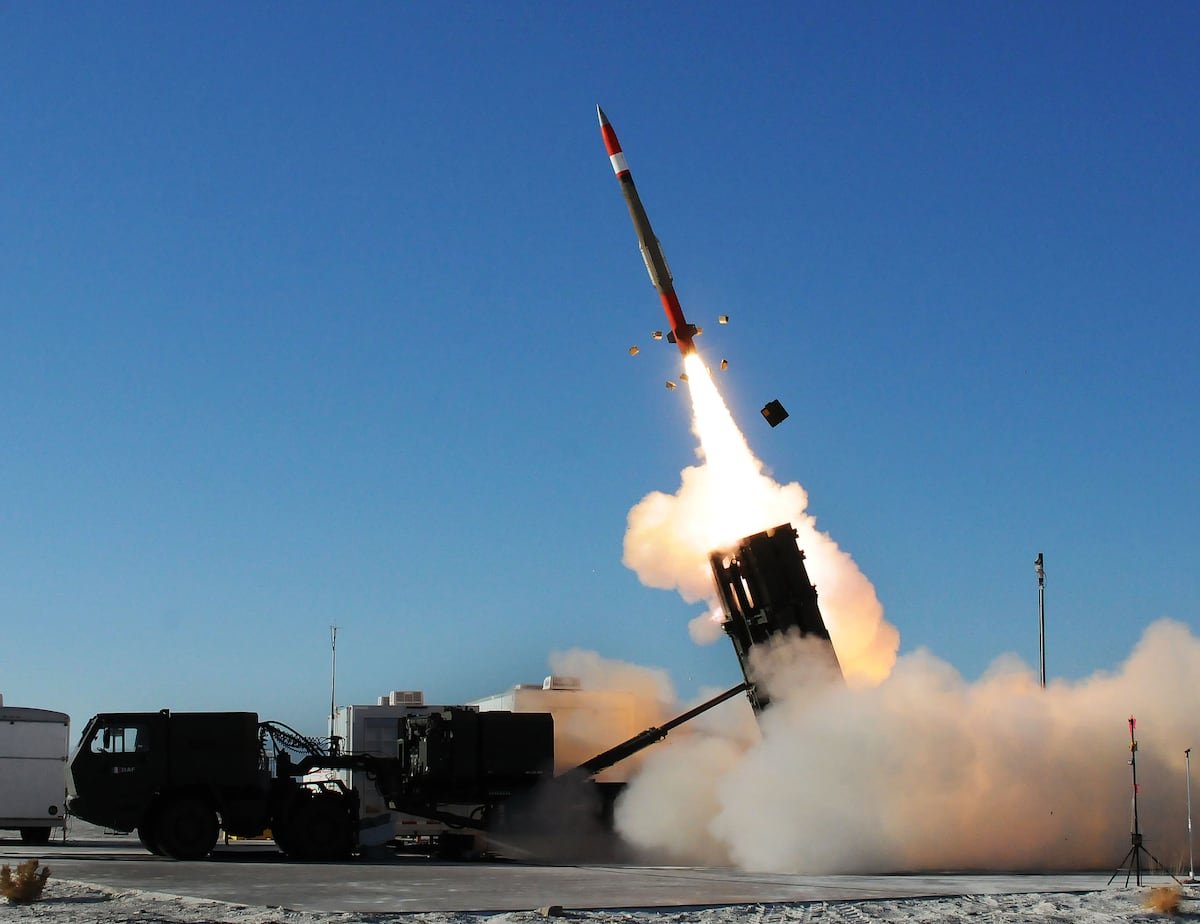
KYIV, Ukraine — U.S. President Donald Trump’s pledge to give Ukraine a license to build its own Patriot interceptors would grant a manufacturing right the United States currently extends to only a handful of allies. It is one Kyiv has eyed since the war began, though it could be years before a homegrown iteration defends a Ukrainian city.
Ukrainian President Volodymyr Zelenskyy, detailing the deal on Thursday after he and Trump met at the NATO summit in Turkey earlier in the week, said the two have resolved it “as leaders” and that Ukraine has been “recognized by America as a country that is ready” to build the system.
“Thank you for the positive decision regarding the license for the production of Patriots,” Zelenskyy said, noting that Trump “repeatedly emphasized that today only two or three countries in the world can produce Patriots, because others are not technologically ready.”
Zelenskyy has pressed Washington for the interceptors for years, as Russia has fired ever more ballistic missiles at Ukrainian cities. Trump’s offer to let Kyiv produce Patriots could hand it an edge both on the battlefield and in its standing with allies and foes alike, but only on a timeline that will take years and cost billions of dollars.
“Our groups, our diplomats, the Ministry of Foreign Affairs and the Ministry of Defense need to agree on all the other technical matters,” Zelenskyy told journalists on Thursday. “The sooner we agree, the sooner we will be able to produce Patriots.”
The promise moves Ukraine from a war it entered reliant on Western arms toward building the most sought after air defense weapon of the conflict itself, a milestone for Kyiv and a measure of how far Washington has shifted. It also moves Kyiv a step closer to defending itself without leaning on allies who have rationed what they send.
So far, the nuts and bolts of the deal remain largely undecided from both government officials and industry leaders — and unsigned. The manufacturer has also not been entirely brief.
“We haven’t informed the company of that yet,” Trump said of Lockheed Martin, which builds the interceptor, while announcing the agreement.
The Patriot’s PAC-3 interceptor destroys its target on impact, a “hit-to-kill” design, and is one of the only weapons able to stop a ballistic missile, making it among the most closely guarded technology the United States exports.
A Patriot interceptor brings together an entire ecosystem of weapons: a radar, a command post, along with the launchers and the interceptors themselves. Ukraine is aiming for permission to manufacture the PAC-3 MSE, the newest and the hardest to build.
Japan is the only other country that builds Patriots under a U.S. license today. Germany, the Netherlands and Spain are jointly standing up a European production line, and Berlin is separately negotiating its own license.
Washington licenses it sparingly because of fears the tech could end up in enemy hands. That caution has only deepened now.
The U.S. fired between 1,060 and 1,430 Patriots in this year’s war with Iran at roughly $3.9 million apiece, many more than the hundreds Ukraine received from all of its Western allies over a span of four years.
Each interceptor takes 24 months to build and 30 for its solid rocket motor, and a single Boeing plant in Huntsville, Alabama, makes the seeker for each one, a Foreign Policy Research Institute analysis found.
That single plant turned out between 650 and 700 seekers last year, a bottleneck that paces the whole line.
Although the Pentagon signed a separate deal in April to triple the key part’s production, even the interceptors ordered under an accelerated $4.8 billion contract this year are not expected for delivery until 2030.
“Fewer such missiles are produced worldwide each month than the enemy fires at Ukraine in that same period,” Defense Minister Mykhailo Fedorov said.
Lockheed Martin delivered 620 of its top PAC-3s last year. A January framework with the Pentagon aims to lift that to 2,000 a year by 2030, according to a Foreign Policy Research Institute analysis.
And Ukraine has no anti-ballistic system of its own — yet.
Zelenskyy this week announced Ukraine is pouring resources into a homegrown version, a cheaper, mass-produced answer to the Patriot he calls FREYA, built around a Ukrainian-made missile and European radars, launchers and command systems.
He plans to present it to partners in France in the coming days, he said Thursday.
Russia’s ballistic missiles are its deadliest weapon against Ukrainian cities. A mass attack overnight on Sunday killed at least 22 people in Kyiv, with all of Russia’s 29 ballistic missiles dodging air defenses, Ukraine’s air force said.
More than 16,000 Ukrainian civilians have been killed since Russia’s 2022 invasion, the U.N. human rights office has verified.
Zelenskyy has called those strikes Russia’s “only advantage” left and named Patriot production his “priority number one.”
Ukraine is “working in different directions” at once, he said, pursuing the American license, European financing and French systems side by side.
The French-Italian SAMP/T, a costly system Zelenskyy called an “analogue of Patriot,” is already arriving under agreements he struck with French President Emmanuel Macron. It is the only other weapon in Ukraine’s arsenal built specifically to stop a ballistic missile.
“Production is very small, queues are very long, involving different countries,” Zelenskyy said of the Patriot and the French systems.
The president acknowledged that none of these solutions will end Russia’s onslaught of Ukrainian cities overnight, making the development of domestic defense systems Kyiv’s top priority.
“Then we will close Ukraine’s sky with our own capabilities,” he said.
Katie Livingstone is the Ukraine correspondent for Defense News and Military Times. Based in Kyiv, she has covered Russia’s full-scale invasion since its first days. She is a former Fulbright fellow whose award-winning work has appeared in outlets across Europe and the U.S.
