

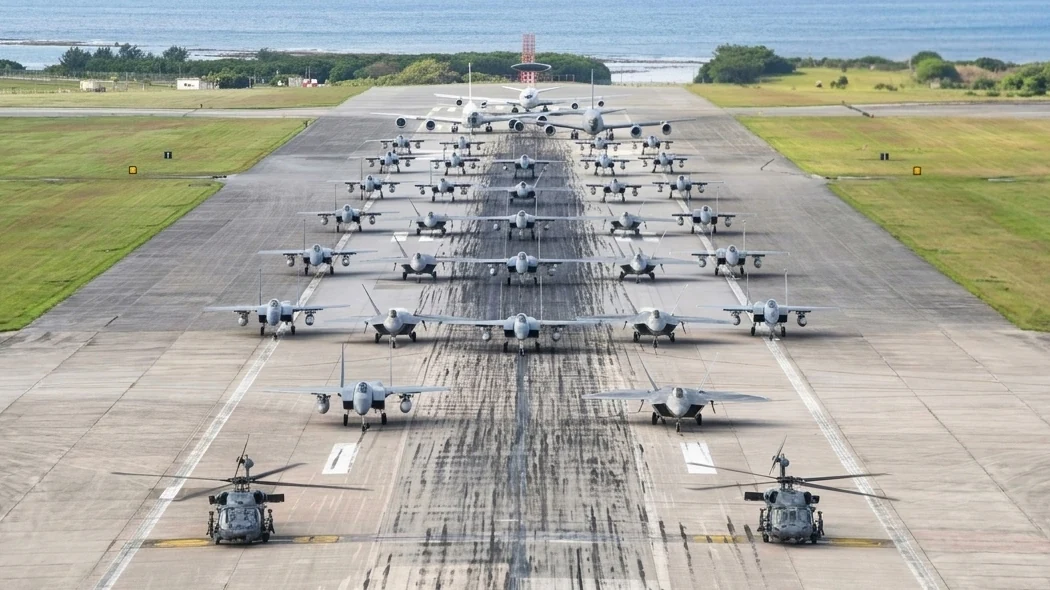
When people hear the largest air force, they often picture sleek fighter jets roaring across the sky or stealth bombers disappearing into the horizon. But the real story is much bigger than that.
Behind every military aircraft taking off is a vast ecosystem of transport planes, helicopters, aerial refueling tankers, surveillance aircraft, trainers, and support crews that keep an air force operating around the clock.
That raises an interesting question: Which country actually has the largest air force in the world? The answer isn’t always as straightforward as counting fighter jets.
Modern military aviation is measured by the total number of operational aircraft across every mission category, from combat and reconnaissance to logistics and search-and-rescue. A nation with fewer advanced fighters can still rank among the world’s biggest air forces simply because it operates a massive and diverse fleet.
In this post, we’ll explore the top five largest air forces by fleet size, using the latest publicly available military aviation data from respected defense sources.
Along the way, you’ll discover what makes each force unique, how their aircraft inventories compare, and why sheer numbers don’t always translate into battlefield dominance.
How We Ranked the World’s Largest Air Forces
Before diving into the rankings, it’s worth answering a simple question that often causes confusion: What exactly counts toward the size of an air force? It’s not just fighter jets.
In reality, an air force is more like a giant toolbox, where every aircraft has a different purpose and contributes to the overall strength of the fleet.
For this post, the ranking is based on the total number of military aircraft in active service or operational reserve. That includes fixed-wing aircraft and helicopters used by a country’s air force and, where applicable, other military aviation branches. Aircraft that are permanently retired or preserved in museums are not included.
The fleet is divided into several major categories:
| Aircraft Category | Primary Role |
| Fighters | Air superiority and ground attack |
| Bombers | Long-range strategic strike missions |
| Transport Aircraft | Troop, cargo, and humanitarian transport |
| Tankers | Aerial refueling to extend operational range |
| Helicopters | Assault, reconnaissance, transport, and rescue |
| Special Mission Aircraft | Airborne early warning, intelligence, surveillance, and electronic warfare |
| Trainers | Pilot training and advanced flight instruction |
This broader approach paints a far more accurate picture of military aviation than counting combat aircraft alone.
For example, a country with hundreds of transport aircraft and helicopters can sustain overseas deployments, disaster relief operations, and rapid troop movements far more effectively than a nation focused almost entirely on fighters.
The data used in this ranking is compiled from respected defense references such as FlightGlobal’s World Air Forces, Global Firepower, official defense ministry releases, and publicly available military aviation databases. Because governments update fleet inventories at different times, and some countries don’t disclose exact figures, the numbers should be viewed as well-supported estimates rather than precise headcounts.
One final point deserves attention. Fleet size doesn’t automatically equal military superiority. A smaller force equipped with fifth-generation fighters, highly trained pilots, robust logistics, and modern command-and-control systems may outperform a much larger fleet filled with aging aircraft.
Availability matters, too. An air force may own thousands of aircraft on paper, but only a portion will be mission-ready at any given time due to maintenance, upgrades, or scheduled inspections.
That’s why this ranking focuses on quantity, while also highlighting the quality, modernization efforts, and strategic role of each country’s fleet. Together, those factors provide a more meaningful view of today’s largest air forces in the world, and why the numbers tell only part of the story.
1. United States — The Largest Air Force in the World
The United States has maintained its position as the largest air force in the world for decades, and the gap between it and every other country remains remarkable. With more than 13,000 military aircraft across its armed forces, the U.S. operates a fleet that is larger than the combined inventories of many other major powers.
At the heart of this aerial dominance is the U.S. Air Force (USAF), but the total fleet also includes aircraft operated by the U.S. Navy, Marine Corps, Army, and Coast Guard. Each branch fulfills a distinct mission, creating an aviation ecosystem capable of responding to crises anywhere on the planet within hours.
| Category | Estimated Aircraft |
| Total Fleet | 13,000+ |
| Fighters | F-22 Raptor, F-35 Lightning II, F-15EX, F-16 Fighting Falcon |
| Bombers | B-52 Stratofortress, B-1B Lancer, B-2 Spirit |
| Transport | C-17 Globemaster III, C-130 Hercules, C-5M Super Galaxy |
| Tankers | KC-135 Stratotanker, KC-46 Pegasus |
| Helicopters | HH-60W Jolly Green II, UH-60 Black Hawk, CH-47 Chinook |
What truly separates the United States from every other country with the largest military aircraft fleet isn’t just the number of airplanes; it’s the balance of capabilities.
Few nations possess such a deep mix of stealth fighters, long-range bombers, strategic airlifters, electronic warfare aircraft, intelligence platforms, and aerial refueling tankers. This diversity allows the U.S. military to conduct multiple large-scale operations simultaneously without relying heavily on allied support.
One often-overlooked strength is its global logistics network. Aircraft can be deployed from bases in North America, Europe, the Middle East, the Indo-Pacific, and beyond, while tanker fleets extend the range of fighters and bombers to almost any region of the world. It’s a bit like having an international highway in the sky, one that can be expanded whenever circumstances demand.
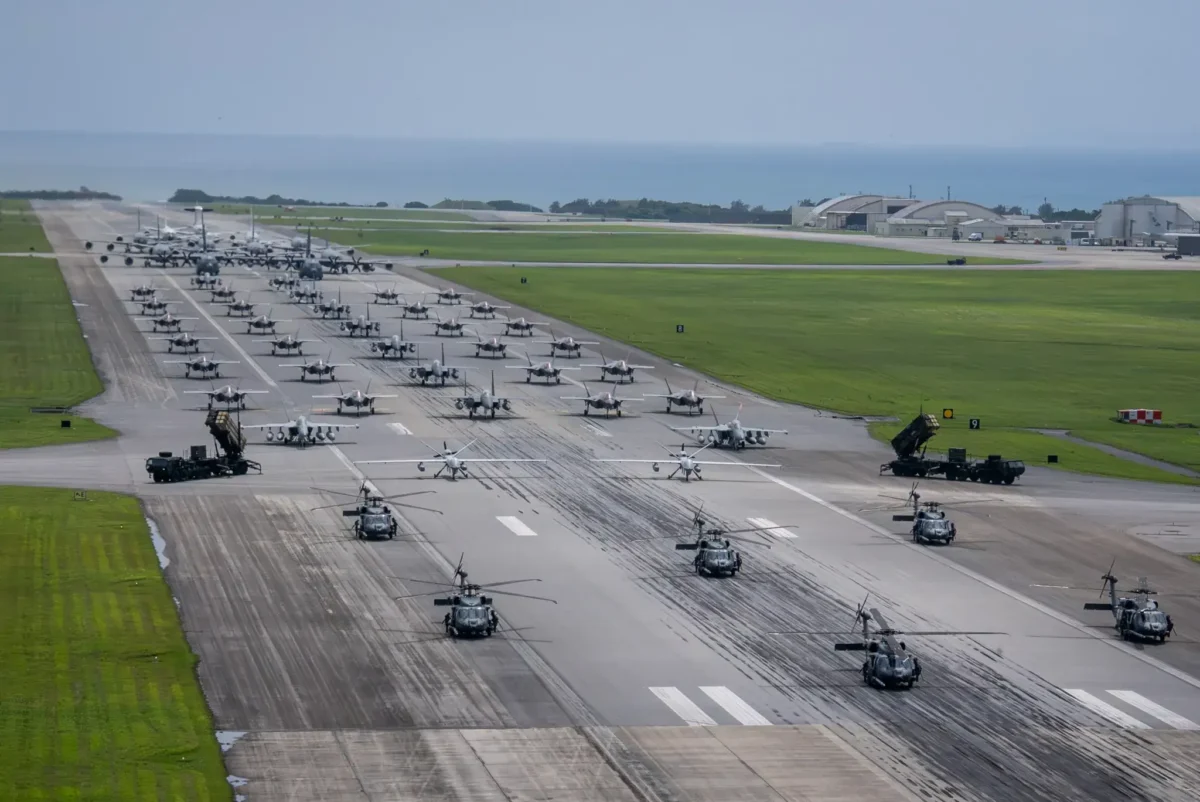
Modernization is another defining feature. The U.S. continues to invest billions of dollars in next-generation systems, including the B-21 Raider stealth bomber, the F-35 Lightning II, collaborative combat drones, and advanced command-and-control technologies.
Many older aircraft are also being upgraded with new radars, weapons, and avionics, extending their operational life without sacrificing effectiveness.
In short, the United States doesn’t just field the largest air force by numbers, it operates one of the most versatile and globally integrated military aviation forces ever assembled, setting the benchmark against which every other air force is measured.
2. Russia — A Legacy Air Power with Global Reach
Despite years of economic pressure, sanctions, and the demands of ongoing military operations, Russia continues to field the second-largest air force in the world by fleet size. With an estimated 4,000+ military aircraft, the country maintains one of the most diverse aviation inventories, blending Soviet-era workhorses with a growing number of modern combat platforms.
Russia’s air arm is designed around one core objective: defending the world’s largest country while retaining the ability to project military power across Europe, the Arctic, the Middle East, and parts of Asia. That mission has shaped a fleet built for endurance as much as combat.
| Category | Estimated Aircraft |
| Total Fleet | 4,000+ |
| Fighters | Su-35S, Su-30SM, MiG-31BM, Su-57 |
| Bombers | Tu-160, Tu-95MS, Tu-22M3 |
| Transport | Il-76, An-124 Ruslan, An-26 |
| Helicopters | Ka-52, Mi-28N, Mi-8/17, Mi-26 |
| Special Mission | A-50 AWACS, Il-20 reconnaissance aircraft |
One of Russia’s biggest strengths lies in its long-range aviation. Aircraft such as the Tu-160 and Tu-95MS give Moscow the ability to launch conventional or strategic strike missions from well within its own territory. Combined with aerial refueling and long-range cruise missiles, these bombers remain an important part of Russia’s military strategy despite their aging designs.
Another defining feature is the country’s heavy reliance on multirole aircraft from the Sukhoi family. Fighters like the Su-35S and Su-30SM are built to handle air superiority, ground attack, and maritime strike missions with minimal configuration changes. This flexibility reduces logistical complexity while increasing operational readiness.
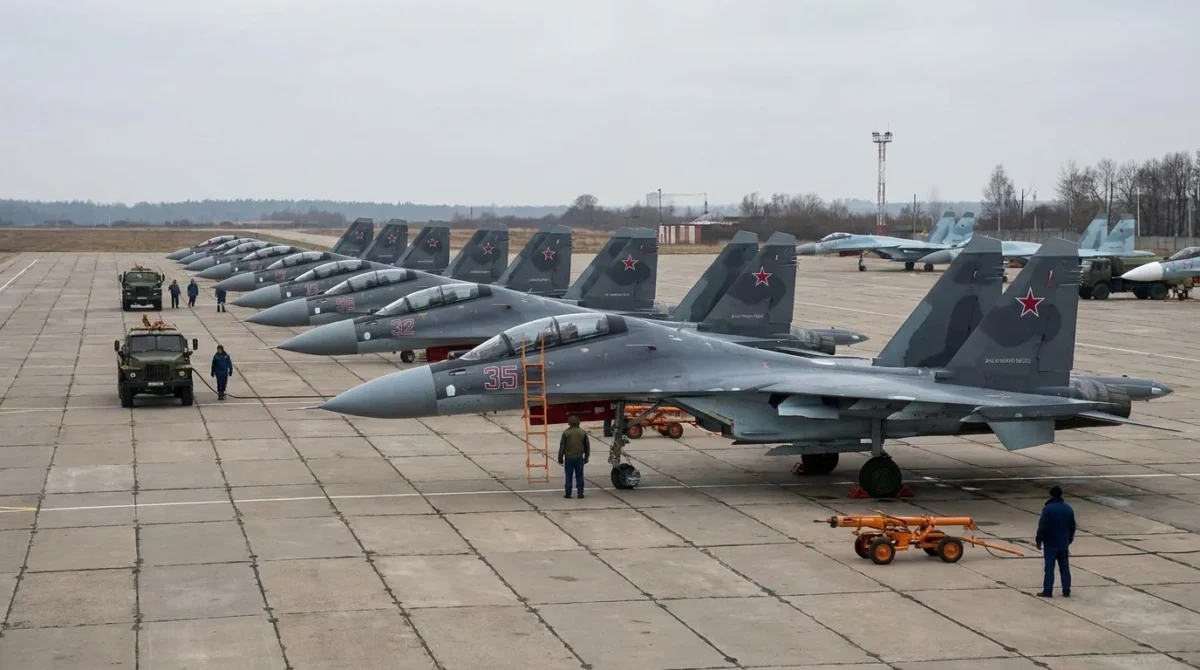
Still, fleet size tells only part of the story. A significant portion of Russia’s inventory consists of aircraft introduced during the late Cold War. Many have undergone extensive upgrades, but replacing aging airframes remains a long-term challenge.
Modernization programs, including production of the Su-57 stealth fighter and upgrades to the MiG-31BM interceptor, are gradually improving capabilities, though not at the pace originally envisioned.
3. China — The Fastest-Growing Major Air Force
If one country has transformed the global military aviation landscape over the past two decades, it’s China. Once heavily dependent on imported Soviet-designed aircraft, the country has rapidly evolved into an aerospace powerhouse with an estimated 3,300+ military aircraft, making it one of the largest air forces in the world by fleet size.
What’s especially striking isn’t just how many aircraft China operates, it’s how quickly the composition of its fleet has changed.
Older fighters are steadily being retired and replaced by domestically designed aircraft equipped with modern sensors, advanced avionics, and long-range precision weapons. It’s a shift from quantity to quality, without sacrificing either.
| Category | Estimated Aircraft |
| Total Fleet | 3,300+ |
| Fighters | J-20 Mighty Dragon, J-16, J-10C, J-11B |
| Bombers | H-6K, H-6N |
| Transport | Y-20 Kunpeng, Y-9, Y-8 |
| Helicopters | Z-20, Z-10, Z-19 |
| Special Mission | KJ-500 AEW&C, Y-9 electronic warfare variants |
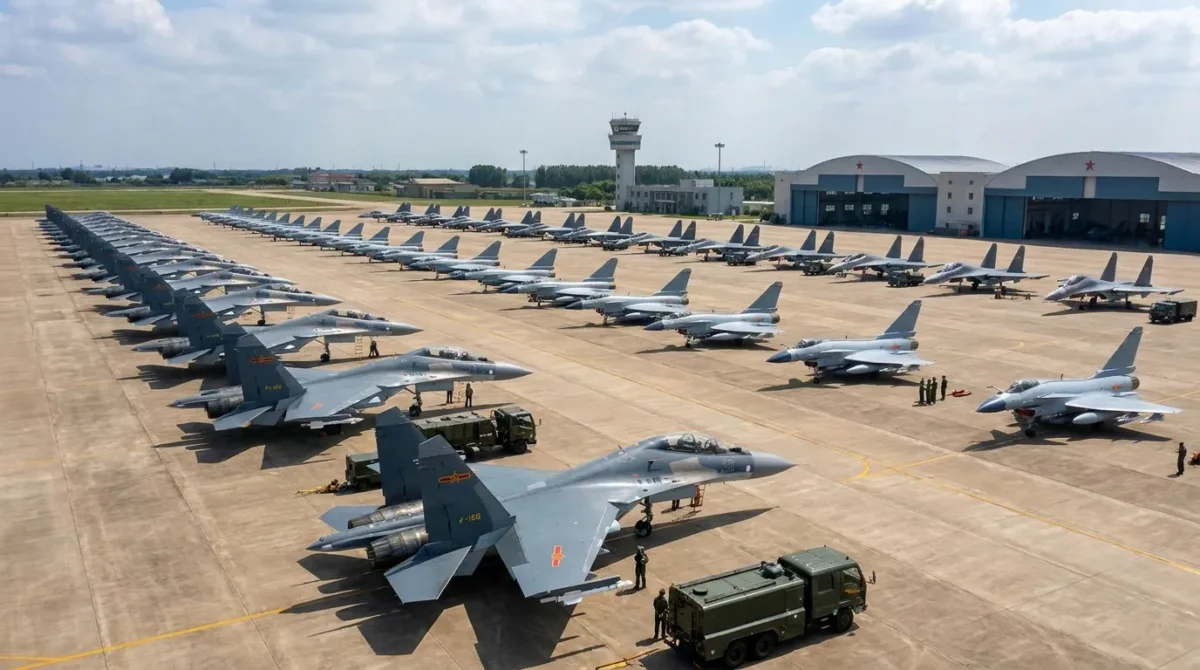
The centerpiece of China’s modernization is the J-20 Mighty Dragon, the country’s first operational fifth-generation stealth fighter. Its growing presence signals Beijing’s determination to compete with the world’s most advanced air forces.
Alongside the J-20, multirole fighters such as the J-16 and J-10C provide the flexibility to perform air defense, strike, and maritime missions across a wide range of scenarios.
The aviation industry has also expanded dramatically. The introduction of the Y-20 Kunpeng, a heavy-lift transport aircraft often compared to the American C-17, has improved China’s ability to move troops, armored vehicles, and humanitarian aid over long distances. This capability supports overseas deployments, disaster relief, and logistical operations far beyond the country’s borders.
China is also investing heavily in force multipliers that don’t always grab headlines. Airborne early warning aircraft, electronic warfare platforms, aerial refueling tankers, and unmanned aerial systems are becoming increasingly common throughout the fleet.
These assets improve situational awareness, extend combat range, and enable more coordinated operations in contested environments.
4. India — A Diverse Air Force Balancing Scale and Modernization
With an estimated 2,200+ military aircraft, India operates the fourth-largest air force in the world by fleet size. Unlike some countries that rely heavily on a single family of aircraft, the Indian Air Force (IAF) has built a remarkably diverse inventory, combining Western, Russian, and indigenous platforms to meet a wide range of operational requirements.
That diversity is both a strength and a challenge. It gives India access to specialized capabilities from multiple suppliers, but it also creates a complex logistics network where different aircraft require different spare parts, maintenance procedures, and pilot training programs.
| Category | Estimated Aircraft |
| Total Fleet | 2,200+ |
| Fighters | Su-30MKI, Rafale, Tejas, MiG-29UPG, Mirage 2000 |
| Transport | C-17 Globemaster III, C-130J Super Hercules, An-32 |
| Helicopters | AH-64E Apache, CH-47F Chinook, Mi-17V5, HAL Dhruv |
| Special Mission | Netra AEW&C, PHALCON AWACS |
| Trainers | Hawk Mk132, Pilatus PC-7 Mk II |
The backbone of India’s fighter fleet is the Su-30MKI, a highly customized multirole aircraft developed in cooperation with Russia.
Complementing it are the Dassault Rafale, known for its advanced sensors and precision-strike capabilities, and the homegrown HAL Tejas, a lightweight fighter that symbolizes India’s ambition to strengthen its domestic aerospace industry.
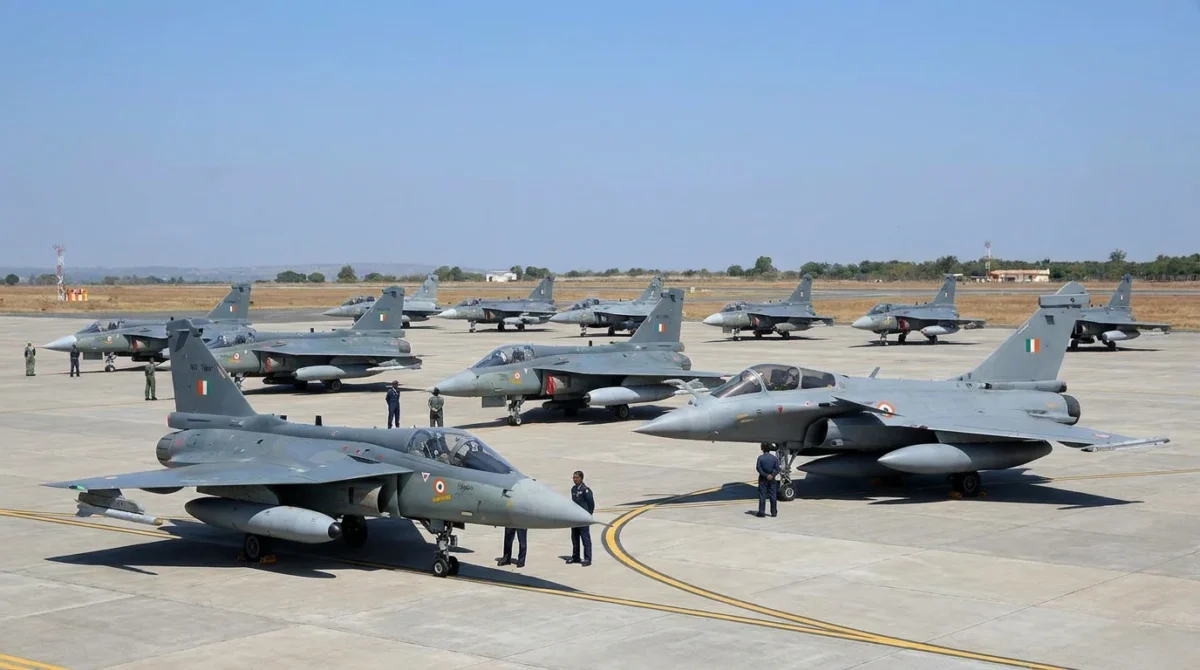
One of the most interesting aspects of India’s aviation strategy is its gradual shift toward self-reliance. Under the government’s “Make in India” initiative, significant investment has gone into developing indigenous aircraft, helicopters, radars, and weapons.
The Tejas program is only the beginning, with projects such as the Advanced Medium Combat Aircraft (AMCA) and new unmanned systems expected to play a larger role in the coming years.
As one of the largest air forces by fleet size, India continues to modernize while carefully balancing imported technology with domestic innovation.
That combination of operational experience, strategic geography, and growing industrial capability ensures the IAF remains one of Asia’s most capable and influential military aviation forces.
5. South Korea — A Modern Air Force Built for Readiness
Rounding out the list of the top five largest air forces in the world is South Korea, with an estimated 1,500+ military aircraft.
While its fleet is considerably smaller than those of the United States, Russia, China, and India, the Republic of Korea Air Force (ROKAF) stands out for a different reason: an exceptionally high level of modernization and operational readiness.
South Korea’s security environment leaves little room for complacency. With the heavily fortified Korean Demilitarized Zone (DMZ) just minutes away from its capital, the country has developed an air force designed to react quickly, maintain constant vigilance, and operate seamlessly alongside allied forces.
| Category | Estimated Aircraft |
| Total Fleet | 1,500+ |
| Fighters | F-35A Lightning II, F-15K Slam Eagle, KF-16, FA-50 |
| Transport | C-130H Hercules, CN-235 |
| Helicopters | UH-60 Black Hawk, CH-47 Chinook, KUH-1 Surion |
| Special Mission | Peace Eye AEW&C, RC-800 reconnaissance aircraft |
| Trainers | T-50 Golden Eagle, KT-1 Woongbi |
The jewel of South Korea’s fighter fleet is the F-35A Lightning II, one of the world’s most advanced stealth fighters. Combined with the long-range F-15K Slam Eagle and upgraded KF-16 multirole fighters, these aircraft provide a balanced mix of air superiority, precision strike, and defensive capabilities.
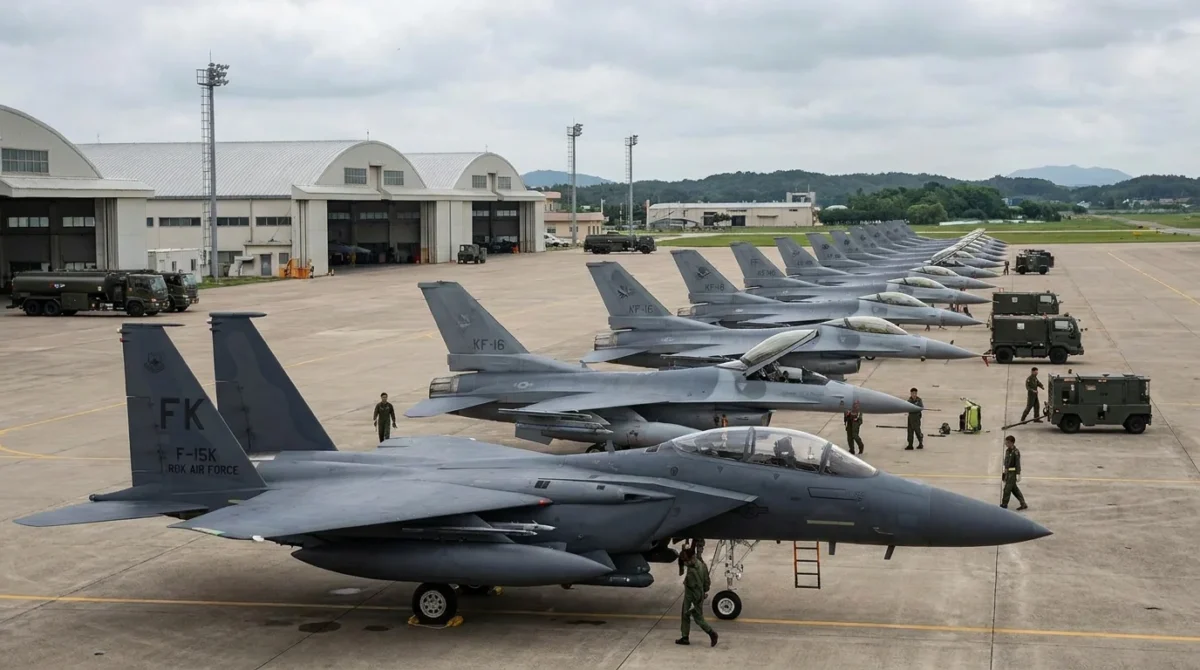
What truly sets South Korea apart, however, is its investment in indigenous aerospace technology. The country’s KF-21 Boramae fighter program marks a significant milestone, aiming to reduce reliance on foreign suppliers while creating a next-generation combat aircraft tailored to regional defense needs.
Although still entering operational service, the KF-21 represents South Korea’s growing ambition to become a major aerospace manufacturer.
South Korea also places considerable emphasis on network-centric warfare. Airborne early warning aircraft, advanced surveillance platforms, secure communications, and missile defense systems are closely integrated, allowing commanders to detect, track, and respond to threats in real time.
In modern warfare, information can be just as decisive as firepower.
Fleet Size Comparison Table
Looking at each country individually tells only part of the story. Place them side by side, and some fascinating patterns begin to emerge. The largest air forces in the world aren’t simply collecting aircraft, they’re building fleets around different strategic priorities.
The United States emphasizes global power projection, supported by thousands of transport aircraft, tankers, and strategic bombers. Russia continues to rely on long-range strike aviation and heavy helicopters.
China is rapidly replacing older aircraft with indigenous designs, while India balances imported technology with domestic production. South Korea, meanwhile, focuses on maintaining a highly modern and combat-ready force capable of responding immediately to regional threats.
Here’s how the world’s five largest military aviation fleets compare.
| Rank | Country | Estimated Fleet Size | Primary Strength |
| 1 | United States | 13,000+ | Global power projection |
| 2 | Russia | 4,000+ | Strategic bombers and multirole fighters |
| 3 | China | 3,300+ | Rapid modernization and domestic production |
| 4 | India | 2,200+ | Diverse multirole fleet |
| 5 | South Korea | 1,500+ | High readiness and advanced technology |
One number immediately jumps off the page: the United States operates more than three times as many military aircraft as Russia, the country in second place. That extraordinary gap reflects decades of investment in expeditionary warfare, global logistics, and alliance commitments spanning every continent.
Another trend worth noting is modernization.
China and South Korea operate smaller fleets than the United States, but a growing percentage of their aircraft are relatively new, featuring advanced sensors, precision-guided weapons, and networked battlefield capabilities. India is moving in the same direction through a combination of imported fighters and indigenous programs.
In the end, fleet size provides an excellent snapshot of a nation’s aviation capacity, but it’s only one piece of a much larger puzzle.
Technology, pilot proficiency, maintenance standards, logistics, and industrial strength all influence how effectively those aircraft can be used in real-world operations. That’s why the next question naturally follows: Does having the largest air force also mean having the most powerful one?
