

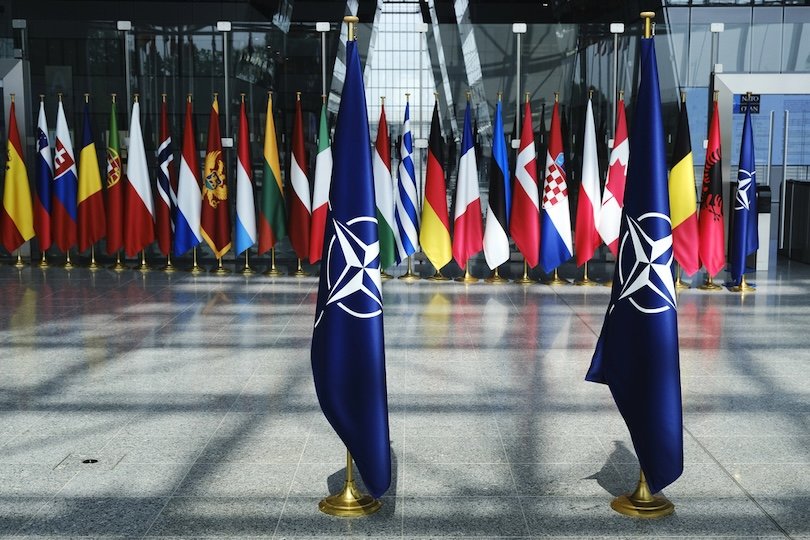
The conflict between the US, Israel and Iran, which was halted by the memorandum of understanding between the US and Iran on June 17, has been a difficult time for NATO. The US president, Donald Trump, resented the fact that America’s NATO allies refused to get involved, commenting that: “NATO wasn’t there when we needed them.” His secretary of state, Marco Rubio, went further, noting that after the Iran conflict, America should “re-examine the relationship”. Peter Hegseth, the US secretary of war, has a plan to put on the table at the Nato summit in Ankara on July 7 and 8. He calls it “NATO 3.0“. Hegseth wants to make official what has been discussed informally for years: that Washington intends to leave European security to Europe, while America downgrades its support. The US has been reducing the numbers of its troops in Germany for years. In recent weeks it has been reported that the Pentagon plans to cut the number of its aircraft available to NATO in Europe by about one-third.
This has put pressure on European members states to expand into any vacuum left by America’s withdrawal. NATO has been able to maintain its unity since its foundation in 1949. But its success in holding together present analysts with a paradox: ever since 1949 its members have regularly been at odds with one another. The crisis over German rearmament and inclusion in NATO, opposed by France, lasted from 1950 to 1955. This was followed by the Suez Canal crisis in 1956 which set the US at odds with France and Britain when the two colonial powers tried to retake the canal after Egypt announced its nationalisation. The post-war French president, Charles de Gaulle, clearly chafed under US primacy in NATO. He tried unsuccessfully in 1958 to set up a tripartite directorate within NATO comprising France, Britain and the US. A few years later he signed France up to the Franco-German Friendship Treaty in a bid to undermine American influence in Germany. The Balkan wars of the 1990s were also a turbulent period for NATO. The military intervention marked the first time the alliance had operated “out of area” and caused considerable debate and a degree of stress between members.
But NATO survived all this internal wrangling, because the US could exercise leadership through robust bargaining and financing, often accompanied by the creation of new liberal institutions, re-balancing the business and security interests of all NATO states. For example, the issue over the rearmament of Germany was solved via the West European Union, which acted as a control authority monitoring German ambition, whereas De Gaulle’s grievances succeeded only in isolating France via the establishment of a Nuclear Planning Group within NATO that included Germany but excluded France.
However, the ecosystem upon which American power built and financed global institutions and liberal compliance mechanisms has shifted. Since 2000, and despite significant population growth, the United States has witnessed the disappearance of approximately 70,000 factories, accompanied by the loss of over five million manufacturing jobs. The manufacturing sector’s contribution to the country’s GDP fell from 28% in 1959 to 10.3% today. Today China manufactures four times as many vehicles annually as the United States. The semiconductor industry tells a particularly concerning story. Once entirely dominated by American manufacturers, U.S. companies now produce only 8% of global semiconductors. Even in military production, the United States faced significant challenges, with Russia manufacturing three times as many artillery shells as the US and Europe combined.
The social implications of this power-shift have been profound: rising poverty rates, with over 36 million Americans living below the poverty line. As a result of all this, as well as the 2007-08 meltdown, debt levels rose exponentially and investors confidence in the dollar has eroded. The United States’ debt at present stands at almost $40 trillion (125% of GDP) growing rapidly at $532 per second, whereas the federal budget deficit stands at 7% of GDP ($1.9 trillion). Thus, instead of enabling the formation of new institutions of liberal governance at home and abroad securing leadership in the transatlantic bloc and globally, the Trump administration is withdrawing or undermining even the existing ones because it can no longer afford to finance them.
The joint US-Israeli operation against Iran – same as the previous Gulf Wars against Iraq – cut off both China and Europe from Iranian oil and gas, inflicting damages to their industrial base and services. The United States remains relatively unscathed, as it does not rely on the Persian Gulf for its hydrocarbon requirements. It counts on fracking, whereas after the operation against Nicolás Maduro in January 2026 it also controls the oil resources of Venezuela. The real long-term aim of the United States has been the strengthening of the dollar as world money and the undermining of China’s manufacturing power via the control of the supply of raw materials. But damaging China, the United States is at the same time damaging its NATO European allies. Blocking off the Strait of Hormuz cuts off China from much needed oil and fertilisers to boost its manufacturing base, but fuels inflation in Europe and high interest rates. This is an important reason that the crack in the alliance grows wider.
What is at stake at NATO’s summit in Ankara on 7-8 July is Europe’s security and the cohesion of the alliance. The United States are in no position to finance Europe’s security against possible Russian advances in Ukraine and beyond. The future direction of the alliance might be as bleak as the domestic finances of the American state. Joint defence and deterrence planning may no longer be possible among the allies. The Trump administration is refocusing its international strategy on China and its domestic strategy on rebuilding industry and finances at home and, by extension, in Latin America. In this context, the role of Turkey in European security looms large, and this may, or may not, happen at the expense of other NATO European powers, such as France and Greece. Today, the conflict within the alliance rests on multiple fronts and is structurally sourced by the inability of the United States to promote global growth, reduce debt levels and finance a new liberal institutionalism capable of absorbing conflicts leading the world system and its actors to adaptation.
China is challenging the United States head-on. The joint US-Israeli attack on Iran is deeply unsettling for the Europeans. It comes on the back of moves by the United States to take Greenland; the new tariffs policy imposed on allies and foes alike aiming to re-launch American manufacturing; and disagreements over the war in Ukraine, which the United States sees as a matter for Europe to sort out. Ukraine showed the limits to NATO enlargement in Eurasia via the Kiev corridor and Iran showed the limits to transatlantic cooperation in managing high levels of geopolitical risk in absence of new liberal institutions of governance based on international law. NATO’s Ankara summit will confirm if all the above factors are in a position to bring the alliance into breaking points, or institute Hegseth’s plan for a NATO 3.0.
