

The Army fields three brigade combat team types—armored, Stryker, and mobile. But it has not actually defined why they exist. In an era of technological innovation and rapidly changing battlefield conditions, a failure to do so is not just an administrative oversight. It risks real consequences for the units that will be charged with engaging the enemy in the close fight.
Field Manual (FM) 3-96, the doctrinal manual on brigade combat teams, describes their organization and general capabilities. It does not explain when a division commits an armored brigade combat team (ABCT) instead of a Stryker brigade combat team (SBCT), for instance,, or what problem each solves that the other cannot. The mobile brigade combat team (MBCT) does not appear in FM 3-96 because the manual predates the MBCT’s formal development. According to Army budget documents, the MBCT’s introduction is meant to “improve speed, mobility, and lethality in a leaner formation.” But this is a design goal, not an operational purpose.
When doctrine fails to define purpose, training and equipment development follow assumptions instead of necessity. The MBCT was built lighter and faster than the infantry brigade combat teams it replaces. The Army assumed lightness is inherently good without asking what operational problem it solves.
The result? Equipment decisions drift, manning becomes template-based, and brigades are trained as interchangeable tools instead of functionally distinct formations. Force development misaligns. Brigades are organized to weight specifications, not to purpose. Training prioritizes general LSCO (large-scale combat operations) tasks applicable to any brigade over the distinctive tasks each uniquely enables. When the force enters combat, brigades may be trained for roles they weren’t designed to perform.
The problem extends beyond doctrine. When Congress asked the Congressional Research Service to assess the MBCT, the resulting analysis focused on capability gaps rather than operational purpose. Although this analysis correctly identifies what the MBCT lacks, it asks the wrong question: whether the MBCT has enough resources, rather than why it exists or what problem it solves in the division’s close fight. Without answering the purpose question first, debates about MBCT size and self-sufficiency remain disconnected from the operational reality the formation was designed to address.
Even senior Army leaders developing the MBCT describe its capabilities—speed, mobility, distributed operations—without articulating the operational purpose those capabilities serve. Leaders clearly describe how the MBCT moves and what it carries, but not why it exists in divisional LSCO. The same pattern extends to institutional doctrine: Senior leaders writing on armored formation concepts at the Army’s Command and General Staff College describe capabilities and reconnaissance-strike methodologies extensively, yet never articulate what operational problem the formation solves for division maneuver in large-scale combat.
The Close Fight
A division in peer LSCO must synchronize brigades across forty to two hundred kilometers of depth under persistent surveillance, massed fires, echeloned defenses, and distributed reserves. Within this environment, brigades must perform three operationally distinct tasks. No single brigade type executes all three equally well.
First, brigades must achieve breakthrough against echeloned defenses. When enemy defenses combine prepared positions, obstacle belts, armor concentrations, and massed fires, breakthrough demands concentrated, protected direct-fire suppression. An assault force must suppress enemy armor, destroy fortified positions, reduce obstacles while controlling passage lanes, and pass combat power through breaches under direct fire. The SBCT cannot suppress concentrations of enemy tanks in prepared positions. The MBCT cannot assault armor-backed defenses. Only the ABCT provides the necessary concentrated, protected firepower.
Second, brigades must concentrate rapidly at decisive points before the enemy commits reinforcements. When a gap opens in echeloned defenses—whether from enemy offensive maneuver or friendly defensive positions—the window for exploitation closes in hours. Dismounted infantry requires hours to march tens of kilometers. Enemy reserves arrive in one to two hours. The ABCT is too heavy to reposition rapidly across lateral axes. Only the SBCT can concentrate mounted infantry at a seam faster than enemy can reinforce it.
Third, brigades must sustain operations across extended depth under continuous surveillance and fires. A brigade with 4,500 soldiers generates large signatures—large command posts, consolidated logistics nodes, predictable resupply routes. Enemy fires target these. A division with only large brigades accepts massive seams that the enemy can exploit or concentrates brigades densely enough to present an even larger target. A division needs smaller brigade packages that operate distributed, present smaller targets, and reconstitute faster after attrition. Neither the ABCT or the SBCT offer this capability. Only the MBCT does.
Three brigade types are not optional. Each solves a problem the other two cannot. This analysis focuses on offensive operations because LSCO against peer adversaries is won through decisive offensive action. Defensive operations and counterattacks remain important, but the division’s primary challenge is synchronizing three brigade types through sustained offensive campaigns under surveillance and fires. The functional purposes that enable offense—penetration, exploitation, and distributed resilience—are the same purposes required in counteroffensive operations when the division transitions from defense.
Brigade Purposes
Doctrine must define these purposes explicitly. Clarity looks like this:
ABCT: The formation the division commits when the close fight requires protected direct-fire rupture of a prepared defense backed by enemy armor, obstacle systems, and massed fires. The ABCT’s purpose is forced penetration—suppression of enemy armor and fortified positions by concentrated protected firepower is operationally necessary.
SBCT: The formation the division commits when the close fight requires rapid exploitation of seams in echeloned defenses before enemy reinforcement. The SBCT’s purpose is rapid concentration of mounted infantry at division-created opportunities—faster than dismounted formations move, retaining protection and command capability light mobile forces cannot provide.
MBCT: The formation the division positions when sustained operations across extended depth require distributed combat power to reduce enemy targeting opportunities and enable faster reconstitution. The MBCT’s purpose is preserving divisional operational reach by positioning smaller brigade packages across extended terrain, where reduced signatures and faster casualty replacement cycles maintain tempo under continuous surveillance and fires.
Brigade doctrine should define these purposes. Division doctrine should specify when to commit each type. Training centers should align exercises with functional purposes. Acquisition decisions should prioritize equipment based on functional purpose, not design assumptions. Once purpose is clear, training, manning, and equipment decisions align to operational necessity, not doctrine drift.
The Design-Doctrine Gap
The problem runs deeper than ambiguous doctrine. It reflects a fundamental split: how the Army designs forces versus how it describes them in doctrine.
The MBCT case exposes this split most clearly. The Army Transformation Initiative designed the MBCT as a lighter, faster brigade to improve operational mobility and reduce logistical demand. Although those design goals are sound, design is not doctrine. Design specifications reflected an implicit assumption—future brigades must be smaller and more dependent on division support—without doctrine stating their purpose.
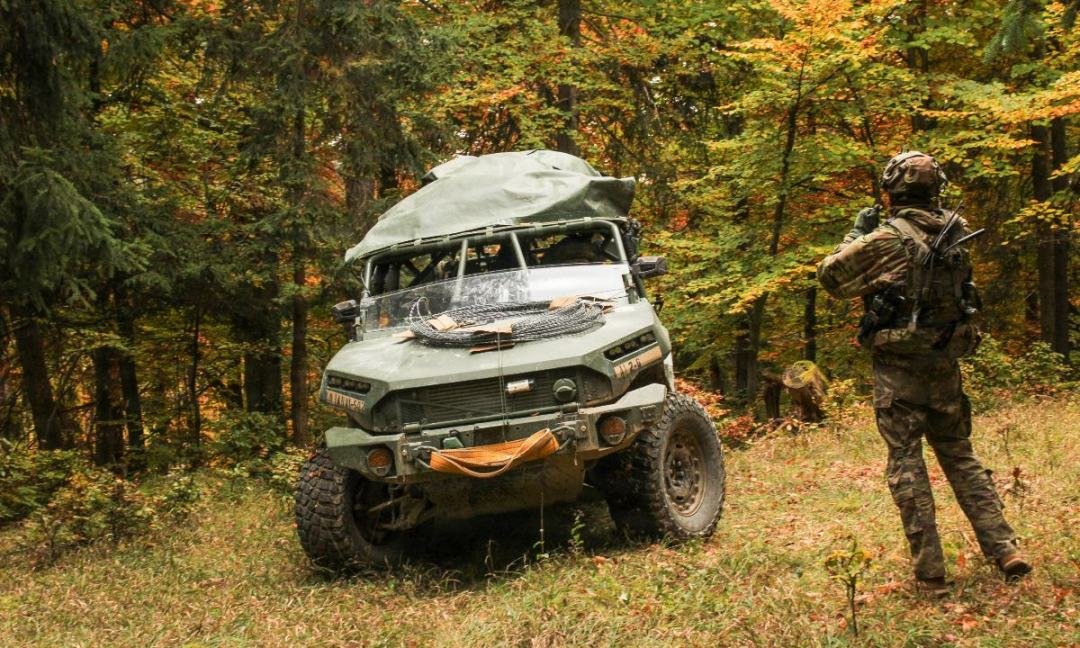
The Infantry Squad Vehicle shows how acquisition fills a doctrinal gap. The Army bought a light vehicle to move infantry quickly over extended distance, but operational testing found that the same vehicle lacked the protection, fires, communications, and sustainment capacity needed for combat against a near-peer threat. Once doctrine fails to decide whether the priority is speed, survivability, reach, or endurance, each missing function becomes a new equipment demand. That demand adds weight, power, signature, and sustainment burden to the formation allegedly built to stay light.
The ABCT and SBCT predate the modular force redesign and retain longer doctrinal histories. FM 3-90.6 (the predecessor to FM 3-96) described them with operational context. FM 3-96 stripped that context away. The current manual is primarily an organization and force structure document, not a doctrine document defining how to employ each brigade type in divisional operations.
The consequence is clear: When design races ahead of doctrine, acquisition programs pursue specifications instead of purposes. Force structure offices balance the portfolio by brigade type. Training centers design rotations around generic LSCO tasks. No doctrine arbitrates between competing design demands for the MBCT or guides training toward functional purpose. Brigades arrive in combat optimized for design goals, not operational problems.
Clear Purpose for the MBCT
Once purpose is defined, doctrine flows to training and manning decisions. If the MBCT’s purpose is distributing combat power to reduce enemy targeting opportunities and enable faster reconstitution, then training, manning, and equipment decisions follow.
Training should emphasize operating in smaller, company and platoon packages across distance, coordinating with division-level support (fires, air defense, sustainment), rapid reconstitution after casualties, command post survivability under persistent surveillance, and receiving division-provided enablers. Training center rotations should stress smaller brigade packages operating dispersed, not large formation maneuver. After-action reviews should ask whether the MBCT reconstituted faster than a legacy infantry brigade combat team, whether command posts survived enemy targeting, whether the brigade could operate effectively with reduced organic enablers.
Manning should prioritize squad and platoon leaders (smaller tactical packages require more junior leaders), expertise in distributed operations, liaison officers to divisions, and less internal staff. Brigades should be more dependent on the division, not less. An MBCT needs leaders comfortable operating smaller tactical elements across distance, receiving support from above rather than providing self-sufficiency.
Equipment should focus on smaller command post signatures, lighter vehicles that don’t require heavy sustainment, extended-range light mobility, and explicitly less organic equipment. The point of the MBCT is distributed resilience. Fewer organic enablers is a feature, not a limitation. Equipment decisions should reduce signature and weight. They should never add self-sufficient capabilities that contradict the MBCT’s dependence on division support.
Recommendations
The Army’s shift to brigade-centric operations in the 1990s took seven years from announcement to doctrine publication. During that transition, the Army invested in brigade structure without clarity on brigade purpose, creating inefficiencies in training, procurement, and employment. The MBCT faces the same risk. Without published operational purposes, the Army will continue designing MBCT capabilities and training without knowing what problem the MBCT solves. The longer doctrine lags structure, the more difficult correction becomes. The Army must publish operational purpose now, not after years of divergent force development.
Four changes would restore alignment between operational necessity and force development.
First, FM 3-96 should include functional purpose statements for the ABCT, SBCT, and MBCT. The current manual describes what brigades look like. It should define why divisions need them—one paragraph per brigade type, clearly stating the operational problem it solves and the distinctive capability it provides. Purpose statements ground training, guide equipment decisions, and inform manning priorities.
Second, division-level doctrine should specify when to commit each brigade type. Current doctrine emphasizes flexibility in task organization. Flexibility does not mean interchangeability. Division doctrine should provide guidance: Commit the ABCT when the close fight requires rupturing high-intensity defended positions; commit the SBCT when rapid exploitation of seams is operationally necessary; position MBCTs when sustained operations across extended depth require distributed combat power. Guidance helps commanders and staffs make task-organization decisions informed by functional understanding, not geographic convenience.
Third, training center guidance should align exercises with functional purposes, not generic LSCO tasks. ABCT rotations should be breakthrough-focused. SBCT rotations should emphasize maneuver exploitation. MBCT rotations should stress distributed operations, rapid reconstitution, and command post survivability under persistent surveillance. Senior observers should ask whether the brigade accomplished its functional purpose, not whether it successfully executed a prescripted scenario. Exercise design and evaluation would change, but difficulty and realism would not.
Fourth, acquisition and matériel development should tie equipment decisions to functional purpose, not design assumptions or budget pressure. Do not reduce MBCT organic enablers just to meet weight goals; reduce them because the MBCT’s purpose is operating distributed and dependent on division support. Do not add capability to the SBCT just because weight was saved; add it only if it directly serves rapid concentration at seams. Do not evaluate the ABCT on speed; evaluate it on breakthrough penetration under direct fire. Acquisition boards should require program managers to trace every major equipment decision to a brigade’s functional purpose statement. If the decision serves no stated purpose, it does not belong in the design.
These four changes require clarity about why the Army built three brigade types and consistency in applying that clarity to training, manning, and equipment decisions. Doctrine describes organizations. It should also describe why those organizations are necessary. Without that clarity, force development drifts from operational reality and brigades arrive in combat trained for the wrong tasks.
The Army’s challenge in large-scale combat operations will be whether brigades are trained, equipped, and manned for the operations they will conduct. Clear doctrine defining brigade-type functional purposes is the foundation for answering that question.
Michael Carvelli is a US Army lieutenant colonel and engineer officer who writes from an operational planning, protection, and engineering perspective. He serves as an assistant division operations officer in First Army.
The views expressed are those of the author and do not reflect the official position of the United States Military Academy, Department of the Army, or Department of Defense.
Image credit: Maj. Brian Sutherland, US Army
