

Abstract
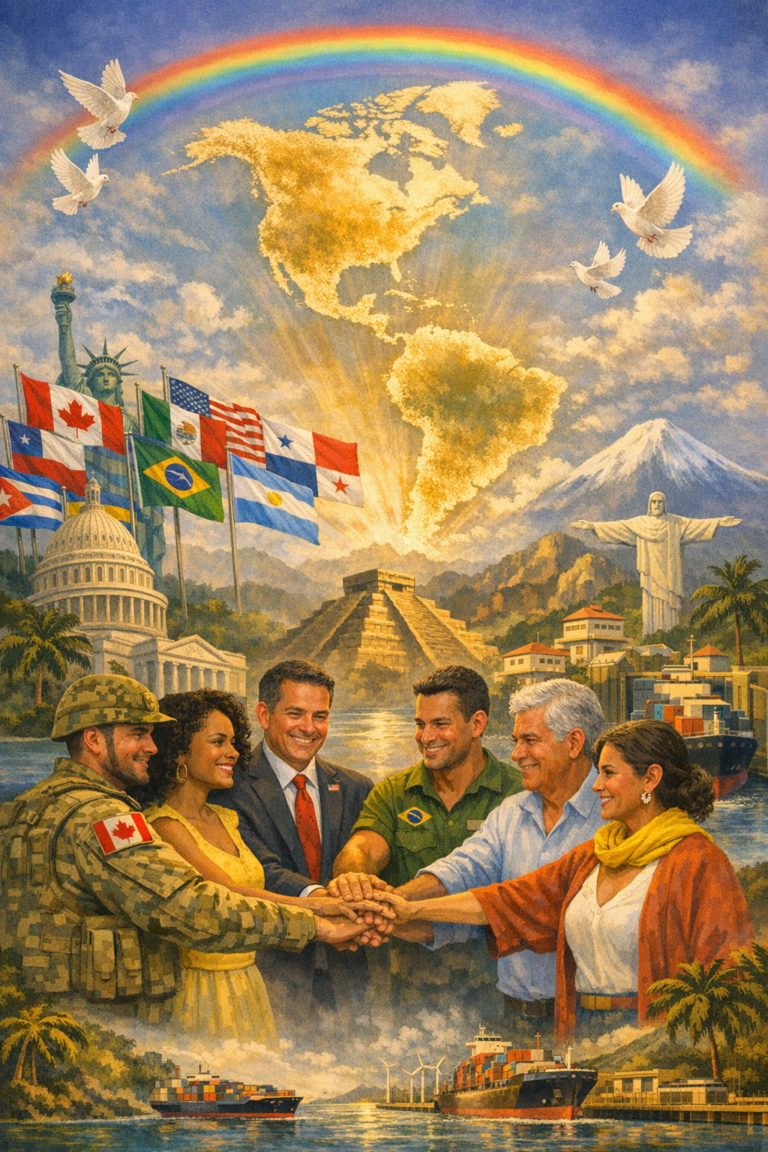
The United States’ pivot to the Western Hemisphere, illustrated by its number one priority of the 2026 National Defense Strategy, indicates that its most critical allies and partners live in its own neighborhood. Washington wants a stable and well-governed Western Hemisphere committed to countering malign foreign influence. A stable and cooperative neighborhood creates conditions for protecting the Homeland and the Home Hemisphere, but to succeed, the United States must become a good neighbor. The US must leverage soft power as an element of national power to create valued relationships and demonstrable improvements to the economies and domestic infrastructure of allies—new and existing—to truly build a better neighborhood. Enhanced infrastructure almost always improves the quality of life within any nation. Whether it is cleaning out rivers clogged with refuse and liable to flooding or building sidewalks to make dense urban centers more accessible and sustainable; improving infrastructure is a good news story. Quality of life progression for the people of the Home Hemisphere is an opportunity for the U.S. to exercise soft power through selling materials, equipment and services at a fair value. Latin America and the Caribbean must be the cornerstone of any coherent hemispheric strategy due to undeniable family ties, a shared history, and common geography. Empowering its’ neighbors to pursue their national interests will help the US maintain its favorable geopolitical position by building integrated protection against malign influence from China.
Introduction
The United States remains in a favorable geopolitical position. It demonstrates strong domestic economic capability, evidenced by its leading economy, calculated at 30.6 trillion US Dollars (USD) compared to China in second place at 19.4 trillion USD. Geopolitical competitors—China, Russia, Iran, North Korea—are located outside the Western Hemisphere, which provides the US with a geographic buffer against land-based invasion. This physical distance forces competitors and potential adversaries to expend treasure and time on developing power projection capabilities to convey power, influence, and legitimacy. Despite these US advantages, China is expanding its influence throughout the Western Hemisphere across the political, economic, and military spectrum. Beijing is employing state-managed firms to create leverage over strategic terrain to include the Panama Canal and to exploit junior partners through lopsided deals such as the massive deep-water port in Peru. China is also increasing its military activities to ostensibly protect commercial interests and collaborate with its partners, but it is also building a subtle armed presence in the region. Beijing’s misadventures are a direct challenge to US national security interests, including strategic terrain, undue influence over global supply chains, and an indirect threat to the homeland.
Therefore, the US must re-examine its approach to achieving its national security objectives in the Home Hemisphere to address the dynamic challenge from China. If Washington maintains the status quo and continues to ignore Beijing’s moves in Latin America, China will gain an intractable economic and military lodgment in the Western Hemisphere. This beachhead is already forming and, if left unchecked, will enable power projection into the region and shape political decisions of partner states in China’s favor. The result would be a series of cascading negative outcomes for US national security and economic objectives. For the US to maintain its favorable geopolitical position, it must enable its community to contest malign Chinese influence in the political, economic, and military sectors throughout the Home Hemisphere. To do this, it must leverage soft power as an element of national power to create valued relationships and drive demonstrable improvements to the economies and domestic stability of allies—new and existing—to truly build a better neighborhood.
An Expanding China
Beijing’s broad geopolitical ambitions include presenting an alternative to a US-led international order, and an increased ability to exert global influence across the elements of national power, including Diplomatic, Informational, Military and Economic (DIME). China is also seeking an opportunity to curtail US power projection and its ability to build a coalition. According to strategic guidance out of the Zhongnanhai (China’s equivalent to the Kremlin or the White House), China is committed to the long game against the other “great power,” a thinly veiled United States.
Chinese Power Projection, Influence, and Legitimacy
At the macro level, China is developing a capability to project power, influence, and legitimacy in the United States’ neighborhood through lodgment, basing, and control of critical chokepoints. China continues to shape and influence the “Path Between the Seas” in a bid to improve its access to Latin America and degrade US influence in the region. Over the past few decades, Chinese influence has grown as Beijing recognizes the strategic implications of expanding its commercial footprint on strategic terrain such as the Panama Canal and its ability to hold US interests at risk, including the ability to shift military and economic resources between the Atlantic and Pacific Oceans at will. Flowing forces between the oceans is a vital component of US naval strategy and critical to maintaining capacity for a flexible response to any theater. Controlling ports at both ends of the Canal does not in of itself prevent the US Navy from transiting the Panama Canal. However, China’s increasing physical presence, personnel moves, and commercial operations establishes cover for its agents to arrive.
These agents may not only monitor allied shipping activity but US movements. By establishing patterns, Chinese agents can take advantage of the Canal’s predictable schedule and routine passage procedures to disrupt movement with relatively little effort. An example would be an agent working in the Canal’s control room who re-assigns movement schedules and communicates those changes to customer vessels but outside of the Canal Authority’s normal situational awareness channels. This creates confusion and an inevitable traffic jam between passing vessels and locally supplied support craft like tugboats. If a stoppage were created at a time when the US must flow forces between the Pacific and Atlantic Oceans, it would delay the Joint Force and disrupt follow on deployment timelines.
Another example of growing Chinese influence in the Home Hemisphere is exhibited by a Chinese Electronic Intelligence (ELINT) station in Cuba which is buttressed by a PLA training presence. This training unit will likely become a vehicle for producing special forces cadre and expanding the PLA’s footprint in the Caribbean. Such an expansion would enhance the PRC’s ability to further penetrate commercial and government infrastructure and establish an enduring lodgment in a nation historically antagonistic and geographically proximate to the US.
If the US does nothing to ameliorate China’s growing position in the Home Hemisphere, Washington will continue to cede territory (in terms of influence, not direct control) to Beijing. US inaction constitutes a great danger to its interests – strategic terrain – stable regional governments – rapid force flow – due to China’s ability to exert influence over critical mobility corridors such as the Caribbean.
Beijing’s Economic and Commercial Opportunities
China’s strategic engagement with Latin America represents a considerable portion of the “mosaic of little moves” which the US has largely ignored until recently. For example, Beijing continues to push infrastructure projects like the high-speed rail link between Panama City and David in Chiriqui. These moves, even if some are unsuccessful, are shaping the strategic environment and setting conditions for further economic activity. Increased economic activity for Chinese firms means fewer opportunities for US industry which runs counter to goals identified in strategic guidance. While it is impractical for the US to compete dollar for yen with China for Latin America’s affection, it is in Washington’s interest to compete where it can win and encourage transparency in activities between Beijing and the capitals of the Western Hemisphere. Doing nothing will gift China abundant opportunities to improve its economic position and further fuel its burgeoning force projection capability.
Another not so little move is the Chancay Mega-port in Peru. This Chinese-owned facility cost 1.3 billion USD to build and is operated by COSCO; the same company which demanded a majority stake in a recent deal between BlackRock and CK Hutchison, forcing the agreement to stall. The Chancay Port is the first deep-water hub on Latin America’s western coast. Most critically, it reduces shipping time from major Chinese ports like Shanghai from 35 to 23 days. Shorter shipping time means quicker turnarounds and higher profit margins for Chinese firms. Higher margins will translate into more influence as China interprets silence from the US as acquiescence and reluctant cooperation from junior partners as a mandate to expand its footprint in the Western Hemisphere.
An additional commercial interest is in the high value minerals sector, namely lithium. China dominates the “Lithium Triangle” Argentina – Bolivia – Chile which contains nearly half of the world’s lithium reserves. This reality presents considerable strategic risk to the US as lithium is a key ingredient to powering much of the Joint Force’s equipment including starlight scopes and unmanned autonomous systems. By leveraging the Lithium Triangle, China has been stripping resources from the Home Hemisphere which directly contributes to a US compounding readiness deficit. This deficit will only grow over time and will reduce Washington’s ability to build the Defense Industrial Base which in turn enables the Joint Force.
Chinese Exploitation
Beijing has a long history of exploiting junior partners through opaque transactions and cunning brinksmanship. For example, the Hong-Kong based CK Hutchison firm renewed its port concessions in 2021 for another 25 years through the local Panama Ports Company. This renewal was of a contract that outran its expiration date before negotiations began, the firm refused to leave and opted to wait for the renewal process to move forward. By maintaining its lodgment past the expiration date, the Chinese-owned company benefited from the patience that characterizes Beijing’s typical engagement with junior partners. However, after decades of opaque contracts and closed doors deal-making, some are looking for more transparency from China, particularly when critical state interests are involved.
Anel Flores, the Comptroller General of Panama, petitioned the Panamanian Supreme Court to investigate the constitutionality of Hutchison’s contract for the ports of Balboa and Cristobal and nullify Panama Ports Company’s accord to operate the ports. The Comptroller General’s audit found that the firm owes the State of Panama 300 million US dollars in unpaid obligations. Additionally, the Panamanian Attorney General’s office launched a criminal investigation citing potential crimes against the public administration causing material damage to the State. The investigation ascertained irrefutable evidence that CK Hutchison caused material damage to the nation of Panama. Additionally, in late January 2026, the Court ruled that the extended contracts violated the constitution and that CK Hutchison owes the Panamanian state 1.2 billion in unpaid concession fees. To further complicate matters, Hutchison owns 90 percent of the local Panama Ports Company and the Panamanian government the remaining ten percent. This lopsided affair is captured best by Mr. Flores in a recent quip to local media, “The contract was bad, one-sided, and abusive, against the interest of the country.” He also added that the ports belong to the nation and should not be up for negotiation. Beijing’s efforts to own both entrances to the Panama Canal carry grave implications for the US’ security posture but is only one of many attempts to manipulate the isthmian defense ecosystem.
If the US fails to improve its security posture on the isthmus, China’s influence throughout the land bridge will advance unimpeded. A Chinese colossus astride the connective tissue between North and South America would be a dangerous scenario for the US as it would diminish the Joint Force’s ability to move between oceans and to conduct joint logistics over the shore. This reality would then reduce US power projection and its ability to maintain lines of supply and communication.
Countering China’s Influence and Capacity
If the United States can be a good neighbor, it will maintain and even improve its power, influence, and legitimacy in the Home Hemisphere. Its willingness to empower its neighbors to create and sustain domestic stability will advance Washington’s priorities, which include a well-governed Western Hemisphere and defending the homeland. These goals are plainly addressed in strategic guidance, including the 2025 National Security Strategy and the 2026 National Defense Strategy. It can achieve these priorities by mitigating China’s power projection, economic interest, and military presence in the Home Hemisphere.
Spoiling China’s Power Play
To spoil China’s growing appetite for power projection, influence, and perceived legitimacy in the Home Hemisphere, the US must equip its regional allies and partners with the tools to advocate for their interests without forsaking sovereignty. To do this, Washington must encourage its neighbors to demand transactional transparency from Beijing and not become victims of one-sided deals overwhelmingly favorable to China. An example of this advocacy is US cooperation with Panama in examining the finer details of a lop-sided affair proposing a high-speed rail link between Panama City and David, the provincial capital of Chiriqui. Once an inquiry revealed that too many strings were attached to the infrastructure deal, (then) President Cortizo refused the project, citing “too much China, too fast.”
China’s dialogue with Latin America is part of a larger disruption scheme which aims to obviate the US’ ability to project power and interfere with Chinese operations, activities, and investments. Denying disruption efforts is best accomplished by the US helping its neighbors to not only understand China’s malign intent but empower them to resist. Columbia should present Latin America with “viable alternatives to the region rather than economic and other dependence on the PRC.” Sustained, integrated, and unified regional cooperation such as Operation Southern Spear is critical to building regional deterrence and better partnerships with US neighbors. Increases in multinational operations efficacy directly translates into the Joint Force’s ability to “deny China the disruption it seeks” which is critical to deterring aggression and a potential fait acompli in the Home Hemisphere.
It’s Just Business: Belaying Beijing’s Commercial Footprint
To reduce Chinese influence in the Western Hemisphere, it must deflect Beijing’s economic and commercial opportunities without crossing a red line. This is best accomplished by collaborating with regional allies and partners on economic policy and leveraging the rule of law. A recent and cogent example is US cooperation with Panamanian authorities concerning the Comptroller General’s audit of CK Hutchison and investigation of the Panama Ports Company. The Panamanian Supreme Court’s ruling, published on 23 February 2026, led to the government of Panama taking physical and administrative control of the ports. Under Executive Decree Number 23, State authorities requisitioned cranes and other material handling equipment to ensure continuous operations. To mitigate global supply chain second and third order effects, Panama designated the Danish-owned Maersk subsidiary, APM Terminals to run the Port of Balboa and the Swiss-Italian MSC affiliate, Terminal Investment Limited to manage the Port of Cristobal. This result removed a considerable amount of Chinese influence over a strategic hub hosted by a critical US ally.
Understanding that against the weight of Chinese state funded enterprise a financial bid for Central America’s affection is likely unviable, the US must communicate to its neighbors that it is in their own interest to engage with China on a level field of play. If US neighbors in the Home Hemisphere conduct business with the PRC through “a framework of transparent interactions” they will reap the benefits of trading with a large economic power without the specter of conquest. The states of Central and South America will pursue their own national interests above any altruistic aspirations alone. The US must do more to shape its neighbors’ perception of their interests and how a deeper relationship with the US, a free market economy, and a preservation of national sovereignty act as the beating heart of those goals.
Additionally, the US should leverage warm relations with Argentina and improve its ties to Bolivia and Chile to disrupt Chinese dominance of the Lithium Triangle. This not only secures more lithium for the Defense Industrial Base (and therefore the Joint Force) but yields less to China. Sun Tzu argued that “each pound of food taken from the enemy is equivalent to twenty pounds you provide by yourself.” Using this calculus, the US can not only increase its own stocks of a critical resource but deny that same resource to its principal adversary.
China and The Path Between the Seas
To reduce China’s presence in the Home Hemisphere and its influence on strategic terrain such as the Panama Canal, the US must continue to improve its dialogue with regional allies and partners. Despite a recent exchange of contentious rhetoric between current Presidents Trump and Mulino in the winter of 2025, both administrations’ interests are aligned along much of the socio-political spectrum. For example, during an 8 April 2025 bilateral meeting, leaders acknowledged the deep security partnership between the nations spanning two centuries. Both Panama and the US recognized the importance of bilateral security cooperation “including over $230 million in US Department of Defense and Department of State security assistance to Panama in the past five years.” The public messaging between the nations, given President Trump’s style of communication, differs considerably from the backchannel coordination between the two countries. One product of this bilateral engagement is President Mulino’s, now realized, commitment to be the first nation in the Home Hemisphere to leave the One Belt One Road Initiative and decrease China’s malign influence throughout the country. This promising development speaks to an already resilient partnership becoming even stronger and more oriented with US security interests. Deeper ties with a critical US ally in the Home Hemisphere not only protects Panama from malign Chinese influence but protects US force projection capability via the Canal that Panama operates.
The US must press the advantage this alignment offers and build upon over a century of partnership with Panama. Strategic guidance indicates that Panama is the US’ most important ally in the region due in no small part to the Canal. A principal signatory of the Inter-American Treaty of Reciprocal Assistance, Panama is a long standing ally with a history of considerable cooperation with US entities. From those first congenial conversations between Doctors William Gorgas and Manuel Amador to the seminal dialogue between President Jimmy Carter and Chief of Government General Omar Torrijos, Panama and the US have been in league, if not in lockstep, with each other in pursuit of a dream four hundred years in the making. The dream of an interoceanic canal trimming 8000 miles off journeys from one hemisphere to the other was realized in 1914 but the strategic value of the “Path Between the Seas” will endure.
The ability for the US Navy to transit the Panama Canal is critical at any point on the crisis to conflict spectrum but is vital to generating combat power during potential simultaneous global protracted conflict. The “New Treaties” signed in September 1977 by President Carter and Panama Chief of Government General Omar Torrijos removed a major obstacle to the US’ relationship with Panama, silencing accusations of colonialism and would “disarm the propaganda of our foreign adversaries…” The new direction of relations with Panama was perhaps best expressed in the treaties’ introduction:
Today, our best way of ensuring permanent access to the canal is not our exclusive or perpetual control of its operation, but rather the active and harmonious support of the Panamanian population.
The deeper and more genuine relations become between Panama and the US, the better equipped both nations are to foil attempts by China to further penetrate the Panamanian private-public enterprise and position its agents to disrupt traffic flow in the Canal not at a time of our choosing.
A Beautiful Day in the Neighborhood
The Western Hemisphere is emerging as the theater of choice in the 21st Century due to a paradigm shift in US policy to defend its core national interests. Chief among these is to ensure a stable and well-governed Western Hemisphere free from extra-hemispheric influence to protect strategic locations. Nested under this core national interest is defending the homeland which is best accomplished by defending forward throughout the Home Hemisphere. Simply put, this shift demands a new US strategy. The US must enable its community to contest malign Chinese influence across the political – economic – military spectrum by leveraging soft power as an element of national efficacy. It can do this by creating valued relationships and restoring US influence and legitimacy in the Home Hemisphere.
However, if the US continues to disregard China’s “mosaic of little moves” in Latin America, China will only increase its power and influence in the Western Hemisphere. This burgeoning influence will lead to a larger Chinese footprint in the region and shape the political destinies of US partner states in terms favorable to China. If Beijing established an enduring position in the Western Hemisphere, it would enjoy comparable abilities to influence regional events as Washington does in the Indo-Pacific. Such a circumstance would create a cascading series of failures for US national security and the stability of the Home Hemisphere.
Leveraging soft power as an instrument of national influence will expand Washington’s circle of trust and accomplish its strategic priorities. If the US limits China’s expansionist options in the Home Hemisphere, it will likely choose to accept a peace amenable to its interests rather than fight to rewire the world to its sole benefit. Building trust in the Home Hemisphere will depend upon allies viewing a relationship with Washington as a value-add arrangement that empowers the pursuit of their sovereign interests. By treasuring its teammates closest to home, the US will mollify Beijing’s expansionism without firing a shot in anger and build a better Home Hemisphere.
