

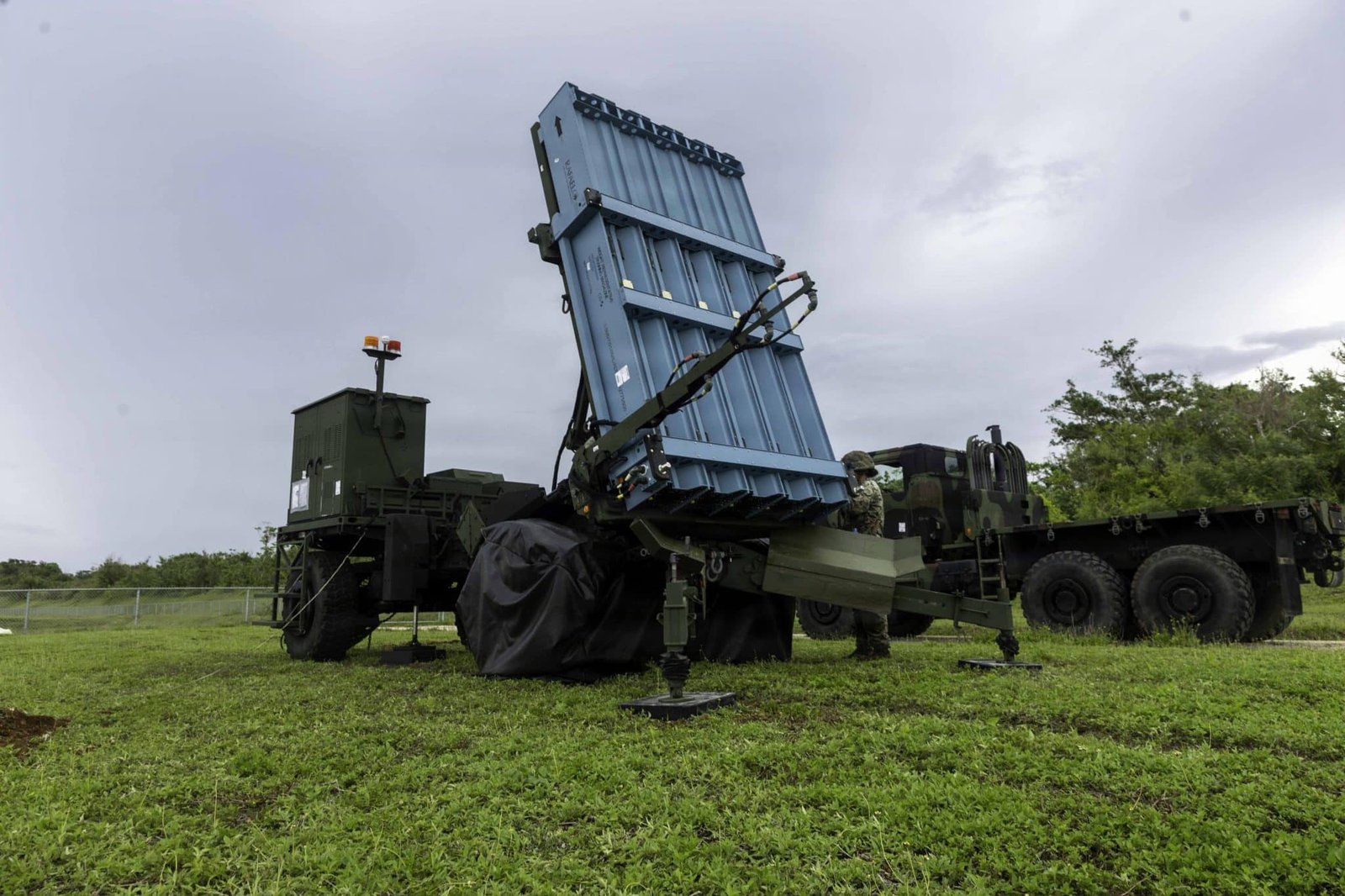
U.S. Army Patriots and Marine Corps MRIC batteries kick off live-fire evaluations during Valiant Shield 2026, anchoring a unified “Golden Dome” blueprint for the Indo-Pacific.
The U.S. Army’s Portfolio Acquisition Executive (PAE) Fires is leading the Guam Defense System Joint Project Office towards a series of anti-missile and combat system evaluations through August, opening the door to upcoming initial operational capability on the island to defend against ballistic and non-ballistic threats under a unified command and control (C2) battlespace picture being pieced together by Lockheed Martin’s Skunk Works.
The island’s defense system is being used as a blueprint for the Pentagon’s Golden Dome initiatives, pushing forward several new capabilities designed to better protect the island and its rapidly expanding military presence from long-range threats.
Several anti-missile system tests are scheduled beginning in late-June, including live fire tests of the U.S. Marine Corps’ Medium-Range Intercept Capability (MRIC) and U.S. Army’s PATRIOT missile system that will both be held during Exercise Valiant Shield 2026, a large force employment field exercise designed to stress U.S. Pacific Command’s strategies and tactics in a high-intensity conflict. Additional tests are scheduled a few hundred kilometers south in Palau in late-July.
Both the MRIC and Patriot are elements of a growing Guam Defense System (GDS) network that includes distributed radars, hardened missile launchers, and an array of underground bunkers to defend the island against an expected barrage of Chinese missiles and drones. Hardened shelters and stands for a yet-to-deploy composite Patriot anti-ballistic missile unit are being constructed this summer, according to a U.S. military official familiar with the missile unit’s plans.
The U.S. Army’s current missile defense unit, Task Force Talon, will be redesignated as the 3rd Battalion, 43rd Air Defense Artillery Regiment (ADAR) in October 2026. 43rd ADAR has historically been a leading element of the U.S. Army’s modernization initiatives, previously fielding the service’s Israeli-developed Iron Dome batteries in 2021.
Today, the Marines have taken on the Army’s mission of broad cruise missile and drone defense with an Iron Dome-adjacent system, the Medium Range Intercept Capability (MRIC). MRIC is designed to defend against cruise missiles and drones with the Iron Dome interceptor’s American-built counterpart, the SkyHunter. MRIC builds on Israel’s combat-proven interceptor with a battery configuration capable of integrating with the service’s existing radars and communication networks.
III Marine Expeditionary Force (MEF) personnel have deployed to Guam with an MRIC battery to simulate the defense the island’s critical infrastructure in simulated air and missile threats during Valiant Shield 2026, and that battery is scheduled for a live-fire demonstration during the exercise.
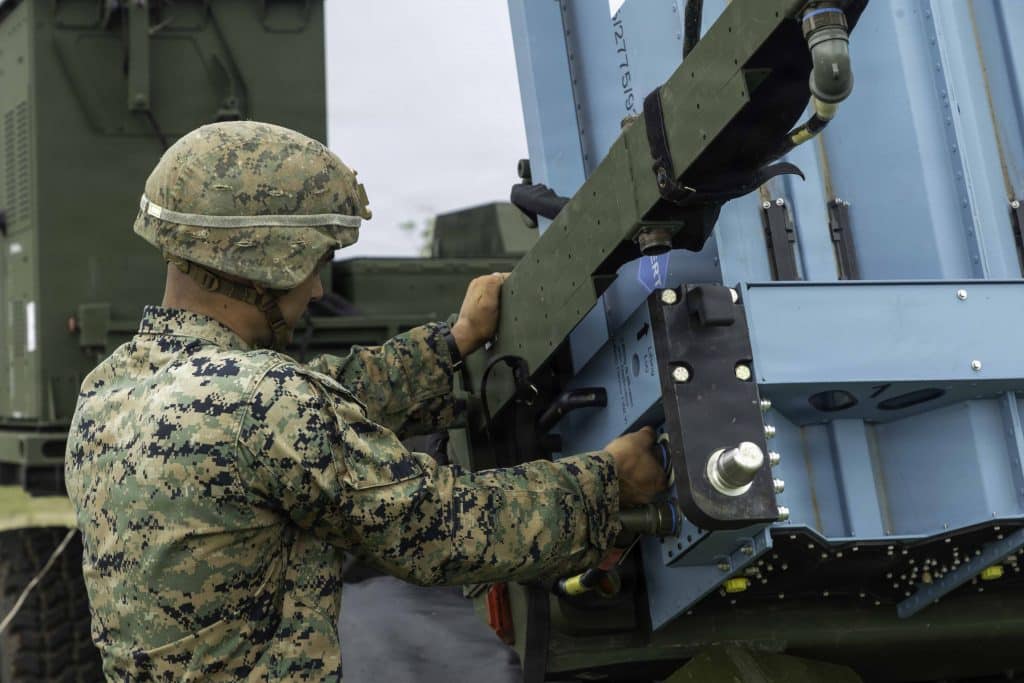
The MRIC system also has been integrated into the service’s forward deployed forces moving forward, according to a statement from III MEF provided to Naval News.
“Our modernization efforts and forward posture send a clear message to the region,” said Lt. Gen. Roger Turner, III MEF Commanding General in the provided statement. “By enhancing our defensive capabilities with the MRIC, we are strengthening our ability to stand with our allies and partners. We want to assure them that through these technological advancements, III MEF is ready and able to answer the call in times of crisis.”
The system is dedicated to enabling operations inside adversary weapon engagement zones — where U.S. Marines are most expected to be deployed. Last week a III MEF unit in Okinawa received their first stand-in weapons, the same of which would operate in the first island chain alongside MRIC batteries that would provide for their defense during real-world combat scenarios.
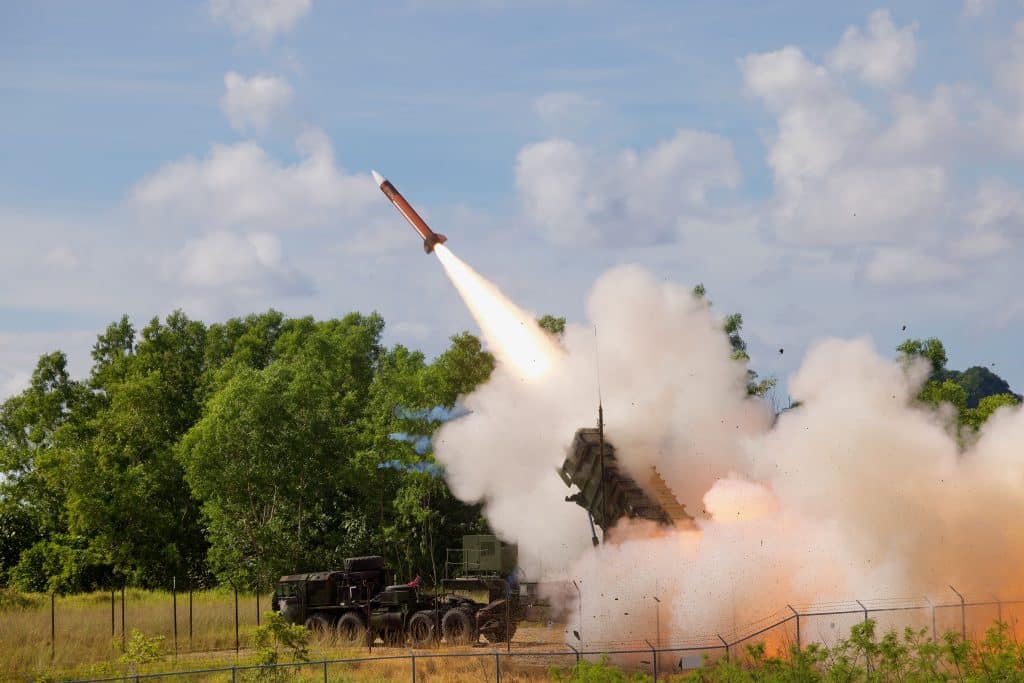
A U.S. Army Patriot battery is also scheduled to participate in live-fire exercises, using the service’s PAC-2 Guidance Enhanced Missile. The service will build on those tests during a joint exercise in Palau, Tenacious Archer 2026, that will test the service’s air and missile defense capabilities alongside the U.S. Marine Corps, who plans to send their short-range Marine Air Defense Integrated System (MADIS) variants, Mk 1 and Mk 2, for testing.
U.S. Army drones and unmanned surface vessels will also participate in the exercise, according to briefing slides reviewed by Naval News. The exercise is scheduled to begin July 24.
China has developed a wide array of advanced missiles capable of reaching the island chain’s most critical airfields and ports, making their defense a major priority for U.S. Pacific Command. Their rapidly modernizing long-range missile inventory is stressing the Pentagon’s current interceptor capabilities.
USPACOM has focused heavily air defense capabilities through the last decade, largely in response to those long-range threats faced by personnel deployed and stationed in the region. One air defense system, quietly developed by Lockheed Martin Skunk Works for the U.S. Air Force, has already been fielded in the Pacific. It serves to pair dozens of radar pictures into one fused image for battlespace awareness and automated engagement capability, defending against the long-range missiles expected in a Pacific conflict.
The Skunk Works-developed command-and-control equipment enables systems like the MRIC, Patriot, and MADIS to operate seamlessly in tandem, creating a unified network for the Guam Defense System.
Defending Guam and the Commonwealth of the Northern Mariana Islands has ultimately become paramount to U.S. success in operations across the Pacific. Extended airfield basing across the CNMI’s various international airports and reclaimed military bases has significantly increased the amount of throughput available to U.S. forces, making the island group an even larger target. The GDS aims to stifle any inbound threat with a 360-degree shield.
