


Strong legs are the foundation of athletic performance, daily movement, and long term health. Whether your goal is to improve your CrossFit performance, lift heavier weights, run faster, jump higher, or simply move better, building stronger legs should be a priority.
Many beginners make the mistake of focusing only on upper body training because it is more visible. However, the muscles of the lower body are the largest and most powerful in the human body. Developing them properly can improve strength, athleticism, metabolism, balance, and even reduce the risk of injury.
The good news is that building stronger legs does not require complicated training methods. Research consistently shows that a few key principles drive most of the results. Beginners who focus on these fundamentals often make rapid progress during their first months of training.
Why Leg Strength Matters
The lower body includes several major muscle groups, including the quadriceps, hamstrings, glutes, calves, and adductors. Together, these muscles generate force for walking, running, jumping, lifting, and changing direction.
Strong legs are associated with better athletic performance, improved mobility, enhanced balance, and lower injury risk. Resistance training for the lower body also contributes significantly to overall muscle mass, which can support metabolic health and healthy aging.
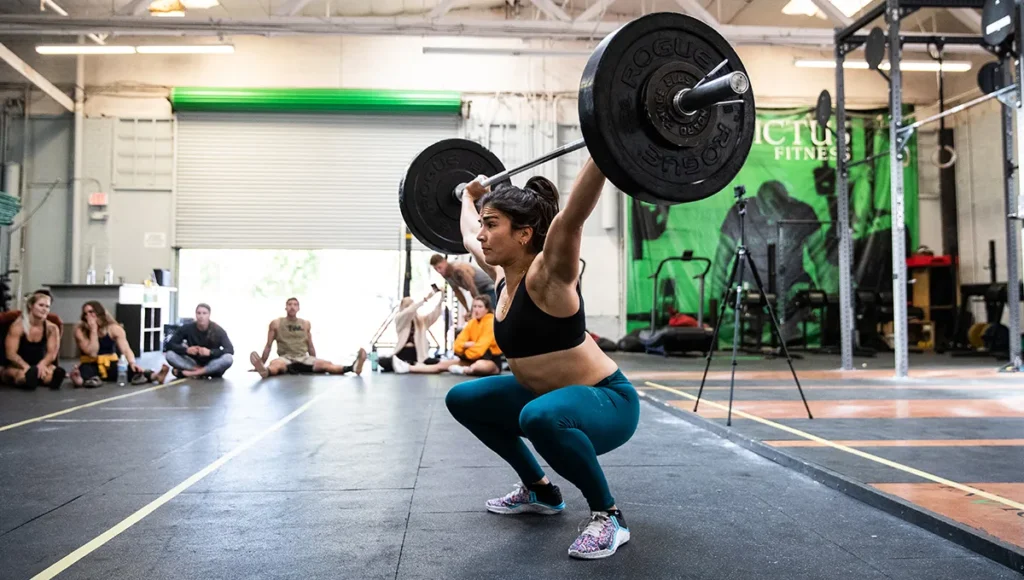
Research has shown that strength training improves neuromuscular function, bone density, muscular strength, and physical performance across a wide range of populations. For beginners, the adaptations are especially rapid because the body responds quickly to new training stimuli.
Tip 1: Prioritize Compound Exercises
Focus on Movements That Train Multiple Muscle Groups
One of the fastest ways to build stronger legs is to center your workouts around compound exercises. These are movements that involve multiple joints and muscle groups working together. Examples include squats, lunges, step ups, deadlifts, split squats, and leg presses.
Compound exercises allow beginners to lift heavier loads compared to isolation exercises because several muscles contribute to the movement. This creates greater mechanical tension, which is one of the primary drivers of strength and muscle development.

Squats are particularly effective because they challenge the quadriceps, glutes, adductors, and core simultaneously. Deadlift variations train the posterior chain, including the hamstrings and glutes, while lunges improve unilateral strength and balance.
Studies comparing multi joint and single joint exercises have found that compound movements are highly effective for developing overall strength and muscle mass while also improving functional performance.
Learn Proper Technique First
Beginners often rush to add weight before mastering movement quality. This is a mistake that can limit progress and increase injury risk. Before loading a squat or deadlift heavily, learn proper positioning, balance, and range of motion. A technically sound movement pattern allows you to apply force more efficiently and train consistently over time.
The goal is not to lift the heaviest weight possible on day one. The goal is to build a movement foundation that supports years of progress.
Tip 2: Use Progressive Overload
Give Your Muscles a Reason to Adapt
The body only becomes stronger when it is challenged beyond its current capacity. This principle is known as progressive overload. Progressive overload means gradually increasing the demands placed on the muscles over time. This can be achieved by adding weight, performing more repetitions, increasing training volume, improving range of motion, or reducing rest periods.
For example, if you can squat 95 pounds for three sets of eight repetitions this week, you might increase the load to 100 pounds next week or perform nine repetitions per set instead.

Research consistently identifies progressive overload as a central requirement for strength development. Without increasing demands, progress eventually stalls because the body has no reason to continue adapting.
Track Your Training
One of the simplest ways to ensure progressive overload is to record your workouts. Keep track of exercises, weights, repetitions, and sets. A training log provides objective evidence of progress and helps identify opportunities for improvement.
Many beginners underestimate how much they are improving. Looking back at your training records after several months often reveals significant strength gains that might otherwise go unnoticed.
Be Patient With Progress
Strength gains do not occur overnight. While beginners often experience rapid improvements during their first months, progress is rarely perfectly linear. Some workouts feel easier than others. Fatigue, sleep quality, stress, and nutrition all influence performance.
Consistency matters far more than chasing perfection. Small improvements accumulated over weeks and months produce impressive long term results.
Tip 3: Train Your Legs Consistently
Frequency Matters
Many beginners train legs only once per week because leg workouts can be challenging and physically demanding.
5 Signs Your Body Is Aging Better Than Most
However, research suggests that training a muscle group more than once per week can be beneficial for strength and muscle growth, particularly when total training volume is distributed across multiple sessions. For beginners, training legs two or three times per week is often an effective strategy.
A weekly schedule might include one squat focused session, one deadlift focused session, and one lighter accessory day emphasizing lunges, split squats, or step ups. This approach allows more frequent practice of important movement patterns while managing fatigue more effectively.
Quality Repetitions Build Skill
Strength is not purely about muscle size. The nervous system plays a major role in force production. Repeated exposure to key exercises improves coordination, motor learning, and movement efficiency. This is one reason beginners often become stronger before significant muscle growth occurs.
By practicing squats, deadlifts, and lunges regularly, you improve your ability to recruit muscle fibers effectively and generate force more efficiently.
Avoid the All or Nothing Mentality
Some people believe every leg workout must leave them exhausted and unable to walk comfortably for days afterward. Excessive soreness is not a requirement for progress.
Consistent, sustainable training produces better long term results than occasional extreme workouts followed by extended recovery periods. The goal is to create a training routine that you can follow week after week.
Tip 4: Eat Enough Protein and Support Recovery
Muscle Growth Happens During Recovery
Strength training provides the stimulus for adaptation, but recovery is where those adaptations occur. When you perform resistance exercise, microscopic damage occurs within muscle tissue. During recovery, the body repairs this damage and builds stronger muscle fibers. Without adequate nutrition and recovery, progress can be significantly reduced.
Prioritize Protein Intake
Protein provides the amino acids necessary for muscle repair and growth. Research consistently shows that individuals engaged in resistance training benefit from sufficient daily protein intake to maximize strength and muscle development.
For most active adults, consuming protein throughout the day supports muscle protein synthesis and recovery. High quality protein sources include lean meats, poultry, fish, eggs, dairy products, and plant based options such as soy, legumes, and tofu. While training is important, it is difficult to maximize results without proper nutrition.
Do Not Neglect Carbohydrates
Carbohydrates are often misunderstood, especially among beginners. They serve as a primary fuel source during high intensity exercise and help replenish glycogen stores after training.

Leg workouts often involve large muscle groups and substantial energy expenditure. Adequate carbohydrate intake can improve training performance and support recovery between sessions.
Sleep Is a Performance Tool
Sleep is one of the most powerful recovery strategies available. Research demonstrates that sleep supports muscle recovery, hormonal regulation, cognitive performance, and physical performance.
Individuals who consistently obtain sufficient sleep tend to perform better in training and recover more effectively. For most adults, seven to nine hours of quality sleep per night is a practical target.
Tip 5: Do Not Ignore Mobility and Range of Motion
Strong Muscles Need Good Movement
Many beginners focus exclusively on lifting heavier weights while neglecting mobility. Mobility refers to the ability to move a joint through its available range of motion with control. Restricted mobility can affect exercise technique and limit force production.

For example, limited ankle mobility may prevent a lifter from achieving adequate squat depth. Poor hip mobility can compromise movement mechanics during squats, lunges, and deadlifts. Improving mobility can help beginners perform exercises more effectively and safely.
Train Through a Full Range of Motion
Research suggests that resistance training performed through a full range of motion can enhance muscle development and strength gains compared to partial range training in many situations. A deep squat performed with proper technique generally recruits more muscle tissue than a shallow squat.
Similarly, controlled movement through the full range of motion encourages flexibility, coordination, and strength development simultaneously.
Warm Up Properly
An effective warm up prepares the body for training and can improve movement quality. Before a leg workout, spend several minutes performing dynamic movements such as bodyweight squats, walking lunges, leg swings, and hip mobility drills.
This increases blood flow, raises muscle temperature, and prepares the nervous system for exercise. A good warm up does not need to be complicated. Consistency is more important than complexity.
Common Mistakes Beginners Should Avoid
Doing Too Much Too Soon
Enthusiasm is valuable, but excessive training volume can lead to unnecessary fatigue and poor recovery. Beginners often make excellent progress with relatively modest training volumes because their bodies are highly responsive to resistance training.
Start with manageable workloads and gradually increase training demands over time.
Skipping Recovery Days
Rest days are not wasted days. Recovery allows muscles, connective tissues, and the nervous system to adapt to training stress. Strategic recovery helps maintain performance and reduces the likelihood of overuse injuries.
Constantly Changing Programs
Many beginners jump from one training plan to another after only a few weeks. Strength development requires consistent practice and progressive overload. A well designed program followed consistently will usually outperform a constantly changing routine.
Final Thoughts
Building stronger legs does not require advanced techniques or complicated programming. The most effective approach is often the simplest.
Focus on compound exercises, apply progressive overload, train consistently, prioritize recovery and nutrition, and maintain good mobility. These principles are supported by decades of scientific research and form the foundation of successful strength training.
Beginners are in a unique position because they often experience rapid improvements when they apply these fundamentals consistently. With patience, proper technique, and a structured approach, stronger legs are an achievable goal for almost anyone.
Key Takeaways
| Principle | Why It Matters | Practical Action |
|---|---|---|
| Compound Exercises | Train multiple muscles efficiently | Prioritize squats, deadlifts, lunges, and split squats |
| Progressive Overload | Drives strength adaptations | Gradually increase weight, reps, or volume |
| Consistent Training | Improves strength and movement skill | Train legs two to three times per week |
| Nutrition and Recovery | Supports muscle growth and repair | Eat sufficient protein and prioritize sleep |
| Mobility and Range of Motion | Enhances movement quality and muscle recruitment | Warm up properly and use full ranges of motion |
References
• American College of Sports Medicine. (2009) ‘Progression models in resistance training for healthy adults’, Medicine & Science in Sports & Exercise, 41(3), pp. 687-708.
• Bird, S.P., Tarpenning, K.M. and Marino, F.E. (2005) ‘Designing resistance training programmes to enhance muscular fitness’, Sports Medicine, 35(10), pp. 841-851.
• Grgic, J., Schoenfeld, B.J., Davies, T.B., Lazinica, B., Krieger, J.W. and Pedisic, Z. (2018) ‘Effect of resistance training frequency on gains in muscular strength’, Sports Medicine, 48(5), pp. 1207-1220.
• Kraemer, W.J. and Ratamess, N.A. (2004) ‘Fundamentals of resistance training: progression and exercise prescription’, Medicine & Science in Sports & Exercise, 36(4), pp. 674-688.
• Morton, R.W., Murphy, K.T., McKellar, S.R., Schoenfeld, B.J., Henselmans, M., Helms, E., Aragon, A.A., Devries, M.C., Banfield, L., Krieger, J.W. and Phillips, S.M. (2018) ‘A systematic review, meta analysis and meta regression of the effect of protein supplementation on resistance training induced gains in muscle mass and strength in healthy adults’, British Journal of Sports Medicine, 52(6), pp. 376-384.
• Peterson, M.D., Rhea, M.R. and Alvar, B.A. (2004) ‘Maximizing strength development in athletes: a meta analysis to determine the dose response relationship’, Journal of Strength and Conditioning Research, 18(2), pp. 377-382.
• Schoenfeld, B.J. (2010) ‘The mechanisms of muscle hypertrophy and their application to resistance training’, Journal of Strength and Conditioning Research, 24(10), pp. 2857-2872.
• Schoenfeld, B.J., Ogborn, D. and Krieger, J.W. (2017) ‘Strength and hypertrophy adaptations between low versus high load resistance training: a systematic review and meta analysis’, Journal of Strength and Conditioning Research, 31(12), pp. 3508-3523.
• Suchomel, T.J., Nimphius, S. and Stone, M.H. (2016) ‘The importance of muscular strength in athletic performance’, Sports Medicine, 46(10), pp. 1419-1449.
