

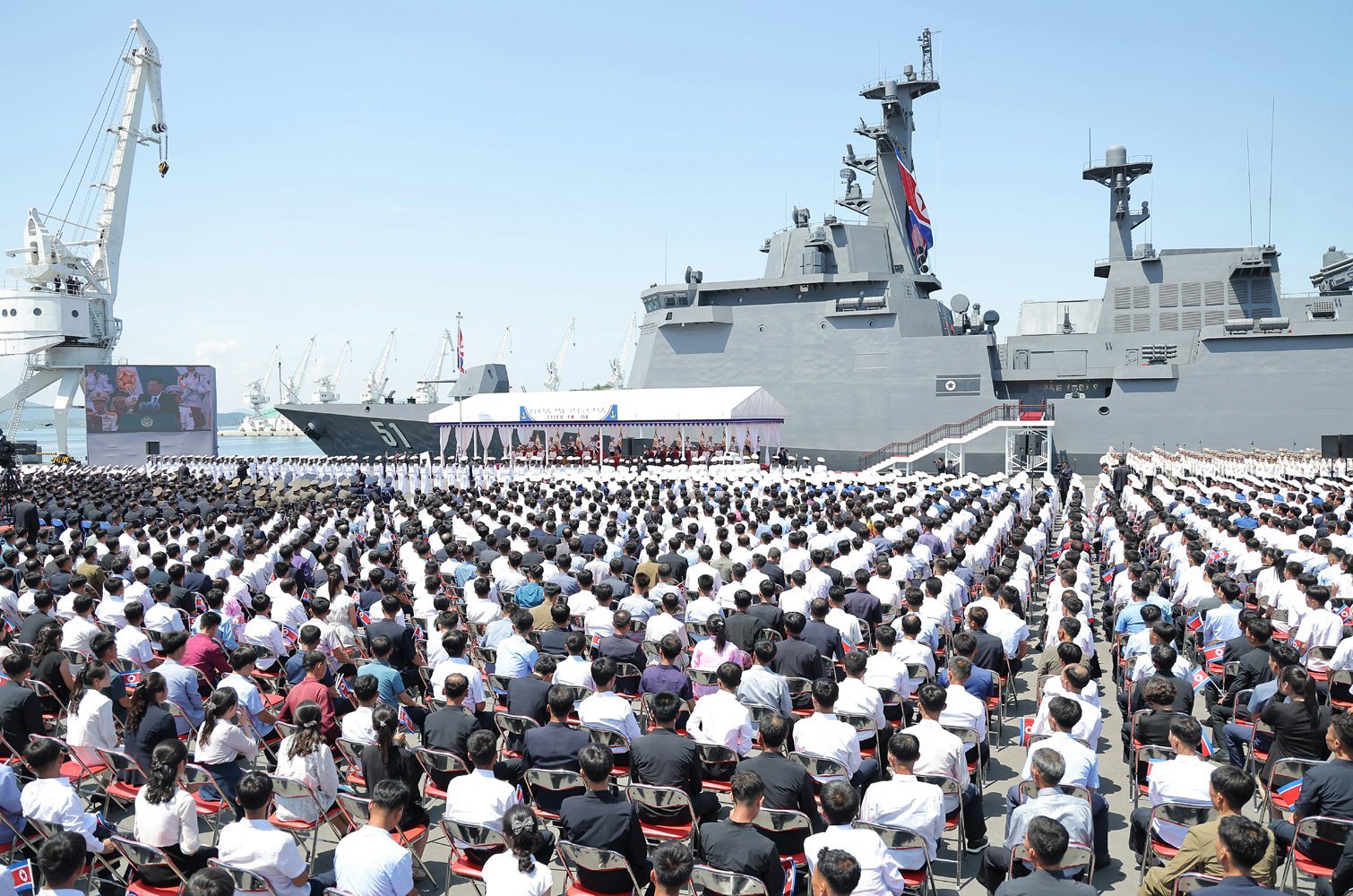
On June 23, 2026, North Korea formally commissioned its largest-ever warship, the lead vessel of the 5,000-ton Choe Hyon-class guided-missile destroyers, while also outlining plans to follow the program with a new class of 10,000-ton cruisers.
On June 23, 2026, North Korea (Democratic People’s Republic of Korea – DPRK) formally commissioned its largest-ever warship, the first of four 5,000-ton Choe Hyon-class guided-missile destroyers (DDG) currently under construction. According to the state-run Korean Central News Agency (KCNA), North Korean leader Kim Jong Un presided over the commissioning of the Choe Hyon (51) on Wednesday at the Nampo shipyard on the country’s western coast.
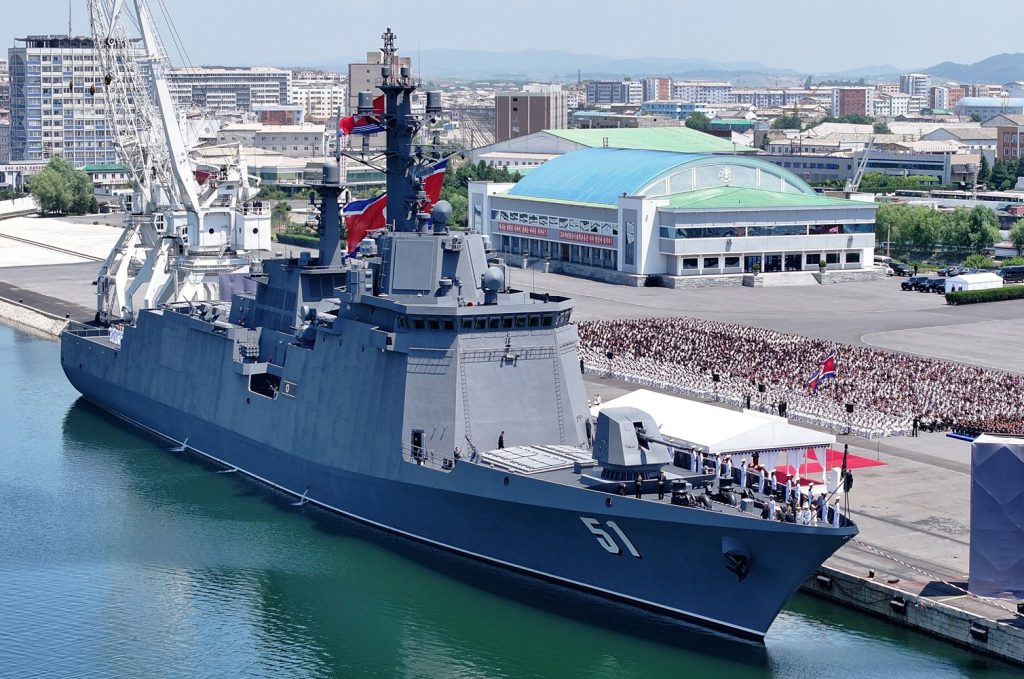
Kim Jong Un said the commissioning of the new ship marked a “new chapter” in the country’s military history, while the navy described it as ending more than 70 years of stagnation. Kim said, that the navy had previously been the weakest branch of the armed forces, but that this has now changed, adding that its combat capability will grow to be admirable beyond imagination.
The new multi-purpose combatant, first revealed in imagery in December 2024, was built at a newly established construction facility at the Nampo Shipyard. It now appears that the widely publicized ceremony held on April 25, 2025, marked the vessel’s delivery to the Korean People’s Navy following the completion of construction rather than its formal entry into operational service.
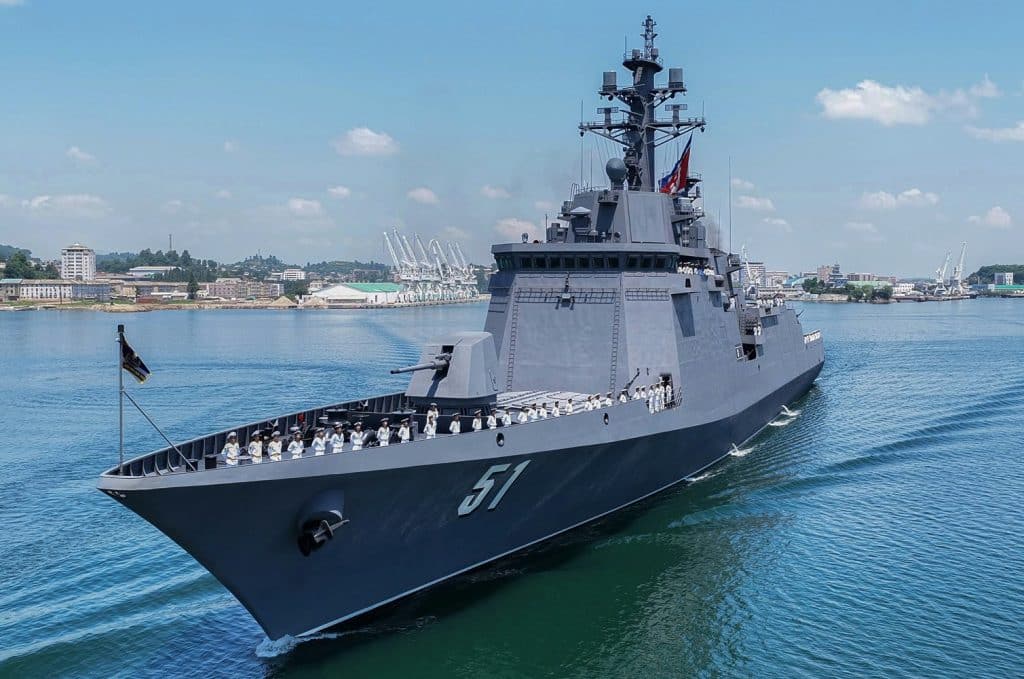
Over the following 14 months, the vessel underwent an extensive program of sea trials, systems testing, and combat systems integration several of which were overseen by Kim Jong Un. During this period, several modifications were made to its weapons and sensor suites (see initial analysis of April 2025 and later significant modifications reported in October 2025), resulting in numerous refinements before the ship reached its final configuration (see Naval News‘ report of March 2026) and entered service with the Navy in June 2026. The country’s first destroyer is also the first ocean-going ship of North Korea and will serve in the West Sea Fleet of the Korean People’s Army Navy (KPAN).
The Choe Hyon-class represents a major leap forward in the modernization of North Korea’s surface fleet, significantly enhancing the capabilities of the Korean People’s Navy and bringing it closer to contemporary naval standards. In addition to its substantial armament, the class is equipped with modern electronic systems, including a comprehensive electronic warfare (EW) suite and four fixed-face phased-array radar panels.
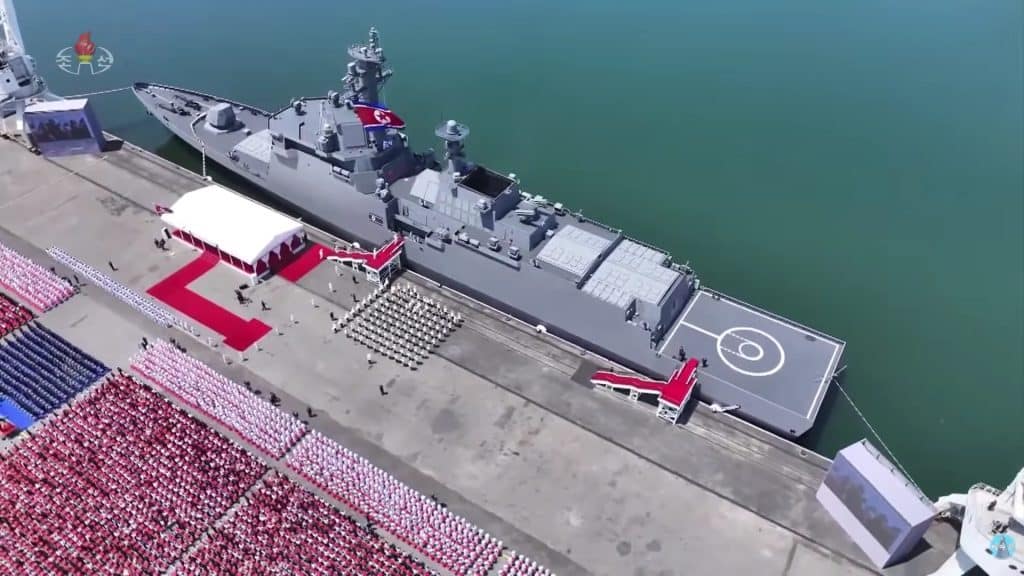
The ship’s missile armament is particularly impressive. As previously reported by Naval News, following a series of design modifications and testing phases, Choe Hyon now features five distinct vertical launch system (VLS) configurations. The aft section contains 64 VLS cells of four different types, while an additional 24 cells are located forward of the superstructure, bringing the total number of vertical launch cells to 88.
The destroyer is also fitted with eight inclined missile launchers concealed within the central superstructure, positioned forward of the engine exhausts. In addition, the vessel carries eight ready-to-fire short-range missiles associated with a naval close-in weapon system (CIWS) resembling the Russian Pantsir-M. Altogether, the vessel appears capable of carrying up to 104 missiles of various types.

The missile armament is complemented by a new 127mm naval gun mounted at the bow, two six-barrel 30mm CIWS amidships resembling the Chinese Type 730, and a Pantsir-M-type air-defense system positioned aft of the funnel, combining short-range missiles as it was reported in the previous paragraph, with twin six-barrel 30 mm rotary cannons. Additional weapons include two twin 533 mm torpedo launchers and six decoy-launching systems of two different types for anti-aircraft and anti-torpedo defense. Close-range defensive armament is further strengthened by ten twin 23mm gun mounts (which replaced an equal number of KPVT heavy machine guns) and four 14. mm KPVT heavy machine guns hidden in the superstructure.
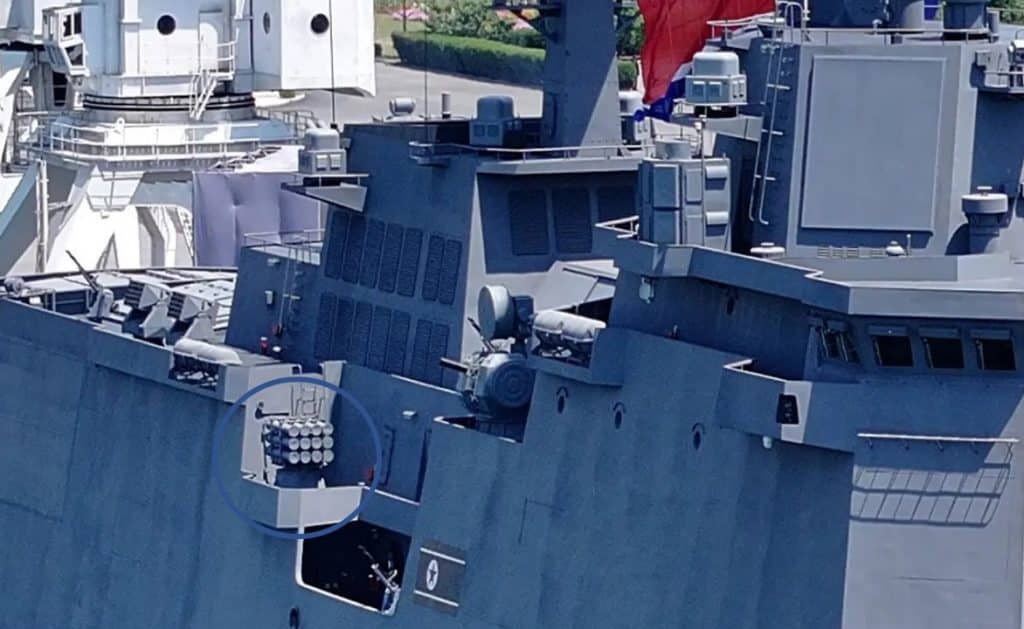
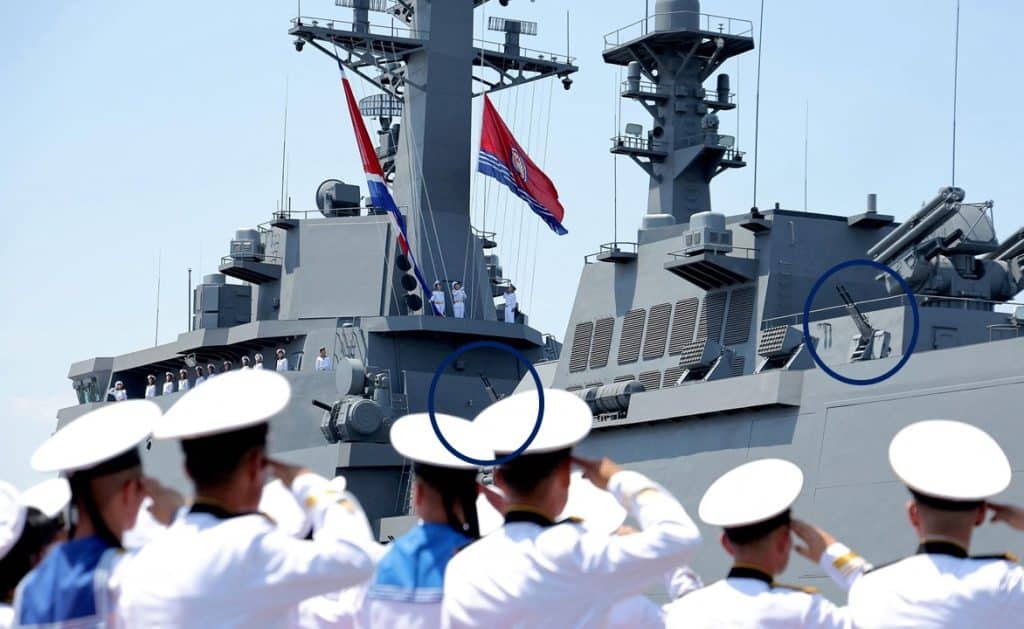
The most notable change in the Choe Hyon’s recent configuration is the addition of a 12-tube launcher on each side of the ship, replacing the earlier NLOS anti-tank guided missile installation which had been removed. This system is believed to be an anti-submarine warfare (ASW) launcher, likely intended for close-in defense against incoming torpedoes.
North Korea Unveils Guided Missile Cruiser Ambitions
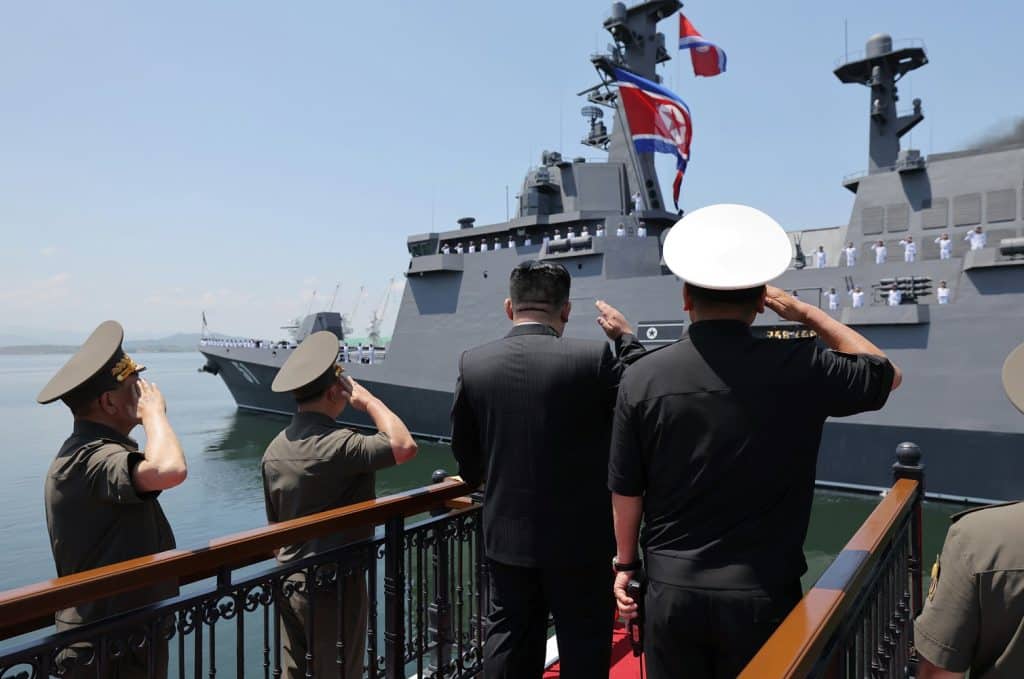
North Korea’s new 145-meter destroyer signals ambitions for a more capable navy that will include guided missile cruisers which will have twice the displacement of the Choe Hyon-class guided-missile destroyers. It also reflects a shift from coastal defense toward a blue-water naval force with greater operational reach and power projection capability.
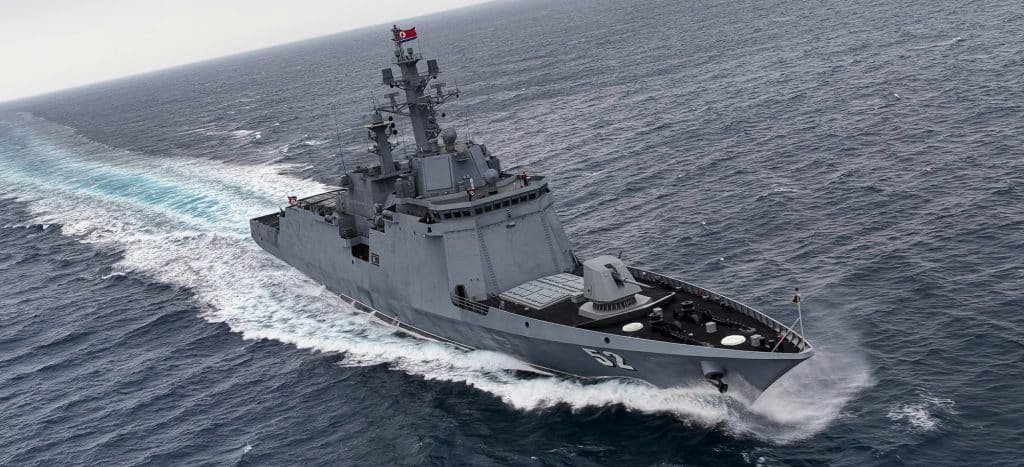
During the commissioning ceremony, Kim Jong Un used the occasion to outline the next phase of North Korea’s naval modernization program. He announced that the second destroyer in Choe Hyuon-class, Kang Kon (52) is expected to enter service in the near future and revealed plans to follow the current destroyer program with a new class of 10,000-ton strategic surface combatants.
According to Kim, the long-term objective is to establish a production rhythm capable of delivering two major warships per year, each representing a step beyond the capabilities of the Choe Hyon-class. The planned force structure would reportedly include cruisers in the 10,000-ton range, which North Korea is expected to designate as “strategic,” a label it has previously associated with nuclear-capable systems.
