

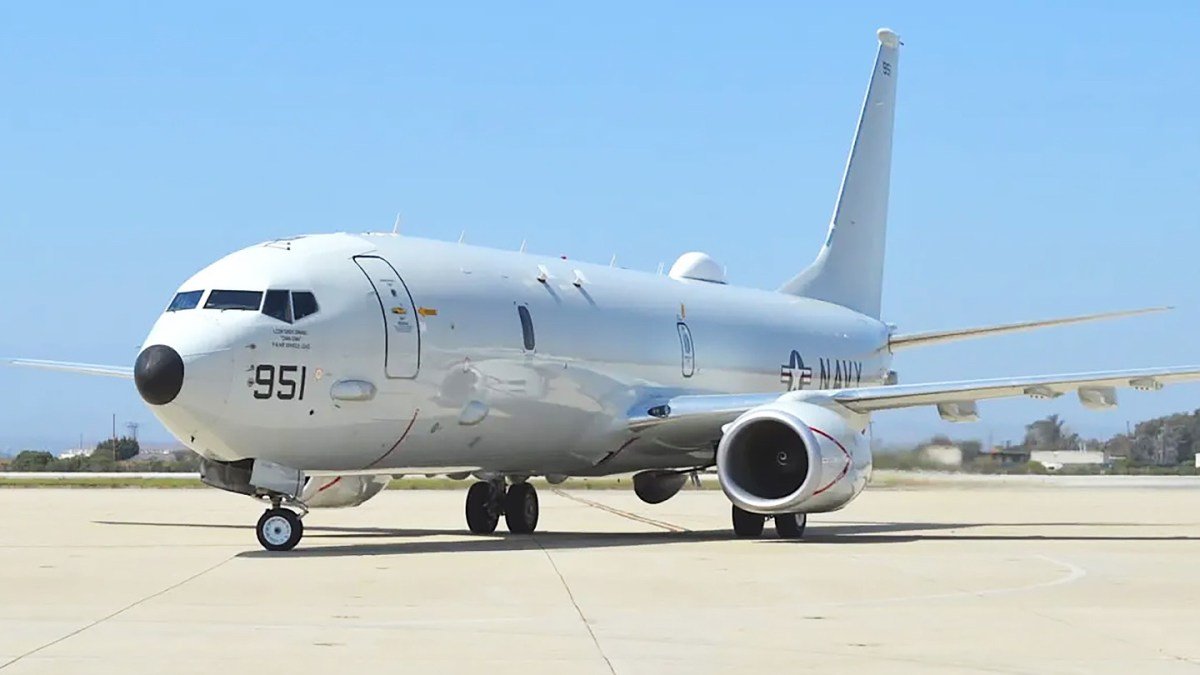
The very first P-8A Poseidon aircraft is now assigned to Air Test and Evaluation Squadron 30 (VX-30), the “Bloodhounds.” TWZ was first to report last year that VX-30 was in line to get two P-8As to support long-range missile and other testing efforts. The aircraft will help the squadron address the increasing difficulties it is facing with its aging P-3 Orion aircraft. Only a handful of P-3s remain in service anywhere in the Navy, and are becoming increasingly challenging to operate and maintain.
VX-30 shared pictures of the P-8A arriving at its home base in Point Mugu, California, on its Facebook page last week. Naval Air Station Point Mugu, part of Naval Base Ventura County, sits right on the southern California coast with direct access to the expansive Point Mugu Sea Range. The Navy and other branches of the U.S. military, as well as defense contractors, regularly use the offshore ranges for missile and other tests, which the Bloodhounds support. Aircraft from VX-30 also often deploy to other locations around the world to support test and evaluation activities, including in other U.S. military range complexes in the Pacific Ocean around Hawaii and in the Atlantic Ocean off the coast of Florida.
As noted, the P-8A now assigned to VX-30 is actually the very first Poseidon ever built and is also known as T-1. The aircraft, which made its maiden flight in 2009, was used for years to support the Poseidon program. The Bloodhounds are also in line to get the second test P-8A, which is also still referred to as T-2. We will come back to this in a moment.
VX-30 already operates a variety of planes specially configured to support test missions, including the aforementioned P-3s. The unit also has KC-130T Hercules tanker/transports, as well as its one-of-a-kind NC-20G and NC-37B jets. The NC-37B was specifically acquired to replace one of the squadron’s NP-3D Orions, a variant nicknamed the “Billboard” because of its heavily modified tail. The NC-20G and the NC-37B reflect a larger push to revamp the Bloodhounds’ fleets in recent years.
Collectively, VX-30’s aircraft are equipped with a mix of radars, cameras, and other equipment to collect imagery, telemetry, and other data during tests. They have communications and data-sharing suites to be able to pass information along to test facilities on land to aid with live monitoring and for deeper analysis.
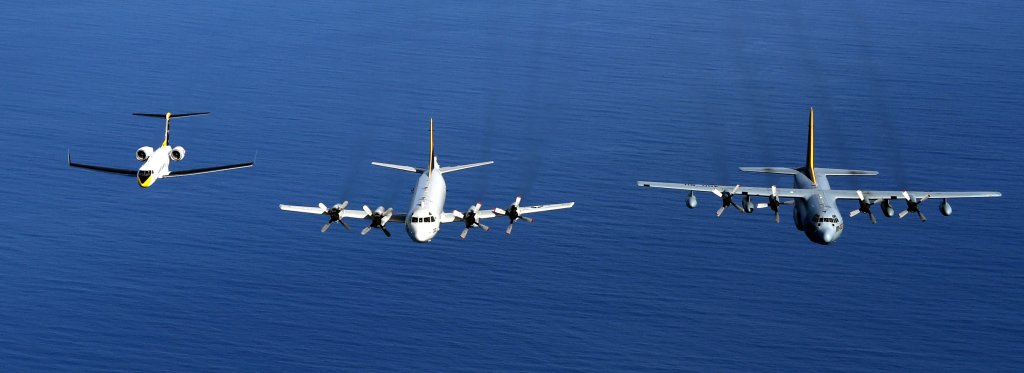
Aircraft assigned to VX-30 are also used for what is called range surveillance and clearance missions to keep unwanted visitors and errant bystanders out of the way in the air and down below during tests. This is where the P-8As will come in, at least initially.
“Both aircraft will perform the Range Surveillance & Clearance mission as well as dedicated testing for Naval Air Systems Command programs supported by P-3 today,” a NAVAIR spokesperson told TWZ last year. “T-1, the airworthiness P-8 aircraft, will have a radar modification to integrate an APY-10 in the airframe, as one does not currently exist. This will provide T-1 with a supportable radar configuration and capability that mirrors the baseline P-8 fleet. T-2 will be unmodified.”
Raytheon’s AN/APY-10 is the standard maritime search radar used on the P-8A, and is primarily designed to spot and track vessels on the surface, as well as masts belonging to submerged submarines protruding above the waves. It also has a synthetic aperture radar (SAR) mode that allows it to capture still images, even through cloud cover, smoke, and dust, and at night. The SAR mode is one of several capabilities of the P-8As that allows it to be used for surveillance in coastal environments and over land, as well as while flying over open bodies of water.
Standard Poseidon aircraft also have a sensor turret with electro-optical and infrared full-motion video cameras, as well as signals intelligence capabilities, as you can read more about here.
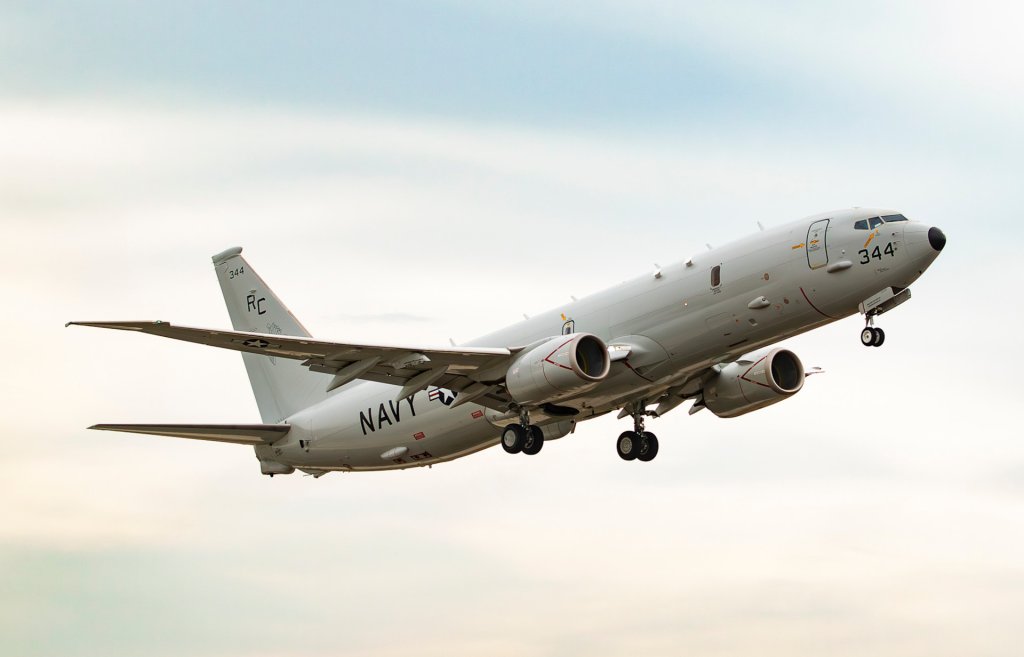
The P-8A’s core capabilities are well suited to the range surveillance and clearance mission. In an unmodified form, the Poseidon’s other sensors might be capable of gathering additional visual and other data during testing, as well.
NAVAIR has also left the door open to potentially modify VX-30’s ‘new’ P-8As in the future to take on an expanded role with the squadron. The Poseidon is based on the Boeing 737 airliner, and offers swap space that could accommodate additional systems down the line. The Navy already operates several more deeply modified P-8s with additional intelligence-gathering capabilities. Those aircraft are notably capable of carrying the AN/APS-154 Advanced Airborne Sensor (AAS), a large podded active electronically scanned array (AESA) radar, under their fuselages, as you can learn more about here. Boeing has developed other add-on sensor packages for the P-8A over the years, as well.
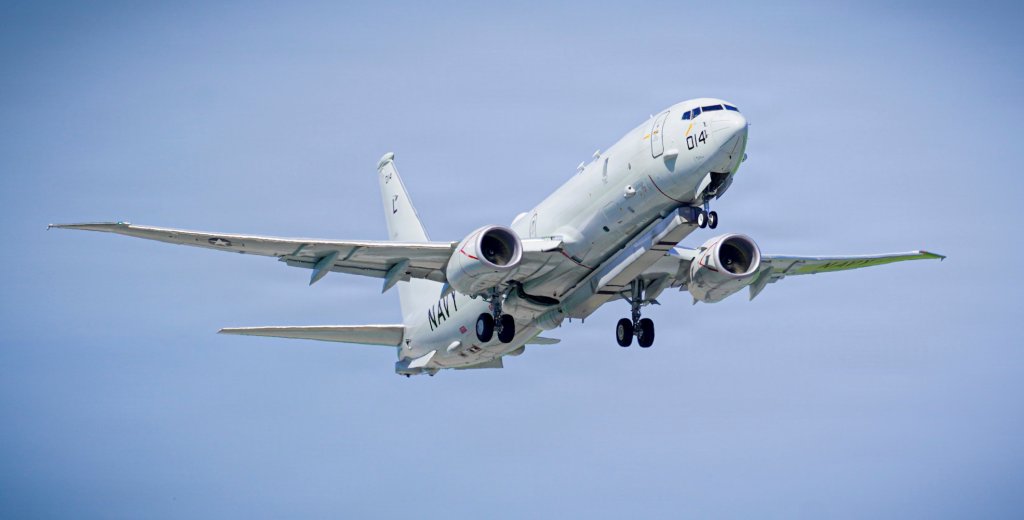
Unlike the P-3, the P-8A also has the ability to refuel in mid-air via boom-equipped tankers. That is another capability VX-30 might be able to leverage to enable longer-duration flights, whether in support of range surveillance and clearance or other missions.
Overall, the “P-8 will go a long way to enabling range support operations and will provide new opportunities for future developmental programs,” the NAVAIR spokesperson told us last year.
On top of the P-8A’s inherent capabilities, even the older test jets are just younger and more modern, in general, than the P-3s that make up the core of VX-30’s fleet today. The Navy took delivery of its last new-production P-3C variant in 1990, and Lockheed (now Lockheed Martin) shuttered the line afterward. This means the very youngest Orion is 36 years old now. As noted, the Navy has been steadily withdrawing Orions from service in recent years.
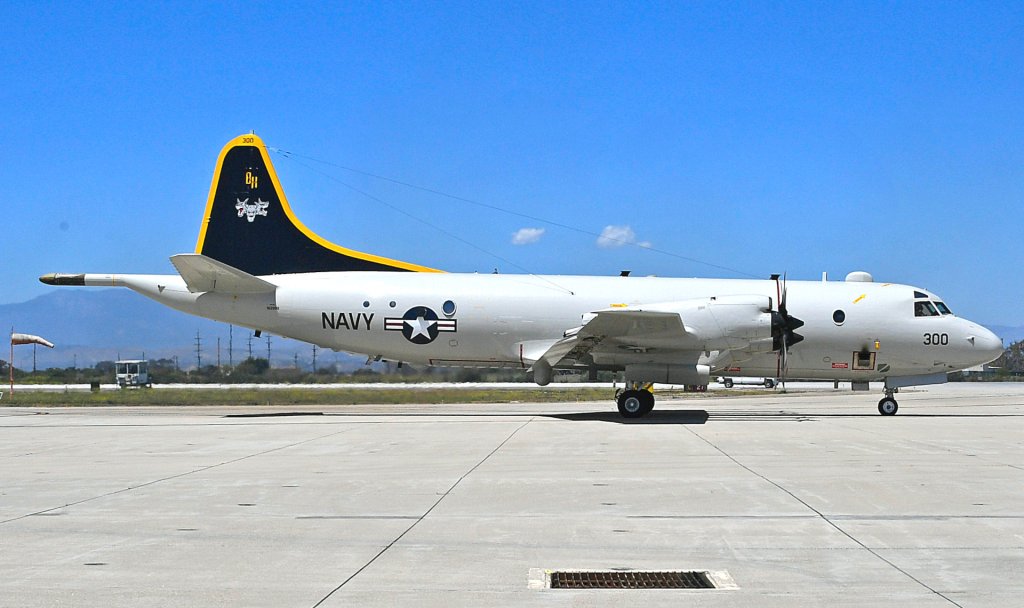
Several Navy test squadrons do continue to operate P-3s, but that’s becoming an increasingly more complex proposition. This is not just because of the maintenance demands of aging aircraft that are no longer in widespread U.S. service, but also the availability of trained aircrews. As part of the transition of active and reserve Navy maritime patrol squadrons from the P-3 to the P-8, the service no longer has a Fleet Replacement Squadron (FRS) for the Orion. FRSs are the Navy’s ‘school houses’ that provide training specific to particular aircraft types to aviators and ground personnel before they are sent to operational units. VX-30 now has to do that training in-house.
“The two P-8s will reduce sustainment costs and increase availability over the four P-3 aircraft VX-30 currently flies. P-8s also help alleviate P-3 manning challenges now that the FRS and operational squadrons have all transitioned to P-8 or decommissioned,” the NAVAIR spokesperson told us last year. “P-3 aircraft require a Flight Engineer crew position, and as the P-3 model manager, the return on time invested to train incoming pilots or qualify Flight Engineers in the P-3 is rapidly diminishing for VX-30’s primary missions.”
It remains to be seen whether the configurations of T-1 and T-2 might evolve in the coming years to expand their ability to support testing over the Point Muge Sea Range or elsewhere globally.
In the meantime, T-1’s arrival already marks a new chapter for VX-30 and the Navy’s oldest P-8A Poseidon.
Contact the author: joe@twz.com
