

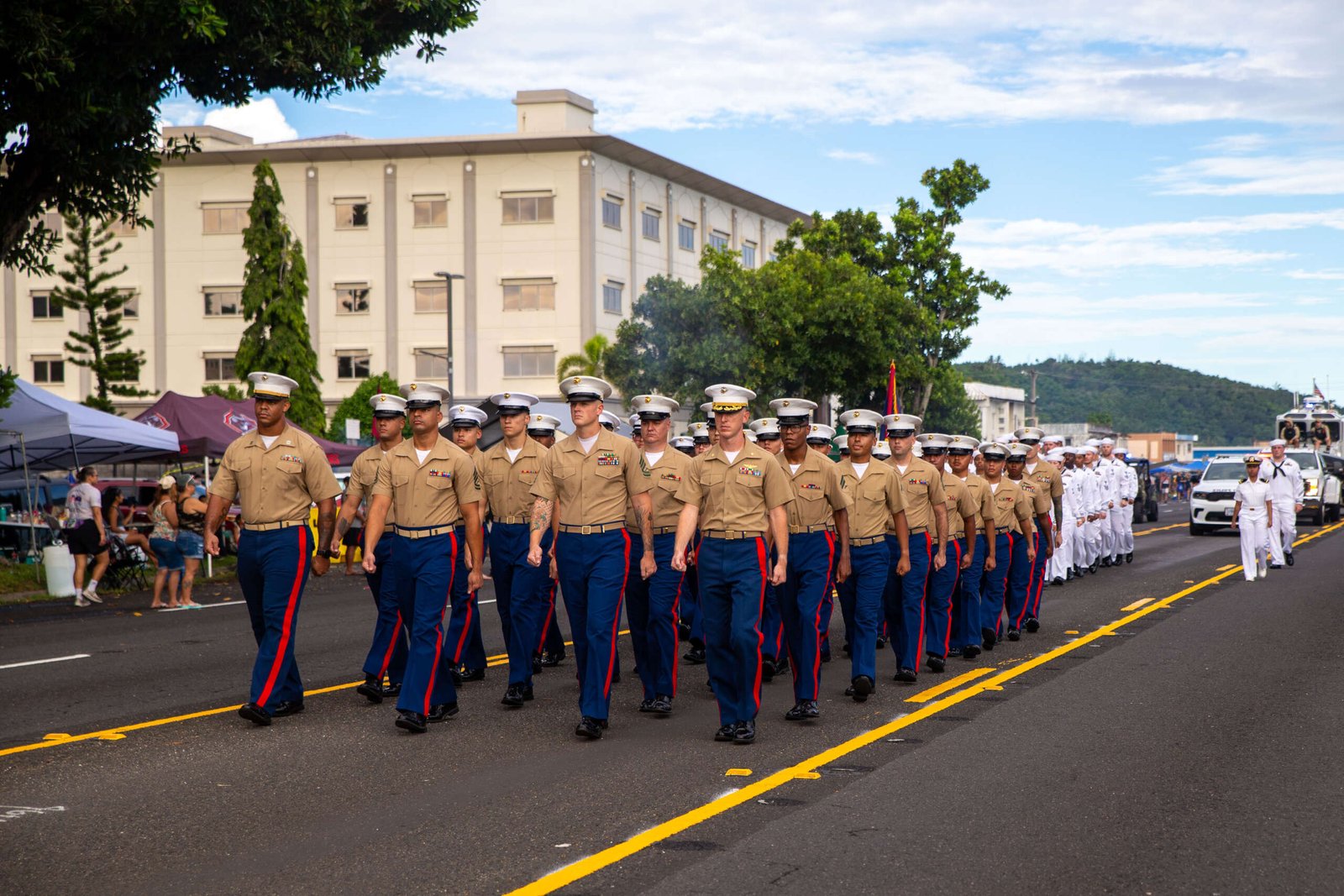
The Marine Corps has set a new goal to grow its force by up to 5% by 2032, adding thousands of troops as the service tries to envision its role on the future battlefield.
The plan, which would expand the Corps to its highest end strength in about a decade after years of downsizing, aims to fill combat capability gaps that arose in earlier versions of the Marine Corps’ controversial Force Design blueprint — an ambitious overhaul of the service’s approach to modern war.
“We’re learning to iterate,” Lt. Gen. Eric Austin, deputy commandant for combat development and integration, said Thursday at an event hosted by the Center for Strategic and International Studies in Washington. “There’s some bumps and bruises. We’re making some corrections.”
The proposal aims for 4% growth in end strength by 2031, with an option to add another 1% by 2032 to “add operational depth,” service spokesperson Lt. Col. Eric Flanagan told Federal News Network in an email Thursday.
Hitting that target could put the Corps at more than 216,000 troops across the active-duty force and the Reserve component — a modest spike of around 10,200 Marines compared to the current force. It’s unclear whether the service is calling for growth in its active-duty force alone or whether the Reserve is included in that goal.
Flanagan said the added manpower would bolster missions across the Marine Corps, rather than address a few specific shortfalls.
The vision is the product of a four-month review, completed in May, by Marine Corps planners that sought to speed up the service’s modernization plans and better integrate emerging technologies from drones to artificial intelligence. Its Force Structure Review Group whittled down 18,000 suggestions for expanding the Corps to 9,000, Austin said, prompting the need for more Marines to staff the ideas that made the cut.
The resultant report “strengthens the Marine Corps’ ability to deter aggression, preserve freedom of action in contested maritime regions, support naval and joint campaigns, and maintain robust global crisis-response capacity,” Flanagan said.
Aspects of that work are already underway. Some Marine expeditionary units have deployed with new attack drones supplied by initiatives like the Pentagon’s drone dominance competitions. Five training cells are teaching service members how to operate the systems in the field, Austin told Federal News Network.
“We’re getting those out to every infantry battalion and to the training establishment, to the Basic School where we train our officers, to the School of Infantry and the like,” he said during the event. “We figured out how to employ these inside these formations, and it’s been wildly successful to date.”
Austin also leads the Marine Corps Combat Development Command at Quantico and is the service’s top acquisition officer for ground systems.
The service is already on its way to a bigger force as well. Monthly recruiting updates show the service is on track to meet its goal of recruiting 31,250 new Marines in fiscal 2026, on its way to the 205,900 billets Congress has allotted it for this year. It’s also requested 208,400 troops — a bump of 2,500 — next year.
Austin acknowledged the original strategy, known as Force Design 2030, missed the mark when it debuted in 2020. Gen. David Berger, its architect who served as commandant until July 2023, told service leaders they’d gotten it “60 to 70% right,” Austin said.
That has given the Corps an opportunity to learn from its mistakes faster than before, Austin said.
“We’re continuing to adapt in a meaningful way,” he said. “The planning and the structure and the capabilities are acquitting themselves … in conflict right now. We just need to go faster and field faster, but I’m proud of the journey we’re on.”
Copyright
© 2026 Federal News Network. All rights reserved. This website is not intended for users located within the European Economic Area.
