

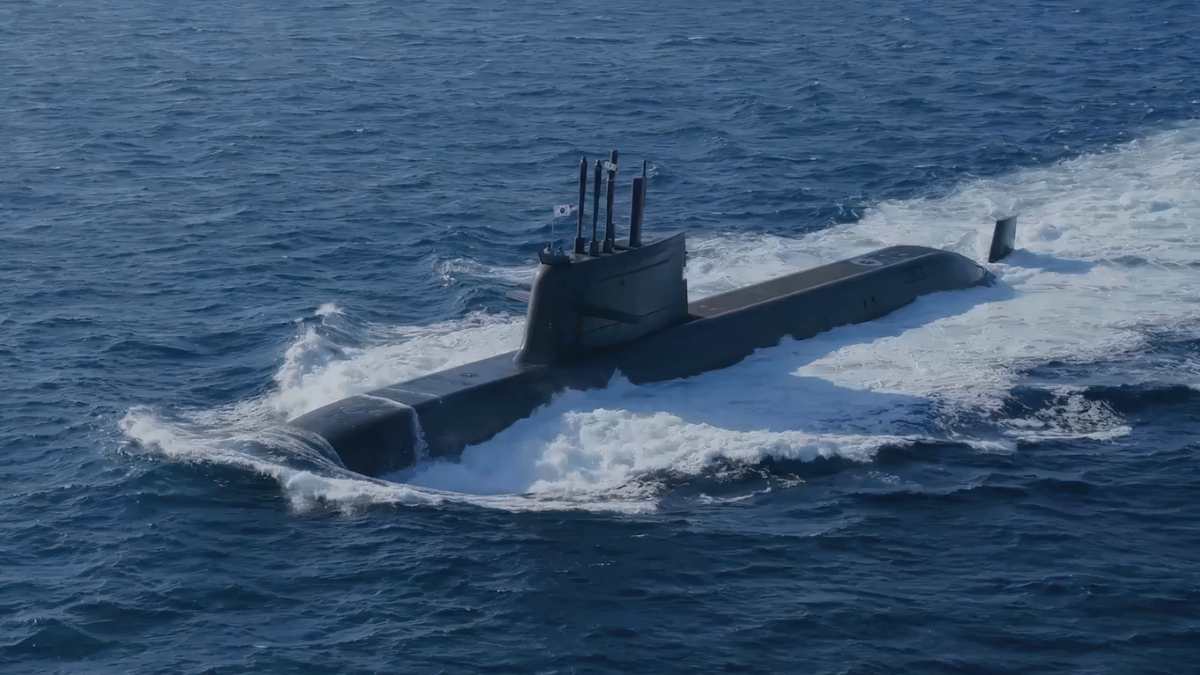
In late May 2026, South Korean Defense Minister Ahn Gyu-back unveiled a roadmap to achieving one of Seoul’s top military acquisition goals: nuclear-powered submarines. This roadmap is heading in the wrong direction.
During last month’s inaugural meeting of the Future Defense Strategy Committee, South Korea published its Basic Plan for the Development of Nuclear-Powered Submarines. Chaired by President Lee Jae Myung, the committee was formed to help South Korea build robust, self-reliant defense capabilities. During the event, Lee’s opening remarks underscored the symbolic significance of the nuclear submarine capability and stressed the program’s role in “strengthening the Republic of Korea’s defense industry capabilities.”
Despite Lee’s strong rhetoric, the country’s nuclear-powered submarine program risks leading South Korea’s defense industry off course. The high costs and technological complexity of developing a niche capability like nuclear submarine shipbuilding are more costly, complex, and less beneficial than Seoul may realize. Moreover, these dynamics run counter to the export-oriented strategy that has made K-defense an international success and could drain talent and resources from an innovative economic engine. Ultimately, the entire endeavor risks creating unintended budgetary and political pressures that could undermine South Korea’s procurement flexibility and constrain long-term defense spending.
What South Korea’s Shipbuilding Success Doesn’t Guarantee
South Korea’s shipbuilding industry is an international leader, surpassed only by China in market share. However, despite this robust, advanced, and capable — some might even argue superior — shipbuilding industry compared to that of the United States, its expertise, existing infrastructure, and ecosystems are distinctly non-nuclear. While South Korea does have a mature nuclear energy sector — operating 26 reactors to provide roughly one-third of the southern peninsula’s electricity — proficiencies in both sectors are necessary, but not entirely sufficient conditions for a nuclear shipbuilding industry.
In fact, Seoul’s success in both sectors likely leads South Korean officials to discount the unique challenges of naval nuclear propulsion, which powers submarines. That’s because the technical expertise required to succeed in both areas is not immediately transferable. Naval nuclear reactors are engineered to meet strict acoustic, shock, and safety standards, all in the confines of a small space capable of operating under some of the most extreme conditions known to man for decades on end. Naval nuclear reactors’ scale, engineering complexity, the no-fail nature of operating underwater at pressure, and overall economics are simply different than their civilian nuclear equivalents. Moreover, nuclear shipbuilding — especially submarine construction — and nuclear vessel operations pose distinct challenges because they require bespoke regulatory, training, and qualification ecosystems and standards that should be developed and maintained alongside existing non-nuclear requirements.
Now, that’s not to say that South Korea’s engineers are incapable of achieving such a feat. Rather, I am arguing that nuclear submarine shipbuilding may not enhance South Korea’s defense industry capabilities in the way policymakers claim it will. And its costs risk running South Korea against the shoals.
Most importantly, though, building such an industry from the ground up, much less maintaining it over the long term, will take substantial time and resources — and it’s unclear whether the ends justify these expensive means. For example, the U.S. Navy has been constructing nuclear submarines for over 70 years, and it remains a profoundly expensive endeavor — from 2027 to 2031, nearly half (roughly 46 percent) of all new shipbuilding spending will go toward nuclear submarine construction. And this doesn’t include additional funds allocated to right the ailing submarine industrial base.
Another example of nuclear shipbuilding’s complexity, even for countries with advanced engineering capabilities, is Japan’s Mutsu: a rare nuclear-powered cargo ship built in the mid-1970s during the rise of Japan’s civilian nuclear power industry. Technical issues and cost growth plagued the ship: These factors, which delayed its maiden voyage by 16 years, ultimately led to its early retirement. Similarly, despite India’s decades of experience operating civilian nuclear reactors, the Indian Navy still faced major challenges in designing its first nuclear-powered submarine: the INS Arihant, which embarked on its first patrol over 14 years after construction began.
A Poor Fit for an Export-Driven Sector
South Korea’s decision to pursue nuclear submarine technology is unwise for another reason: It runs counter to the export-driven growth strategy that has transformed South Korea into one of the world’s fastest-growing manufacturers of defense equipment.
Since the mid-2010s, South Korea’s defense sector revenue has grown substantially, increasing by almost 75 percent from the mid-2010s to the mid-2020s, despite smaller growth — a 26 percent increase — in Korean government military procurement spending over the same period. The war in Ukraine only accelerated this growth, resulting in a more diverse export portfolio, with the majority of Korean arms exports now going to European states such as Poland.
The Korean arms industry’s shift toward exports likely came as no surprise to close observers. The country has long relied on export-driven economic growth to fuel its development throughout the 20th century, so much so that the government refers to its rapid growth during this period as “The Miracle on the Hangang River.”
Unfortunately, nuclear shipbuilding is not well-suited to this export-oriented strategy. For one, nuclear submarines were rarely exported until very recently. This is likely due to non-proliferation concerns and the regulatory challenges of acquiring such technology while complying with the Nuclear Non-Proliferation Treaty, of which only five countries are non-participants. Countries attempting to acquire nuclear submarines often feel compelled to loudly insist that their efforts are not steps toward developing nuclear weapons, and go to great lengths to make this clear — like South Korea’s decision to design a reactor that uses low-enriched uranium, whereas U.S. nuclear submarines use highly enriched uranium. Even when nuclear submarine technology has been exported, as in Russia’s lease of nuclear submarines to India, the acquiring country was sprinting to develop its own sovereign nuclear shipbuilding capability. The strategic significance and prestige of nuclear submarine technology lead those capable of achieving such a technological feat to do so themselves. The high cost of nuclear submarines further limits export potential: The Virginia class-related portion of the U.S. submarine exports to Australia under the AUKUS deal reportedly costs upwards of $4.5 billion per ship.
South Korea’s export-oriented defense industry is a valuable catalyst for innovation: As companies compete, they improve production techniques, enhance capabilities, and boost efficiency. This competition-driven innovation and competitive edge are likely contributing factors to the Korean arms industry’s overall success. However, because South Korea is facing long-term demographic decline — and in some cases, acute workforce shortages — a major nuclear shipbuilding initiative’s investment could create a talent vacuum, drawing engineering capacity and capability away from programs that contribute to the virtuous cycle described above. Applying a limited talent pool to a specialized subsector would likely do more harm than good to the country’s defense industry, diminishing its competitive edge rather than strengthening it.
Once You Start, You Can’t Stop
Most importantly, though, South Korea’s nuclear submarine ambitions risk creating unintended budgetary and political pressures that may constrain the country’s long-term defense spending and limit its fiscal flexibility. That’s because nuclear shipbuilding can become a self-perpetuating institution once created. The industry’s high start-up costs and its specialized technical workforce require careful care and feeding to prevent atrophy over time. That, plus the fact that policymakers and military officials impart a unique strategic importance and prestige on operating nuclear submarines, effectively creates an unmovable budgetary floor for nuclear submarine shipbuilding.
Even in a wealthy country such as the United States, where there is significant demand for submarines, the substantial costs of building them and the industry’s strategic importance heavily shape defense budgets. For example, the American submarine and nuclear shipbuilding industry struggled for years during the late 20th century as the end of the Cold War led to canceled submarine orders and a new era of low-rate submarine production that lasted into the early 2000s. During this period, shipbuilding acquisition decisions were increasingly guided not by capability needs but by the necessity to carefully manage the nuclear shipbuilding workforce to prevent low demand from hollowing out the industry and its workforce. However, careful care and feeding during this era ultimately reduced competition and efficiency. To prevent the closure of a major nuclear shipbuilder, the government encouraged the former competitors to become a symbiotic, interdependent production partnership, with some submarine components built in Virginia and others in Connecticut. The over $10 billion invested throughout the submarine and maritime industrial bases by the U.S. government over the past decade to address the impacts of this period shows how challenging and costly it can be to maintain a nuclear shipbuilding industry in the long term.
Nuclear shipbuilding can become a self-perpetuating institution for multiple reasons, beyond just its strategic significance and workforce support needs. For one, it offers sizable economic incentives for shipbuilders and politicians alike. During the government’s meeting to announce Korea’s acquisition roadmap, Ahn emphasized that the program will create more than 40,000 jobs. It’s unclear how Ahn arrived at this figure or what is included. As a point of comparison, defense firms directly employed roughly 52,000 people nationwide in 2024. South Korea’s entire shipbuilding workforce, which also builds commercial vessels, is only about 126,000 people. That Ahn is emphasizing job creation at all is a troubling trend, as it suggests that politicians and officials behind the push may already be over-indexing on job creation at the expense of capability delivery, efficiency, and cost-effectiveness. Further, established incumbent firms typically dominate nuclear shipbuilding because they are the only ones capable of handling this especially demanding work. This means a submarine initiative will benefit and enrich legacy heavyweights who are skilled at using political and bureaucratic influence across government, the military, and industry to gain and maintain support for nuclear shipbuilding.
This heady mix of high costs, specialized workforces, plus political and bureaucratic incentives creates a structural inertia that, once established, takes on a momentum of its own. This inertia can crowd out other military acquisition priorities or hinder investments in new or emerging capabilities and concepts of operations that do not include nuclear submarines.
Finally, if such a high-profile program takes longer than expected, costs more than budgeted, or is more complex than anticipated, the sunk cost fallacy and a government’s desire to avoid national embarrassment can take over, causing policymakers to throw good money after bad.
Is a Nuclear Submarine the Right Tool for the Job?
Underlying the cost-benefit calculus above is the question of why this specific capability is necessary and whether it could be accomplished more cost-effectively by other platforms. Like many of South Korea’s military means, the rationale for acquiring this capability lies in deterring North Korea — specifically, to counter the growing underwater threat posed by Pyongyang’s own submarine modernization and submarine-launched ballistic missile efforts. During the plan’s announcement, Ahn called nuclear submarines essential to an “underwater kill chain” to track and neutralize these specific threats more quickly and stealthily.
Though nuclear submarines excel at these two things, it remains unclear whether these advantages make them significantly better equipped to deter North Korea than the diesel-electric and air-independent propulsion-enabled submarines the South Korean navy already operates. For one, some have argued that the greater displacement of nuclear submarines makes them less effective and maneuverable in shallow waters, such as those of the Yellow Sea off the coast of the Korean peninsula. Moreover, modern diesel-electric boats are already remarkably advanced and have stealthy acoustic signatures comparable to those of nuclear submarines — making today’s diesel-electric technology already well-suited for the surveillance mission Ahn envisions. In fact, nuclear submarines should operate mechanical reduction gears as well as loud reactor cooling pumps, which create both noise and infrared signatures, whereas the only noise from today’s in-service diesel-electric submarines running on full-electric battery power comes from the “shaft bearings, propeller, and [water] flow around the hull.”
In addition to nuclear submarines’ stealth and speed, nuclear reactors offer endurance. They can operate at high speeds — 35+ mph — for as long as their captain desires, while diesel-electric submarines usually go more slowly, typically maintaining speeds around 11 mph to avoid frequent surfacing over long distances to recharge their batteries. Aside from needing to surface to support their human crew, nuclear ships can operate underwater indefinitely and have even circumnavigated the globe entirely underwater, which is what makes them so hard to track. Nevertheless, South Korea’s proximity to North Korea and the relatively small areas of operation in the Yellow Sea and the Sea of Japan do not necessarily demand endurance sprints to traverse quickly. Further, battery technology is advancing rapidly, further eroding the stealth advantage of nuclear-powered submarines. South Korea’s KSS-III class submarine, which is already in service, uses a new lithium-ion battery that enables it to sprint submerged at 23 mph for up to 10,000 nautical miles — in other words, from Busan to Seattle and back. All said, nuclear submarines’ size does allow them to carry a greater number of sophisticated weapons and sensors, making them more lethal to some.
Finally, when considering whether nuclear submarines are the right tool for the job, it is important to note that Seoul’s sizable investment comes at a time when militaries around the world are experimenting with larger quantities of smaller underwater drones capable of surveillance and anti-submarine warfare missions. While still largely in development, though increasingly fielded, these platforms are orders of magnitude cheaper to build than nuclear submarines. Some might argue that, due to the rapid pace of technological change, South Korea may find itself overly invested in yesterday’s technology. Although undersea drones are unlikely to replace submarines anytime soon — they remain valuable to those producing them at scale already — it’s easy to envision a future in which Seoul chooses these emerging technologies to fill the capabilities gap it ostensibly hopes to address with nuclear ships.
There is one elephant in the room: China’s role in all of this. It’s unclear how much countering China’s rapidly growing maritime power figures in South Korean policymakers’ minds — any statements to that effect are likely to be made only behind closed doors. That said, South Korean academics and naval experts have directly linked the country’s nuclear ambitions to increasing the number of allied submarines in the Pacific theater, arguing South Korea “would complement U.S. efforts to deter Chinese aggression without requiring additional American deployments.”
The above reasoning aside, the key limiting factors deciding whether nuclear submarines hold a competitive edge over their diesel counterparts and whether nuclear boats could effectively deter China or North Korea will sound familiar: Their cost and protracted development timeline make them difficult to build and operate at scale. A case in point: the South Korean joint chiefs of staff reportedly said Seoul will build just four submarines for the time being, with the first likely to enter service at the earliest over a decade from now. While it is entirely possible that South Korea may be able to build nuclear boats more quickly and cheaply than its allied counterparts, this may not be enough to enable the South Korean navy to operate more than four at any time soon. All the while, militaries worldwide are increasingly deploying proliferated, low-cost, and attritable systems that could easily hold nuclear boats at risk.
The Question Seoul Isn’t Asking
In Jurassic Park, the 1993 summer blockbuster about how man’s technological prowess can achieve even the impossible, Jeff Goldblum’s character says: “Your scientists were so preoccupied with whether or not they could, they didn’t stop to think if they should.” In their pursuit of prestigious nuclear submarines, South Korean policymakers are more focused on whether they can do it, when a better question is whether they should.
By focusing on whether South Korea’s defense industry can achieve this capability, policymakers risk assuming that the next rung on the technological ladder is inherently beneficial, rather than recognizing the concrete opportunity costs and resource tradeoffs involved.
Ultimately, Seoul’s nuclear-submarine ambitions may backfire, causing more harm than good to South Korea’s thriving export-oriented defense industry. The high costs and complexity of developing this specialized capability make it a poor candidate for export and likely to drain talent and workforce from more successful and innovative projects within Korea’s defense sector. The institutional dynamics also risk creating budget and political pressures that could overshadow non-submarine programs, an unforced error that might limit procurement flexibility for years. Despite all of this, it remains highly questionable whether the ends justify the time-consuming and cost-intensive means, especially when an appropriately cost-effective capability that can be produced and operated at greater scale is already at South Korea’s disposal.
Wilson Grossman-Trawick is a senior associate in the Asia Group’s Defense and National Security Practice, advising clients on U.S. defense policy, shipbuilding, emerging technology, and maritime industrial base trends. Previously, he was an advisor to senior acquisition officials in the U.S. Navy’s submarine and shipbuilding enterprise. The views expressed in this article are his alone.
While the Asia Group represents companies in the shipbuilding and manufacturing space, none of them stand to benefit if the recommendations in this article are followed.
Image: Ministry of National Defense of the Republic of Korea via Wikimedia Commons
