

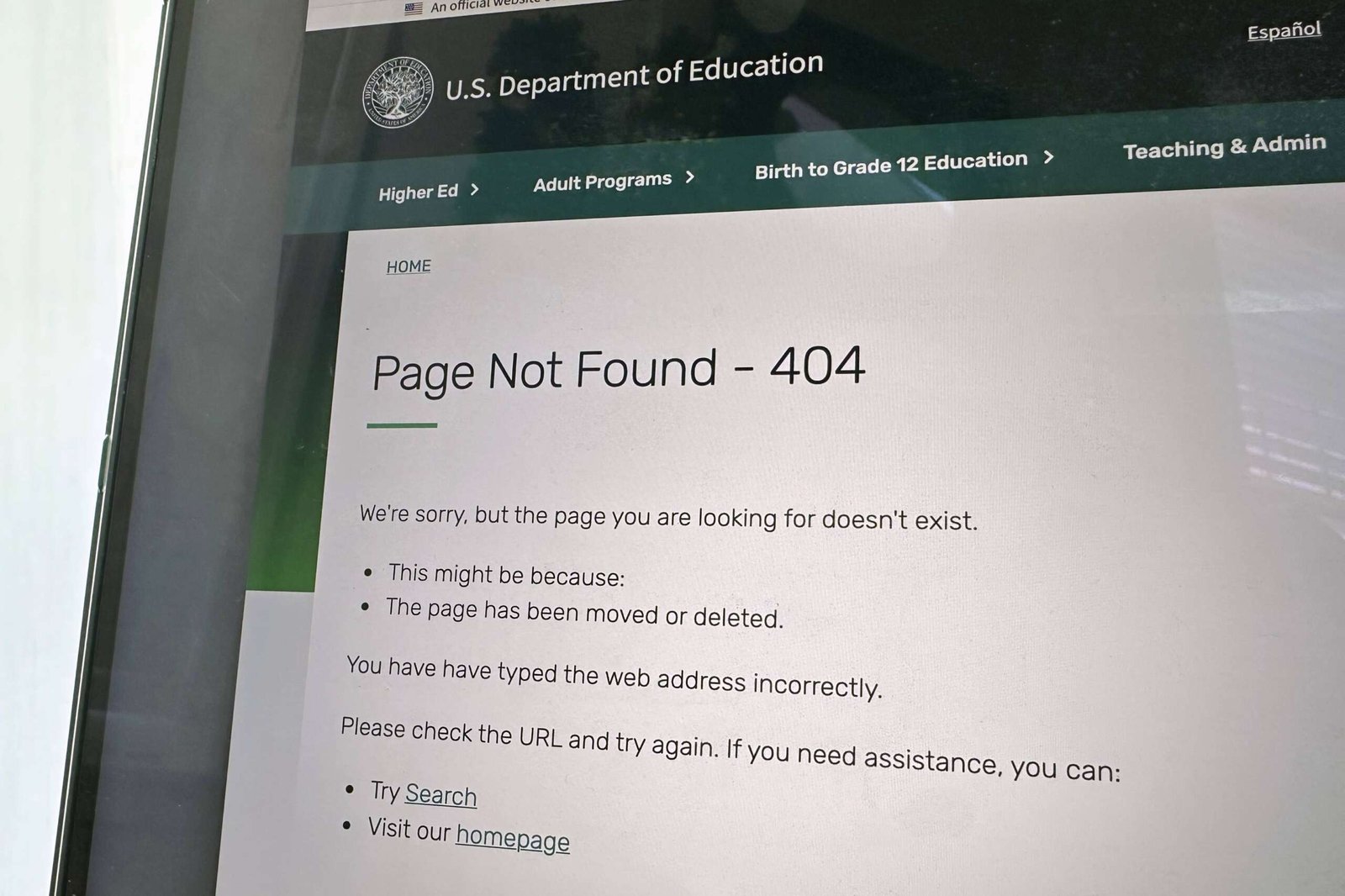
Agencies are moving ahead on the Trump administration’s governmentwide goal of eliminating .gov websites deemed “confusing” or duplicative.
The Commerce Department, working with the Office of Management and Budget, is looking to reduce its number of websites by nearly 50%
Brian Epley, the department’s chief information officer, said at an industry conference on Thursday that the website is meant to make it easier for online users to search for information and services that Commerce and its component agencies provide.
“That front door has to be easy, it has to be clear, and it has to deliver on the services that we’re intended to provide you,” Epley said Thursday at the Government Service Delivery Conference.
The Trump administration is focused on reducing the number of “confusing government websites” as part of the President’s Management Agenda.
Last year, the General Services Administration led a governmentwide website audit. GSA documents obtained by Federal News Network showed that agencies planned to eliminate 332 websites — about 5% of the 7,200 total sites under review at the 24 largest departments and agencies.
According to documents obtained by Federal News Network, Thomas Shedd, the former commissioner of GSA’s Technology Transformation Services, directed agencies last summer to target “low-hanging fruit,” including standalone sites for agency blogs, photo galleries and forums.
GSA also directed agencies to eliminate sites for events or initiatives that haven’t been relevant for a number of years, as well as standalone sites for “niche topics or working groups.”
Federal Chief Information Officer Gregory Barbaccia, who also serves as the current head of GSA’s Technology Transformation Services, said that many agencies are struggling with “fragmented delivery channels,” including duplicative websites.
“You have to navigate myriad websites for the same things often, and it’s really a failure when the citizen has to produce the same information duplicative times at different agencies,” Barbaccia said.
Joe Gebbia, chief design officer of the United States and co-founder of Airbnb, said in a recent podcast interview that his office, the National Design Studio, is looking to overhaul tens of thousands of federal websites.
“We’re fixing all of them,” Gebbia said in January on the American Optimist show. Many of the federal government’s websites, he added, “look like they’re from the mid-90s.”
There are approximately 27,000 federal websites, which support millions of users at any given moment.
“The scale of the opportunity is huge,” Barbaccia said. “Something as small as even reducing the number of clicks in a website could have a tremendous amount of impact on the population when you think about the numbers in totality,” he said.
In January, Barbaccia outlined his “one government” blueprint to website design, adding that “it’s jarring to the public when one agency’s digital experience is completely different than another agency.”
Barbaccia added that his approach is about ensuring the platforms agencies deploy are “designed for the people we’re serving, not for the bureaucracy.”
“You should not have to have an intimate understanding of how the government is organized to understand how to navigate an online service platform. That’s us being selfish,” Barbaccia said.
Greg Boone, a former innovation specialist at GSA’s defunct 18F tech shop, now the customer success director for WordPress VIP’s public sector accounts, said there’s a need to reduce the sprawl of government websites, some of which have been around since the dawn of the internet age.
“There’s a big content management problem in the government and there has been for ages,” Boone said. “It’s like part of the peril of being the government that invented the internet is that you have websites that have been online since before the World Wide Web was in everyone’s home.”
Boone said that NASA, the creator of some of the oldest websites still running in the federal government, is trying to consolidate them just like Commerce. He said NASA is using artificial intelligence to “find all the duplicate content that got missed while they were consolidating sites.”
In one case, Boone said a user at NASA found four different online profiles for the same astronaut, and that the AI tool has been useful in eliminating the outdated profiles.
“It’ll look across their entire site and find those, and figure out which one is the right one,” Boone said. “Content audits, I remember doing them at GSA when I was there — they would take months and they would be these interminable spreadsheets. AI can really speed that up. You still need humans to make sure that you’re making the right decisions.”
Copyright
© 2026 Federal News Network. All rights reserved. This website is not intended for users located within the European Economic Area.
