

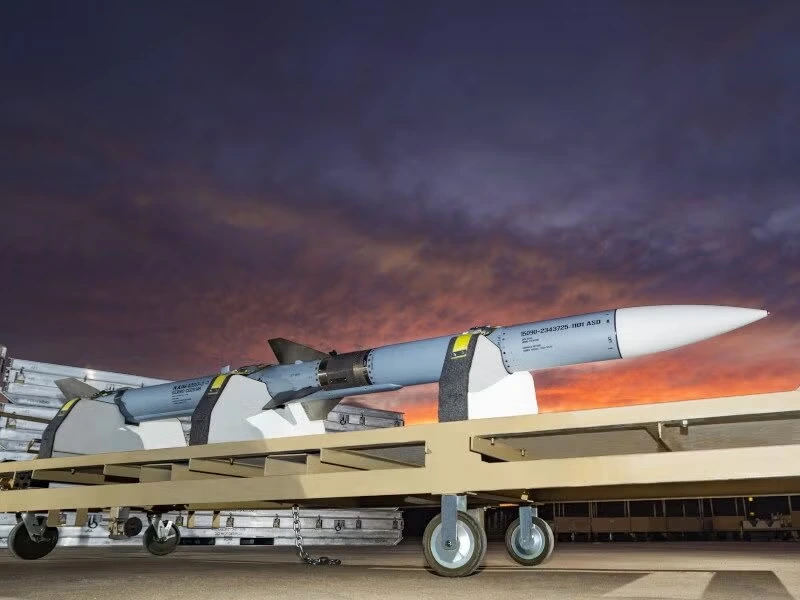
Defense Feeds – Washington. The U.S. Approves AIM-120C-8 AMRAAM Missile Sale to South Korea decision underscores the deepening defense partnership between Washington and Seoul as both allies work to strengthen deterrence and air defense capabilities in Northeast Asia.
The U.S. government has approved the potential sale of 70 AIM-120C-8 Advanced Medium-Range Air-to-Air Missiles (AMRAAMs) to South Korea, providing the Republic of Korea Air Force with additional beyond-visual-range combat capability for its growing fleet of advanced fighter aircraft. The approval comes amid increasing security concerns on the Korean Peninsula and across the broader Indo-Pacific region.
The AIM-120 AMRAAM remains one of the most widely deployed air-to-air missiles in the world, serving as a cornerstone of air combat capabilities for numerous U.S. allies. The latest approval highlights Washington’s continued commitment to supporting South Korea’s defense modernization efforts while enhancing interoperability between allied forces.
Military analysts view the acquisition as part of Seoul’s broader strategy to maintain a technological edge in an increasingly complex regional security environment.
AIM-120C-8 Enhances South Korea’s Air Combat Capability
The AIM-120C-8 represents one of the latest operational variants of the AMRAAM missile family developed by RTX Corporation.
Designed for beyond-visual-range engagements, the missile allows fighter pilots to detect, track and engage aerial targets at significant distances while maintaining flexibility in dynamic combat situations. The weapon has become a standard component of modern Western air forces due to its reliability, combat-proven performance and compatibility with a wide range of fighter aircraft.
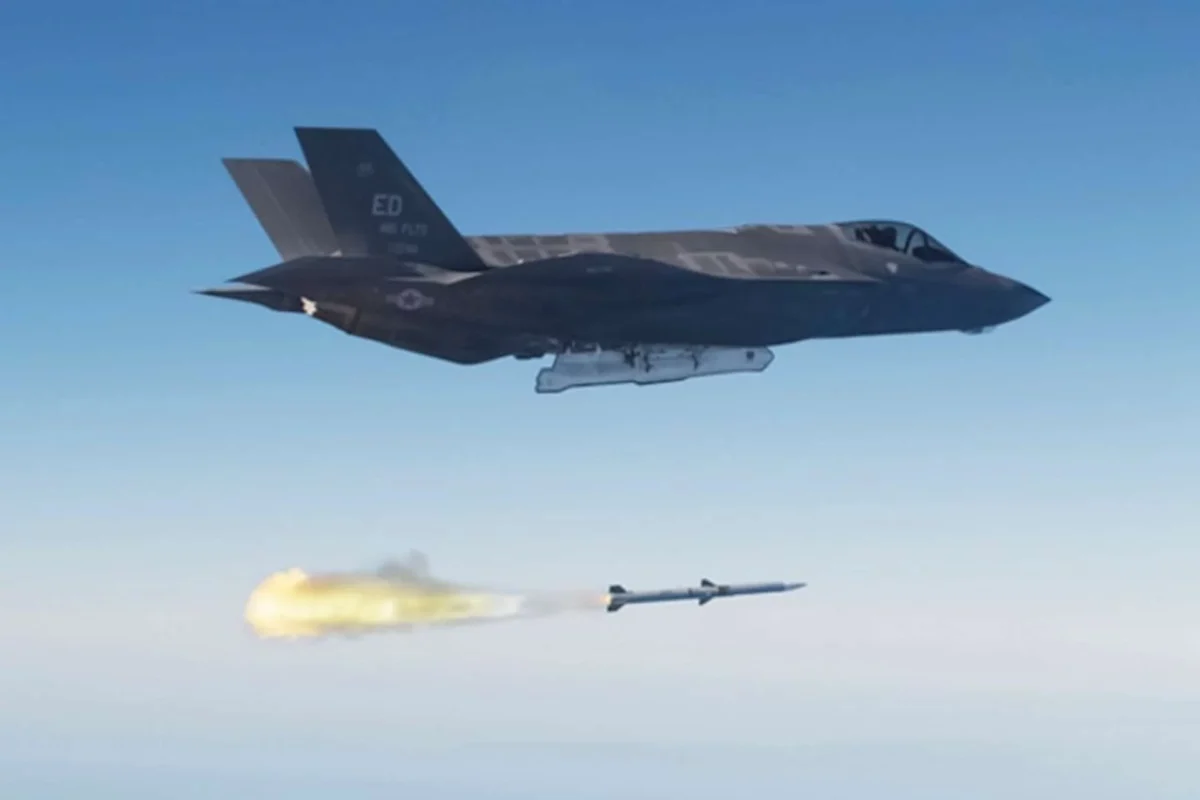
For South Korea, the acquisition is expected to support several frontline combat platforms, including the F-35A Lightning II and advanced variants of the F-15K Slam Eagle. The missiles will enhance the country’s ability to respond to airborne threats while strengthening overall air superiority capabilities.
Military experts note that modern air warfare increasingly depends on long-range detection and engagement capabilities. Aircraft capable of identifying and striking opponents before entering visual range often hold a significant tactical advantage.
The AIM-120C-8’s advanced guidance systems and networked targeting capabilities make it particularly valuable in highly contested operational environments where speed and situational awareness are critical.
The missile sale also supports South Korea’s ongoing efforts to modernize its armed forces and maintain readiness against a broad range of regional security challenges.
Regional Security Concerns Drive Defense Investments
The approval comes as security conditions in Northeast Asia remain a central focus for military planners.
North Korea continues advancing its missile and weapons development programs, while broader strategic competition across the Indo-Pacific has prompted countries throughout the region to increase defense spending and accelerate modernization efforts.
South Korea has responded by investing heavily in advanced aircraft, missile defense systems, naval capabilities and indigenous defense technologies. Maintaining a strong and technologically advanced air force remains a key element of the country’s deterrence strategy.
The acquisition of additional AMRAAM missiles complements these efforts by ensuring frontline fighter units maintain sufficient stocks of modern air-to-air weapons. Large missile inventories are increasingly viewed as essential given the potential intensity and duration of future conflicts.
Defense analysts also point to the importance of interoperability between allied forces. The Republic of Korea Air Force regularly trains and operates alongside U.S. military units, making common weapon systems a significant advantage during joint operations.
As regional military capabilities continue evolving, maintaining advanced aerial combat capabilities has become a priority for many Indo-Pacific nations.
Air Superiority Remains Critical to Future Warfare
The missile sale highlights the continuing importance of air superiority in modern military strategy.
Despite the rise of drones, cyber warfare and long-range precision weapons, control of the air remains essential for enabling broader military operations. Air superiority allows forces to conduct reconnaissance, strike missions and defensive operations with greater freedom and effectiveness.
Advanced air-to-air missiles such as the AIM-120C-8 play a central role in achieving that objective. Their ability to engage enemy aircraft at long range provides a significant combat advantage while increasing the survivability of friendly forces.
Military planners increasingly expect future conflicts to involve highly contested airspaces protected by sophisticated radar networks, advanced fighter aircraft and integrated missile defenses. In such environments, long-range precision weapons become indispensable.
For South Korea, the acquisition of 70 additional AMRAAM missiles strengthens an already capable air force while reinforcing deterrence against potential adversaries. The sale also demonstrates Washington’s continued support for allied defense modernization efforts across the Indo-Pacific.
As regional competition intensifies and air combat technologies continue evolving, advanced missile systems remain a crucial component of maintaining military readiness. The latest U.S. approval ensures that South Korea will continue expanding its ability to defend national airspace and contribute to regional security in the years ahead.
