

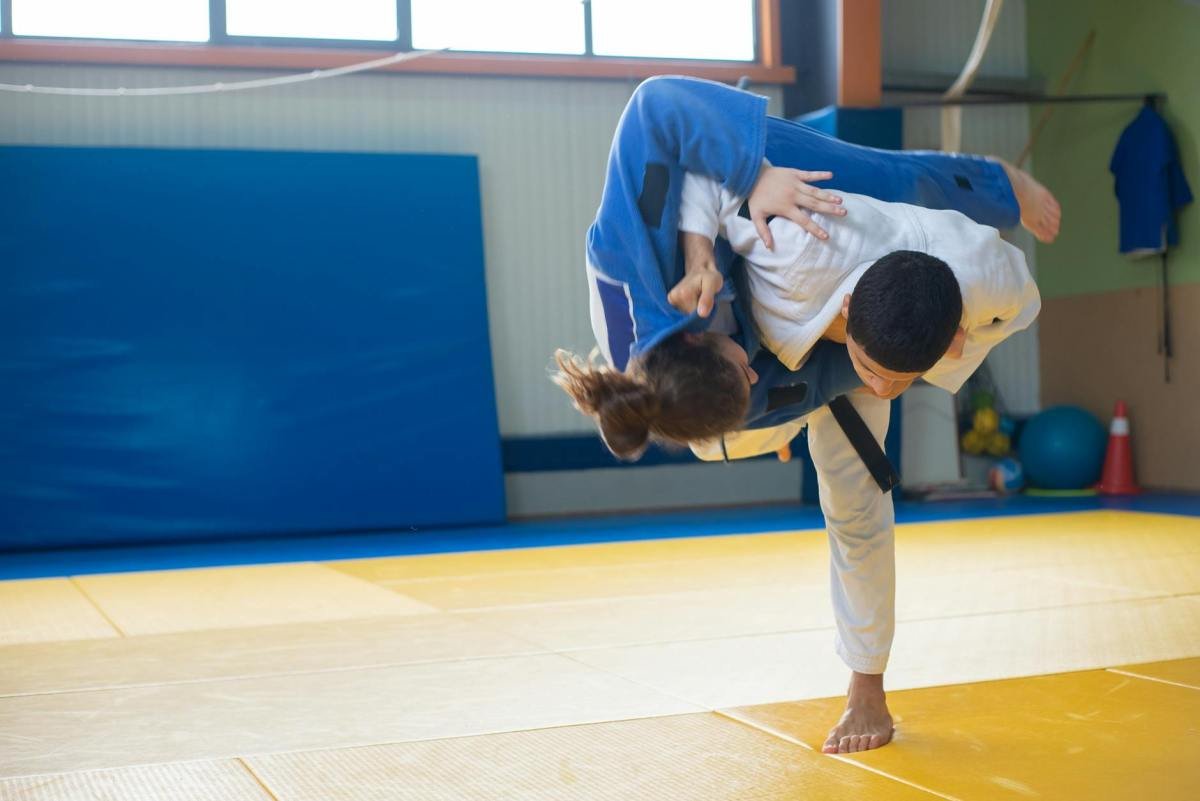
Lou Moyerman first started judo after being jumped by some kids, enrolling in a program led by Helen Foos. Moyerman would come to view Foos as a second mother and would be introduced to Takahiko Ishikawa through her. When he enrolled in Temple University and began a judo club there. From there, Moyerman took to spreading judo, establishing his Liberty Judo school and Liberty Bell Classic tournament. Today, Moyerman took some time to discuss his early time in judo, his relationship with Ishikawa, and the lasting effect of judo in his life. This interview was used in the writing of the book Takahiko Ishikawa: Judo’s Quiet Master, available now!
Martial Arts of Yesterday, Today, and Tomorrow: Welcome Lou! Thank you for joining us to talk about Ishikawa!
Lou Moyerman: It is a pleasure to be here!
MAYTT: When did you first start training under Ishikawa and what were your first impressions of him as a person and as an instructor?
LM: My first teacher was Mrs. Foos. I practiced with her up and through high school when I was a kid. When she left to go to Virginia Beach, I think I was a freshman in college. And at that time, I started going to Sensei’s club on Broad and Race, and then second one was a little further up on Broad and Palace Hill. I finished high school in 1969, and I don’t think I practiced with him until I was finished high school, although I knew who he was then. I’d say 1970 was when I started training with him.
He was pretty incredible. I don’t think I knew anybody who I had met – I was only a kid when I was awed by him. He just knew so much judo. He was very jovial and happy most of the time. He was just a sensei. He was a true Japanese sensei. once he stepped on the mat, you knew. There was a lot of respect in this club – respect towards him and everybody else in the club. You knew that you were going to learn something from him, and he was going to help you be good at judo.
MAYTT: What was the judo scene/community like in Philadelphia? Was it a vibrant community interacting with one another or were there small pockets of schools and clubs in almost isolation from each other?
LM: In terms of the judo community, I don’t remember much with Mrs. Foos except that we would go to few tournaments, mostly local and regional. I didn’t go to any national tournaments until I was in college. Most of the people that I remember back then, in our area, there were a few clubs that had students, like the Mid-Atlantics. When we went to tournaments, most of the clubs that I remember were from Baltimore, Washington, D.C, or New Jersey. There wasn’t a lot from Philadelphia; there wasn’t a huge judo population there from what I can recall. The central YMCA had a program, and I don’t really remember any others back then. When Ishikawa came around, which was when I was at the end of junior year and the start of my senior year of high school back then, we were mostly in the Shufu Yudanshakai, or the Shufu region/Capital region. Then there were clubs all over the place. At the time, that went from Virginia to Northern New Jersey, so there were a lot of different clubs: the Washington Judo Club, the Cradford Judo Club, and a bunch of other around that time. I don’t remember there being a lot of places in Philadelphia to do judo. If you wanted to practice judo and wanted to get better in Philadelphia, you went to Ishikawa’s. That was where everybody went. Friday nights and Saturday nights were big days at his club. People would come Friday night to practice and stay in Philadelphia for the night and come back Saturday. So, there were always big crowds on Fridays and Saturdays. People from jersey and Delaware. It was the place to go for practicing and instruction. Those were the two days.
When I first saw him, he was probably eighth dan. There was nobody else around then with that kind of rank of that kind of knowledge. There were some other really great Japanese instructors around. I used to ask them about Ishikawa and they would tell me that they weren’t at all like him. And I used to be under these guys too.
When I used or think of the term sensei, I think of Japanese instructors from Japan that learned judo in Japan and were incredible. Ishikawa was probably the top of the line when I think of the term sensei. I asked him once, because I used to go to the other clubs for training – those clubs didn’t do much instruction, just a warzone or a battlefield – why he always taught something in whatever class we were in. he said to me, “I’m the highest ranked judoka. People come to my class and come to see me teach something, whatever it is. So, I always feel obligated that I must teach a lesson during my classes. I don’t want to ever skip teaching a lesson.” He didn’t want to disappoint people. He was more worried about the people coming in and doing something because they came to see him. He wasn’t worried about giving us enough time on the mat to beat each other up during randori. He always taught something – it was just the way he was.
His judo knowledge was incredible. Friday nights he would teach kata. We went down there to practice, and we didn’t care about kata; we didn’t do much with kata. But he would always teach Friday night and it was remarkable that he knew what all the different kata were. I don’t remember much of what he did now, but it was pretty cool thinking about it now. Who else could you learn this stuff from except for somebody who was the best in the world? And this came from his judo, and it was remarkable. He was so good at teaching the techniques. He was very traditional in that he would always demonstrate on the next highest rank. Whoever that was received the honor of being thrown or choked or pinned or whatever he was teaching. When it was somebody that was beating you up coming up, it’s fun to watch Ishikawa demonstrate a choke and you’d ask questions, “Oh Sensei, which way should you pull?” And Ishikawa would pull, and the guy would go, “Uuulllgghhh!” [Laughs] And then one day, I found myself being choked and there were questions and questions, and I thought to myself that payback was a bitch. [Laughs] He was so strong.
We had a judo club up at Temple University and I was teaching a class. As it grew, I would tell everybody, especially when they got into it and were getting good, when we would be going to Ishikawa’s, and I’d treat everybody to the class on Friday night. It was about three dollars for mat fee back then. I don’t know where I found the money, but that was okay. They would ask me why we were going there, and I told them they would see. I had a football player on the team that was about six-foot-five, 250 pounds, left tackle, high school wrestler. He was a good athlete, Jeff. I said to him that one thing you have to do when you get there is to randori with the sensei; if you don’t, you’re disrespecting him. Jeff looks at Ishikawa, who was about five-foot-ten, about 220 pounds, as says, “Oh man. I’m gunna kill this old man!” I kept telling him to randori with Ishikawa, cause I and everybody that was watching knows what’s going to happen. [Laughs] During the match, Ishikawa is talking to him, “Oh big guy. Strong man!” People are getting closer and closer and Ishikawa’s pushing Jeff back. Then he throws Jeff in a foot sweep and goes flying. Jeff gets up and now you can see that he’s mad. He starts trying to grab a leg, because he used to wrestle, and Ishikawa moves his leg out of the way and Jeff tries for it again. “Oh, you’re very strong!” Ishikawa says to him and lets him go in close. “Push harder!” Jeff pushes and he can’t move the guy! [Laughs] This goes on for the five minutes with us all watching. Jeff comes over when it’s done, “God! You were right about that guy!” I told him that Ishikawa was sixty-six years old and the look on his face was shock. That’s why Ishikawa was so special – he understood what judo was about.
When he laid down on the mat and you tried to do kesa gatame – so you know that you have to put your arm under somebody’s head to do that pin – you couldn’t put your arm underneath Ishikawa’s head. He would just lay there while you try to put your arm underneath his head, and you couldn’t do it. I don’t know why – he would put it down and you couldn’t move him. It was truly remarkable. Then when he’d do kesa gatame to you, he’d hold you down with no hands and telling everybody else what to you. “No, you pull this way” or “You do this” and you felt helpless. He was remarkable like that.
MAYTT: What was the dojo atmosphere like while training under Ishikawa? Was he a strict instructor or would there be some flexibility in his teachings?
LM: Most of the time it was pretty good that there were enough people there to practice with. When I first started going there, I was a brown belt and about sixteen or seventeen and the black belts would love to toss me around all over the place. I said to myself that there was one day where I was going to toss them back – my own motivation. It was amazing when I made my black belt, they all beat me up that night and then they took me to the locker room and poured beer on my head, saying welcome to the club – welcome to the world of judo now. Nobody was not out to not help each other, so to speak. It was like, if you got there early, you would get on the mat and practice. People would come early to train, as long as you got permission, of course. At the end of class, Ishikawa would always let people stay and do certain things for those stragglers.
He loved ne waza. Sometimes there were four of five of us that would stay after and he would do ne waza drills or he would show a move and have everyone try it or lay one person down and the other would have a turn to hold them down and try and get out, then he would show an escape. Things like that. It was always a good atmosphere. Most of the people were all friends. There were tons and tons of respect, as it is in judo. In 1971, I met a guy from Israel. His girlfriend was at Temple, and they came to practice with us and he ended up coming for years. His name was Yona Melnik. He was an Israeli national champion, and he went on to be and Olympian for Israel and coach. I said to him, “You don’t have to come here this way. You live in Boston and your girlfriend lives in Philadelphia and the best teacher in the world is in Philadelphia. Come down and get on the mat and meet him and see if you like and make you mind up if you want to practice here more.” He really didn’t speak a lot of English back then. I took him there and it became an instant love affair between the two of them. Anything that Ishikawa taught, Yona could do. He was a great athlete. The judo in Israel, at the time, it wasn’t as fantastic as it is now. And he didn’t have the kind of teacher that Ishikawa was, so he just opened the world of judo up for Yona. Yona would do a morote seoinage and a foot sweep, and then three weeks later, he was doing tai otoshi, osoto gari, and everything else he did but better. He stayed for a whole year in Philadelphia before he got married. We would just practice together there. He was the kind of quality person that went to Ishikawa.
Dick Walters was there, way back when. Dick’s brother, Jack Daniels – there were some many people that I respected when I first started there that I can’t remember right now. I don’t know a lot of the real old timers, but I heard that he had a great bunch of students back then too. After me came Joe Condello. Joe and I met down there. He was sixteen and I was nineteen. He was a white belt, and I was a black belt and I beat the crap out of him, and then he beat the crap out of me years later. Then we ran Liberty Bell Judo Tournament for years together and clubs together. Now my son and his daughter are running the tournament together. We have a great history between us too.
MAYTT: You bring up the Liberty Bell Judo Tournament, which still exists today, an amazing feat in of itself. Could you give some background on that and how that came about?
LM: I have a really cool Ishikawa story to tell you: there was a guy in south Philadelphia named Rich Layes and his wife was an Ishikawa student too – they are in Florida now. He, Joe Condello, and I used to run judo tournaments – little ones here, little ones there. One day, we sat down, and I said to the guys, “I really like to do something different. I’d like to promote a tournament called Liberty Bell Judo. We would give out Liberty Bells as rewards instead of medals to represent the city here.” It was the goal to make it a regional-type tournament. Everybody bought into it, and we started it in 1988. We held it at the George Washington high school for a couple of years, since I taught PE there, I had some connections there to help get the school for the tournament. The first year – we did it in June – we had 102 people in the tournament. I thought we would never survive. We had somebody sponsor us for a couple of years, that helped. By the fifth or sixth year, we were having a couple hundred people and it kept growing. We added different venues; we moved to Holy Family University; we moved to Lincoln High School. I was doing a lot of USA Judo then, so I was all over the country and all over the world. We had kids that were competing for us, but I was the manager with the teams, so I would promote the people outside the US and people inside the US. And it just kept blossoming. The largest number we had was 890, and that was when we didn’t let people fight in two divisions. Now, with people fighting in two or three divisions, numbers are a little high too, but that’s okay. That’s the way things are now. So, for four years in a row, we had over 700 people and one year we had 890.
People were looking for good competition to go and compete in and every year it would get harder and harder, almost as fierce as a competition at our nationals at times. But we kept promoting it and the only thing we could do was make it better each time – sit down after each year and ask yourself, what did we do right or wrong; what do we need to do? People said that we needed to get tatami mats and we ended up buying tatami mats. People said to try this system, and we tried that. People said we should try this; we just kept trying to make sure we improved our product, so to speak, the competition each year that people would come. That was the whole idea of it.
Instead of becoming a regional tournament, we became international and highly national and probably one of the most prestigious tournaments in the country, in terms of numbers. If you won the Liberty Bell, it was like you won any other tournament you could fight in in the country. It turned out to be really neat. I won’t lie to anybody, we made money, but we, I’d say, put all that money back into judo: if we needed new mats, we bought it. Since Joe and I had a club, we used to call the tournament the club’s Liberty Bell. It was Susan Oles idea to have a Liberty Bell Judo Club. She said, “You’re at a YMCA but you don’t call yourself the Y Liberty Bell Tournament. Your tournament is Liberty Bell, so make it Judo Liberty Bell.” We did that. When we needed money to pay rent or buy for the clubs, or take kids places, that’s what we used it for. We sent a lot of kids to international tournaments. At times, we helped some of the senior Olympic athletes; we had them as guests so they could raise money to go to what they needed to go to.
We did what we thought what would make our tournament attractive to people, that they would come to a great city, and we tried to promote Philadelphia. A couple of times, we had a few representatives from Philadelphia come from here at the beginning – we had Michael Sweeney for years. Jason Morris. Later on, like Brian Olsen, and Surida Chutes. They all came, gave out awards, talked to kids, they gave out autographs, they sold stuff, helped themselves to the training. I think we just tried to keep everything right and it seemed to work, so we kept at it. Now its Joe’s daughter and my son running it. And hopefully they get to have it this year [2022]; they have it planned. Hopefully things will get better so they can have it this year, because we miss having it. It was a judo happening – it really was. We’ve had people from California, Florida, Colorado, and the training center team came for years; Canada really uplifted up when Quebec started bringing in busloads of judoka – two or three buses of kids one year. All teenagers and upcoming athletes that would come down. They liked it because they could fight Saturday with the kids and Sunday with the adults; they go home with eight, ten, or twelve matches in two days, which is like great. That’s how you get better at judo – you compete. If you want to be a competitor, you have to compete. You have to learn what you’re doing right or wrong. Liberty Bell offered that – if somebody fights Saturday and Sunday, they were guaranteed four matches a piece. Some tournaments, you’re lucky if you have a match. That’s why people came. We were very hospitable to the people that came. We tried to run the tournament for the athletes, not for our ego. That was our biggest things when we started it. This tournament was for the athletes so we tried to run it so effective so that they could come in and only worry about fighting. We did the match numbers for them. We provided whatever we needed to provide for them. We were up all night doing that, but that didn’t matter, and we didn’t care.
I think Ishikawa was very proud of us doing that. Let me tell you the story about him. During one of the first four or five years, we invited him. I asked Joe if Ishikawa would come if he was invited, because Ishikawa was in Virginia Beach still. Joe said he didn’t know because he wasn’t doing much. Now Joe moved to Virginia to stay with Ishikawa when he opened a dojo down there. Joe and Ishikawa were very close. I said to Joe, “Well, you’re closer to him than I am. Why don’t you ask him to come up? We can give him some money. We can hand him an envelope with a bunch of money in it because it’s to pay him back from us to him.” We wanted him to be honored there. After a little bit of him saying no and us asking a few more times, he said that he would come. He was going to go somewhere and stop in Philadelphia. So, he came to the tournament, and we stopped the tournament when he got there. He sat down at the head table, and we introduced him to everybody and got a tremendous around of applause. It was great. We were so happy. Then we sat down with him; we were just talking with him. I told Joe to give Ishikawa the money, but he said for me to give him the money. [Laughs] We went back and forth on this until finally we both say, “Sensei, this is for you.” and we hand him the envelope. He shakes his head, “Oh no, no, no, no. You don’t give me anything.” “Sensei, no. We want to give you something. This is so important to us; this is us saying thank you.” “No. I don’t want it.” So, we badgered him for just a little bit longer and he finally said, “Okay. Okay. I’ll take it.” He takes the envelope, and he looks at Joe and I and says, “See? I took the envelope; its mine.” He threw it on the table and said, “I give it back to you now. It’s yours.” We were both speechless because we didn’t know what to say to him; he got us. Then he said he had to go. We thanked him, put the money back in our pockets, and we looked at each other like he got us and there was nothing we could do about it. That’s the way he was. We were speechless. We didn’t know what to say for a while then we just laughed, because that’s all we could do. [Laughs] I think that was the last time we saw him.
When I was in Japan, I should have got on a train and seen him, but I was worried about getting lost in Japan. I did talk on the phone with him. He didn’t really want to talk to me, but I talked to his wife and she finally put him on and he said hello to me; “Tell Joe I said hello.” We talked for about two minutes and that was about it. I felt honored that I got to talk to him. I kicked myself in the ass for not seeing him. I was in Tokyo, and he was in Yokohama. I didn’t know here it was or what I was doing. I know my friend Yono went to see him when he was there once. He was a special person.
MAYTT: How did Ishikawa’s family view his judo endeavors? Were they supportive or did they not have much concern with it? Was his wife or son ever seen training on the mat?
LM: The kids, like I said, trained judo with Mrs. Foos because they lived with her. I think the girls were fine with that, but I think that was part of the problem with his son. He wanted to do more judo with his father. I don’t know if that was a true fact, but that was one of the rumors that we’ll never know why he took his life. He didn’t leave a message or anything else. I was supposed to stay in his room that night and sleep there because I was working for Mrs. Foos’ son-in-law. He was a landscaper and he told her that he needed me the next day and that he would bring me back. And that was the night Hajime took his life. We went back the next day, and they wouldn’t let me back into the house, but when they did finally tell me about that, they took me home. I don’t know why or how or what happened with that. His wife had come over for a while, but I didn’t know what happened there – I was a kid. We didn’t know those things. She finally went back, and I don’t know if they were trying to get something to work. But I know that later on, Mrs. Foos adopted the kids and took care of them.
MAYTT: You first trained under Helen Foos. Could you tell me more about her relationship with Ishikawa?
LM: She is a major part of the Ishikawa story. I started with her when I was twelve, if I recall correctly. We used to go to her house. She used to have a house on Montgomery Avenue and a judo club that was in the house. She had a big living room that she converted into a dojo. It was mostly kids’ classes then, if I remember. She too was a very good teacher of judo and of techniques. She really knew her judo. She was very influential in my life in terms of helping to raise me as a person through judo, as I didn’t know much of anything. My father and brother both did judo with her for a while. My father hurt his knee, so he had to stop so he could make a living. She mostly taught kids. She had a really unique way of working with kids. She made judo a really family-type thing with her.
As we grew older, we used to go to judo on a Friday night, stay at her house – she had a very big house. Saturday we would practice and then the rest of the day Saturday we would work for her. There were about six or eight of use, maybe. We did all kinds of odd jobs around the house – clean up inside and outside. She even paid us; I don’t remember how much. Then she would take us out to dinner and spend the night again together. I remember we used to watch TV in her bedroom – she had a giant bedroom – and she would sit on her bed with her dogs, and we would all be sitting all over the floor, laughing, playing, talking with each other. She was like a mother figure in my life; I did have my own mother, but that’s what Mrs. Foos was to me.
Sunday we would wake up, eat, and work again for a few hours, and then she would take us home. Those were my weekends when I was fourteen, fifteen, and sixteen for a while. We would do that all weekend. She also used to take us to tournaments in a Volkswagen bus. Back then, you didn’t have to worry about seatbelts, so she took all the seats out of the bus and left only two seats up front. The rest of open-ended – we would sit on the floor. She would take us to tournaments with that, the five or six or ten of us – don’t remember the exact number. Sometimes a parent would drive, and she would sit up front with them. After the tournaments, we would always have dinner together. I remember we used to go to Chinatown a lot. She was a pretty remarkable lady. She was invited to my bar mitzvah – we wouldn’t start things until she got there, that’s how much my father respected her too. We had a very nice club; we had a lot of kids that did good judo. We all got raised that way. We all liked each other and have a fun time.
Through the years that I’ve taught judo in different places and all, I’ve always tried to look at it as not just a sport, but as a family thing to keep kids happy and keep them off the streets – mentor them and raise them as a family because if you didn’t, they wouldn’t want to stay in judo. It wasn’t like a team thing like in high school or basketball, so you had to keep kids interested somehow. If they felt comfortable and felt happy and they learned good judo, then that was a good thing. I think she was as instrumental as Sensei was in my own approach to judo and I’m thankful for that.
She was a very remarkable woman. She really only had kids’ classes after a while. The adults wouldn’t put up with her ways – she was set in her ways a bit. She was the type of person that would take her shirt off of her back and give it to you if you needed it. I always remember that expression and she treated us like her own kids in a lot of ways. When I got married, she was still alive, I invited her to the wedding. Unfortunately, she couldn’t come. She sent me a very nice wedding present and a very beautiful letter. I took my oldest son and my niece down to see her in Virginia Beach when she had moved down there before things got bad and never got back down there. She was very influential in my life. I can’t say enough good things about her.
I didn’t know much about her before I started judo. There are a lot of stories about her and Ishikawa, but I don’t know which ones are true or not, to be honest with you. I just know she was very remarkable. There was a time, originally, where she was going to open a dojo in her barn and putting a living part on the top for Ishikawa if anything ever happened, but nothing ever did. So, she went and opened her own dojo, Merion Dojo – that’s what we would call it back then. We were in the town of Merion, Pennsylvania. I know that she used to tell stories when she used to do judo, when there were only a handful of women in the entire country doing judo. She used to have to fight the men to get her black belt. All the stuff wasn’t very easy, but it was pretty remarkable in that sense that she became a black belt in judo. I know she also took a lot of jujutsu with this guy named Jack Feinsinger. For some period, he used to come to the club and teach us all jujutsu a little bit. He was a really little guy, who was nasty too – he wasn’t the type of person you’d want to fight with for sure! He was one of her instructors at one time.
The rumor was that they were lovers for a while, and something happened. I do remember that Ishikawa used to come by the house a lot because his children lived in her house. He had two daughters and a son: Fumiko, Atsuko, and Hajime. They were practicing judo with Mrs. Foos and living with her. Somewhere along the line, she officially adopted Ishikawa’s children. I don’t really know all the story behind all of that. The son committed suicide when he was about fourteen or fifteen. He was a little younger than I was. The older daughter, Fumiko, was a tad older than me – she’s seventy now. Astuko, the little one, was a really neat girl – she’s not a little girl anymore; she has a bunch of kids – but she was a lot of fun. She had a bubbly personality all the time. She was always smiling, from what I remember. But I don’t really know what happened between them or what went on. I was too young to remember and when I was older, no one really talked about it, to be honest.
Part two coming soon!
Find out more about Shimada, Ishikawa, and more in Takahiko Ishikawa: Judo’s Quiet Master!
