

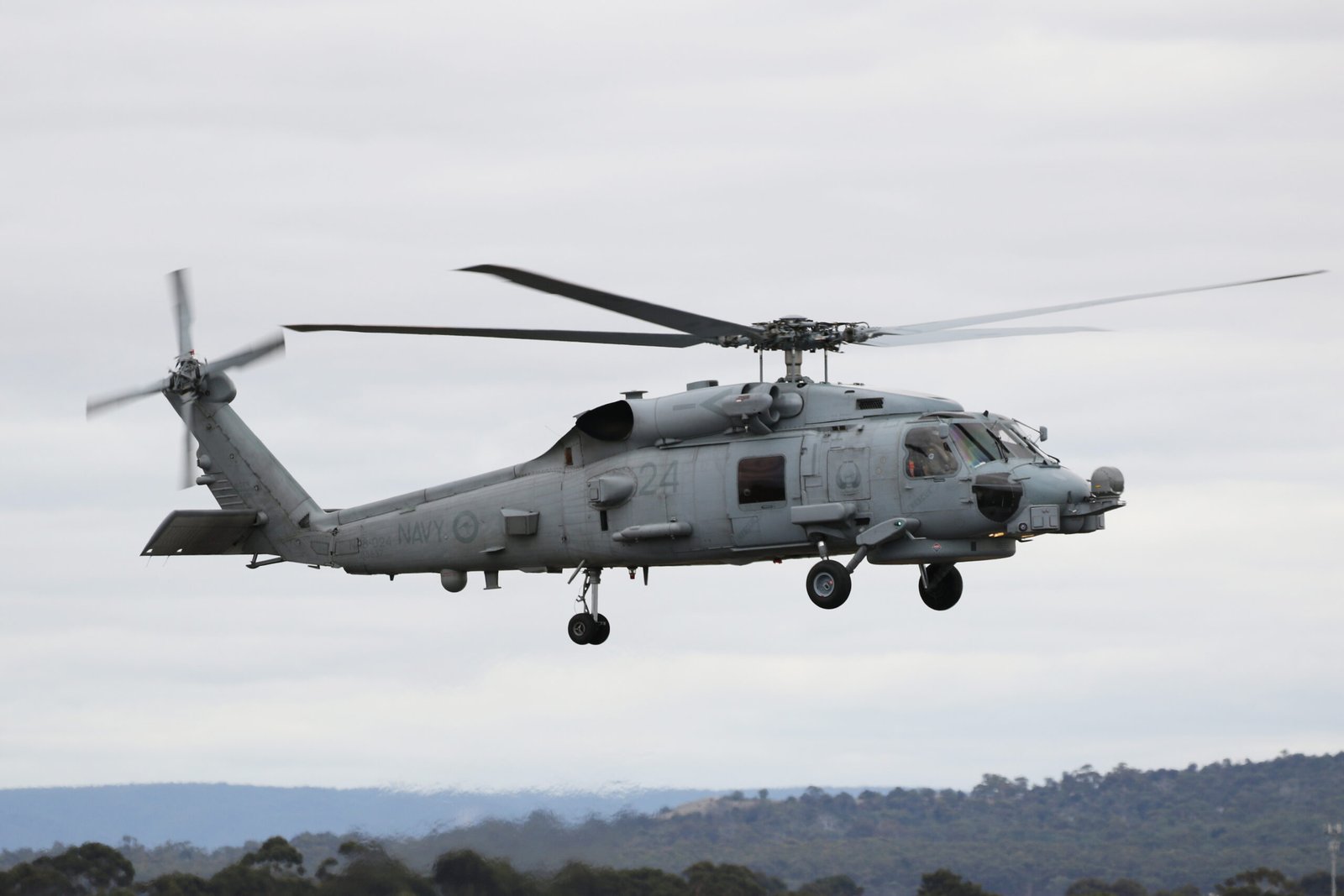
The US Defense Security Cooperation Agency (DSCA) announced on 5 June that the country’s State Department had okayed a sale of five Sikorsky MH-60R naval helicopters to New Zealand, as well as accompanying MK 54 torpedoes.
This followed the New Zealand government’s revelation on 21 August 2025 that it had selected the MH-60R to replace a fleet of eight Kaman SH-2G(I) Super Seasprite helicopters (three of which are in long-term storage). This was the culmination of a Maritime Helicopter Replacement request for information issued on 24 April 2023.
Naval rotary-winged assets are rather unique in that they are allocated to No. 6 Squadron of the Royal New Zealand Air Force, but they are flown by crews from the Royal New Zealand Navy (RNZN).
The DSCA listed a price tag of US$1.5 billion for the helicopters and support package. Included are seven Link 16 radios; 14 embedded GPS/inertial navigation systems; five digital magnetic anomaly detection systems; and five airborne low-frequency sonars.
The sale includes weapons too: 225 Advanced Precision Kill Weapon Systems (APKWS); 225 APKWS II guidance sections; 65 AGM-114R Hellfire missiles; four M36E8 Hellfire captive air training missiles; GAU-21 crew-served guns; and five M240D 7.62mm machine guns.
This is the first time New Zealand will have fielded Hellfire missiles. The deal includes several types of sonobuoys too, which will increase New Zealand’s ability to detect hostile submarines.
The DSCA stated, “The proposed sale will improve New Zealand’s capability to meet current and future warfare threats by providing greater security for its critical infrastructure.”
On the same day, the DSCA made a determination that Wellington could also purchase 20 MK 54 Mod 0 lightweight torpedoes worth US$69 million.
This capability will greatly boosts the RNZN’s capability. Its Super Seasprites carry elderly AGM-119 Penguin missiles and MK 46 Mod 5A torpedoes. Naval helicopters are especially important since the navy’s two Anzac-class frigates do not possess integral anti-ship strike weapons.
Former defence minister Judith Collins said last year: “These five Seahawks will increase the offensive and defensive capability and surveillance range of RNZN frigates and ensure we are interoperable with our ally Australia and other partner defence forces.”
Indeed, the Defence Capability Plan, released on 7 April last year, highly recommended commonality with Australia’s military, which has been operating the MH-60R since 2014.
There has been no indication that Cabinet has approved the final business case for the MH-60R purchase yet. However, the move is expected to occur this year.
A Lockheed Martin Sikorsky spokesperson told Asian Military Review, “As the most advanced and capable multi-mission helicopter with unparalleled capability, proven reliability and sustained performance, the MH-60R is the ideal choice to meet New Zealand’s requirements, while also enhancing operational and interoperability with the US and other allied nations.”
The NZDF also stated, “Overall, the project is expected to be undertaken in three tranches. The first is the helicopter replacements, the second will concentrate on infrastructure and training systems at Base Auckland Whenuapai, and the third will look at investing in vertical-take-off-and-landing uncrewed systems to complement the helicopters.”
This is an important investment for New Zealand, which last month published a defence budget of NZ$5.491 billion (US$3.23 billion) for the New Zealand Defence Force (NZDF) for FY2026/27.
Wellington has also promised to increase defence spending as a proportion of GDP from 1% to 2% within eight years. Defence spending this coming year equates to 1.23% of GDP.
However, this level is insufficient in the eyes of the USA. When asked directly about New Zealand’s defence expenditure by a Kiwi academic at the Shangri-La Dialogue last month, US Secretary of Defense Pete Hegseth described New Zealand as “freeloading”.
He complained, “2% is not enough, so 2% is freeloading. I don’t have anything against New Zealand; I want partners to step up.”
by Gordon Arthur
