

For Stephen Ferrara, principal deputy assistant secretary of defense for health affairs, health information technology is far more than software and servers.
“It’s a tool, it’s an interface, it’s a patient engagement technique, it’s a force multiplier,” Ferrara said. “It’s really a path for our patients, our service members, to continue their health care journey as they go to the VA.”
That expansive vision is driving a period of rapid transformation inside the Military Health System — one that Ferrara says is as much about people as it is about platforms.
Connecting a complex ecosystem
The MHS serves a uniquely diverse population: active duty service members, military families, retirees, and veterans spread across military treatment facilities, community providers, the Tricare network and the VA. Bringing cohesion to that ecosystem is one of the system’s defining challenges.
“Being able to bring all those data pieces and that information together and make sure it’s in a consolidated place so that a person has a cohesive and continuous health record is really important,” Ferrara said. He pointed to the Health Information Exchange as a key enabler, and to an emerging partnership with Kaiser Permanente at Walter Reed National Military Medical Center as an example of what military-civilian integration can look like in practice.
Underpinning it all is MHS Genesis, the system’s primary electronic health record platform, which Ferrara said is the same underlying system the VA uses under a different name. That shared foundation means a service member can carry one continuous health record from enlistment, through active duty, into VA care.
Artificial intelligence is accelerating that integration, empowering providers and patients alike to more easily access and utilize data, Ferrara said.
One of the most visible recent deployments of that philosophy is ambient listening, a capability that transcribes and summarizes clinical encounters in real time, freeing providers from the keyboard and returning their attention to the patient in front of them. Ferrara called it one of the most successful IT rollouts of his career.
“To me, it brings humanity back to health care,” he said. “You can go back to having that conversation, that looking in the eye, that one-on-one.”
The only healthcare system that goes to war
But for all the advances in garrison care, Ferrara is quick to remind that the MHS carries a mission unlike any other health system in the country.
“There are many great health care systems in America,” he said, “but we are the only great American health care system that goes to war.”
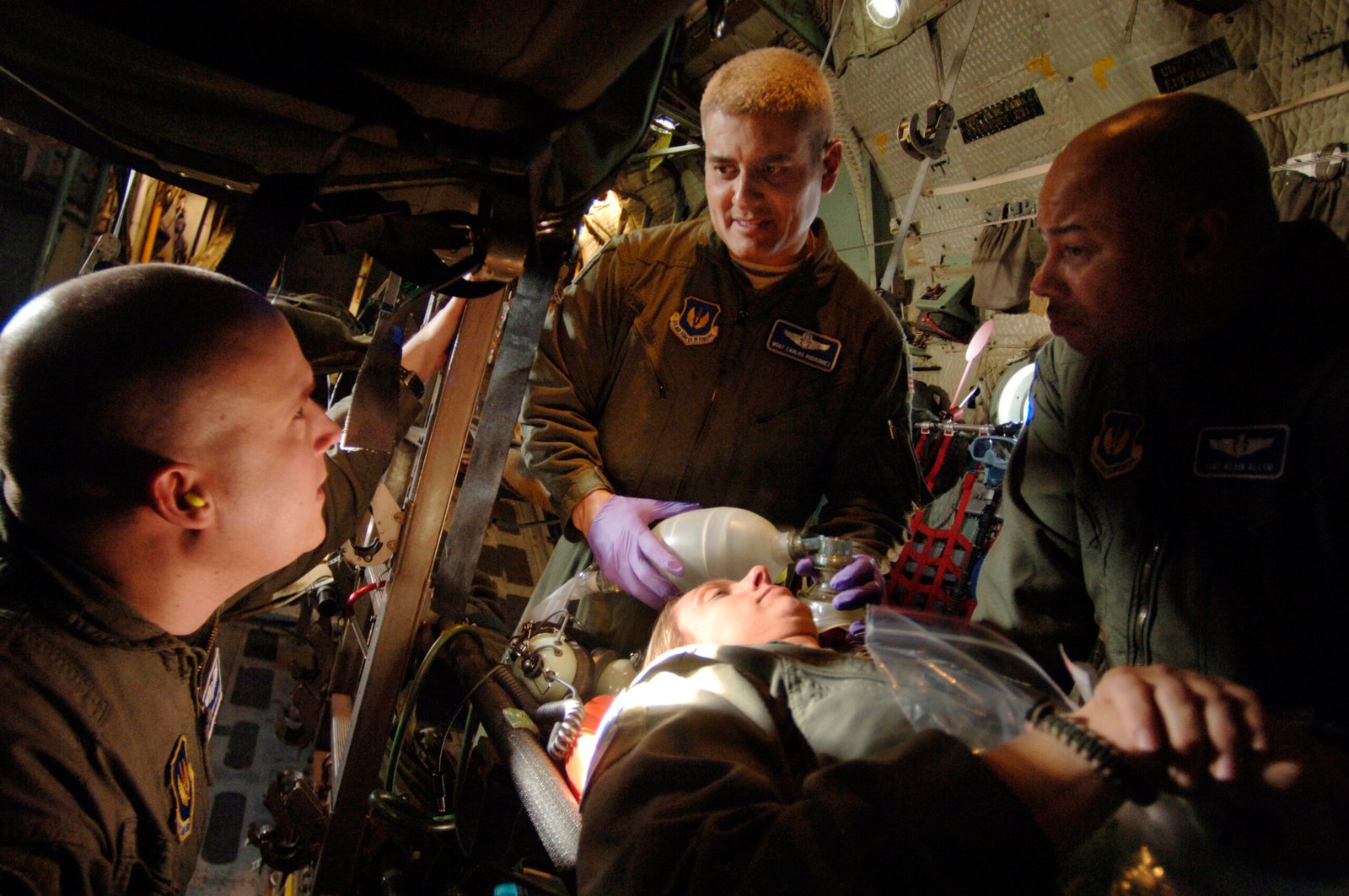
That distinction shapes everything about how the MHS approaches health IT. The Joint Operations Medical Information System, or JOMIS, links the operational environment back to garrison systems and MHS Genesis. In the field, a platform called BATDOK allows medics to document every intervention wirelessly — synchronously or asynchronously — ensuring a complete record follows the patient from point of injury through definitive care and into rehabilitation.
Ferrara, who deployed multiple times during his own military service, recalled a not-so-distant past when battlefield documentation meant a piece of paper that might get wet or bloodied before reaching the next stage of care. Today, that documentation happens in real time. He credits that capability — combined with the Joint Trauma System, an innovation of the Global War on Terror — with helping achieve the highest-ever battlefield survival rates.
The design principle behind battlefield IT, he said, mirrors the one driving ambient listening in the clinic: technology should be invisible.
“The IT needs to support the patient and the provider relationship and interaction,” Ferrara said. “I don’t need to remind anybody that we deal in life-and-death situations routinely. We make the extraordinary routine. And so when people have to do those things, they can’t be troubled by, ‘did I click the right box?’”
The patient is the point
Across every use case — from a well-baby check at an MTF to trauma care in a combat zone — Ferrara returns to a single guiding principle.
“The patient is the most important stakeholder, first and foremost,” he said. “If it’s not working for the patient, it’s not doing its job.”
That means patients being able to book appointments, view results in plain language and leave a clinical encounter with a clear summary of what was discussed. It means providers spending their time on patients rather than on documentation. And it means the provider-patient relationship itself being protected and strengthened by the technology meant to support it.
Ferrara acknowledged that the relationship between clinicians and health IT hasn’t always been harmonious. But he believes that dynamic is fundamentally shifting.
With MHS Genesis cloud migration under way and AI capabilities expanding rapidly, Ferrara sees a system moving toward something that feels less like an administrative burden and more like a genuine partner in care as pen-and-paper processes and clunky electronic health records systems evolve into supportive elements.
The metric for success, in his view, is straightforward: Did the technology make it easier to take care of a patient?
“That’s where the IT can really help,” he said. “And that’s where the workforce is going to embrace it and not see it as the enemy.”
Copyright
© 2026 Federal News Network. All rights reserved. This website is not intended for users located within the European Economic Area.
