

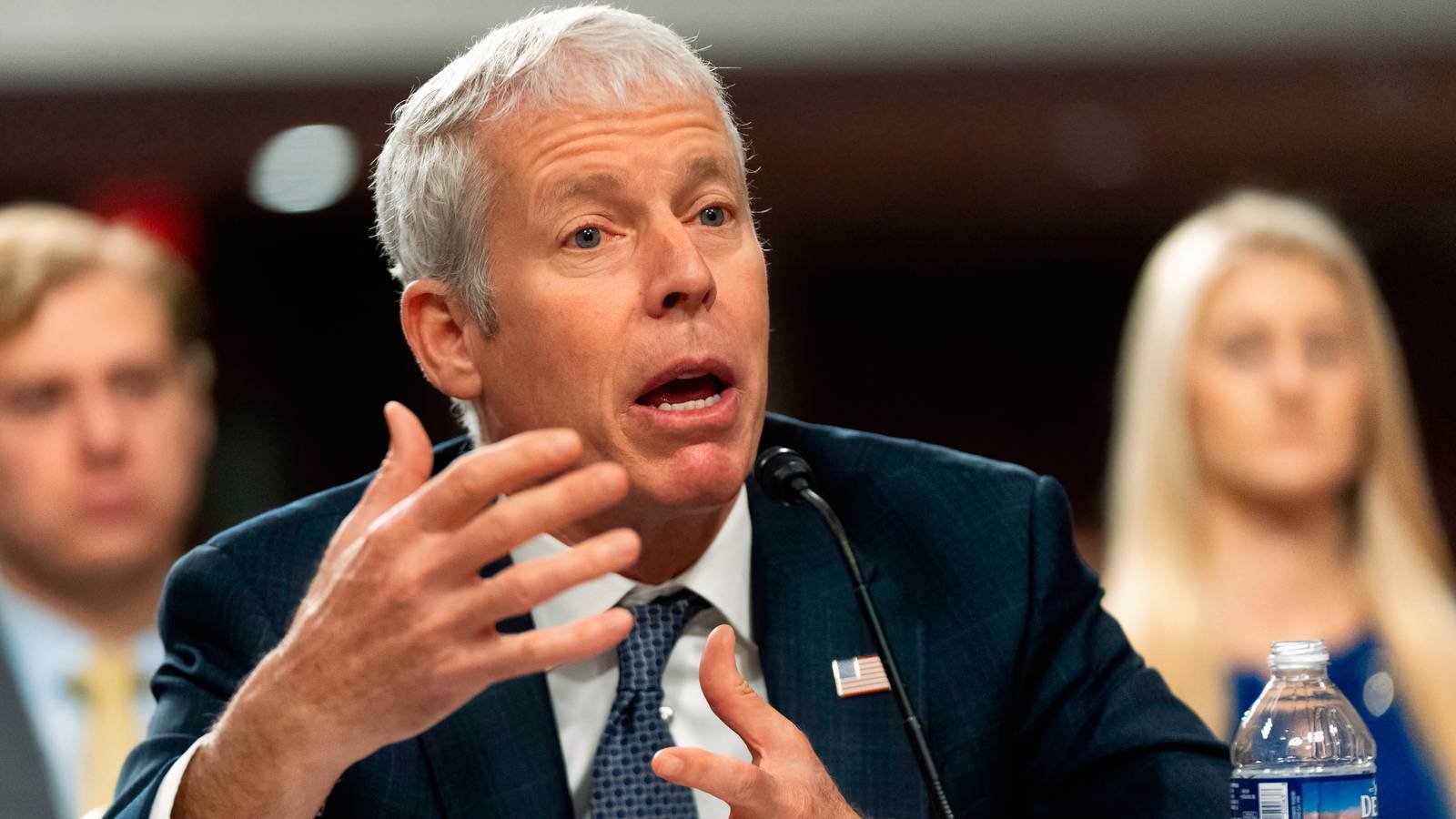
Iran is “frighteningly close” from enriching uranium to weapons-grade levels and constructing nuclear weapons, Energy Secretary Chris Wright warned U.S. senators on Wednesday.
Wright testified before the Senate Armed Services Committee, issuing a cautious warning that while Tehran may still face additional weaponization steps, the Middle Eastern nation could enrich a major uranium stockpile to weapons-grade levels sooner than expected.
“They are weeks, a small number of weeks, away to enrich that to weapons-grade uranium,” Wright said when asked about Iran’s nuclear program by Sen. Richard Blumenthal (D-CT) on Wednesday. “There’s still a weaponization process that happens after that, but they’re quite close.”
The hearing centered on the department’s atomic energy defense activities and a National Nuclear Security Administration budget request. The committee listed Wright as a witness alongside Brandon Williams, the NNSA administrator, and Timothy Walsh, the assistant secretary of energy for environmental management.
Military.com reached out for comment to the Department of Energy, the National Nuclear Security Administration, the White House, the State Department, and Blumenthal’s office.
The warning came as Blumenthal pressed Wright on how much enriched uranium Iran has, how quickly Tehran could move it to weapons-grade levels, and whether the Trump administration believes stopping the threat requires going after all of Iran’s uranium stockpiles.
Blumenthal asked Wright about Iran’s broader uranium stockpile, including material enriched to 20% and 60%. Wright said Iran has uranium enriched up to 60% and “a lot of” uranium enriched to 20%, calling that level “very concerning.”
Enrichment to roughly 90% is generally considered weapons-grade, but producing weapons-grade uranium is not the same as fielding a nuclear weapon. There’s a difference between producing weapons-grade material, and developing it into a usable weapon.
Iran’s Uranium Stockpile Takes Center Stage
The exchange sharpened one of the biggest questions hanging over the Trump administration’s Iran policy: Whether stopping Tehran’s nuclear program means limiting future enrichment, removing its existing enriched uranium stockpile, or destroying the material outright.
Asked by Blumenthal whether President Donald Trump would have to go after all of Iran’s uranium stockpiles to stop enrichment, Wright said, “I think that’s the wise strategy.”

“Ultimately, the goal is to prevent future enrichment of uranium as well,” Wright said. “Yes, to have a safe world, we need to end their nuclear program.”
The International Atomic Energy Agency reported in February that, based on information Iran provided on June 12, 2025, previous verification work and past operating records, the agency estimated Iran’s enriched uranium stockpile as of June 13, 2025, at 9,874.9 kilograms. That included 184.1 kilograms enriched up to 20% and 440.9 kilograms enriched up to 60%.
But the IAEA also said it could not provide current information on the size, composition or whereabouts of Iran’s enriched uranium stockpile because it lacked access to Iran’s four declared enrichment facilities. The agency said it also could not determine whether Iran had suspended enrichment-related activities.
In April, nuclear policy experts warned that securing Iran’s enriched uranium by force would be risky and complex, especially if the material had been moved, buried or dispersed after strikes on nuclear sites.
Iran’s 90% Warning
Wright’s warning came one day after an Iranian lawmaker raised the possibility of Tehran pushing enrichment to weapons-grade levels if the country is attacked again, adding another layer of urgency to the administration’s argument that Iran’s uranium stockpile cannot be left unresolved.
“One of Iran’s options in the event of another attack could be 90 percent enrichment,” Iranian parliamentary spokesman Ebrahim Rezaei wrote Tuesday on X. “We will review it in the parliament.”

Reuters reported Tuesday that the fate of about 400 kilograms of uranium enriched to 60% remains unclear, and that U.S. intelligence assessments suggest Iran’s nuclear program may not be significantly impeded unless that highly enriched uranium stockpile is removed or destroyed.
Vice President JD Vance said Wednesday that talks with Iran were making progress, adding that the administration’s central test remains whether Tehran can be prevented from ever obtaining a nuclear weapon, according to Reuters.
The Center for Arms Control and Non-Proliferation said in March that Iran’s 60% enriched uranium stockpile, if further enriched to 90%, could provide fuel for multiple nuclear weapons. But the group cautioned that breakout calculations are simplified and do not account for detection, weaponization work or whether Iran has already completed other steps needed to build a weapon.
