

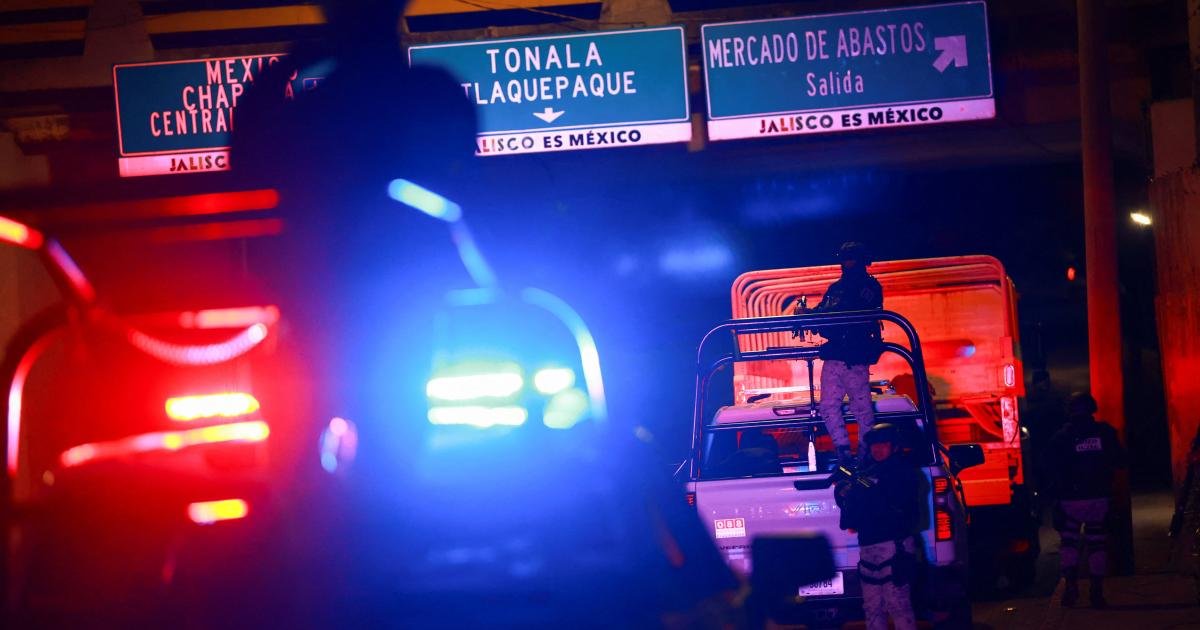
President Donald Trump’s approach to the drug war has been characteristically brazen. Since September, spectacular boat bombings by American forces in the Caribbean and the eastern Pacific have killed nearly 200 people, violating international law while doing little to curb the U.S. fentanyl crisis. Washington strong-armed Mexico into finally taking out the drug lord Nemesio Oseguera Cervantes, known as El Mencho, in February. Two months later, U.S. prosecutors indicted Rubén Rocha Moya, governor of Mexico’s Sinaloa state, on charges of aiding drug trafficking. In March, Trump hosted 12 Latin American leaders at a Florida country club for the first summit of the “Shield of the Americas,” a new, U.S.-led regional security initiative to counter drug cartels and transnational crime. Casting the effort as an “armed conflict” against “narcoterrorists,” Trump has designated Mexican and Venezuelan cartels as foreign terrorist organizations and is threatening to do the same for Brazil’s powerful prison-based gangs. Across all of these efforts, U.S. officials have floated direct military action that would shred diplomatic boundaries long thought inviolable.
But the president has not been nearly bold enough. For all his pomp and bluster, his approach is depressingly conventional. For three decades, countries in the Western Hemisphere have been hamstrung by the notion that the only way to counter the drug trade is with all-out combat: physically preventing all drug production and trafficking, and arresting or killing all drug traffickers. If antidrug efforts do not achieve these goals, the thinking goes, the answer is to escalate. But the promise of victory via brute force is a dangerous illusion. Drug flows are larger than ever, and militarized crackdowns have not just failed but also backfired, ultimately empowering the cartels that adopt the most violent and destructive tactics.
There is an alternative: what I call “conditional repression.” Countries facing powerful and destructive criminal groups, such as drug cartels and prison gangs, should draw bright redlines and concentrate their fire on the groups that cross them. Escalatory measures, whether military or judicial, could be used to punish only the worst cartel behavior. In this way, the repressive force that is currently failing to stop the drug trade could be used coercively to reduce its most pernicious harms. And nobody understands coercion better than Trump. From tariffs to military operations in Iran and Venezuela, he has seized personal control over levers of power and used it to punish those who do not bend to his will. Trump could do the same to cartels: cow them into ending fentanyl flows and minimizing violence, criminal governance, civilian extortion, and environmental degradation. However contentious his tactics, this president may be uniquely (and surprisingly) qualified to change the way the United States—and the world—fights the drug war.
MIGHT MAKES WORSE
Trump’s call to fight the cartels with military power is hardly new. Facing both domestic and U.S. pressure, many Latin American states have tried for decades to stop drug trafficking and destroy cartels through brute force. Blanket crackdowns, or “unconditional” repression, may hurt or even eliminate individual cartels, but they do little to deter those cartels’ rivals and often open up more market share. Somebody will fill the gap to meet drug consumers’ voracious demand, and that somebody is the cartel best adapted to the repression the state is doling out. This often leads to violent turf wars between cartels and disruptive conflict with the state. Unconditional repression also gives cartels incentives to break into the most lucrative illicit markets, such as fentanyl, because the state will come after them equally hard no matter what drug they trade. By the same logic, cartels begin to branch out: they tyrannize and extort civilians, raid municipal coffers, kill politicians, tap oil pipelines, abet illegal miners and loggers, recruit children, and traffic humans to expand and secure their operations.
Mexico’s experience illustrates the dynamic. In 2006, President Felipe Calderón launched a full-scale offensive against cartels, deploying Mexican armed forces in the streets. Today, this is remembered as the last time Mexico took the drug war seriously, but in many ways it backfired. Meant to curb rising cartel violence, the crackdown instead provoked a tenfold increase in cartel-related homicides and unprecedented armed confrontations between cartels and state security forces. Mexico’s traditional cartels were weakened, but new criminal groups rose to power, first among them El Mencho’s Jalisco New Generation Cartel. The state onslaught gave these groups more, not less, reason to build up private armies, enter the fentanyl market, prey on civilians, and murder politicians. El Mencho’s killing this year surely set the Jalisco cartel back and may even lead to its fragmentation, but the message it sent to his successors was, if anything, that they should hire more soldiers and bribe more officials.
Trump’s call for joint military action with Latin American governments to destroy cartels thus risks amplifying the fallacy of the traditional drug-war paradigm at hemispheric scale. Calls from policy experts to shift from airstrikes and violent raids to investigation and intelligence sharing are welcome, and acting on them could enable governments to hurt cartels more effectively and with less collateral damage, but the underlying problem would persist. When investigating money laundering or the production of precursor chemicals for illicit drugs, for example, authorities would still face pressure to prosecute whichever cartels they can, whenever they can, in the hope of making it impossible for them to operate. That is almost surely not going to happen. Just as cartels find ways to survive and adapt to military crackdowns, they will find new ways to produce drugs and launder the profits.
WAR IS OVER (IF YOU WANT IT)
For all their efforts, the United States and Latin America interdict only a small share of overall drug flows, on the order of 20 percent. Although far from the goal of the brute-force strategy to eradicate the drug trade, this is a significant loss for traffickers, enough to make them take the risks of interdiction seriously. But if states block drug flows haphazardly or indiscriminately, they squander their coercive power—traffickers do not know where or when to expect a crackdown, so they simply price in the risk. A better use of states’ power is to condition crackdowns on cartel behavior, striking harder at criminal groups when they cross established redlines. If the expected punishment for bad behavior is great enough, cartels will have powerful incentives to behave well, and even police their rivals.
The goal should be to curb the worst harms of the drug trade—not least the devastating U.S. fentanyl crisis, which was responsible for an estimated 70,000 deaths between November 2024 and November 2025. Trump could threaten in a Truth Social post to keep striking cartels as long as they keep trafficking fentanyl; he could even say that he cares less about cocaine and marijuana. For the threat to be credible, Washington should stop striking random boats in the Caribbean but rather target known fentanyl traffickers. Criminal groups might react by shifting their trade away from fentanyl to less damaging drugs and activities. The crisis is grave enough that even if targeted repression only partially reduced the damage from the fentanyl trade, Trump could claim success. On its own terms, conditional repression would primarily benefit the United States and may violate the sovereignty of Latin American countries. However, by taking the lead, Washington would encourage producer and transshipment countries in the region to pursue their own conditional approaches to progressively wean cartels off extortion, violence, corruption, and environmental destruction. On all of these fronts, even marginal progress would be far better than the status quo.
Militarized crackdowns have not just failed but also backfired.
Conditional repression will not “win” the drug war. Coercion works by cowing, but not destroying, its target. This is why, once the U.S. capture of Venezuelan President Nicolás Maduro hung a sword of Damocles over the remaining Chavistas in Caracas, Trump left those officials in place; rather than risk being deposed themselves, they have complied with his demands. For conditional cartel strikes to be similarly effective, they must leave well-behaved cartels not just intact but also strong enough to control their own rank and file and deter more poorly behaved upstarts from entering the market.
Yet therein lies the rub. Anything short of blanket repression is typically, and devastatingly, tarred by hard-line politicians in both the United States and Latin America as surrendering to or negotiating with the cartels, which makes leaders wary of pursuing these alternatives. Here, Trump’s talent for making the politically unthinkable viable offers a real opportunity. The president has already flouted outdated drug-war orthodoxy by signing an executive order in April to fast-track research on the use of ibogaine and other psychedelics—substances long categorized as more dangerous than opiates—for medical purposes. Meanwhile, he has made self-interested coercion the cornerstone of U.S. foreign policy. If it is now politically acceptable to alternately threaten and cut deals with adversaries such as China and Iran, then why not also bully criminal organizations into obedience? Conditional repression, after all, is not negotiating; it is dictating the rules of the game. Trump could simply swap pledges to “defeat” the cartels with promises to dominate, tame, and bring them to heel.
It is worth recalling the history of Calderón’s original crackdown. Members of his own security staff, working with the U.S. drug policy wonk Mark Kleiman, pushed a plan to hit the most violent cartels hardest. Calderón rejected it, arguing that conditioning repression would favor some cartels over others. He was not wrong: the goal is to reward good behavior. Yet as the rise of the Jalisco network shows, unconditional crackdowns also favor certain cartels: those most willing and able to fight back. Either strategy requires a choice about which cartels to favor and which to punish. Hammering this point home could help make conditional strikes more palatable.
LEVERS OF POWER
Conditional strikes still have an optics problem. If they work—if the state’s threat is credible enough to deter cartels from crossing redlines—then those cartels go largely unpunished. Repression held in reserve when cartels are behaving can look like omission or even corruption. Maintaining basic levels of law enforcement would help by demonstrating to citizens that the state is actively addressing the problem of organized crime, but there is no getting around the fact that conditional repression, if effective, would produce fewer displays of force. It might also mean that reductions in the most harmful activities—fentanyl traffic, violence, extortion, and environmental crimes—would come at the expense of increased flows of the cartels’ bread-and-butter drugs, especially cocaine. But this tradeoff is worth it.
Conditional repression against drug traffickers would require Trump to wield discretionary power over the application of state force, swiftly punishing criminal groups that behave badly. This approach has been effective in other contexts. The U.S. Drug Enforcement Administration builds cases and accumulates intelligence so that it can strike hard at a cartel when it steps over a line, such as killing American agents. U.S. municipal police forces typically respond similarly when an officer is killed, with all-out gang raids and dragnets well beyond everyday levels of policing. Focused deterrence initiatives in cities such as Boston and Mexico City use similar measures to dissuade smaller gangs from homicidal violence. Meanwhile, in Rio de Janeiro, where decades of hard-line drug repression induced powerful prison gangs to take territorial control over whole favelas, the Police Pacification Units program used the threat of military incursion to deter traffickers’ armed patrols and reestablish state authority.
The elephant in the room is Trump himself. He is certainly willing to exercise presidential prerogative; he has avoided seeking congressional approval for tariffs and military strikes because it would slow him down and make his threats to change course at will less credible. However troubling that approach might be, that same prerogative would help make conditional cartel strikes credible. What is harder to imagine is Trump committing to clear, consistent redlines that are designed first and foremost to serve the public interest, even ones that exclusively benefit the United States. Perhaps other countries such as Brazil, Colombia, and Mexico can wield some leverage of their own, conditioning their cooperation in antidrug efforts on redlines that address harms to producer and consumer countries alike. Still, if the United States is going to expand its anticartel strikes in the hemisphere with or without the help of local governments, better to avoid one more futile attempt at eradicating the drug trade and instead try to make it less harmful to society.
Loading…
