

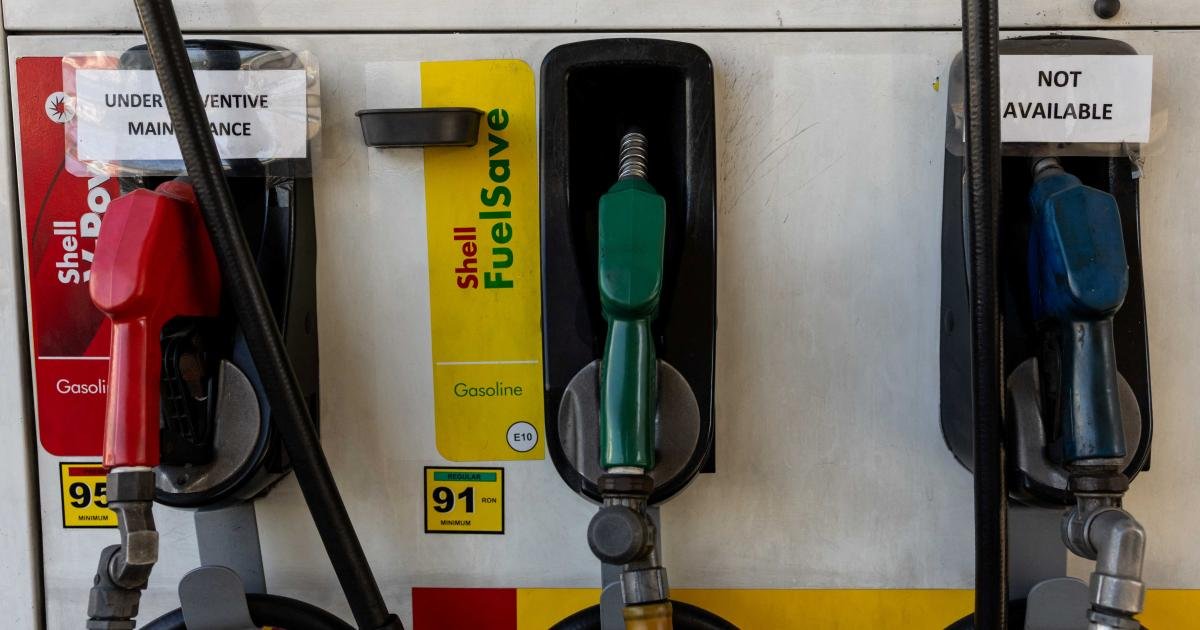
For the Middle East, the war in Iran has been another tough lesson in how divisions and competition can yield brutal conflict. But for most of the world, the war has been a lesson in something else: the political pitfalls of energy dependence. When the Strait of Hormuz effectively closed in early March, choking off roughly a fifth of global oil and liquefied natural gas, countries everywhere began to face spiking oil and gas prices. On March 24, the Philippines became the first state in the world to declare a national energy emergency. Zambia has suspended fuel levies for three months, costing its already debt-laden government $100 million. Slovenia is rationing fuel. Other governments have taken similar measures. Some have negotiated directly with Tehran for safe passage of their tankers.
This chaos has prompted a political awakening. Countries dependent on imported fossil fuels have discovered that foreign governments can easily deprive them of an essential need—undermining their sovereignty. Dependent states, for example, have found themselves paralyzed when it comes to responding to the conflict in Iran. They all want it to end. But they are unable to say much to Tehran, which controls the strait, or do anything more than mildly criticize Washington, which is now blockading the waterway. Countries that have built strong domestic energy industries, by contrast, have been comfortable speaking out about the attacks and pressuring its belligerents to stop. The world has discovered that energy independence is a form of political independence and that energy systems enable and foreclose geopolitical action. It is a realization that is already prompting governments to shift away from importing fuel and toward building up capacity at home.
Unless they have large stores of oil and gas, the best way for countries to become energy independent is to invest more in renewables, such as solar, wind, and hydroelectric energy. And the state that dominates the supply chain for these technologies is China. Beijing has invested hundreds of billions of dollars in building up large clean energy firms, and these companies are now exporting their wares across the world. The United States, by contrast, recently abandoned investment in clean tech and redoubled its spending on fossil fuels that few countries want. Beijing, then, may emerge from the war in Iran as its winner—and Washington as its ultimate loser.
RUNNING ON EMPTY
To see how the energy crisis is shaping state behavior, consider Southeast Asia, the region most dependent on the oil and gas that transits the strait (over half of the region’s oil comes from the Persian Gulf), and thus the place most affected by its closure. Laos has had to shutter hundreds of gas stations and cut the school week to four days in order to avoid running out of power. In Vietnam, diesel prices rose 40 percent. In Indonesia, the deficit is soaring while the currency plunges. As a result, the region has been astonishingly quiet about the conflict, lest it run afoul of Tehran or Washington and jeopardize its ability to get whatever oil imports it still can. Indonesia has negotiated directly with Iran to secure passage through the strait for tankers destined for Persian Gulf ports.
Other Asian countries have also run into trouble. India, for instance, styles itself as a leader of the so-called global South, and it has regularly rebuked Washington in recent months over high U.S. tariffs. But two of every three barrels of India’s oil imports transit the Strait of Hormuz, and so it now faces an energy crisis for which it needs the United States’ help. The country thus did not criticize the United States for sinking an Iranian warship in the Indian Ocean, even though that ship had been invited to the region by New Delhi for naval exercises. India’s foreign secretary took five days to sign a condolence book for the assassinated Iranian Supreme Leader Ali Khamenei. The country’s efforts to avoid antagonizing Washington have worked so far: once the strait was closed, the United States loosened sanctions on the global trade in Russian oil, and the first exceptions were granted to India. Washington also allowed the country to buy Iranian oil in March and April. But Indian officials would surely have preferred to speak freely and act like the global leaders they claim to be.
Instead, that opportunity came to Pakistan—India’s rival. Pakistan is not as dependent on fossil fuel imports, largely thanks to an explosion in renewable energy. The share of Pakistani power that comes from solar energy went from under three percent in 2020 to over 32 percent by the end of 2025, one of the fastest energy transitions anywhere in the world. This boom was largely market driven, as the combination of falling Chinese solar panel prices and rising grid prices prompted households and businesses to install rooftop solar systems at a remarkable pace. A recent analysis has estimated that this solar boom has allowed Pakistan to avoid over $12 billion in oil and gas imports since 2020, with $6.3 billion in savings projected for 2026 alone. Islamabad has, in turn, organized negotiations to end the war, hosting top officials from Iran and the United States and encouraging both parties to forge a permanent deal. Pakistani Prime Minister Shehbaz Sharif and Field Marshal Asim Munir (the country’s de facto leader) even brokered the two sides’ April 8 cease-fire. Pakistan was always a logical mediator, given its historic ties to both Tehran and Washington. But it would have struggled to act as an independent broker without the material independence its energy system enables. In the past two weeks, Sharif has intensified Pakistan’s energy transition, calling for renewable energy to become 90 percent of the country’s energy mix over the next decade.
The divergence between states that are heavily dependent on imports and ones that are not is evident outside Asia, as well. Spain generates over 56 percent of its electricity from renewables, mostly from wind and solar. As a result, it has not only had the lowest energy bills in Europe throughout the war, its government has also refused to let the United States use its military bases for operations against Iran—a stance unthinkable for other NATO allies that are less energy independent. Brazil’s electric grid runs overwhelmingly on hydropower, wind, and solar, and its transport sector is partly fueled by sugarcane ethanol produced domestically. As soon as the bombs started falling, Brazilian President Luiz Inácio Lula da Silva, known as Lula, immediately declared that his country was opposed to the strikes. Both these stances were widely explained in ideological terms: Spanish President Pedro Sánchez leads a left-wing coalition, and Lula is a progressive who likes to claim leadership of the global South. But both states still needed economic room to maneuver. To see why, compare them with South Africa. It is also led by a party that has long seen itself as left of center. It has friendly ties with Iran, and it has long positioned itself as a leader of the non-Western world. But its diesel and petrol imports largely run through the Strait of Hormuz and the government has had to take the costly decision to reduce fuel taxes to prevent domestic political blowback. It has been relatively quiet in its critique of the United States and Israel; it recently appointed an apartheid-era minister as its ambassador to the United States to try to appease the Trump administration.
POWER IS POWER
When confronted with oil shocks in the past, states have often reworked their energy systems. The Arab oil crises of the 1970s, for example, are a big part of why Brazil is now energy independent. At the time, the country was greatly affected by international oil markets. But its rulers resolved to never again get caught flat-footed, so they developed five large-scale hydroelectric dams and launched an industrial policy to support sugarcane ethanol fuel. A poster for the ethanol program, named Proálcool, in 1979 displayed an image with uncanny resonance today: an oil shipping vessel passing by a sea mine in what could be the Strait of Hormuz. The caption read, “The ethanol in your car doesn’t pass through here.” In the corner, a tagline for Proálcool declared: “If you have it, you don’t depend on anybody.” Today, over 80 percent of cars on the road in Brazil run on motors that can burn either gasoline or ethanol. The country’s grid is one of the cleanest in the world, comprised of nearly 90 percent hydro, wind, and solar power.
The Hormuz crisis will almost certainly prompt a new set of countries to become more energy independent. To do so, some will invest more in fossil fuels. The Philippines has already increased coal-fired power generation and authorized the use of lower-grade, higher-emission fuels to stretch existing stocks. Thailand has similarly turned to coal to replace lost liquefied natural gas. Indonesia, too, has bolstered coal production.
But states are also investing more in renewables. Vietnam, for instance, has approved over 80 major renewable energy projects in the past six years, including offshore wind and hydropower. It is also fast-tracking electric vehicle adoption and charging infrastructure. Thailand may be investing in coal, but it is also reviving its residential rooftop solar program. And Indonesian President Prabowo Subianto has announced that he wants to build 100 gigawatts of new solar capacity in the next three years. Speaking at a recent business forum, he described the Iran crisis as a “rude wake-up call” that would accelerate the shift toward renewables. He has pledged to eliminate Indonesia’s massive fuel subsidies over three years, which have been a critical element of the country’s fossil fuel–based political economic model. He has also announced that all vehicles in the country will eventually be electric.
These investments will disproportionately flow to one state: China. Beijing has spent decades pouring trillions of dollars into renewable manufacturing and electrification, and it has become the world’s predominant producer of clean-energy tech. It makes more solar panels than any other country. It is home to CATL the world’s largest battery producer, and BYD, the world’s best-selling electric vehicle company. China now appears to have peaked its carbon emissions, based on data from the last two years.
Beijing may emerge from the war in Iran as its winner—and Washington as its ultimate loser.
Thanks to these changes, Beijing was better prepared to handle the current crisis than almost any other major oil importer, and it is now best positioned to benefit. Since the war began, the value of the world’s top three battery makers—China’s CATL, BYD, and Sungrow—has increased by more than $70 billion combined, far outpacing the combined increasing value of large oil companies even though oil prices have risen precipitously. BYD is reporting record sales in Southeast Asia. And a Chinese state-owned firm completed one of Southeast Asia’s largest solar installations in Laos this April. That region’s elites appear to have taken notice. The annual survey of Southeast Asian opinion leaders conducted by ISEAS (a prominent research institute in Singapore) and released this month showed that U.S. President Donald Trump’s leadership has become their top geopolitical concern and that China has overtaken the United States as their preferred superpower partner. The war is accelerating a political drift away from Washington across Asia, and the energy crisis is the material mechanism driving it.
The United States hopes that it might still be able to use the Hormuz crisis to its advantage, namely by offering the world more hydrocarbons. Over the last year, the Trump administration has refused to limit oil exports, even though doing so might help domestic fuel consumers, and it has issued sanctions waivers to keep Russian oil flowing abroad. The U.S. International Development Finance Corporation, previously restricted from financing oil and gas projects overseas, has redirected its lending toward spending on precisely such infrastructure in the developing world. Trump has also pushed European allies to commit to long-term liquefied natural gas contracts with U.S. suppliers as a condition of continued security guarantees. But the reality is that the war has made Washington’s proposals far less attractive than what Beijing is offering. Although some foreign officials will inevitably have concerns about relying on China to make the infrastructure needed for renewable energy systems, the sources of energy for these systems—wind and sun—simply cannot be captured by a geopolitical chokepoint, unlike gas and oil.
Countries across the globe, meanwhile, are experiencing what dependence on fossil fuel chokepoints means right now: rationing, shortened school weeks, collapsing budgets, industrial shutdowns, and political paralysis. They also know that fossil fuel supplies don’t always bounce back when a crisis is finished. Qatar, for instance, has said it will take years for the Ras Laffan liquefied natural gas facility to return to full capacity, and in the interim, it has declared force majeure on long-term supply contracts to Belgium, China, Italy, and South Korea. The appeal of building energy systems that cannot be choked off by any single country has never been more concrete.
None of this is to suggest that energy systems are the only factor in determining foreign policy. Ideology, alliance structures, domestic politics, and historical relationships all shape how countries position themselves. But these factors operate within constraints that are set by energy systems. And for much of the global South, the lesson of this war is that geopolitical sovereignty requires being able to produce one’s own power.
Loading…
