

Single combat, the practice of ritualized one-on-one fighting for enormous stakes, dates back to antiquity. In The Iliad, Achilles and Hector engage in a duel that stands in for a larger conflict between vast armies. The Hebrew Bible includes the account of David and Goliath, whose single combat determines the victor of a growing conflict between opposing forces, the Israelites and the Philistines, that are otherwise prepared to do battle. In Medieval Europe, single combat evolved into a legal practice grounded in the belief that divine intervention would reveal the rightful party, while in Japan, the legendary Samurai duel between Musashi and Kojiro in 1612 became a cultural touchstone shaping Japanese thinking in business and strategy for centuries.
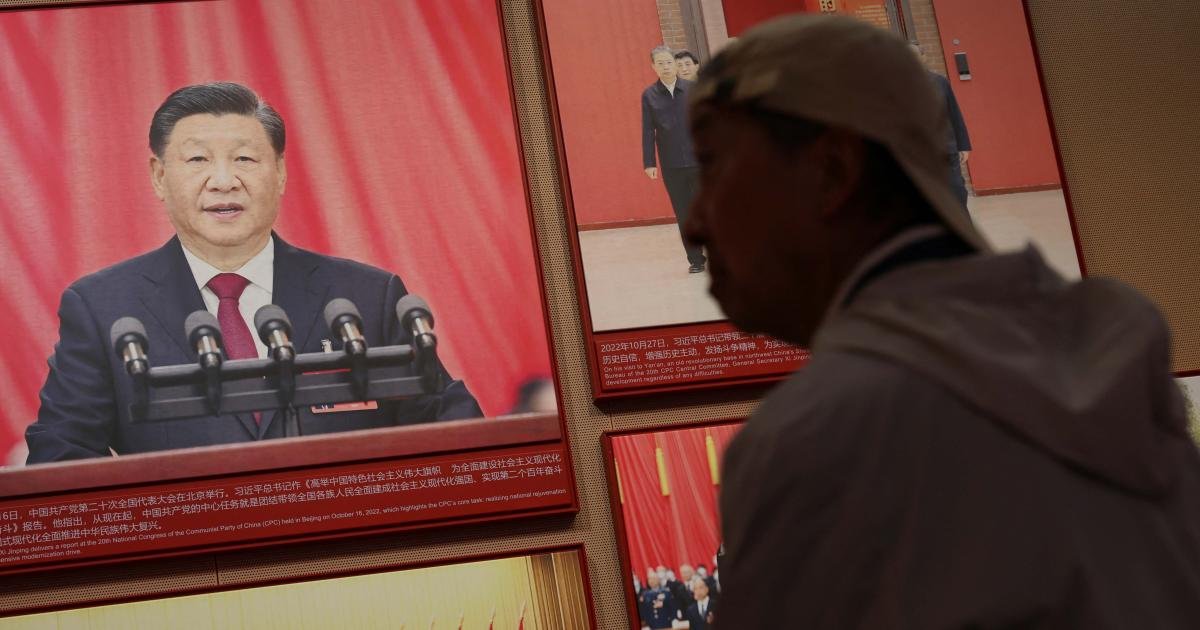
The allure of single combat is the belief that larger and more complex military or political struggles between civilizations or clans can be settled through individual tests of courage, acumen, and legitimacy. When U.S. President Donald Trump and Chinese leader Xi Jinping meet in Beijing this week, it will be a modern standoff with the unmistakable overtones of single combat. Summits are often less historically significant than advertised, but this one has the feel of a geopolitical heavyweight matchup. With the broader relationship at a crossroads, each man comes to the table with remarkably few institutional constraints, substantial personal latitude, and manifest ambition to shape the next phase of the U.S.-Chinese relationship. Trump has largely silenced, sidelined, or ignored the China experts in his midst, and Xi is the absolute first among equals on the ruling standing committee of the Chinese Communist Party. Not since Richard Nixon’s historic meeting with Mao Zedong in 1972 has each country’s leader had so much personal authority in deciding the future of the relationship.
Adding to the suspense is the fact that both men have insisted on this meeting even though the conflict still smoldering in Iran is politically awkward for each of them. For Trump, Iran increasingly looks like the kind of Middle East quicksand that he promised to avoid, while Xi is warmly welcoming a leader who has just laid siege to one of China’s closest partners. Despite this, both leaders are determined to test their proverbial mettle on a field of battle, where the stakes include global primacy in technology, the potential trajectories of the U.S. war against Iran, the balance of regional power in Asia, and the status of Taiwan.
There is still considerable uncertainty, however, about whether this meeting will be pro forma or transformative. Unlike previous U.S.-Chinese summits, which have perhaps suffered from too much advance planning and staff choreography, this meeting veers sharply in the other direction, at least on the U.S. side. Much will be decided by the leaders themselves, and the key factors in play are less the merits or technical criteria associated with each bilateral agenda item and more the characteristics and experience of the two men. Trump, especially, is a wildcard, and some worry that his unpredictable China policy may inadvertently lead the United States into unilateral concessions and unintentional appeasement. Onlookers, as they have done throughout moments of single combat in history, will be gauging each combatant’s stance and utterances for clues as to wounds inflicted and thrusts parried behind closed doors.
STYLE VS. STRATEGY
A quick comparison of Trump and Xi reveals two leaders who, despite operating within vastly different political systems, share certain instincts about power, nationalism, and global competition. Yet they diverge sharply in style, governing philosophy, and long-term ambition. Trump’s personal style is rooted in improvisation, confrontation, and sometimes impolitic direct communication. His leadership style emphasizes disruption, including challenging norms, questioning institutions, and privileging his instincts over bureaucratic processes and traditional intermediaries. Whereas Asian interlocutors almost always search for the hidden stratagem behind a particular Trump gambit, Trump’s behavior is often better explained by transactionalism or temperament. His MAGA movement is more about attitude than architecture.
Xi, by contrast, embodies a highly disciplined, opaque, and centralized leadership style shaped by harsh and punishing decades within the Chinese Communist Party. His persona is carefully curated to project steadiness, authority, and ideological commitment. Xi communicates through formal speeches, party documents, and controlled media channels, emphasizing unity and continuity rather than disruption. His leadership reflects a Leninist model: hierarchical, methodical, and deeply institutional. Whereas Trump thrives on unpredictability, Xi prioritizes control—over information, political actors, and societal narratives. His relentless consolidation of power, including the removal of term limits and elevation of “Xi Jinping Thought,” reflects a deliberate effort to position himself as a transformational figure within China’s historical trajectory.
Yet despite enormous differences, both leaders share a profound belief in centralized authority, deep skepticism or even bitterness toward liberal internationalism, and a commitment to advancing national interests in an increasingly Hobbesian world. The personal rapport between Trump and Xi also matters as they prepare to face off. During Trump’s first term, the two leaders cultivated a relationship that oscillated between cordiality and confrontation. Trump often spoke positively about Xi on a personal level, even as policy disputes intensified and then exploded during the COVID-19 crisis. Xi occasionally seemed off balance during early encounters, but he ultimately demonstrated a facility for engaging Trump through flattery and symbolic gestures while maintaining a firm stance on substantive “core” issues such as Taiwan.
Diplomacy in Asia generally favors the methodical, consistent planners over the impatient improvisers. Just think of the groundwork carefully laid over years to forge closer relationships between U.S. partners such as Japan, the Republic of Korea, and Australia, as well as the recently revived Indo-Pacific Quad. On this score alone, Xi has advantages. He has articulated and acted on a clear plan of investment and preparation in military readiness and technology development since arriving in power nearly 15 years ago. Xi believes firmly that China’s rise is a historical certainty and that the United States will continue its hurtling decline—a viewpoint that imbues him with unwavering confidence as he prepares to meet Trump.
The Trump team seems to be taking strategic ambiguity to a new level.
Trump’s views of China, by contrast, and of U.S. strategy toward the rising superpower might charitably be described as fluid, fluctuating between perceptions of China as an admired partner and a nefarious enemy. Predicting which Trump will show up in Beijing is a challenge. Trump is unmistakably lured by powerful autocrats, and he admires and perhaps even envies Xi’s harsh treatment of domestic foes and the press. In December 2025, Trump reversed bipartisan restrictions on the flow of some of the most advanced AI technology to China—a move that many observers saw as imperiling one of the few areas of clear American advantage in the contest for global tech leadership. Trump’s rhetoric has also resurrected his “G-2” framing of the U.S.-Chinese relationship, which implies that the United States and China sit astride Asia, making decisions that deeply affect the interests of U.S. allies. And Trump has indicated in discreet phone calls with Xi a willingness to coordinate, if not compromise, on future U.S. security support for Taiwan.
Yet Trump also announced in December one of the largest U.S. arms sales to Taiwan in history, replete with items such as precision munitions and drones that were informed by battlefield experience in Ukraine. The Trump administration has also taken bold action to break China’s monopolies over critical minerals and rare-earth magnets, including taking direct stakes in U.S. mining companies and announcing a $12 billion stockpiling initiative. And, albeit under various and shifting rationales, Trump has launched military actions that removed the leaders of two of China’s key international partners in Iran and Venezuela.
Taken together, these actions indicate that Trump may be following a version of so-called strategic ambiguity toward China. The term, which refers principally to the long-standing uncertainty over whether the United States would provide military aid to Taiwan in the event of an armed attack, has a long and tortured history in the context of the U.S.-Chinese relationship. But the strategy has allowed the United States to maintain a complex balancing act of engaging Beijing and preserving unofficial links with Taiwan.
Now, the Trump team seems to be taking strategic ambiguity to a new level. It remains highly unclear whether the U.S. president will tilt toward China or align with traditional allies and partners to confront Chinese coercion and aggression in the Indo-Pacific. The summit is thus the first real test of Trump’s true alignment in an increasingly contested and divided Asia.
CHAOS THEORY
For those looking for clarity in the defining geopolitical relationship of the twenty-first century, strategic ambiguity as China policy is especially frustrating. But the approach is not without its advantages. After all, it keeps China guessing about Washington’s intentions. During Trump’s first term, there was no country more poorly prepared for the onrush of policy unpredictability than China. A telling moment occurred when Xi first visited Trump in 2017. Just as the Chinese leader arrived at Mar-a-Lago, the United States launched a major round of missile strikes against Syria; the members of the Chinese delegation remained awkwardly on their plane as they attempted to interpret the timing and meaning of U.S. military actions.
Xi is on firmer footing in Trump’s second term. He responded to Trump’s so-called Liberation Day tariffs with a scalpel-like precision that effectively highlighted American vulnerabilities and seemingly cowed the administration. Still, while Chinese interlocutors quietly profess confidence about their larger global prospects during Trump’s tenure, there is an underlying worry about what Trump might do under duress. They recognize that he is unpredictable and could still inflict significant harm, and Xi will move deliberately to maximize his near-term advantage without precipitating a reaction that could compromise larger goals.
Strategic ambiguity has domestic political advantages for Trump, as well. On Capitol Hill, his approach offers enough hope for a reversal to keep in check broad-based, if tremulous, Republican critiques of perceived softness toward Beijing. Inside the Trump administration, the China policy tent stretches wide, encompassing senior officials solely bent on securing commercial deals as well as those who firmly believe that China poses an existential threat to the United States. Although the infighting can lead to bureaucratic inefficiencies and personal frustrations, it also keeps every option on the table. It is even possible that Trump, who famously enjoys playing members of his coterie off one another, sees the dynamic as a type of Hegelian dialectic, in which conflict is needed to determine the ultimate course of China policy. In this view, strategic ambiguity is a mere way station on a journey to clarity.
Still, the strategy risks more than it rewards. When applied to the larger U.S.-Chinese context, strategic ambiguity creates a lurking anxiety among U.S. allies and partners that U.S. strategy will err on the side of accommodation, or even appeasement, toward an increasingly ambitious China. Under the Biden administration, in which I served, U.S. strategy in the Indo-Pacific focused on building solidarity among allies and developing enough scale in military capacity and technology prowess to effectively counter China’s size and coercive capabilities. If the United States drops out of that effort, its partners are left without a linchpin and with little recourse.
This is why the meeting between Trump and Xi represents far more than a routine diplomatic engagement. It is the highest-stakes encounter yet between two leaders whose personal styles, political imperatives, and global ambitions have already reshaped international relations. Observers seeking to interpret the summit must look beyond the official statements and ceremonial gestures to understand the deeper strategic signals embedded in the interaction. The meeting is not simply about immediate policy outcomes or summit deliverables; it is about positioning, leverage, and the very trajectory of great-power competition on a global stage. It is single combat in a technological age.
THE TEA LEAVES
The tone and choreography of the meeting will be revealing. Trump has historically approached diplomacy in a highly personalized and transactional manner, often emphasizing optics, perceived strength, and dealmaking. Xi, by contrast, operates within a more controlled and hierarchical system, in which symbolism and protocol carry significant weight. The balance between informality and rigidity—whether the meeting appears relaxed and improvisational or tightly scripted—will offer clues about which side has the upper hand.
Body language and public remarks will also be revealing. Trump has frequently used public forums to signal dominance or dissatisfaction, while Xi tends to communicate through carefully calibrated language that reflects broader strategic narratives. If Trump adopts a conciliatory tone, it may indicate a desire to stabilize relations for economic or political reasons. Conversely, sharper rhetoric could suggest an effort to extract concessions or appeal to more hawkish U.S. audiences. Xi’s language, particularly any suggestion that China does not need to acquire advanced U.S. chips or is uninterested in U.S. technology, would suggest increasing confidence in China’s own capabilities amid technology decoupling, whereas a commitment to visit the United States later this year may indicate that Xi feels comfortable in his continued ability to manage Trump.
The summit also has the potential to turn into a forum in which both leaders test the limits of competition while tentatively exploring areas of coexistence. Trade and economic policy will feature prominently, but the underlying dynamics extend beyond boldly declared tariffs or ad hoc arrangements on market access. The real contest lies in technology, supply chains, and standards setting. Issues such as semiconductor controls, telecommunications infrastructure, and particularly artificial intelligence are proxies for a broader struggle over future global technology leadership. Announcements of coordination on AI safety, removal of Chinese entities from U.S. export control lists, or agreement to avoid additional export actions on critical minerals and technologies would signal a tack toward coexistence versus escalation on these issues.
The tone and choreography of the meeting will be revealing.
Another inescapable dimension of the encounter will be in the realm of security. Tensions over Taiwan, the South China Sea, and broader military posture are central to the bilateral relationship. Trump comes to this meeting with critical elements of U.S. military capacity in the Indo-Pacific having been diverted to the Middle East, repeating a pattern of strategic preoccupation with the Persian Gulf that has burdened American statecraft for a generation. There are now legitimate questions about depleted U.S. deterrent capacities in East Asia that Xi could try to exploit.
Xi, for instance, views Taiwan as a core national interest and has tied its eventual unification with mainland China to the legitimacy of the Chinese Communist Party. He has ambitions to potentially leverage Trump’s proclivity to improvisational dealmaking on this most sensitive issue. Signals from the summit—such as reaffirmations of existing policies or subtle shifts in language about Taiwanese independence—will carry profound implications for the region’s stability.
Observers should also pay attention to what is not said or done. In high-level diplomacy, silence and omission are often deliberate strategies. A lack of joint statements, the absence of certain topics, or the failure to announce concrete outcomes can be as meaningful as explicit agreements. Should potentially contentious issues such as technology controls, regional security, or China’s cooperation with Iran and Russia go unmentioned, it could signal entrenchment by one or both sides—or, conversely, may suggest deliberate de-escalation or even back-room accommodation.
ARE YOU NOT ENTERTAINED?
Trump’s ambiguous approach will be put to the test in Beijing. China, after all, appears to be seeking to sustain Trump’s porous policies on advanced technologies while enlisting Trump in a complex effort to politically weaken Taiwan’s democratic leadership. But so far, the Trump team has signaled only that it wants short-term deliverables to address domestic political needs, including boosting agricultural exports, sales of ranching products and Boeing jets, and curbs on fentanyl production. If this comes to pass—U.S. concessions on Taiwan and technology in exchange for Chinese purchases of legumes and dubious restrictions on drug flows—it will mean that strategic ambiguity has simply been a mask for U.S. acquiescence to China’s power and ambitions.
Allies and partners in Europe and Asia will be watching closely for such signs. If the meeting suggests a thaw in U.S.-Chinese relations—or even a profound realignment toward a G-2 stance—it will prompt recalibration in the form of increased defense spending and more cooperation among military middle powers. Conversely, indications of heightened rivalry could reinforce existing U.S. alliances in Asia even while accelerating efforts by China’s neighbors and trading partners to hedge against instability.
In the end, the significance of the meeting will not lie in any agreements reached, but rather in the signals it sends about the future of U.S.-Chinese relations and the perceived standing of the two men. Here is the central challenge of the single-combat paradigm. Examples of solo combat throughout history almost always involve the audience as a central actor in the drama. These engagements are for show, a display for the crowd, which then carries forward the outcome as definitive. When Achilles dragged Hector’s body behind his chariot, Troy’s fate was sealed. A simple misstep or miscalculation by a single national champion can thus be decisive, while seasoned and well-equipped armies are sidelined. As Trump ventures into the arena in Beijing, the world will be watching and eager to see whether the two leaders emerge driving together in the chariot, or with one dragging the other behind.
Loading…
