

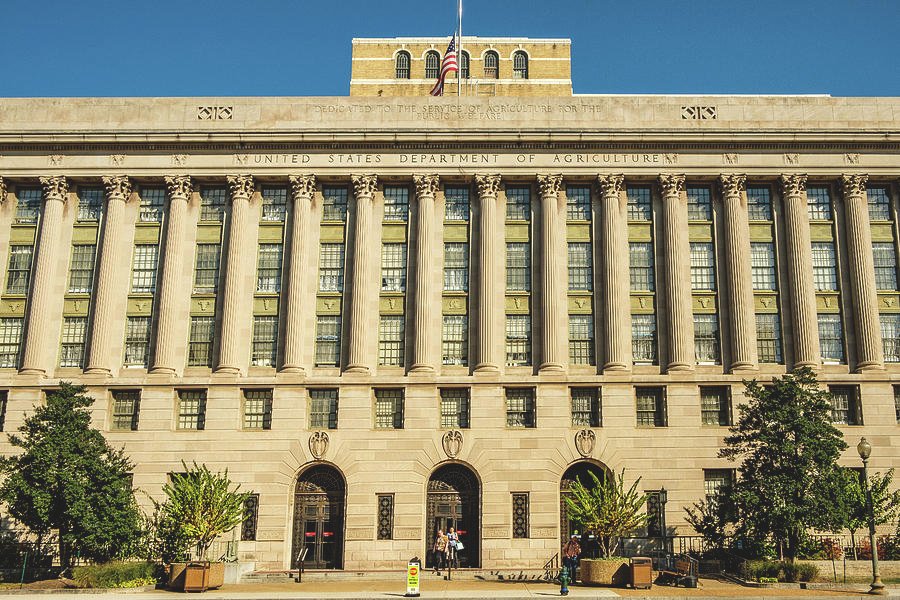
The Agriculture Department is embarking on a multi-part plan to relocate employees across its component agencies outside of the Washington, D.C. area.
USDA is moving many more jobs across the country than it did under the first Trump administration, but expects fewer employees will turn down relocation offers this time around.
However, two unions representing impacted USDA employees say the relocations will cause more disruption than department leaders anticipate.
For the second time in seven years, USDA is looking to move D.C.-based employees at the Economic Research Service (ERS) and National Institute of Food and Agriculture (NIFA) to Kansas City.
USDA relocated hundreds of ERS and NIFA positions to Kansas City in 2019, but about 85% of impacted employees quit their jobs or retired, rather than relocate.
The American Federation of Government Employees Local 3403, which represents USDA researchers, expects to see similar results this year.
An internal survey conducted by the union found that 76% of its members have indicated they are not planning to relocate. AFGE Local 3403 said in a statement that these relocations, which are expected to go into effect by the end of the summer, will trigger a “brain drain” within the department.
Federal News Network has reached out to USDA for comment.
The union said diminished staffing at NIFA would lead to longer grant processing timelines and delays in funding for universities and research institutions. Fewer researchers at ERS, the union said, could increase the risk of research error that could impact economic planning.
“ERS and NIFA are the intellectual and financial engines of American agriculture,” AFGE Local 3403 said. “By forcing this move on an accelerated timeline, with no promise of financial help or job security, the USDA is effectively dismantling decades of institutional knowledge, jeopardizing the very data and funding that farmers, policymakers and land-grant universities rely on.”
AFGE Local 3403 said it is calling for “immediate congressional intervention” to halt these relocation plans.
USDA Deputy Secretary Stephen Vaden told House lawmakers last August that the department “learned some lessons” from the 2019 relocations, but said it’s unclear how many employees would agree to relocate under these latest plans.
“Whether every employee will voluntarily decide to come with us, I don’t know,” he said.
USDA announced last summer that it plans on relocating more than half of its D.C. area workforce to hubs across the country. About 90% of USDA employees already work outside of the D.C. area. The department let over 15,000 employees leave the agency last year, after they accepted deferred resignation and early retirement offers.
Lawmakers included language in a comprehensive spending deal for fiscal 2026 that barred USDA from using appropriated funds to relocate personnel or programs without the approval of Congress. But as reported by E&E News, Vaden, in his previous role as USDA’s general counsel during the first Trump administration, argued that USDA did not need the approval of congressional appropriations committees to relocate staff.
Vaden told USDA’s inspector general office in August 2019 that the USDA secretary “has the requisite legal authority to relocate” employees.
“USDA is not required to abide by unconstitutional laws,” Vaden wrote.
The National Federation of Federal Employees is also arguing that USDA’s Forest Service is pursuing relocation plans without the approval of Congress.
“The fiscal year 2026 appropriations law explicitly prohibited using appropriated funds for reorganization activities without prior notice and approval,” NFFE President Randy Erwin wrote in a letter to lawmakers. “Yet this sweeping overhaul … was announced unilaterally, without the transparency, notice, or authorization required by law.”
The Forest Service is planning to move its headquarters to Salt Lake City, Utah. In addition, the agency would shut down 57 of its 77 research facilities, as well as all nine of its regional offices.
Forest Service Chief Tom Schultz told members of the House Appropriations Committee that about 500 employees would have to relocate under the headquarters reorganization plan.
Schultz said the Forest Service isn’t looking to shrink its workforce. Thousands of agency employees left last year by taking voluntary separation incentives.
The agency’s FY 2027 budget request proposes eliminating 800 of its approximately 1,110 research scientist positions, with the expectation that affected employees would find similar jobs in the private sector or at the state level. Schultz said those researchers would likely find similar jobs in the private sector or at the state level, and that the “states would step up” to provide funding for these positions.
According to NFFE, the Forest Service already lost over 20% of Ph.D.-level researchers under recent staff-reduction initiatives.
Erwin said that without oversight from Congress, this reorganization plan could lead to reduced access to public lands and a loss of protection of natural resources
“This dismantling creates a clear pathway for transferring federal lands to state and private control without the consent of Congress or the American people,” he wrote.
Copyright
© 2026 Federal News Network. All rights reserved. This website is not intended for users located within the European Economic Area.
