

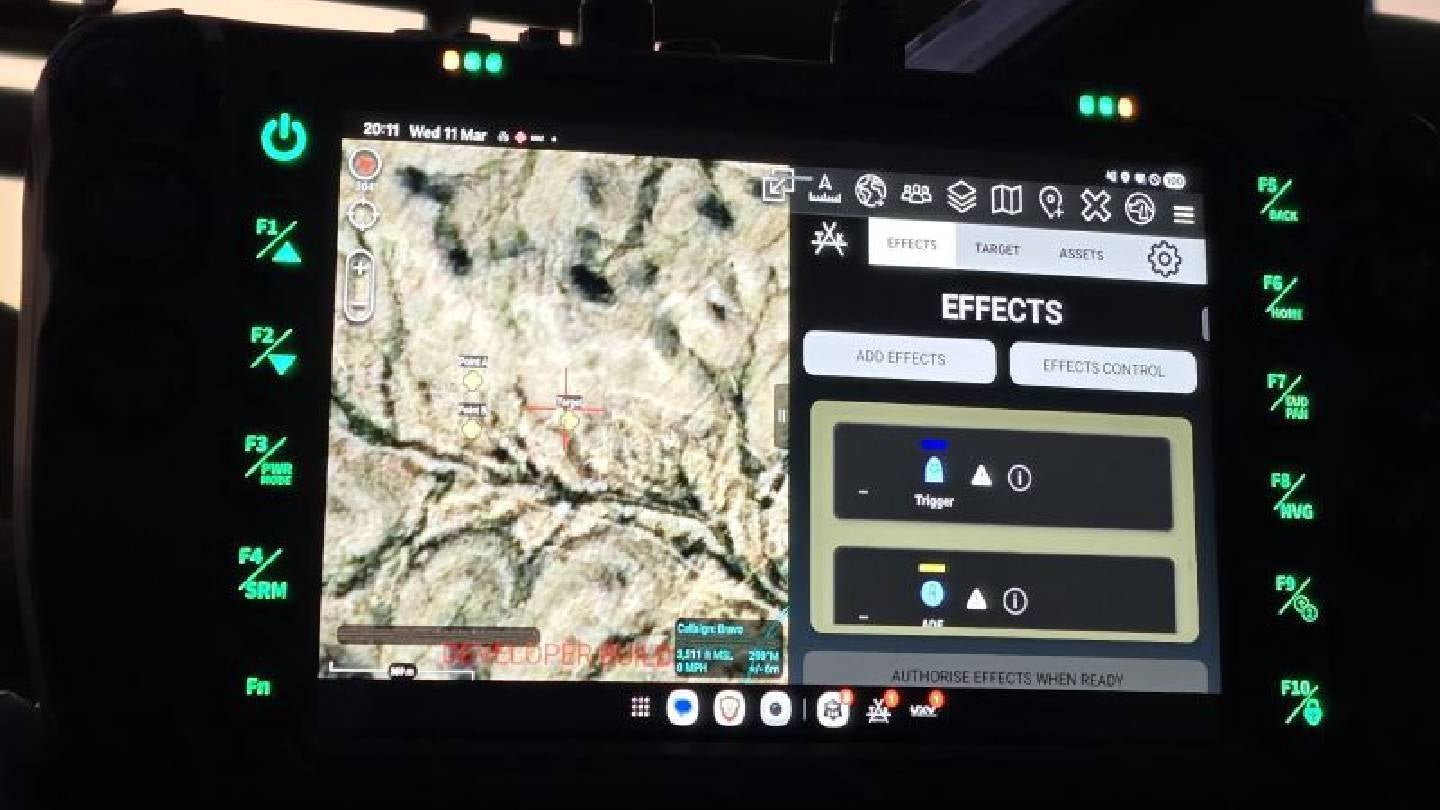
The UK Defence Science and Technology Laboratory (Dstl) has created Assured Intent Messaging (AIM), a new digital messaging system intended to unify communication among diverse military technologies.
AIM enables commanders to coordinate surveillance, targeting and weapons management across a variety of platforms, such as uncrewed systems and missiles, Dstl said in a statement on 5 May 2026.

Discover B2B Marketing That Performs
Combine business intelligence and editorial excellence to reach engaged professionals across 36 leading media platforms.
Find out more
Dstl, an agency of the UK Ministry of Defence (MOD), designed the system to address challenges presented by contemporary military operations, where various interconnected systems from different manufacturers must function together reliably.
Integrating these various technologies has previously been slowed by communication complexity and increased risk of errors.
With AIM, Dstl introduces a “shared, government-owned messaging standard” to ensure clearer, more dependable instructions can be exchanged among different platforms.
The system uses deliberately compact messages for reliable transmission over limited bandwidth, addressing issues common in contested operational environments where network resources are constrained.
AIM also incorporates a ‘publish and subscribe’ model, drawn from Internet of Things (IoT) technology, sending only relevant information to the required systems.
Unlike past solutions, this prevents errors introduced by translating between different data formats, a frequent cause of delays in the field, Dstl stated.
The design further ensures that AIM continues to operate if communications are disrupted or bandwidth is restricted.
A member of Dstl’s technical team said: “Commanders have multiple technologies in the battlespace, and it’s vital they work together quickly and efficiently. This universal messaging system helps harmonise communication between different systems, so decisions can be turned into action much faster.”
In March 2026, AIM underwent a large-scale live demonstration in Texas, where a single operator managed several operational and experimental assets at the same time, including sensors, uncrewed platforms, target-designation tools, and ground-launched missiles.
Dstl plans to publish the AIM standard to industry in mid-May.
The system complements the Sensing for Asset Protection with Integrated Electronic Networked Technology (SAPIENT) standard, another Dstl-developed framework for networked sensor integration.

