

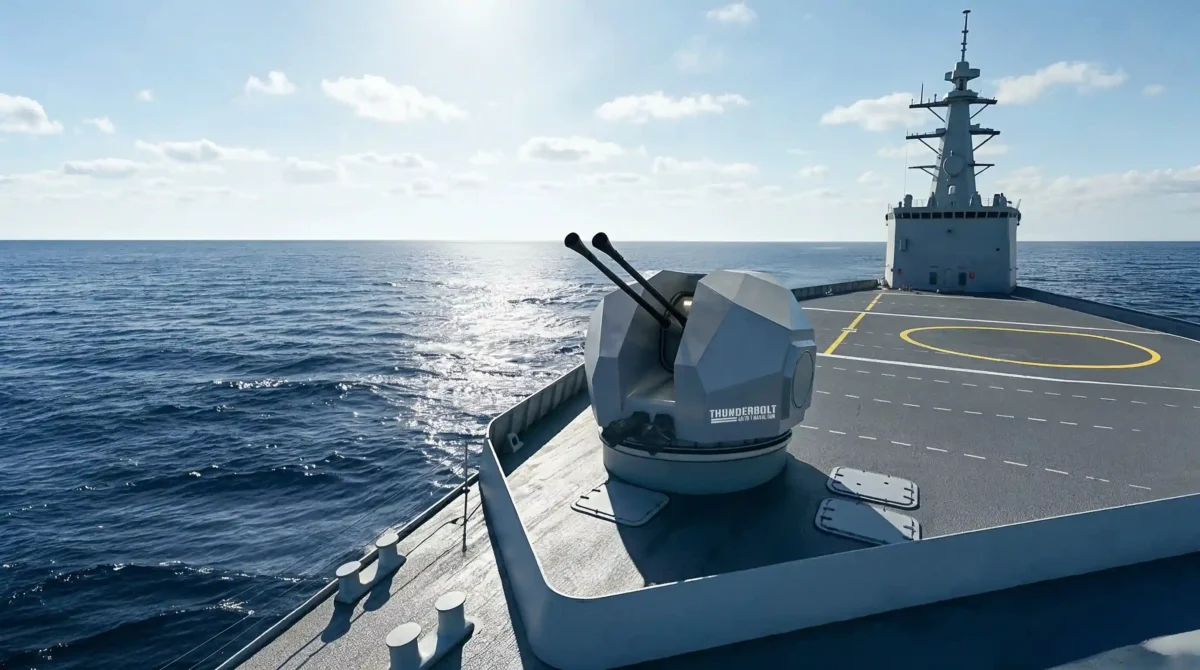
Defense Feeds, Ankara — Türkiye is continuing its push to modernize naval defense systems as the Türkiye Thunderbolt 40mm naval gun strengthens NATO ship defense with a new close-in protection capability designed for modern maritime threats.
The Thunderbolt 40mm naval gun system introduces an additional defensive layer against drones, missiles and fast attack craft, reflecting the growing demand for rapid-response naval protection systems.
The unveiling of the Thunderbolt system highlights Türkiye’s expanding defense industry and its increasing focus on indigenous naval technologies. As modern naval warfare evolves, ships face a wider range of asymmetric threats that require faster and more adaptable defensive solutions. Close-in weapon systems are therefore becoming a critical component of fleet survivability.
The Thunderbolt 40mm is designed to complement existing ship defenses rather than replace them. By adding another interception layer, the system aims to improve a vessel’s ability to respond to threats that penetrate outer defensive zones. This layered approach is increasingly important in modern maritime combat environments.
Designed to Counter Modern Naval Threats
The Thunderbolt 40mm naval gun has been introduced at a time when naval threats are becoming more diverse and difficult to counter. Drones, loitering munitions and anti-ship missiles now pose significant risks even to advanced warships. Traditional defense systems alone are often insufficient against saturation attacks or fast-moving targets.
The new system is intended to provide rapid close-range engagement capability. Its 40mm caliber offers a balance between firing rate, range and destructive power, making it suitable for engaging both aerial and surface threats. This versatility is essential for modern naval operations where ships may face multiple types of attacks simultaneously.
Fast attack craft and unmanned surface systems are also becoming more common in maritime conflicts. Smaller and highly maneuverable threats can be difficult to intercept with larger missile systems. The Thunderbolt provides a cost-effective and responsive solution for these scenarios.
In addition, modern close-in defense systems must operate with high levels of automation. Rapid detection, tracking and engagement are critical when reaction times are measured in seconds. The Thunderbolt is expected to integrate advanced fire-control and targeting technologies to improve effectiveness.

Türkiye Expands Indigenous Naval Defense Industry
The development of the Thunderbolt 40mm reflects Türkiye’s broader effort to strengthen its domestic defense sector. In recent years, Ankara has invested heavily in indigenous military technologies across land, air and naval domains. Reducing dependence on foreign suppliers has become a strategic objective.
Naval systems have emerged as a major focus within this modernization effort. Türkiye has already developed indigenous warships, drones and missile systems, and the introduction of the Thunderbolt further expands these capabilities. This supports long-term self-sufficiency in defense production.
The system may also hold export potential within NATO and allied markets. Many navies are seeking affordable and adaptable close-in defense systems to address emerging threats. A domestically developed platform gives Türkiye greater flexibility in both deployment and international cooperation.
In addition, local production supports industrial growth and technological development. Defense projects often contribute to broader advancements in engineering, electronics and manufacturing. This strengthens the country’s overall industrial base.
Growing Importance of Layered Naval Defense
The introduction of the Thunderbolt 40mm highlights the increasing importance of layered defense strategies in naval warfare. Modern warships can no longer rely on a single system to counter every threat. Instead, survivability depends on integrating multiple defensive layers capable of engaging targets at different ranges.
Close-in weapon systems are especially important as a last line of defense. If missiles or drones evade outer interception systems, rapid-response guns provide another opportunity to neutralize incoming threats. This redundancy significantly improves overall protection.
The growing use of unmanned systems in maritime operations is also driving demand for more flexible defenses. Low-cost drones and autonomous boats can overwhelm expensive missile systems through sheer numbers. Gun-based systems offer a more sustainable solution in such situations.
Looking ahead, naval defense systems are expected to become increasingly automated and networked. Integration with radar, sensors and combat management systems will be essential for rapid engagement and coordinated defense. The Thunderbolt 40mm appears to align with this broader trend in naval modernization.
Türkiye’s introduction of the Thunderbolt system underscores how naval warfare is evolving toward multi-layered and technology-driven defense concepts. As threats continue to diversify, adaptable close-in protection systems will play an increasingly important role in safeguarding modern fleets.
