

Introduction
In a statement on X, US Under Secretary of State Thomas G. DiNanno claimed that China allegedly conducted a yield-producing nuclear explosive test on June 22, 2020, using a decoupling method to reduce seismic waves. The Trump administration can use this claim to justify its continuation of nuclear testing for the modernization of its nuclear program. Despite this, DiNanno’s claim has been denied by the CTBTO, explaining that the two seismic activities detected that day were far below the nuclear explosive test yield that the International Monitoring System (IMS) can currently detect. It proves that this was not an explosive test, and highlighting it could be a political move to pressure China into a three-way arms control agreement, or a justification for continuing nuclear testing.
The CTBT bans explosive nuclear tests; however, both the US and China have signed but not ratified the treaty. As signatories to the Comprehensive Nuclear-Test-Ban Treaty (CTBT), both China and the United States are obligated under Article 18 of the 1969 Vienna Convention to refrain from acts that would defeat the treaty’s “object and purpose”. This obligation prohibits nuclear explosions while awaiting ratification. While the CTBT bans nuclear explosions, not testing, it does not clearly define what an explosion is, leaving it open to interpretation. The US claims to adhere to the zero-yield standard in its nuclear weapons testing moratorium.
The US adopted a zero-yield policy in 1995, before which low-yield explosions were called experiments and not explosions—meant only for peaceful purposes. Even small nuclear tests, however, can lead to a chain reaction phenomenon, which might provide information about fissile material behavior and weapons design in violation of the treaty. Mistakes can happen, just like in 1958, when the Lawrence Livermore National Laboratory (LLNL) conducted a “safety experiment” known as Neptune, with an expected zero yield but a possible yield of around 10 tons. The safety experiment produced a 115-ton impact, forming a crater in the process. The LLNL later began referring to the incident as a “cratering experiment” and released a report mentioning the success of the findings.
Similarly, China followed suit in conducting hydronuclear small-yield experiments. In 1993, China conducted a hydronuclear experiment that went out of control at the China Southwest Institute of Fluid Physics, causing contamination—a nuclear safety hazard that forced scientists to seal off a portion of the laboratory.
Preparing for Nuclear Tests with Designated Yields
The US Under Secretary’s statement is particularly interesting because of the wording used by the State Department about China conducting nuclear explosive tests: “while preparing for tests with designated yield in hundreds of tons”. One test, which the statement specifically mentioned, was allegedly conducted on June 22, 2020. The CTBT can detect events at China’s nuclear site Lop Nor to the seismic body-wave magnitude of mb = 3.4. A nuclear explosion with a mb = 3.4 typically means a low-yield event within the range of 10 to 50 tons of TNT equivalent, depending on the geology and depth of the explosion. This means that the International Monitoring System (IMS) of the CTBT could have easily detected an explosive test. Modern explosive devices often have yields in the range of 1–250 kilotons, meaning it falls within the IMS’s detection capabilities.
Even with decoupling, which would reduce the yield up to 20–40 times from Lop Nor, the explosion would still have been detectable. There would also be chances of detection if there was a perfect decoupling of the Lop Nor rock, which would reduce the magnitude by about 70 times, requiring a cavity large enough to keep wall stress within the rock’s elastic limit. Perfect decoupling is a theoretical idea; achieving it at the Lop Nor test site is practically difficult due to the site’s geology and the massive scale required. Aside from the CTBTO, the regional seismic networks would also have been able to detect such an important explosion, but there was no such detection.
Only if the explosion was a few hundred tons would the test have gone undetectable with the decoupling method used. For China’s objective of modernizing its nuclear arsenal, such a test would not have been of use. This could mean that if there was a test conducted by China on June 22, 2020, it would have likely been a safety or 1-point test with a few-hundred-yield explosion.
A Three-Way Arms Control Agreement
The Under Secretary’s statement on China allegedly preparing for nuclear explosion tests could be a preemptive measure to deter China from nuclear expansion, however this is unlikely without solid evidence.
China benefits the most from nuclear testing, considering it has the lowest number of nuclear tests in comparison to the US and Russia.
To achieve objectives as per its five-year plan and its established policy, China declares that it will continue to develop its nuclear forces. The US, on the other hand, has likely been able to replace minor testing with simulation technologies. The US has already been using simulations to solve safety problems through modeling fixes. In such a case, the US must ratify the CTBT to enable it to conduct On-Site Inspections, yet they have been reluctant to do so, invalidating the narrative propagated by Under Secretary DiNanno recently.
Testing on an Equal Basis
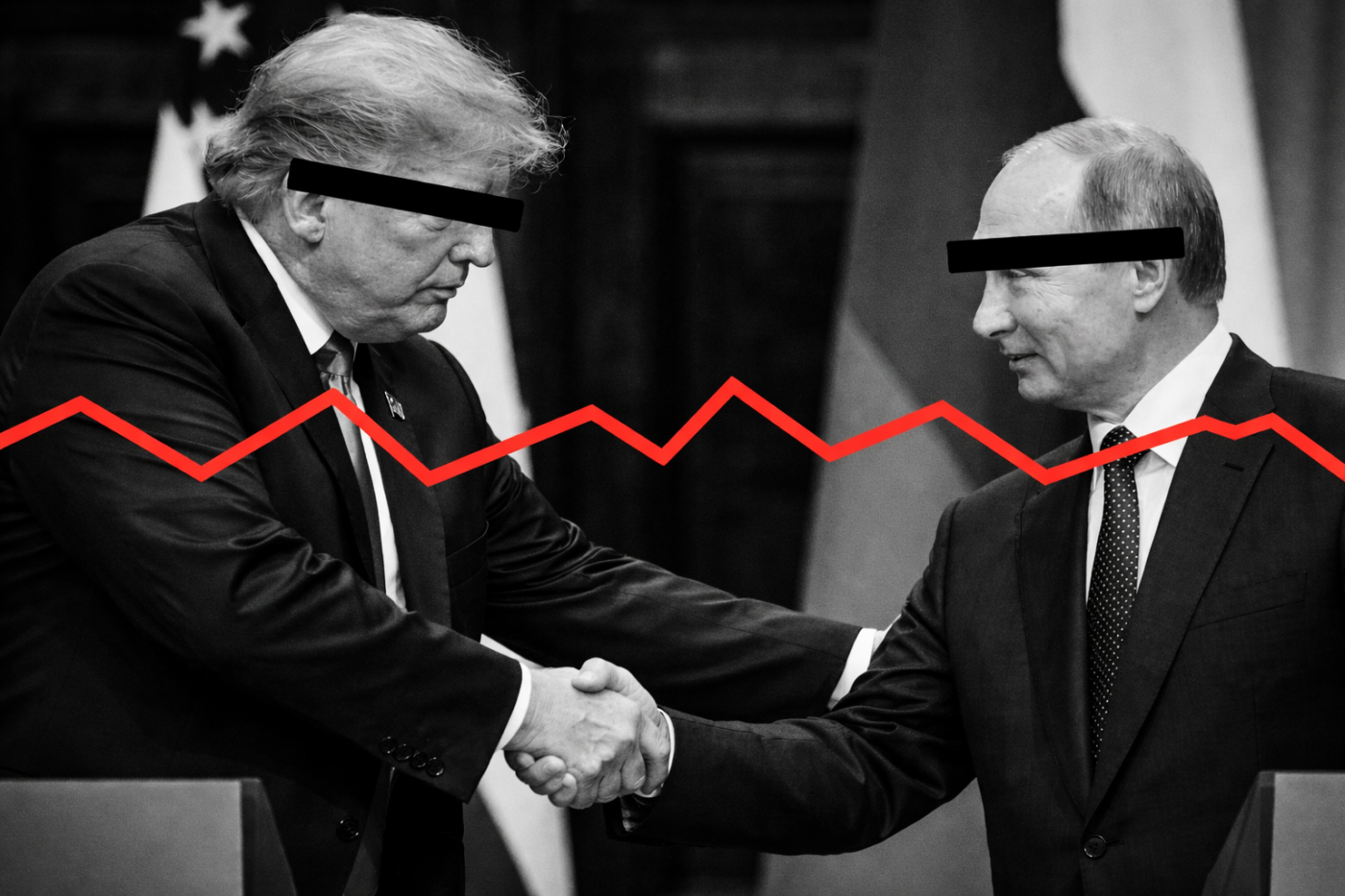
Another assumption is that this statement could be another significant attempt by the US to justify its own continuation of nuclear testing, given that the US is not under any arms control agreement since the expiration of the New START. This argument is supported by a number of US statements. Since last year, Washington has blamed “other states” for conducting nuclear tests while also signaling interest in the “continuation of nuclear testing”, suggesting that detonations could resume “on an equal basis” with China and Russia. The continuation of testing will help the US increase and modernize its nuclear arsenal, which the US can use to maintain the status quo and disturb the strategic balance between itself, Russia, and China. This might also push China to be pressured into a three-way arms control agreement later on, for which the US has been advocating. Trump would be the first president since Ronald Reagan to increase the number of nuclear weapons again, if he chose to do so. The indications of his intention started within hours of the expiration of New START, when Trump turned down an offer from Russian President Vladimir Putin for an informal extension.
Trump’s 2025 statement desiring to resume detonations “on an equal basis” with China and Russia was first interpreted as if he wanted to continue the kind of powerful underground nuclear tests that were frequently used as a tit-for-tat response in the Cold War era. But after Under Secretary DiNanno’s statement, the wording “on an equal basis” can be interpreted as the US wanting to continue testing using decoupling methods, just as they claimed China has done. Other experts believe that the US might be interested in relatively small tests that might release no detectable shock waves, making them impossible to detect.
Conducting small tests for safety purposes is not as significant as the Trump administration is making it out to be, so it is possible that the US is going to continue testing for modernization and deployment of its non-deployed nuclear capabilities. Post–New START expiration, Trump stated that he wants “to strengthen deterrence on behalf of the American people” and that the US should “complete our ongoing nuclear modernization programs,” also suggesting that the US “retains nondeployed nuclear capability that can be used to address the emerging security environment, if directed by the president.” The United States removed MIRVs from its intercontinental ballistic missiles in 2014 in part to comply with New START and in part to enhance crisis stability, since single-warhead missiles reduce incentives for preemptive strikes.
Without treaty limits, the US might be planning to once again upload additional warheads onto existing missiles.
Most of the evidence suggests that President Trump intended to continue nuclear testing, though it remains unclear whether the goal was to pressure China into a three-way arms control agreement or to support U.S. nuclear modernization.
Conclusion
If the US truly wants to make sure that China is not pursuing nuclear testing, it should ratify the CTBT in order for the treaty to have more actionable enforcement. The US would then be able to request the CTBTO to conduct a special On-Site Inspection to determine whether China is violating the treaty or not. This might also push China into a three-way arms control agreement with the US and Russia. China should also ratify the CTBT and agree to On-Site Inspections to falsify all allegations put against its nuclear program. This would put China in a position to demand the CTBTO to conduct On-Site Inspections for other states that China suspects of conducting nuclear tests. It all depends on the intentions and commitment of the three superpowers to the arms control regime, which will determine if the future holds an uncontrollable three-way arms race or a new multilateral arms control agreement.
