

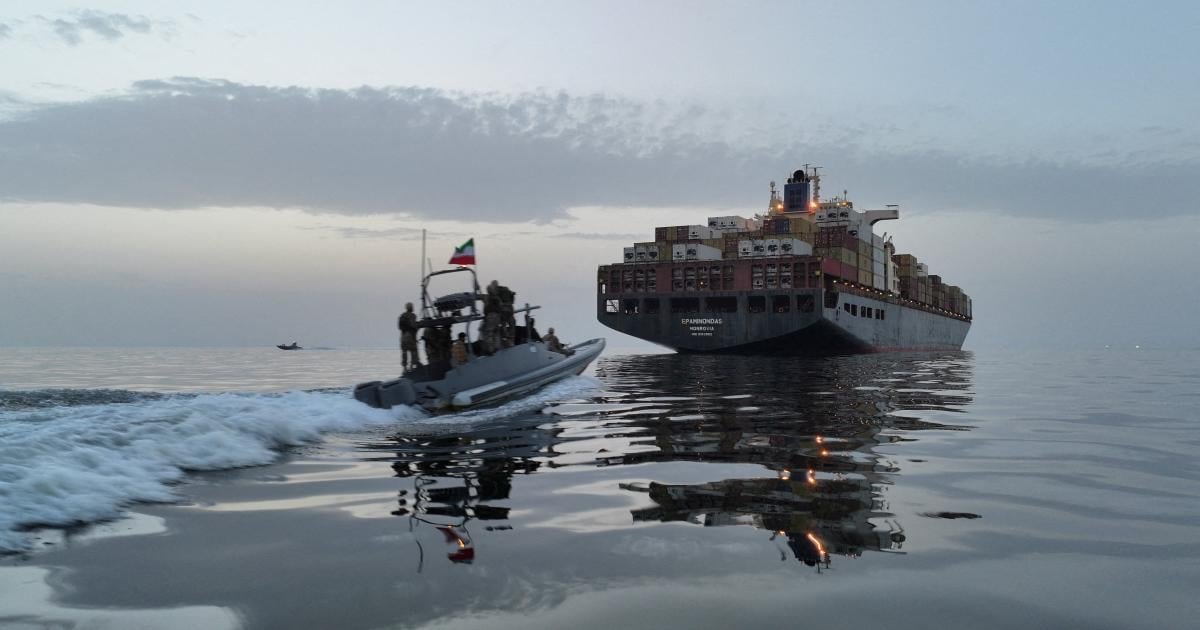
Despite a fragile cease-fire between the United States and Iran, the global economic crisis sparked by the closure of the Strait of Hormuz continues unabated. Dueling blockades have kept 20 percent of the global oil supply, 20 percent of the global supply of liquefied natural gas, and critical commodities such as helium, aluminum, and urea trapped inside the Persian Gulf, unable to reach markets. U.S. efforts to evacuate ships from the strait have been met with a renewed barrage of Iranian missiles and drones, and very few ships have managed to get through.
The economic impacts of this crisis have already begun to crystallize: shortages of fuels and other products in East Asia and Australia, skyrocketing jet fuel prices, and a drop in the global demand for oil for the first time since the COVID-19 pandemic in 2020. In the United States, gasoline has exceeded $4 a gallon and could break $5 by the end of May. Should the strait remain closed, these economic pressures will worsen, causing rising inflation and slowing GDP growth.
Iran’s ability to close the strait has been likened by political analysts to the “oil weapon” used by Arab oil producers against the West in the early 1970s. But in truth, the international system now faces a larger and more durable challenge than it did then. Even if Iran fails to institutionalize its control over the strait by establishing some kind of long-term toll system, it has proved that it can close the waterway to traffic even in the face of significant military force.
This threat will hang over the global economy for the foreseeable future. It seems unlikely that the U.S. and Israeli military campaign will topple the Iranian regime; whatever eventual deal ends this round of conflict will almost certainly leave Supreme Leader Ayatollah Mojtaba Khamenei and his allies in the Islamic Revolutionary Guard Corps in place. If and when hostilities flare up again, Tehran will be able to lock down the strait. Washington should acknowledge and address this risk and not fall under the illusion that military force and diplomatic maneuvering can permanently solve this problem.
The United States will need to open the strait in the next few months to avoid an even more serious economic crisis. This will likely require a combination of negotiations and pressure from the U.S. blockade. But over the long term, the United States needs to find ways to make sure that if Iran tries to close the strait again the global economy will not suffer as it is suffering now. Washington should embrace strategies that build energy resilience and reduce exposure to future strait closures. It should also support efforts to expand shipping routes in Persian Gulf states and revive supply-side incentives to accelerate the energy transition both at home and abroad. Only by reducing its dependence can the United States undercut the strategic significance of the strait and rob Iran of its leverage.
FOOL ME ONCE
The clearest parallel to Iran’s weaponization of the Strait of Hormuz is the 1973 Arab oil embargo, when the Arab members of OPEC cut oil production and banned oil shipments to the United States following the outbreak of war with Israel in October of that year. The embargo had a profound impact—causing severe gasoline shortages in the United States and contributing to a 400 percent increase in the price of crude oil globally—but its use as a policy tool proved to be short-lived.
The oil embargo succeeded because the stars aligned in its favor. U.S. dependence on foreign oil had increased sharply between 1967 and 1973, and domestic production began to decline in 1970. This gave Arab producers unique leverage, which they did their utmost to weaponize. That leverage quickly receded, however. Non-Arab members of OPEC, led by the Iranian shah, Mohammad Reza Pahlavi, continued producing oil, undermining efforts to squeeze the market through production cuts. The oil embargo was lifted in March 1974, after weeks of negotiations between U.S. Secretary of State Henry Kissinger and Arab leaders. By 1975, real oil prices had fallen again, in part because of inflation. (A second shock from 1979 to 1980 caused prices to double yet again, but the cause was the sudden collapse of Iran’s oil production amid the Islamic Revolution rather than concerted action by producers.)
Having done it once, Iran can shut down the strait in the future.
In the wake of the oil crisis, the United States and other industrialized economies developed tools for handling future shocks, the most important of which was a system of petroleum reserves that could act as a cushion against disruptions. No country or group of countries was ever able to successfully deploy the oil weapon again because OPEC and its Arab members were never again in a position to hold the global economy hostage.
By contrast, Iran’s success in the Strait of Hormuz is likely to prove more durable. The Islamic Republic has spent decades developing the capabilities needed to close the strait: mines, rockets, drones, antiship ballistic missiles, and a fleet of small, fast boats that can swarm and overwhelm passing ships. And it has succeeded in doing so with relatively little effort. Since February 28, Tehran has carried out more than 20 attacks on ships in waters surrounding the strait, according to the Joint Maritime Information Center, which monitors maritime traffic in the strait; coupled with depositing land mines in the strait and attacking onshore targets in Gulf states, this was enough to grind traffic to a halt. A month of heavy bombing by both the United States and Israel was not enough to force the strait open; naval escorts have proved challenging to arrange, given the reluctance of other countries to enter the conflict; and shippers remain unwilling to transit the strait owing to the high degree of uncertainty surrounding the cease-fire deal.
Having demonstrated it once, Iran can now credibly threaten to shut down the Strait of Hormuz in the future. Its military capabilities have been degraded but not destroyed. It would take little effort for Iran to deter shippers from resuming traffic. All it would have to do is lay a few more mines or launch small-scale attacks on passing ships. And should Iran successfully establish a tolling system and force every ship to pay a fee to pass through the strait or suffer possible attack, it is unlikely that military force could dislodge it from that position. Regional states, shipping companies, and international actors must now regard Iran’s threat as real, even if the strait is eventually reopened in the short term.
ON THE STRAIT AND NARROW
In the coming months, the United States will need to use a combination of force and diplomacy to reopen the strait. Iran has begun levying tolls on passing ships, but it is likely to encounter problems maintaining this system given broad opposition from regional states and shipping companies. Washington has opted for economic pressure via a naval blockade that is strangling Iran’s ability to export oil, while “Project Freedom” aims to free ships trapped in the strait using U.S. naval deployments. At the same time, negotiations between the two sides, however slow, have not completely collapsed. Although it may take weeks, or perhaps months, reopening the strait is a necessary component of any durable cease-fire agreement—provided, of course, the United States and Iran do not resume hostilities.
Over the next several years, however, Washington and its international partners must pursue further strategies to limit their vulnerability to any future closure. One such strategy would be expanding energy networks in the Persian Gulf. Saudi Arabia and the United Arab Emirates already have pipelines that avoid the strait by moving oil to the Red Sea and the Gulf of Oman, respectively, and that can carry approximately nine million barrels a day—nearly half the total volume that typically moves through the strait. Additional lines will be needed to ease the burden on Bahrain, Iraq, and Kuwait, which currently lack ways to bypass the strait. Bahrain and Kuwait could plausibly build lines that connect to the Saudi network. Iraq is in a tougher position because its only viable routes for new pipelines are west to the Mediterranean, an unattractive option for an oil exporter that ships most of its oil east to Asia. For the transit of goods other than oil, expanded road and rail networks running parallel to the Gulf into Oman or to the UAE port at Fujairah would provide relief in the event that the strait is blocked to container or cargo traffic.
The United States could assist with the financing of such projects and could deploy credits or loans via the Export-Import Bank or the International Development Finance Corporation, justifying the action on national security grounds: money spent on building infrastructure that avoids the Strait of Hormuz would strengthen the position of the United States and its allies against Iran in the event of future confrontations. Washington could plausibly pull other international actors, such as European states, India, Japan, Pakistan, and even China, into such projects, given their collective interest in maintaining access to Persian Gulf energy. Such actions would also provide the United States with a means of leading the international response to the Hormuz crisis and strengthen U.S. ties with its Gulf partners.
Money spent on infrastructure that avoids the strait would strengthen the U.S. position.
At home, the United States should do more to strengthen resilience against energy shocks. Already the world’s biggest oil and gas producer, the United States could invest in greater domestic storage, including a strategic reserve of refined products such as diesel and gasoline. It should also move to aggressively refill and expand its crude oil reserve, which had been depleted by two record draws in 2022 and 2026, following Russia’s invasion of Ukraine and the start of the war in Iran. The United States’ refinery complex is heavily concentrated in states along its Gulf Coast, which leaves the west and east coasts vulnerable to disruptions in overseas supply. California, for instance, depends on Middle Eastern oil for one-fifth of its overall consumption. Building new pipelines at home would stiffen resilience, just as constructing new pipelines in the Persian Gulf would. Washington should also permanently suspend the Jones Act, a century-old statute that makes it hard to transport domestic energy from one U.S. port to another.
But the best way to address the United States’ vulnerability to hydrocarbon price shocks would be to reduce exposure to hydrocarbons. The Trump administration should consider reviving Biden-era incentives for clean energy and electric vehicles, easing restrictions on the installation of renewable energy systems, and pursuing an all-of-the-above, supply-side energy policy that supports the development of both renewables and fossil fuels, so as to make energy cheap, available, and abundant even in a time of heightened risk and disruption.
As with the 1970s crisis, the shock produced by the war with Iran and the closure of the Strait of Hormuz is likely to have extensive ripple effects, no matter how or when the conflict ends. Unlike the earlier crisis, however, the threat posed by Iran’s new “oil weapon” is likely to prove far more durable. Iran has demonstrated that it can close the strait and keep it closed, even in the face of the full force of a global superpower. There is no returning to the status quo ante, when shipping through the strait was assumed to be risk free under the watchful eye of the U.S. Navy. The United States and other countries, both in the region and elsewhere, will need to build out the global energy system so that the next time Iran tries to take the world hostage, the world will not be so easily trapped.
Loading…
