

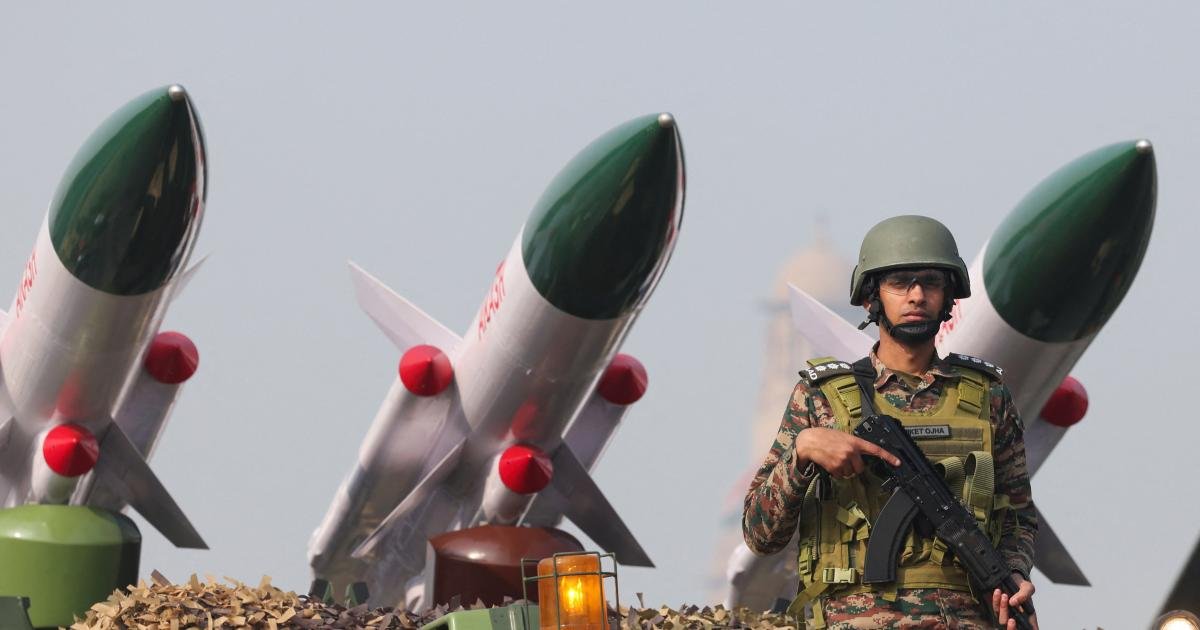
In his 2026 State of the Union address, U.S. President Donald Trump repeated a familiar refrain celebrating his role in ending the May 2025 conflict between India and Pakistan—the deal he has said he is most proud of. He declared that but for U.S. efforts to pull both sides back from the brink, the conflict “would have been a nuclear war.”
Trump’s claims rankled New Delhi, which has long insisted that its disputes with Pakistan are purely bilateral and don’t require the mediation or intervention of outside powers. But the president had a point. The May 2025 crisis, in which the neighbors exchanged intense cross-border fire for four days, was the most serious fighting between two nuclear powers in decades. It marked a significant expansion of conventional conflict below the nuclear threshold, with drones, missiles, and artillery striking an unprecedented number of sensitive targets, including military bases and urban centers.
Far from being chastened by the scale of the fighting, military planners in India and Pakistan have instead spent the last year drawing lessons about how to inflict greater damage on each other in future conflicts. Both sides have concluded that the next major clash will turn on their ability to strike faster, farther, and in greater volume than they have in the past. They are putting those lessons into practice by acquiring new capabilities, expanding indigenous development programs, and enacting major structural reforms to improve the speed and coordination of their forces.
They also appear increasingly convinced that, should the conflict erupt again, more intense conventional fighting would not risk nuclear escalation. Shortly after the May crisis, Indian Prime Minister Narendra Modi announced a “new normal” in which India would “strike precisely and decisively” and “not tolerate any nuclear blackmail.” In response to Indian Army Chief Upendra Dwivedi’s warning that Pakistan should avoid provocations if it wants to “remain on the world map,” Pakistan’s military threatened to “shatter the myth of geographic immunity, hitting the farthest reaches of the Indian territory.”
Yet despite their confidence and bluster, the continued risk of escalation in a region home to a quarter of the world’s population should not be underestimated. Even if precision-strike warfare makes the deliberate use of nuclear weapons less likely than in a ground combat scenario, the introduction of novel systems, targets, and domains increases the risk of inadvertent nuclear use.
If and when it comes, the next crisis between India and Pakistan is likely to prove more dangerous, more destructive, and more difficult for Washington to manage. Both sides have historically shown considerable caution in managing crises and avoiding uncontrolled escalation. But India and Pakistan climbed new rungs of the escalation ladder in the last conflict without serious repercussions, emerging both more determined to exact meaningful costs on the battlefield and more confident in their ability to do so.
Washington’s traditional role in facilitating de-escalation will remain critical. Yet Trump’s comments will make mediation more difficult. To prevent the backlash in India from stopping crucial diplomatic outreach, the United States and its partners must prepare for a future crisis that looks nothing like the last. Developing and testing a playbook for rapid decision-making, while supporting quiet channels of substantive engagement between New Delhi and Islamabad, could help prevent the next spark from becoming a true conflagration.
DIPLOMATS OF LAST RESORT
A heinous terrorist attack on tourists in Indian-administered Kashmir’s Pahalgam Valley triggered the May 2025 crisis. On April 22, gunmen killed 25 Indian citizens and one Nepali national, targeting many at close range for their Hindu faith, according to multiple reports. As videos of the attack spread on social media, Modi threatened to pursue the terrorists and their backers “to the ends of the earth” and promised a “punishment bigger than they can imagine.” India blamed Pakistan for the attack and enacted a series of punitive diplomatic measures, including suspending the Indus Waters Treaty, the water-sharing agreement the two sides have maintained since 1960, closing the Attari-Wagah border crossing, expelling Pakistani military advisers, and cancelling visas.
Two weeks later, India targeted nine sites across Punjab province and Pakistan-administered Kashmir with precision-guided artillery, drone, and missile strikes. The attacks struck deeper into Pakistani territory than any since the 1971 India-Pakistan war, hitting two major cities in Punjab associated with anti-India terrorist groups. Pakistan countered by downing several Indian fighter jets. After two days of tit-for-tat drone attacks, in which Pakistan tested India’s air-defense systems and India destroyed a radar site in Lahore, fighting reached a crescendo when India struck at least 11 military sites across Pakistan, including the Nur Khan Airbase in Rawalpindi, adjacent to the headquarters of the agency that oversees Pakistan’s nuclear weapons. With over 70 casualties, the episode marked the most intense fighting between India and Pakistan since the 1999 Kargil conflict, a limited war that erupted after Pakistani forces crossed the Line of Control into Indian-held territory.
At first, Washington took a relatively hands-off approach to mediation. On May 8, shortly before the most intense exchange of fire, U.S. Vice President JD Vance told Fox News, “We’re not going to get involved in the middle of a war that’s fundamentally none of our business.” By the next day, however, Trump administration officials received “alarming intelligence”—the details of which remain unclear—that forced an about-face. Vance and Secretary of State Marco Rubio worked the phones, ultimately securing a cease-fire on May 10.
Vance’s and Rubio’s work was the latest chapter in a long history of U.S. management of South Asian crises dating back to the 1990 Kashmir crisis, when U.S. President George H.W. Bush sent Deputy National Security Adviser Robert Gates to cool tensions. U.S. efforts have been largely effectively, if not always even-handed: in recent crises, Washington has tilted toward its key Indo-Pacific partner in New Delhi, feeding Pakistani concerns that the United States was emboldening India, before reverting to a more balanced style of crisis management in May 2025. Past success, however, does not mean that Washington is prepared to manage a more intense and less predictable crisis in the future.
WE’RE NOT IN KARGIL ANYMORE
India and Pakistan are already using the last exchange to identify gaps to fill and advantages to exploit should fighting break out again. Both are pursuing more capable weapons systems: Pakistan is looking to China and Turkey as it seeks to upgrade its air defenses, fighter and drone fleets, airborne early-warning aircraft, and electronic-warfare and counter-drone capabilities, while India has identified the need for additional air-defense and counter-drone systems, more fighters and drones, new satellites and sensors, and advanced electronic warfare capabilities.
Both countries are also revising their escalation playbooks. Over the past several crises, India has gradually expanded the space for conventional conflict under the nuclear threshold while remaining careful to signal non-escalatory intent. Its goal has been to punish Pakistan for what India argues is its neighbor’s continued support for cross-border terrorist groups without triggering the nuclear escalation Pakistan has traditionally threatened to deter its much larger rival. The fact that the latest conflict did not spiral could strengthen New Delhi’s confidence in pursuing military objectives and further limit its willingness to exercise restraint. An Indian defense official publicly blamed India’s loss of fighter jets at the outset of the fighting on “the constraint given by the political leadership to not attack the [Pakistani] military establishment or their air-defense system.” After striking Pakistani air defenses in subsequent rounds without triggering dramatic escalation, India could feel emboldened to do so earlier in a future crisis, effectively starting at a higher rung on the escalation ladder.
For its part, Pakistan, bolstered by advanced Chinese capabilities, has undertaken reforms to prepare for the kind of conventional conflict it has long sought to deter. It created the Army Rocket Force Command, an outfit tasked with enhancing Pakistan’s conventional precision-strike systems and consolidated military planning, deployment, and procurement authorities under now-Chief of Defense Forces Asim Munir. Islamabad has also rhetorically signaled its own greater appetite for risk-taking, warning that it would “not hold back” in the face of Indian aggression.
If these preparations are any indication, the next crisis could pick up from where the last conflict left off—and far exceed its intensity. As both sides grow more comfortable with conventional conflict, they may become more willing to hit greater numbers of high-value targets further inside one another’s territory.
Consider the following scenario. An unpredictable, but not altogether unexpected trigger kicks off a series of events that soon escalates. Indian preparations for a large-scale military exercise near the shared border causes concern in Islamabad that the build-up may be cover for war. Pakistan reinforces the Line of Control, disperses aircraft, activates air defenses, and places armored reserves on alert while surging naval and coast guard patrols along the coast. Soon after, Baloch militants carry out a maritime attack on a Pakistani coast guard vessel near Gwadar, killing a dozen crew members. Despite presenting no substantiated evidence, Islamabad accuses New Delhi of sponsoring the attack. India denies involvement and warns Pakistan against using the incident as a pretext for escalation.
The next crisis could pick up from where the last conflict left off.
With tensions running high, Pakistani air defenses shoot down an Indian aircraft operating near the exercise area, claiming it crossed the border. India denies the incursion and accuses Pakistan of unprovoked aggression, responding with a strike on the radar site involved that kills soldiers and nearby civilians. Pakistan immediately retaliates against an Indian military facility, causing multiple casualties, among them senior officers. India expands its strikes to additional Pakistani air-defense and command nodes in facilities across the country to reduce the threat to its aircraft. Pakistan, in turn, launches drones and conventional missiles against Indian air bases and logistics facilities, including near major cities hundreds of miles inside India. Some bases targeted by both sides house nuclear-capable aircraft, raising the possibility that each side is attempting to degrade the other’s nuclear deterrent.
Images of casualties, smoldering military sites, and damaged civilian infrastructure circulate on social media, creating pressure for further retaliation. India accuses Pakistan of killing scores in a strike on a Hindu temple that Pakistan argues instead targeted a nearby military facility. False claims of aircraft losses and impending attacks fan the flames. As outside governments press for de-escalation, Indian and Pakistani planners are incentivized to strike quickly before diplomacy freezes the conflict on unfavorable terms. The swift pace and lack of clear phases of escalation further blur the lines dividing “rounds” of fighting, such that near-simultaneous salvos leave few opportunities for off-ramps.
Citing Pakistan’s strike on the temple as “religious terrorism,” India moves to limit the flow of water to Pakistan, making good on Modi’s 2025 warning that “blood and water cannot flow together.” Lack of water storage and diversion capacity prevent India from exerting significant control under normal conditions, but New Delhi can more meaningfully threaten to manipulate water flows at certain times of year, rapidly releasing water from dams during the summer monsoon or holding water during the winter dry season. During the Pahalgam crisis, Pakistan responded by deeming any significant disruption in water flow an “act of war” crossing the country’s “red line” and threatening potential retaliation. This time, faced with the threat of water scarcity in midwinter, Pakistan conducts precision strikes near Indian dam infrastructure to deter New Delhi while publicly appealing to China to limit water flows to India for signaling purposes.
Within days, fighting expands into the naval domain. Citing a need to protect shipping lanes, India engages in naval maneuvers that Pakistan interprets as preparation for a limited naval blockade of its key ports—an especially salient concern in the light of the war in Iran. Pakistan, seeking to protect its access to the Arabian Sea, fires on the Indian vessels after they ignore repeated warnings. With few shared understandings or guardrails at sea, the crisis begins to spiral. Each side attacks the other’s naval assets and port infrastructure near global shipping lanes, disrupting commercial traffic, driving up insurance costs, delaying energy shipments, and drawing outside powers more directly into the crisis to protect sea lanes and evacuate nationals.
The conflict would implicate great powers in more direct ways, as well, some of which could make finding a resolution more difficult. China, for example, could provide additional real-time intelligence support to Pakistan to maintain relative military balance if Pakistan struggles to cope with Indian strikes. The United States would face an unprecedented test of its crisis management capacity while simultaneously being forced to address urgent threats to citizens and personnel in the region and to contend with the broader economic implications of a war. And although the United Kingdom, the Gulf states, and other countries might engage leaders in Islamabad and New Delhi, they would struggle to coordinate and bring an end to the fighting if either side isn’t ready to do so.
SIGNAL FAILURE
Destructive as it would surely be, such a war may present less of a risk of a nuclear escalation than the scenario that has long worried outside analysts most: an Indian ground invasion and the possibility of Pakistani tactical nuclear weapon use in response. In this sense, the shift away from ground combat to long-range warfare and the addition of new rungs on the conventional escalation ladder does limit at least one direct path across the nuclear threshold. New conventional capabilities, an increased willingness to use them, and new domains of conflict give Pakistani leaders alternatives that could forestall a crisis scenario in which they perceive nuclear use as their only recourse.
Influential thinkers in Islamabad have noted this evolution. Retired Lieutenant General Khalid Kidwai, the architect of Pakistan’s nuclear strategy, acknowledged that the creation of the Army Rocket Force Command, for example, “provides an additional layer of strategic deterrence between the operations of conventional forces and the potential employment of nuclear forces, thereby in some ways raising nuclear thresholds.” Kidwai’s comment marks a significant shift for Pakistan, which has historically relied on the threat of nuclear use to deter even limited conventional attacks by India.
Yet this framing obscures another danger: that more intense and less predictable conventional fighting could amplify escalation pressures and increase the risk of inadvertent nuclear use. As conflict intensifies, pathways to miscalculation are likely to multiply. Red lines could be misread, dual-use assets could be targeted accidentally, dispersals of short-range nuclear systems for defensive purposes could be read as preparations for use. If both sides incur significant casualties, suffer damage to civilian and military infrastructure, and struggle to stem a flood of misinformation and disinformation, leaders could find it more difficult to pursue a face-saving off-ramp. Even assuming both remain cautious about nuclear use, the pressure, ambiguity, and compressed timelines of a fast-moving conventional conflict could increase the risk of inadvertent nuclear escalation.
The shift away from ground combat does limit one path across the nuclear threshold.
Greater risk acceptance in conventional conflict will also complicate efforts by the United States and other countries to manage a crisis. In the past, Pakistan’s nuclear signaling—public threats, missile movements, alerts, and other activity visible to intelligence agencies—helped create a sense of urgency in Washington by raising fears that a conventional clash could cross the nuclear threshold. During the Kargil crisis, for instance, such fears helped spur U.S. President Bill Clinton to press Pakistani Prime Minister Nawaz Sharif to withdraw his forces. Now that Islamabad and New Delhi appear more willing to absorb and respond to conventional strikes, the window for outside diplomatic intervention to avert potential nuclear use has shrunk. As escalation accelerates and expands across domains, outside powers may find themselves reacting to events rather than shaping them, with fewer clear off-ramps available.
For Washington in particular, future crises may prove more difficult to manage in the wake of Trump’s repeated claims that he compelled both sides to accept a cease-fire. According to The New York Times, those assertions contributed to a falling out between Trump and Modi during a postcrisis call and remain a sore point in New Delhi, which maintains that de-escalation was strictly bilateral. New Delhi has historically rejected third-party mediation in conflicts with Pakistan, because it views the Kashmir dispute as a bilateral matter and believes outside involvement legitimizes Islamabad’s efforts to internationalize the issue. Should fighting break out again, Washington may struggle to play its traditional crisis manager role if India resists U.S. overtures to avoid appearing to accept outside mediation, reward Pakistani escalation, or forfeit the time and space needed to achieve its military objectives. Pakistan, meanwhile, may expect the United States to reprise its previous role in engineering an off-ramp—only to find Washington less able or willing to do so.
China’s relationship with Pakistan could further complicate future crisis-management efforts. Beijing seeks to avoid escalation in its neighborhood, but the May crisis showed that it is not merely a bystander: Pakistan relied heavily on Chinese fighter jets, missiles, air defenses, and other capabilities, and Indian officials later alleged that China provided real-time intelligence support during the fighting. Beijing’s involvement is likely to persist and potentially deepen, raising the prospect that Washington and its crisis-management partners will have to contend not only with India and Pakistan but also with China as a player in the confrontation.
Admonitions alone may not be enough to stop a tense moment from exploding.
The most effective way to manage the risks exposed by the May 2025 crisis is to work to prevent the next one while reinforcing crisis-management mechanisms should those efforts fail. Despite deep animosity in the relationship, quiet engagement between India and Pakistan could still reduce the risk of another conflagration in the near future. India’s decision not to respond militarily to a November 2025 car explosion in New Delhi that killed ten people, for example, demonstrated restraint and a willingness to not default to military action. Participants in unofficial dialogues suggest that such actions, along with public gestures such as the December 2025 handshake between India’s foreign minister and Pakistan’s national assembly speaker in Bangladesh, have created modest space for renewed discussion.
The Trump administration should treat the May crisis not as a one-off diplomatic success, but as the impetus for a more serious South Asia crisis-prevention strategy. The United States should encourage engagement between India and Pakistan behind the scenes, supporting informal forums for dialogue without overshadowing or complicating the process. Discussions could focus on restoring and deepening confidence-building measures between the two sides, including the development of new communication channels for use in both peacetime and crisis to minimize the risks of inadvertent escalation. At the same time, Washington and its partners should privately make clear to New Delhi and Islamabad the economic, political, and strategic costs of a large-scale crisis.
Admonitions alone, however, may not be enough to stop a tense moment from exploding into something more destructive. A coordinated crisis-management plan that watches for unpredictable or unprecedented escalation pathways, identifies where the United States and its partners have leverage over or access to each side, and clarifies which officials, channels, and messages would be used at each stage would be a valuable first step. These efforts may not guarantee de-escalation, but they would give outside governments a better chance of acting quickly and coherently before a fast-moving crisis outruns diplomacy.
The May 2025 crisis did not bring India and Pakistan to the brink of nuclear war. It did, however, lay the groundwork for another clash that could. Washington’s success in encouraging a cease-fire should not be mistaken for proof that future crises can be managed with the same tools, timing, or assumptions. The fire next time may burn hotter and spread faster. Whether it remains limited or spirals out of control will depend largely on the firebreaks built now, before the next spark ignites.
Loading…
