

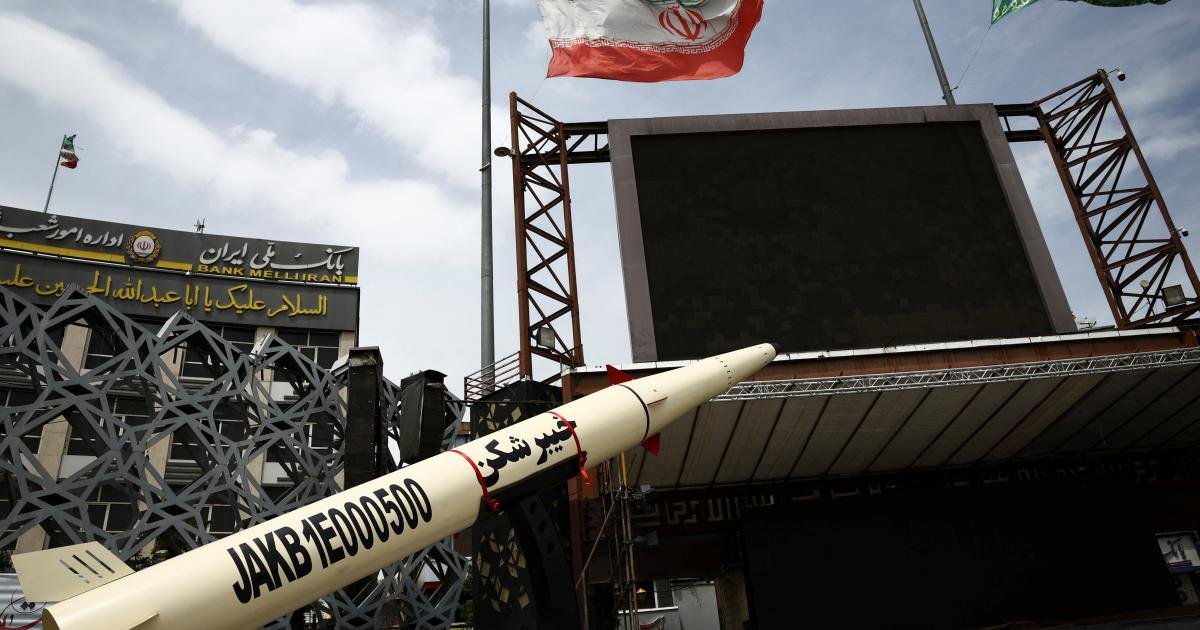
Over the last three weeks, talks between Iran and the United States have stalled. The two countries have managed to preserve their shaky cease-fire. But despite days of both indirect and direct negotiations, including a dramatic, 21-hour high-level summit in Islamabad, a lasting deal remains far away.
Part of this failure has to do with Washington’s misplaced expectations. U.S. President Donald Trump believes that the United States holds all the cards and can force Tehran into buckling, regardless of months of evidence to the contrary. But part of the problem is mutual mistrust. The roots of this mistrust date back to Iran’s 1979 Islamic Revolution and the subsequent hostage crisis. This deep wariness has not just persisted; it has deepened. Washington has now spurned Tehran repeatedly in negotiations. It forged a nuclear deal in 2015, only to abandon it three years later. It entered new talks with Iran in 2025, and then bombed Iran’s nuclear infrastructure. And when talks picked up again at the beginning of this year, the United States launched its latest military campaign. As a result, most Iranians have little faith that the current negotiations will work or that the cease-fire will hold. Hard-line factions in Iran, historically skeptical of diplomacy, have been emboldened, whereas pragmatists who support engagement have been marginalized.
To overcome this mistrust, the United States will need to prove that the current negotiations are fundamentally different from past ones—which is to say that they will result in a viable and durable agreement. That can begin by Washington finally accepting that Iran has fundamental rights as a sovereign state, including to enrich uranium for civilian, peaceful purposes. The United States will also need to help Iran reconstruct by letting states along the Persian Gulf, Iran included, impose surcharges for certain petroleum-related goods that depart from ports in the Persian Gulf and transit south through the Strait of Hormuz, which Tehran has proven it can choke off. The resulting funds can help finance the region’s reconstruction in accordance with needs, and Iran, obviously, requires the broadest support. Finally, the United States needs to ensure that Israel will refrain from attacking Iran and help the two countries forge stable, if still unfriendly, relations. Tehran, in turn, will have to agree to new limits and severe oversight of its nuclear program so that Washington can be sure it will never build a nuclear weapon. Iran will also need to accept that it cannot extract funds for the very passage of ships through the strait, in contravention of international law.
Such a comprehensive deal would provide both Tehran and Washington with what diplomats call a “golden bridge”—or an arrangement that allows adversaries to retreat from maximalist positions while still claiming victory. It would inevitably disappoint the United States’ many Iran hawks, who are averse to letting Tehran notch any kind of win. But the reality is that coercive diplomacy is not effective. It hardens resistance, constrains room for compromise, and increases the risk that disputes repeatedly escalate into more violent conflicts. It is thus time for U.S. and Iranian officials to shift their language and strategy away from maximalism and embrace compromise instead.
NUCLEAR NEGOTIABLES
The road to U.S.-Iranian peace begins with some on-the-ground basics—such as a pledge to maintain the present cease-fire and to not attack critical infrastructure, particularly in the Gulf. That means the two countries must agree to a carefully defined extension of the cease-fire, one that explicitly prohibits such strikes.
Next, the two sides will need to resolve some of their deeper disputes—particularly over Iran’s nuclear program. That clearly remains a central challenge for Americans and many others who want the Iranians to give up any technology that could enable the development of a nuclear weapon. U.S. officials are especially concerned about the nearly 1,000 pounds of highly enriched uranium in Iran’s possession, and they fear that Tehran might still have several thousand efficient centrifuges. These two specific concerns are addressable. Iran could blend down enriched uranium to below 3.67 percent of U-235 and place strict limits on the introduction and the number of more efficient centrifuge technology. The United States and the UN Security Council could devise and employ a regional monitoring and control regime to make sure that Tehran makes good on its word. As part of doing so, Iran might ratify the Additional Protocol to the Nuclear Nonproliferation Treaty and again subject itself to intensive International Atomic Energy Agency inspections, as it did after ratifying the 2015 nuclear deal, known as the Joint Comprehensive Plan of Action.
But for Iran to agree to such measures, the United States will have to acknowledge that Tehran is entitled to develop nuclear technology for energy, health care, and other peaceful purposes. Its right to do so is supported by the Nuclear Nonproliferation Treaty, which it has ratified. So far, however, the Trump administration has refused to make this concession. Instead, it has stuck to demands that Iran forgo all enrichment.
Yet Washington might be willing to budge if Tehran agreed to embed its enrichment in a multinational commission featuring U.S. partners in the region. In this scenario, all fuel-cycle activities in Iran and potentially the whole Middle East would be under the joint operation and supervision of a consortium managed by officials drawn from Bahrain, Iran, Iraq, Kuwait, Oman, Qatar, Saudi Arabia, the United Arab Emirates, and possibly Turkey. This collaborative structure would make it easier to detect any effort by Iran to divert nuclear material. If Tehran agreed to participate in such a commission and generally abide by the terms of its peace deal with Washington, it would receive sanctions relief. The UN Security Council would also revise, freeze, suspend, or end resolutions levied against Iran for its nuclear program. And if Iran stopped supporting terrorist activity, the Security Council would also freeze or end resolutions targeted at Iran for that kind of misconduct.
TAKING CHARGE
Should Tehran and Washington agree to a nuclear deal, the path to durable peace would get easier. But Iran’s nuclear program is not the only point of dispute. The two governments are also locked in a battle over whether Iran should control the Strait of Hormuz—a battle that is perhaps just as essential. And resolution of that issue is closely related to resolving the nuclear one.
Right now, both countries have taken maximalist stances over the strait. Iran, having proved that it can block off the waterway thanks to its geographic position and use of force, has asserted that it has the right to do so. It seems set on formalizing its dominance by laying out a new set of rules governing passage, including tolling ships that hope to pass through.The United States, by contrast, has demanded that Iran lift all restrictions on the strait and let commerce flow through freely. It has launched a blockade of Iran’s shores and the strait until Iran agrees to do so.
To close this gap, the two sides will need to get creative. The United States will need to recognize that absent a massive and costly military operation, Iran will retain the capacity to close the strait. But it can reject Tehran’s suggestion that it toll the strait. Tolls would be contrary to the straits provisions of the Law of the Sea Treaty and would set a truly bad precedent that could limit free maritime commerce through other such waterways. What the United States can do is have exporting states in the Persian Gulf levy a transportation surcharge on petroleum-based goods—oil, gas, and fertilizer—that are departing from their ports and transiting southbound through the strait. Such a surcharge might, for example, include $5 per barrel of oil, 20 cents per 1,000 cubic feet of gas, $25 per ton of sulphur, and $30 per ton of urea and anhydrous ammonia. These products form a heavy percentage of the trade that goes through the waterway and affect the world’s current price of commerce. Such surcharges are distinct from tolls because they are imposed by the exporting states at the port of origin, rather than by a single state for passage through an internationally guaranteed open waterway. The surcharges could raise similar revenues to tolls, an estimated $80 billion a year, according to the best estimates. The surcharge revenue would, in turn, go to a new UN agency that would be in charge of distributing the funds.
Despite weeks of attacks, Iran remains open to negotiations.
The resulting funds would be earmarked, in part, for the purpose of rebuilding Iran, helping fulfill Tehran’s demand for wartime reparations. The remainder of the money could go to repairing civilian war damage in regional Arab states. The funds could meet the region’s immediate humanitarian relief needs and repair broader, wartime damage. The money could also go to helping the region address its environmental challenges. The funds would complement whatever the United States, the European Union, and affluent Arab states and others contribute to reconstruction. The fund’s duration would be open-ended. But it would be subject to periodic review and, if needed, renewed by the parties: the states levying export surcharges, as well as Oman, which has suffered damage from the war. Iraq would not be a participant, because of its long, 1980s war with Iran and because its primary rebuilding needs are unrelated to the current conflict.
A deal on the strait would first be worked out between Iran and the United States. The two countries should, in fact, set up a working group dedicated to the issue. (They should also set up a working group to handle nuclear challenges.) But the United Nations would have an essential role to play, as well. A fee arrangement would need explicit UN Security Council support and broader UN monitoring to ensure that the surcharges are not used for unauthorized purposes, such as military buildups or nuclear and chemical weapons programs. The Security Council would have to set up the new UN organization, perhaps called the Persian (or Arabian) Gulf Cooperation Agency, that would be charged with distributing the funds and tracking them. It must be run by effective and competent personnel appointed by the UN secretary-general under a careful and appropriate process of evaluating and approving candidates. In addition to Iran and the Gulf states, the UN Security Council’s permanent members—China, France, Russia, the United Kingdom, and the United States—would participate in the agency by providing a nexus of a board of directors, as would Brazil, India, Indonesia, Japan, and Malaysia. These countries might also provide funds, training, and personnel. The UN General Assembly would settle disputes involving the agency using a majority vote. The agency could also coordinate other international assistance in rebuilding Iran and other Gulf states.
Such measures would not totally resolve Tehran’s and Washington’s underlying disputes. But they would help stabilize ties and pave the way for negotiations that could eventually normalize relations. The two sides would need to engage in careful sequencing. An immediate opening of the strait would be necessary, but the linkage between the strait and Iran’s nuclear program could offer financial benefits for Iran that could serve as positive leverage that makes Tehran more willing to place caps on its nuclear program and end its support for terrorism. The United States and others would always retain the ability, in extreme circumstances, to use military force as a way to assure continued Iranian good behavior, despite the fact that military force is an inefficient way to induce compliance and forge agreements.
THREE-BODY PROBLEM
Optimistically, Tehran and Washington could realize the benefits of cooperation and forge a lasting agreement. For any deal to stick, however, it would need buy-in from Israel, which is often left out of peacemaking conversations. A nonaggression pact between Iran and Israel would be needed to assure ongoing stability in the Middle East. Otherwise, Iran will continue to attack Israel through its proxies and Israel, without proxies, will make more direct military attacks on Iran. Conflict between Iran and Israel could again escalate, drawing Washington and the Arab Gulf states back into a war against Iran. The region would then remain trapped in a condition of chronic, unending conflict.
An Iranian-Israeli nonaggression pact would, no doubt, be difficult to establish. Few governments mistrust and fear each other more. Such a pact would certainly not look like peace in any traditional sense: there would be no embassies, no trust, and no shared vision. But it is still possible for the two countries to forge a disciplined, structured coexistence in which they pursue deescalation. This is a new and different concept, and a period without threats and violence would be required.
Iran and Israel would need to establish backchannels of communication. Egypt and Oman are the obvious potential mediators. The aim of such backchannels would be to defuse tensions and avoid escalation via improved communications and mediatory steps. Iran and Israel would also need to stop publicly speaking of each other in near-apocalyptic rhetoric. Iranian elites, for example, could stop leading chants of “death to Israel” at their Friday prayers. Israeli elites, in return, could stop claiming that Iran will cause a “nuclear holocaust.” Once they have begun to open a channel for more respectful communication and backed away from their most extreme positions, Iran and Israel could seriously consider undertaking confidence-building measures that produce mutual security assurances, particularly around their nuclear and missile capabilities.
A key point of any discussions will be Hezbollah. Currently, Israel and the United States are trying to separate negotiations with Iran from negotiations involving Lebanon. This is problematic, as it is not possible to address the Hezbollah question without engaging Iran. It will be necessary to think about the bigger picture with Israel, which might need to establish nonaggression pacts with both Iran and Lebanon. Over time, should there be such an agreement between Israel and these two states, it could yield more durable mechanisms for dialogue, risk reduction, and perhaps even limited economic cooperation.
The vexing role of the Palestinian problem continues and will continue to be an important part of any future regional security arrangement. It is a genuine political and humanitarian tragedy and must not be lost in present negotiations. Although its resolution would not end the Iranian-Israeli rivalry, it would remove one of the Iranian regime’s most powerful sources of legitimate concern. For Iran, the Palestinian cause has long provided moral and political justification for its opposition to Israel. A credible pathway to Palestinian statehood would weaken this narrative and help solve the problem.
TALK IT OUT
The Middle East stands at an inflection point. Iran has long insisted that it has no desire to develop a nuclear arsenal. Its former supreme leader, Ali Khamenei, even issued a religious ruling against doing so. But although Iranian Foreign Minister Abbas Araghchi regularly declares that Iran will not proliferate, the fatwa has died along with the former supreme leader, and given the recent conflict, Iran’s new leadership will undoubtedly come under severe internal pressure to produce a nuclear deterrent. If it does, the world will face a very complex threat to peace. People everywhere should try to prevent such an outcome, Iranians included. (Recently, former Iranian Foreign Minister Javad Zarif published a useful article in Foreign Affairs about how to forge peace in which he argued that Iran’s nuclear technology has not deterred attacks.)
Thankfully for everyone, there are reasons to believe that negotiations can avert such an outcome. Despite weeks of attacks, Iran remains open to negotiations. Araghchi has repeatedly reaffirmed Iran’s right to enrich and control the Strait of Hormuz. Yet he has also said that Iran is open to talking further about how it can assure the world that it will not develop a nuclear weapon and called for a new regime to govern the strait. And with some control over the latter, Iran may not need the former. Tehran, after all, has demonstrated that it can resist two nuclear-armed states of significantly superior military capability in part by using the strait as leverage.
In parlous times, unexpected ideas emerge that open the door for diplomacy. This is one of those times. Coercion or bombings will not resolve the conflict between Iran and the United States. Instead, the two countries need a golden bridge so that the outcome of negotiations is not one of humiliation but cooperation and thus success.
Loading…
