

With the Russian-Ukrainian War now well into its fifth year, the ground war remains characteristically intense. Both sides have experienced significant losses in personnel and equipment. And yet, the front line has seen relatively minor adjustments. In November 2023, General Valerii Zaluzhnyi, then serving as commander-in-chief of the Armed Forces of Ukraine, described how the war had become a positional-centric form of warfare. The war’s new character, including a host of unmanned systems, has limited the ability to execute large-scale maneuver. And attritional warfare based on limited maneuver and fought along a relatively static line of contact tends to favor the side with more resources—in this case, Russia.
Recent estimates put total Russian casualties for the year 2025 at 416,570. Despite these losses, Russia has continued to regenerate its combat power. Through 2025, Russia could still recruit 35,000 people per month, principally through financial incentives of around 2 million rubles ($24,612). Ukraine’s capability to inflict significant casualties is impressive, but it has resulted in no change to the Russian will or ability to wage war.
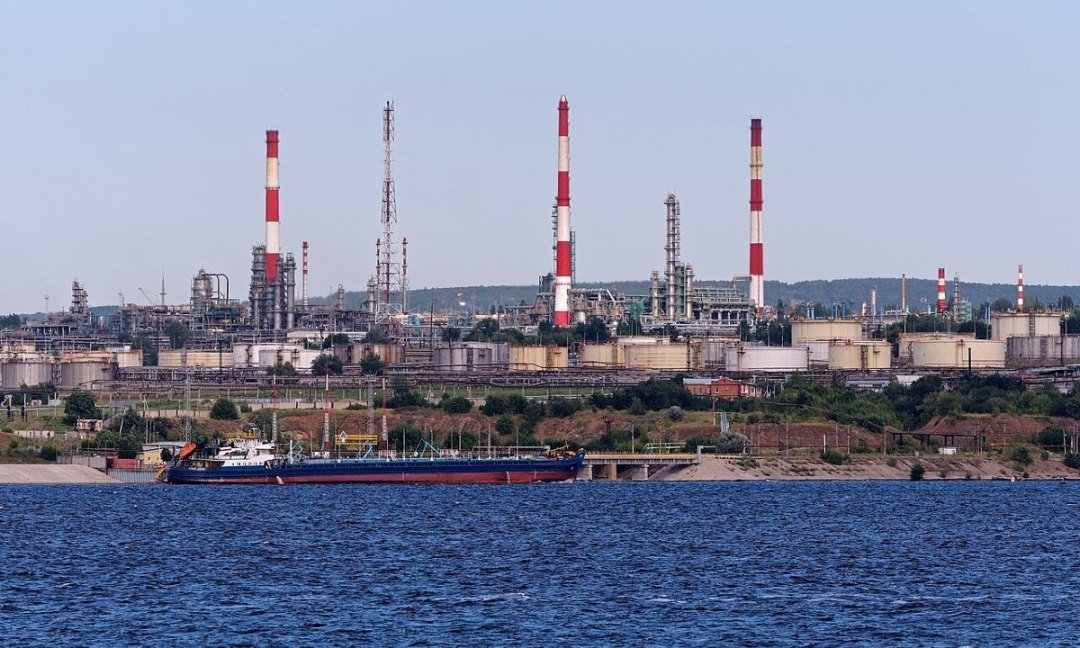
Recognizing this, Ukraine has adjusted its approach. While continuing to support its ground forces, Ukraine has begun to attack critical infrastructure inside Russia. Through a deliberate campaign of long-range strikes, Ukraine appears to be trying to reduce Russia’s war-making capabilities, primarily by targeting Moscow’s ability to generate income through oil sales. Ukraine’s new theory of victory parallels Allied strategic bombing in World War II. An examination of the Allies’ bombing campaign offers a framework for understanding Ukraine’s strikes today—and their prospects for success. Moreover, taken together, the two campaigns reveal both enduring lessons on the conditions under which deep-strike fires can diminish a state’s ability to wage war and direct implications for the future application of long-range fires.
Ukraine’s Homegrown Long-Range Strike Capability
When Russia initiated its full-scale invasion of Ukraine in February 2022, Ukraine had limited means to strike deep. Kyiv sought better munitions from its Western supporters and soon began developing its own deep-strike capabilities. Initial supplies from the United States and European countries proved limited, with restrictions on their usage. These restrictions were meant to prevent escalation, specifically with respect to Russia’s nuclear capability. By the end of 2025, despite loosening of some restrictions by Ukraine’s supporters, Russia’s nuclear saber-rattling had effectively deterred Western support, at a minimum by slowing the delivery of key weapons over the course of the war’s first few years.
During this period, however, Ukraine began developing its own deep-strike capabilities. In December 2024, Kyiv unveiled its Peklo missile drone, with a published range of seven hundred kilometers. In August 2025, Ukraine unveiled the Flamingo cruise missile with a reported range of three thousand kilometers. Due to domestic manufacturing, Ukraine is no longer reliant upon the supplies and permissions of its supporters to strike deep inside Russia.
Once Ukraine established the capability to strike deep, it had to decide which targets would have the greatest impact on Russia’s ability to wage war. While experimenting with a few options, Ukraine has primarily targeted Russian oil production and distribution to reduce Russia’s economic potential. In 2024, oil and gas revenues accounted for approximately 30 percent of Russia’s income (equating to $120.3 billion), with 85 percent of that value coming from oil, primarily crude oil, and the rest from natural gas. Despite Western sanctions, oil revenue remains significant to the Russian state, often due to the use of unsanctioned vessels.
Starting in the summer of 2025, Ukraine increased its long-range strike campaign, conducting forty-three strikes from July 1 to September 7 alone. These targets included oil refineries, transportation infrastructure, and military-industrial complexes. Ukraine struck Russian oil infrastructure more than 140 times in 2025, an increase of over 50 percent from 2024. In November, Ukraine began attacking not just refineries but the ships and nodes Russia needs to transfer its oil into the international market. These strikes include sinking two oil tankers, part of Russia’s “shadow fleet,” in the Black Sea. On November 29, 2025, Ukraine struck the Russian port of Novorossiysk, a key Black Sea shipping port for oil exports.
While it is hard to precisely differentiate the direct effects of the long-range strikes from those of other economic instruments, such as international sanctions, there have been reports of the war’s impact within Russia—including an inability to pay soldiers, disrupted funding for war production, and domestic fuel shortages in the fall of 2025. Additionally, Russia has been forced to reallocate limited air defense assets. Reports also indicate that the Russian government is seeking alternative ways to raise revenue to fund its war, including increased taxation. While it is hard to measure the state of the Russian economy accurately, signs have begun to emerge of struggles to raise revenue.
Historical Case Study: Strategic Bombing in World War II
The Allied strategic bombing campaign provided the first example of long-range fires in a war. As Phillips Payson O’Brien argues in How the War Was Won, the Allied sea and air campaigns destroyed more Axis combat power than any land or naval battle. While the Allies still required ground forces to seize terrain, the application of long-range fires made a critical contribution to the Allied success. By the spring of 1941, bombing objectives shifted from Romanian oil fields to transportation networks. Cities represented junctions where a single bomb could disrupt a line-of-communication node, affecting multiple lines. The problem with each of these bombing strategies was the failure to recognize their effects. For example, Great Britain prioritized attacks on U-boats at their submarine pens. However, the actual impact was negligible because strong concrete structures protected the U-boats.
Eventually, the Allies developed a comprehensive theory for applying airpower, starting with the destruction of the Luftwaffe, followed by targeting German production and mobility. The destruction of roads, bridges, and railways prevented Germany from bringing materials together to produce war matériel and from reacting to Allied actions. The Allied strategic bombing campaign successfully prevented Germany from creating and then moving combat power to the decisive point once Allied ground forces entered continental Europe.
The Allied bombing campaign provides several lessons applicable to Ukraine’s long-range strikes today. First, the targeting process must have an assessment mechanism. If the Allies had realized earlier that attacking hardened U-boat pens had no effect, they could have reassigned those sorties. Additionally, this case study demonstrates that long-range strikes may not have an immediate impact. Finally, practitioners must adapt their theory until it succeeds. Once the Allies decided to dismantle the Luftwaffe, destroy German production capabilities, and disrupt lines of communication, they developed a successful theory for the strategic bombing campaign, aided by improved technologies.
Future Application of Long-Range Strikes
The methods used by the Allies in World War II for long-range fires and by Ukraine today differ. In the 1940s, bomber technology evolved significantly, but the aircraft could not deliver precision strikes. Today, Ukraine employs unmanned systems over extended distances with pinpoint accuracy. In World War II, the Allies sought to destroy Germany’s war-making means and its lines of communication to disrupt its ability to move combat power from production to the front lines. Today, Ukraine has prioritized Russia’s economy by disrupting its international sales of oil products to impose pain and to undermine Russia’s ability to raise revenue.
In future wars, the United States will most likely experience a new environment. Future leaders must recognize that technology will change and situations will differ, but these lessons can help future strategic leaders to determine what targets they should prioritize, recognize the need for an enforced targeting cycle, ensure an appropriate passage of time to assess the impacts of the strikes, and acknowledge that bombs alone will not win a war without complementary ground combat power.
For years, despite some successes in other domains, notably at sea, Ukraine had focused on a traditional, maneuver-based form of ground combat. They did this partly because of the initial lack of capabilities to strike deep into Russia and an immediate need to stop Russian forces moving west. However, in the second half of 2025, Ukraine initiated a prioritized effort to strike deep into Russia, specifically infrastructure facilitating Russian oil sales. Ukraine will need to continuously adapt its strategy for employing its long-range munitions. Ukrainian commanders and planners must assess which targets are most vulnerable and which have the most significant impact on Russia’s war-making capability. Most likely, Ukraine will only compel Russia to cease the war by posing a legitimate threat on the ground, in conjunction with a degradation of its war-making capabilities. Just as history later proved the effectiveness of the Allied strategic bombing campaign on Nazi Germany’s ability to produce and move combat power, it will take time to realize Ukraine’s long-range strike campaign fully. However, Ukraine’s theory of deep strikes is logical and appears to be already affecting Russia’s economy.
Jefferson Burges is a member of the Ukraine War Integrated Research Project at the United States Army War College.
John Nagl is the General Pershing chair of military strategy at the Army War College and director of the Ukraine War Integrated Research Project.
The views expressed are those of the authors and do not reflect the official position of the United States Military Academy, United States Army War College, Department of the Army, or Department of Defense.
Image credit: Alexxx1979
