

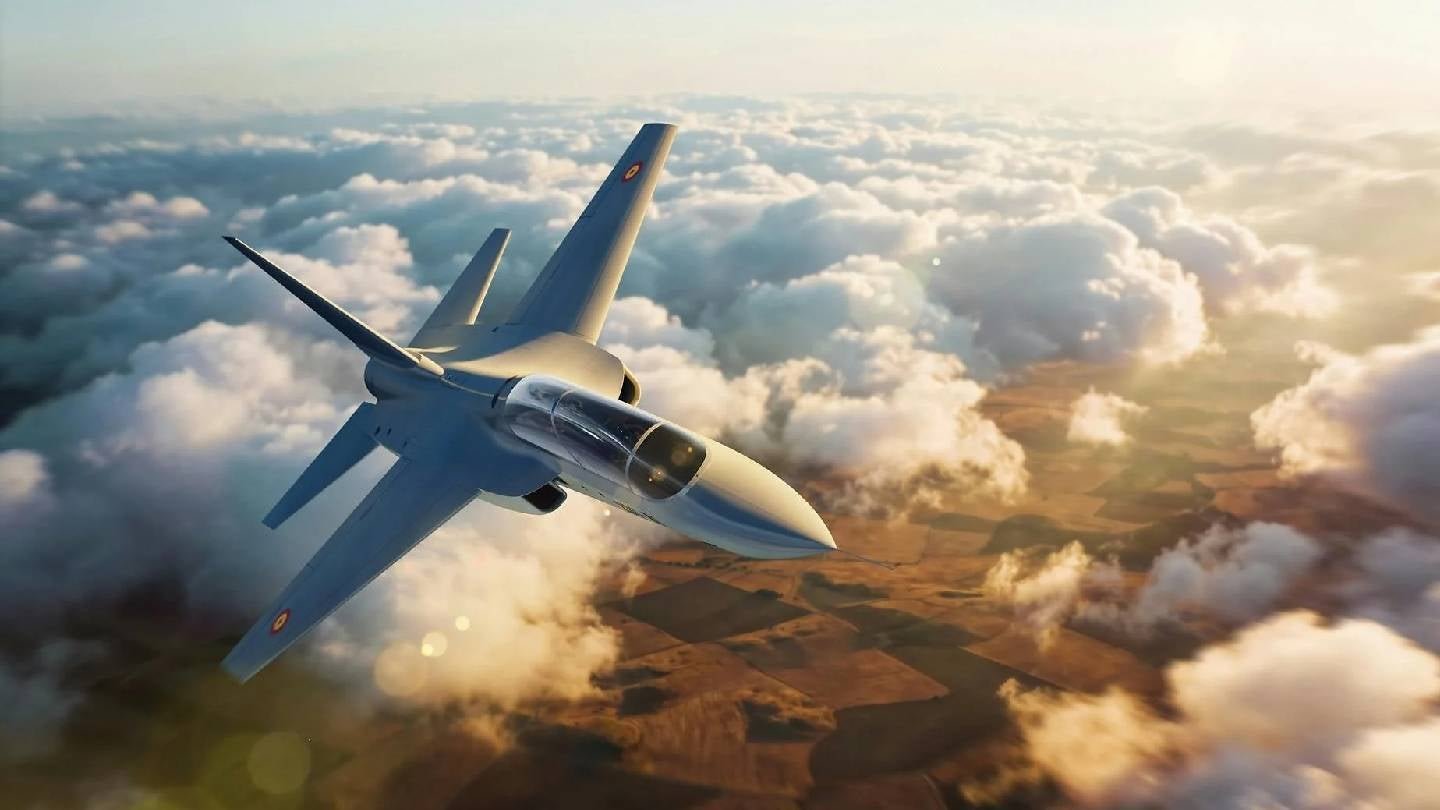
Airbus, working with a consortium of Spanish firms, has presented the industrial programme for the Spanish Air and Space Force’s Integrated Combat Training System (ITS-C).
The presentation comes after the Airbus-led group secured the contract last December.

Discover B2B Marketing That Performs
Combine business intelligence and editorial excellence to reach engaged professionals across 36 leading media platforms.
According to Airbus, the ITS-C, which includes 60% participation of national industry, will replace the F-5 trainer aircraft currently in operation.
The framework for the new system is established through a co-development arrangement between Airbus, serving as the primary contractor, and Turkish Aerospace, the manufacturer of the HÜRJET training aircraft.
The new system incorporates the advanced training process for future fighter pilots, tailoring a fleet of 30 aircraft, locally named SAETA II, to Spanish requirements.
The programme also includes an all-encompassing suite of operations and maintenance services.
Airbus will also oversee extensive updates to the Fighter and Strike School Training Centre at Talavera la Real Air Base in Extremadura.
Among the planned changes is the installation of new simulators, which are being developed by Indra. This facility will support both the aircraft and the accompanying synthetic training systems, aiming to maximise the availability of training resources.
Delivery will take place in two phases, with the first phase beginning in 2028 and including the handover of 21 aircraft.
One of these will be used by Airbus to develop and test new avionics and mission systems integration.
This phase also includes the development of a ground-based training system, which is expected to be operational in the 2029-2030 academic year.
The second phase will see all 30 aircraft, after their conversion to Spanish standards, delivered with updated simulators and ground-based systems between 2031 and 2035.
According to Airbus, Spanish industry will handle ongoing support for the fleet, including maintenance and upgrades.
In addition to producing main components, electrical systems, and building the conversion centre, Spanish firms will handle the integration of national technologies for avionics and mission systems, including contributions from GMV, Sener, Aertec, Grupo Oesía, Orbital, and Indra.
Spanish Secretary of State for Defence, Amparo Valcarce, described the project as one that “mobilises our industry, generates knowledge, employment, and opportunities throughout the entire value chain.”
In December last year, Spain, through the Ministry of Defence’s Directorate General for Armament and Material (DGAM), awarded four contracts to Airbus to procure 100 helicopters.

