

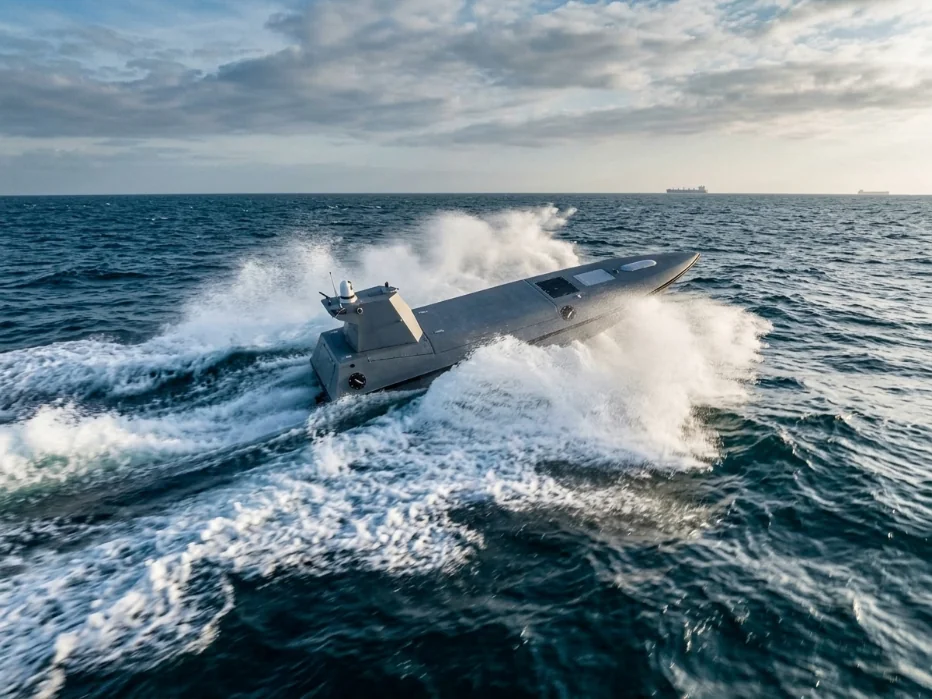
Defense Feeds, Berlin — Germany is advancing its naval modernization efforts as the Germany Kraken K3 armed USV boosts naval strike capability through the launch of a new production program.
Developed to support both strike and surveillance missions, the Kraken K3 unmanned surface vessel reflects a growing shift toward autonomous systems in maritime operations. As naval warfare evolves, unmanned platforms are increasingly seen as essential for maintaining operational flexibility and reducing risk to personnel.
The Kraken K3 is designed to operate without a crew, allowing it to be deployed in high-risk environments where traditional vessels may face greater vulnerability. Its combination of autonomous navigation, surveillance systems and strike capability positions it as a multi-role asset. This development aligns with broader trends across NATO, where unmanned systems are becoming integral to future force structures.
Germany’s decision to move into production signals confidence in the platform’s potential. It also highlights the importance of integrating new technologies into naval operations to address emerging threats. The focus now turns to how such systems will be deployed and what role they will play in future missions.
Autonomous Strike and Surveillance Capabilities
The Kraken K3 USV is built to perform a dual role, combining intelligence gathering with offensive capability. Equipped with advanced sensors, it can conduct surveillance across large maritime areas, providing real-time data to command units. This enhances situational awareness and supports decision-making in complex operational environments.
In addition to surveillance, the platform is designed to carry weapon systems for precision strikes. This capability allows it to engage targets without exposing crewed vessels to direct threats. The integration of both functions into a single platform increases operational efficiency.
Autonomy is a key feature of the Kraken K3. The vessel can navigate and operate with limited human intervention, reducing the need for onboard personnel. This not only lowers risk but also allows for longer deployment durations.
Such capabilities are particularly relevant in contested waters. Unmanned systems can operate closer to potential threats while maintaining a lower profile. This provides a strategic advantage in both surveillance and engagement scenarios.

Expanding Role of Unmanned Systems in Naval Strategy
The introduction of the Kraken K3 reflects a broader shift in naval strategy toward unmanned and autonomous systems. Modern navies are increasingly investing in platforms that can operate alongside traditional vessels. This approach enhances flexibility and allows for more distributed operations.
Unmanned surface vessels can perform tasks that would otherwise require significant resources. They can patrol large areas, gather intelligence and support missions without the logistical demands of crewed ships. This makes them a cost-effective addition to naval forces.
The use of autonomous systems also supports network-centric warfare concepts. By sharing data with other platforms, USVs like the Kraken K3 contribute to a more connected and responsive force. This integration is essential for modern military operations.
Germany’s move into production indicates a commitment to this evolving approach. It suggests that unmanned systems will play an increasingly important role in future naval missions. As technology advances, their capabilities are expected to expand further.

Strategic Implications for European Naval Forces
The development of the Kraken K3 has broader implications for European naval capabilities. As regional security challenges grow, there is increasing emphasis on modernization and technological innovation. Unmanned systems offer a way to enhance capability without significantly increasing personnel requirements.
For Germany, the program strengthens its position within NATO and contributes to collective defense efforts. The ability to deploy advanced unmanned platforms enhances interoperability with allied forces. This is particularly important in joint operations and multinational missions.
The introduction of armed USVs also raises important considerations. Issues related to command, control and rules of engagement will need to be addressed. Ensuring that these systems operate effectively within established frameworks is essential.
Looking ahead, the Kraken K3 program represents a step toward a more autonomous future in naval warfare. Its combination of surveillance and strike capabilities highlights the potential of unmanned systems. As navies continue to adapt to changing threats, such platforms are likely to become a central element of maritime operations.
Germany’s investment in the Kraken K3 underscores a broader trend toward innovation in defense technology. In an increasingly complex security environment, maintaining a technological edge remains a key priority.
