

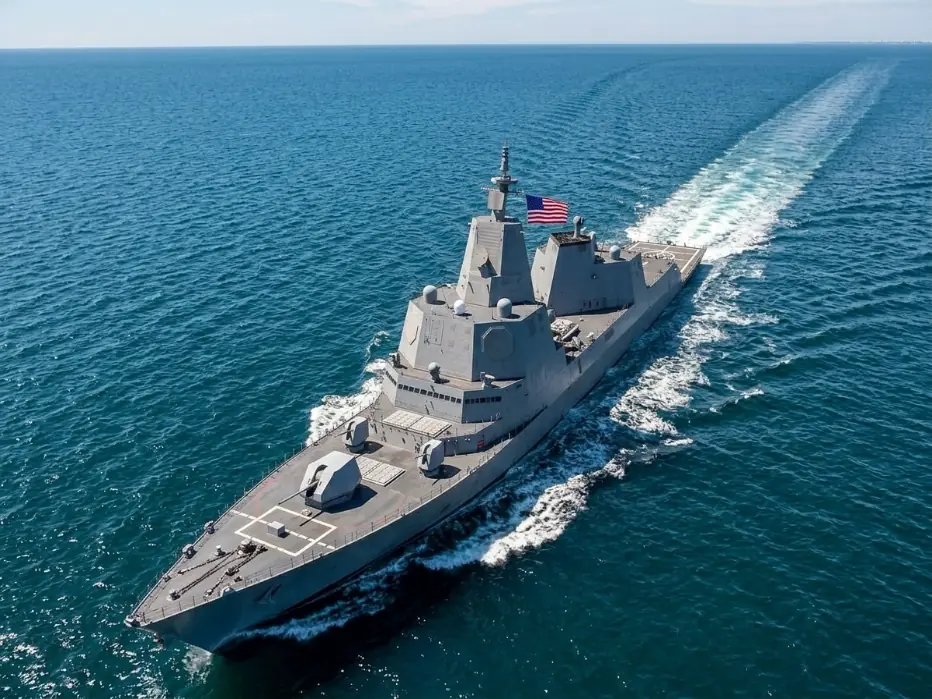
Defense Feeds, Washington — The US Navy is exploring a bold new direction in naval warfare as the US Navy Trump-class battleship plan signals naval shift through a proposed $17 billion investment.
The concept, centered on a next-generation battleship, reflects growing interest in reintroducing heavily armed surface combatants adapted for modern threats. While still in early stages, the proposal highlights how the Navy is reassessing its future force structure.
The idea of a new battleship class marks a notable departure from recent naval trends. For decades, emphasis has been placed on aircraft carriers, destroyers and submarines. However, evolving threats such as hypersonic missiles, drone swarms and long-range precision weapons are prompting a reconsideration of how surface combatants should be designed.
If pursued, the Trump-class battleship would represent a hybrid approach, combining traditional firepower with advanced technology. The goal is to create a platform capable of operating in highly contested environments while delivering significant offensive capability.
Reviving Battleship Concepts for Modern Warfare
The concept of a modern battleship reflects a shift in thinking about naval power. Historically, battleships served as the centerpiece of naval fleets, equipped with heavy armor and large-caliber guns. Over time, their role diminished as missile technology and airpower became dominant.
The proposed Trump-class aims to reinterpret this concept for contemporary warfare. Instead of relying solely on large guns, the platform would likely integrate advanced missile systems, directed energy weapons and modern sensors. This would allow it to engage a wide range of threats, from surface ships to aerial and missile targets.
Durability is another key factor. A heavily protected ship could provide greater survivability in environments where anti-ship missiles and drones are prevalent. This contrasts with lighter vessels that rely more on speed and electronic defenses.
At the same time, the concept raises questions about cost and practicality. Building such a platform would require significant investment, and its role within the broader fleet would need to be clearly defined.

Strategic Rationale Behind the $17 Billion Proposal
The proposed $17 billion funding request reflects the scale and ambition of the project. Developing a new class of warship involves not only construction costs but also research, testing and integration of advanced systems. The investment indicates a willingness to explore alternative approaches to maintaining naval superiority.
One of the driving factors behind this initiative is the changing threat environment. Potential adversaries are investing heavily in anti-access and area denial capabilities. These systems are designed to limit the effectiveness of traditional naval assets, particularly large surface ships.
A more heavily armed and resilient platform could help address these challenges. By combining offensive and defensive capabilities in a single vessel, the Navy may be seeking to create a ship that can operate independently in contested regions.
The proposal also reflects broader discussions within defense circles about the future of naval warfare. As technology evolves, the balance between different types of platforms continues to shift. Exploring new concepts is part of adapting to that reality.

Implications for Future Naval Force Structure
If developed, the Trump-class battleship could influence the overall composition of the US Navy. It may complement existing platforms such as destroyers and carriers, providing additional firepower and resilience. Alternatively, it could lead to changes in how resources are allocated across the fleet.
The introduction of such a vessel would also have implications for naval strategy. A heavily armed surface combatant could serve as a deterrent, projecting power in key regions. It may also play a role in supporting joint operations alongside other military branches.
However, integrating a new class of ships into the fleet would require careful planning. Training, logistics and maintenance considerations would all need to be addressed. Ensuring compatibility with existing systems would be essential for effective deployment.
From a broader perspective, the proposal highlights the ongoing evolution of naval warfare. As threats become more complex, navies must continuously adapt their capabilities. The exploration of a modern battleship concept reflects this need for innovation.
Whether the Trump-class moves forward or remains a conceptual study, it underscores a key point. The future of naval power will likely involve a mix of traditional strengths and emerging technologies. Finding the right balance will be critical for maintaining strategic advantage.
