

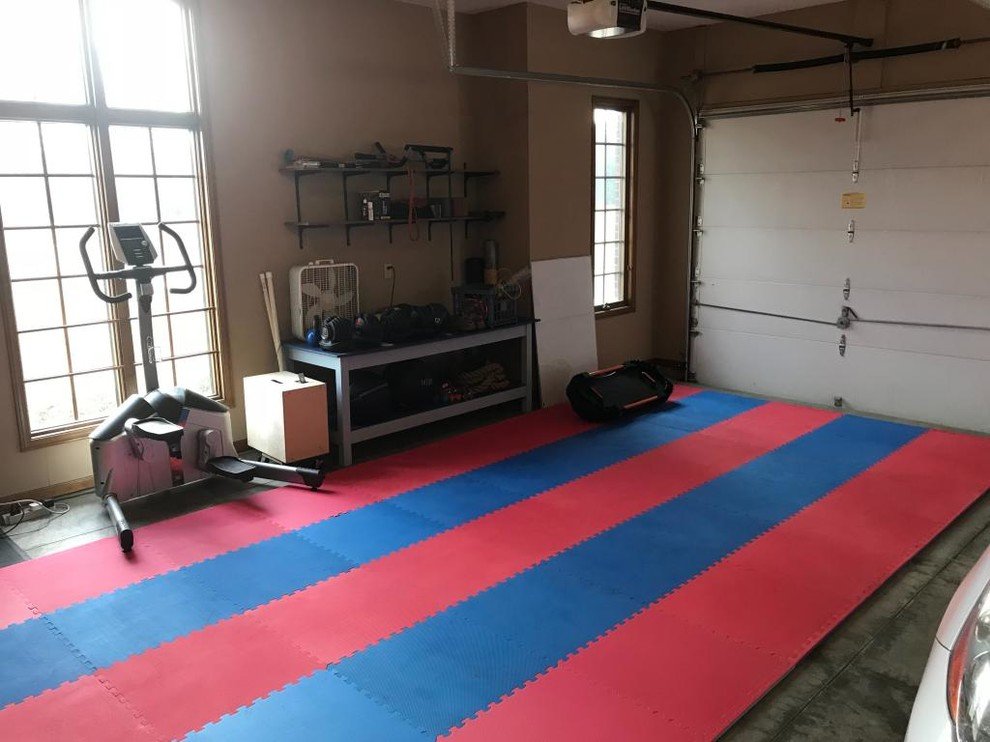
I have officially stopped going to taekwondo training classes (see the details in this blog post), but that doesn’t mean I’m going to stop training altogether. While I don’t have tons of room in my current home to train, my partner and I have figured out how to make the most of our space. This guest article by Dana Brown shares how to create a safe, functional, and welcoming space to practice your martial art in your home. If you would like to contribute a martial arts-related guest post to Little Black Belt, please review the guest writer guidelines here.
Martial artist homeowners and instructors often want one dedicated space that supports a holistic martial arts practice, but most homes can’t spare a room that functions like a full-time dojo. The core challenge in home remodeling for training is creating a multipurpose wellness space that handles hard sessions, recovery work, and quiet decompression without feeling cramped, fragile, or overly specialized. When flexible training room design is treated as wellness infrastructure instead of a gear dump, it becomes easier to train consistently, manage injuries, and protect mental focus. The goal is a room that earns its square footage every day.
Understanding Integrated Training and Recovery
Integrated training and recovery means your room supports hard practice, body care, and mental reset in one place. Because martial arts include hard and soft styles, a home setup should handle impact, flow, strength, and stillness without a full dojo.
This matters because consistency comes from fewer barriers. When recovery tools and calm space live beside your training zone, you warm up better, cool down on purpose, and protect focus after stressful days. Over time, that reduces nagging injuries and supports steady skill growth.
Picture finishing rounds on pads, then stepping two paces to breathe, stretch hips, and journal your notes. It borrows the feel of intensive training without leaving home, since your environment guides you from effort to downshift.
Design a Flexible Room: Layout, Storage, Lighting, Materials
A good home wellness space supports the full loop of integrated training and recovery: intensity, downshift, restore, often in the same hour. The goal is a room you can reset in minutes without turning it into a permanent obstacle course.
- Zone the room in layers, not walls: Mark three “modes” that can overlap: a clear training rectangle, a recovery corner, and a transition strip for shoes/gear. Use movable boundaries, an area rug edge, tape lines under mats, or two floor markers, so you can keep a consistent 6×8 ft (or larger) striking/grappling footprint while still having space for breathwork or soft tissue work. This layout reduces decision fatigue: you always know where hard rounds happen and where you decompress.
- Build a two-minute reset with clutter-proof storage: Aim for storage that supports one fast sweep: open bins for daily items, closed cabinets for visual calm, and a single “quarantine” tote for random gear that needs sorting later. Place your most-used items at chest height (wraps, bands, timer, small first-aid kit) and heavier items low (kettlebells, sandbags) to protect your back. A simple rule helps: if it touches the floor after training, it needs a hook, shelf, or bin within one step of where it’s used.
- Use adaptive lighting to control arousal and safety: Put bright, even overhead light on a dimmer for technical rounds and cleaning, and add a warm, low side lamp for cooldown, stretching, or journaling. Keep “no-shadow” zones around any mirrors, heavy bags, or step-ups, visual surprises are where ankles and toes get punished. Road-safety research showing lighting can reduce nighttime crashes is a useful reminder that visibility affects reaction time and errors, even in a home setting.
- Choose durable, training-friendly surfaces (and layer them): Treat flooring like protective equipment: a tough base layer plus a replaceable top layer. Over a firm subfloor, use interlocking mats or a roll-out surface for impact, then add a washable top cover where you sprawl and do mobility. For walls, prioritize scuff-resistant paint and corner guards in striking lanes; for doors/trim, choose materials that won’t chip when a bag chain swings or a stick trainer clips the edge.
- Protect the room with “training-grade” details: Install rounded hardware, recessed or covered outlets near the training area, and cord management that keeps nothing looped at ankle height. If you’re hanging a bag or rings, anchor into structure, not just drywall, and leave a clear radius so your head doesn’t meet a light fixture during footwork. A small, dedicated “med corner” shelf keeps tape, ice sleeves, and rehab bands accessible without turning recovery tools into clutter.
- Maintain flexibility with a simple inspection cadence: Once a week, do a 5-minute walk-through: check mat seams, bag mounts, loose screws, and any fraying straps, then wipe high-touch surfaces. A mindset of proactive maintenance helps you spot small issues before they become expensive, or injurious, especially when you’re training hard and recovery capacity is limited.
Wellness Space Q&A for Martial Artists
Q: How can I design a single room that effectively balances martial arts training, recovery, and relaxation without feeling cluttered?
A: Assign clear “modes” instead of permanent zones: a training footprint, a recovery spot, and a calm corner you can step into immediately after rounds. Keep only one day’s worth of tools visible and store the rest out of sight to reduce visual noise. If you cannot reset the room in two minutes, you have too many items competing for attention.
Q: What practical layout and storage solutions help keep my wellness space flexible and organized for multiple uses?
A: Use a movable center line and keep the middle open, then push strength tools and recovery gear to the perimeter. Choose wall-mounted hooks, a slim shelf for wraps and timers, and one lidded bin for “miscellaneous” so it does not spread. Label storage by use case like striking, mobility, rehab, so transitions are automatic.
Q: How can lighting and materials be chosen to enhance both physical training and mental relaxation in my home?
A: Put bright, even light on a dimmer for skill work and safety, then switch to warmer side lighting for breathing, stretching, or journaling. Select matte, wipeable surfaces that do not glare and choose flooring with stable traction plus a forgiving top layer. A distraction-controlled setup can support focus, and achieve 43% more focused work time is a useful benchmark to aim for.
Q: What planning strategies help prevent burnout and support long-term physical and mental well-being in a home wellness space?
A: Treat the room like a training partner: schedule intensity days, recovery days, and true rest, then make the environment match each one. Keep a simple checklist for sleep, soreness, and mood so you adjust volume before pain forces a break. Build small recovery cues into the space, and mental health domains can improve when recovery practices are consistent.
Q: How can I protect my remodeled wellness space and its essential systems and appliances from unexpected repairs or breakdowns?
A: Start by documenting your room’s upgrades and serial numbers, then set reminders for basic maintenance like filter changes and humidity checks. Understand the difference between homeowners insurance, which often helps with sudden covered damage, and service-contract style coverage, which may help with repair costs for specific systems or appliances. If you are unsure what is typically included, understanding what a home warranty covers can help you plan realistically.
Build a Home Wellness Room That Adapts to Training
This workflow helps you design one room that can switch cleanly between training, recovery, and downshifting your nervous system. For martial artists, that matters because better transitions protect joints, sharpen focus, and keep you improving even when your goals or body change.
- Define your training and recovery goals
Start by writing three “modes” you will use weekly: skill work, strength or conditioning, and recovery or breathwork. For each mode, list the top 2 movements you must be able to do safely (for example, shadowboxing with footwork, hip mobility, soft tissue work). Use the idea of representative learning design to pick drills your space should support, not just equipment you want to buy. - Choose a layout that protects a clear training footprint
Measure your open floor and mark a minimum rectangle that stays empty when it is “go time” (tape on the floor works). Put everything else on the perimeter so you can enter, train, and exit without weaving around objects. Confirm you have a clean line of sight for spinning, sprawls, and falls so you reduce surprise collisions. - Plan storage and surfaces around friction and cleanup
Assign one storage home per mode (striking, mobility, rehab) so you can grab and put away gear without thinking. Pick surfaces you can wipe quickly and flooring that gives stable traction, then add a removable top layer (mat or rug) that matches the day’s session. The goal is fewer decisions mid-workout and fewer excuses to skip recovery because cleanup feels annoying. - Phase upgrades using a simple stepwise checklist
Upgrade in rounds: safety first (flooring, lighting), then organization (hooks, bins), then performance extras (bag, mirrors, timer). A stepwise methodology keeps you focused on the questions your room must answer, like “Can I train hard and reset fast?” rather than chasing random improvements. Each phase should be usable on its own so you never lose momentum. - Test, reset, and revise your room routines weekly
Run a short test session for each mode, then time your reset and note what caused delays, pain, or distraction. Remove one friction point per week: relocate a tool, reduce what stays out, or simplify your warm-up station. This creates a room that evolves with your training cycle instead of locking you into one version of yourself.
Design a Home Wellness Space That Lasts Through Training Cycles
It’s easy for a home wellness room to start strong and then slowly become storage once schedules change or training priorities shift. The way around that is the same mindset used in holistic martial arts wellness: build a sustainable home training space with clear purpose, reflective remodeling benefits, and long-term space flexibility so it can support practice, recovery, and quiet time without constant rework. When the room stays simple, durable, and clutter-resistant, it keeps earning its place as your body adapts and your goals evolve. A good wellness space is one you can reset in minutes and rely on for years. Choose one small wellness room implementation upgrade this week, then run a short test-and-reset to confirm it still fits. That consistency protects resilience, health, and performance over the long arc of training.
