

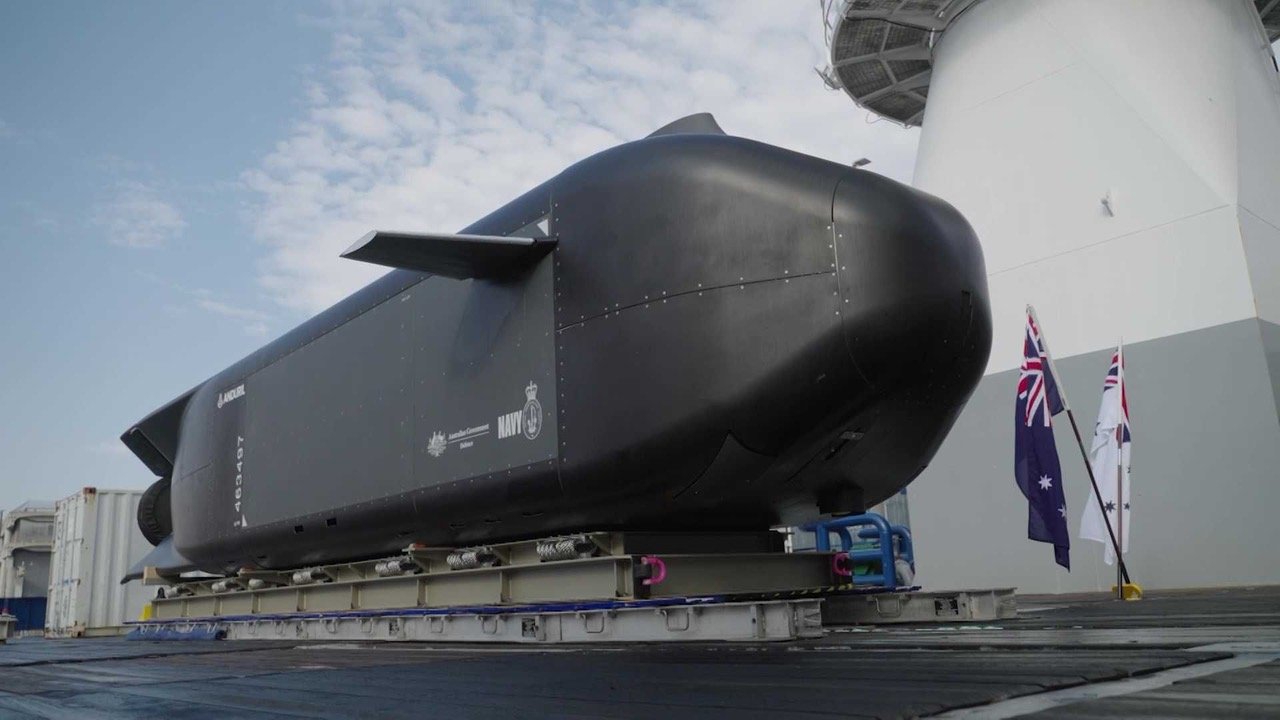
The Royal Australian Navy (RAN) has formally established the Maritime Autonomous Systems Unit (MASU), tasked with accelerating the development, integration and operational employment of uncrewed maritime systems.
The unit will focus on capabilities optimised for persistent, long-range intelligence, surveillance and reconnaissance, as well as strike missions, reflecting a broader shift towards distributed and autonomous operations.
MASU is expected to field a range of uncrewed surface and subsurface platforms, including Anduril’s Ghost Shark extra-large autonomous underwater vehicle, Ocius Technologies’ Bluebottle unmanned surface vessel and C2 Robotics’ Speartooth large uncrewed underwater vehicle.
While the primary mission is to safeguard Australia’s maritime interests, MASU will also include a Deployable Vehicle Team designed to enable the launch, control and sustainment of autonomous systems from austere locations such as overseas wharves. This reflects an emphasis on flexibility and forward deployment in contested environments.
The move comes as Australia’s Department of Defence released an update to its National Defence Strategy on 16 April, alongside the 2026 Integrated Investment Program.
The plan commits an additional A$14 billion (US$10 billion) in defence spending over the next four years, and A$53 billion over the next decade.
The updated strategy highlights the growing role of uncrewed surface and underwater vessels in complementing the navy’s enhanced-lethality surface fleet, as well as its future AUKUS conventionally armed nuclear-powered submarines.
In parallel, Canberra is advancing a broader naval recapitalisation effort. Beyond the previously announced eleven Mogami-class frigates, the National Defence Strategy reiterates requirements for new large optionally crewed surface vessels, upgrades to Hobart-class destroyers, and – in collaboration with the Australian Border Force – a combined fleet of up to 25 minor war vessels.
Together, these developments underscore Australia’s intent to integrate autonomous systems at scale, all the while expanding overall fleet mass and resilience in response to a more contested Indo-Pacific maritime environment.
by Chen Chuanren
