

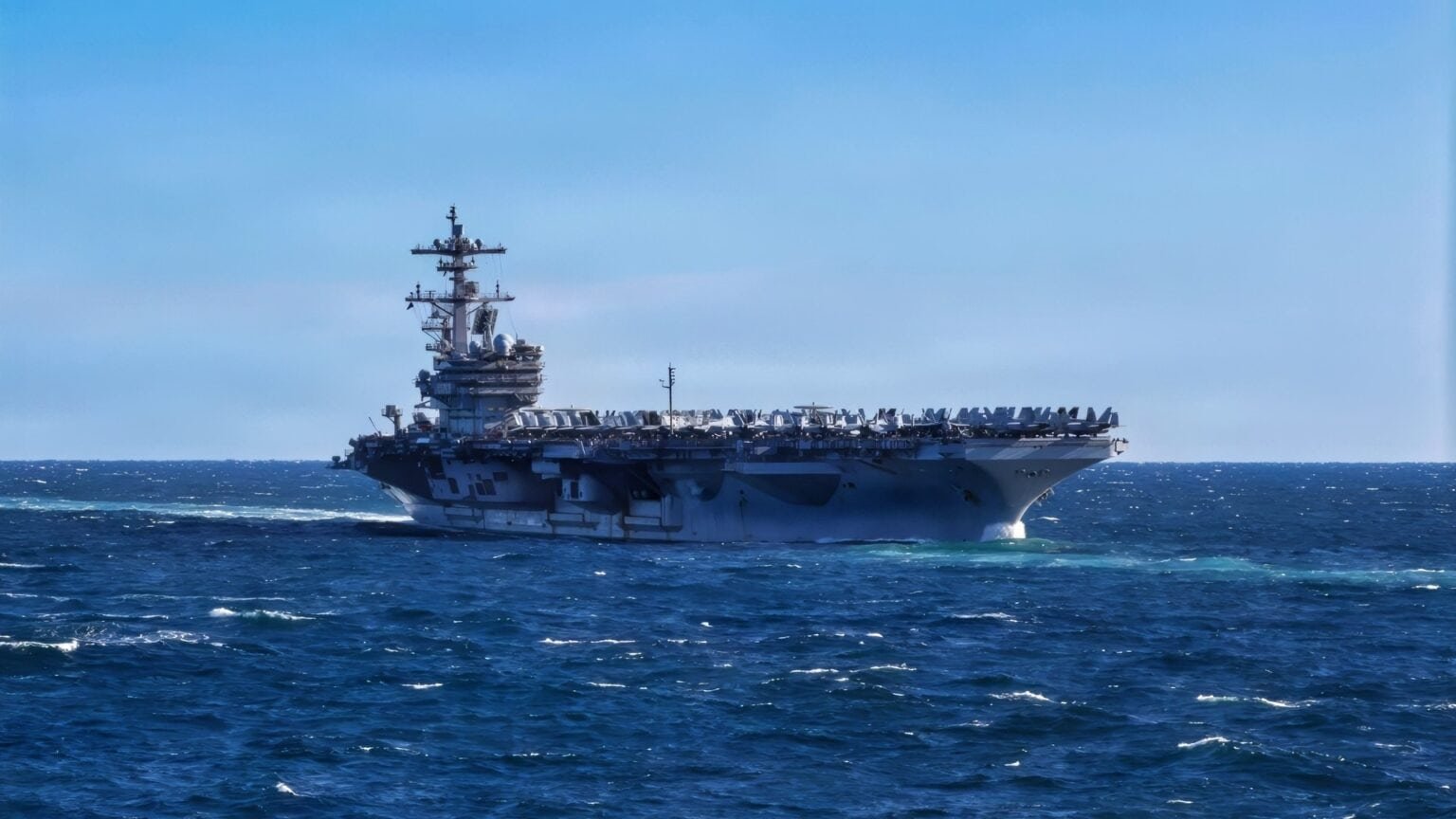

The future course of the naval aspect of the conflict remains uncertain. It is unclear whether US forces will transfer assets through the Strait of Hormuz to achieve their goals or continue operating mainly from the Arabian Sea. As the US seeks to establish air superiority over mainland Iran, gaining similar control in the maritime domain will also be essential to protecting American surface combatants before they enter the confined waters of the Gulf. In this environment, large blue-water vessels would face limited manoeuvrability due to narrow navigation routes and the dense network of Iranian-controlled islands that further hinder evasive actions.
Meanwhile, the aircraft carrier USS George H.W. Bush has departed Naval Station Norfolk in Virginia as the US weighs a potential ground offensive against Iran. The Carrier Strike Group includes Carrier Air Wing 7 and destroyers USS Ross, USS Donald Cook, and USS Mason. They are reported to be heading to the US Naval Forces Europe-Africa/U.S. 6th Fleet area of operations, which includes the eastern Mediterranean Sea. It is not clear whether the carrier will remain in the eastern Mediterranean or station itself in the Middle East to support Operation Epic Fury, the ongoing US-Israel operation against Iran in its fifth week.
For now, Tehran seems to have chosen to limit maritime escalation. However, this restraint could change if the pressure from Operation Epic Fury increases or if the regime’s threat perception rises. Although the conflict so far has focused on missiles and one-way attack drones, the maritime domain could quickly become a key area of military escalation.

The alternative is to stay with a model that no longer fulfills its main promise of security. The evidence is increasingly clear: US bases in the region have not protected Gulf states from Iranian aggression, and in some cases may have even increased their vulnerability. Recognising this reality is the first step towards creating an alternative, and potentially more sustainable, security framework.
The war in Iran has dominated headlines with reports of airstrikes and escalating military activity, but beyond the immediate devastation, the conflict has also revealed other rising threats to both merchant ships and US warships aside from mines, drones, and missiles.
Modern shipping relies heavily on GPS satellite navigation, and when those signals are disrupted or manipulated, ships can suddenly appear to their navigators and to other vessels as being somewhere they are not. The risk is even greater in war zones, where ships could be misdirected into danger.
While the conflict persisted, the China-Pakistan “Sea Guardian IV” joint naval exercise took place as the PLAN’s guided-missile frigate Daqing and Pakistani naval vessels parted ways in the nearby northern Arabian Sea. The exercise commenced on 25 March and was conducted in two phases: harbour exchanges and live sea drills. During the joint exercise, ships from both sides alternated as the command vessel. With the US and Iran reaching stalemate, Pakistan is emerging as a potential mediator, possibly overseen by its benefactor, China.

by David Oliver
