

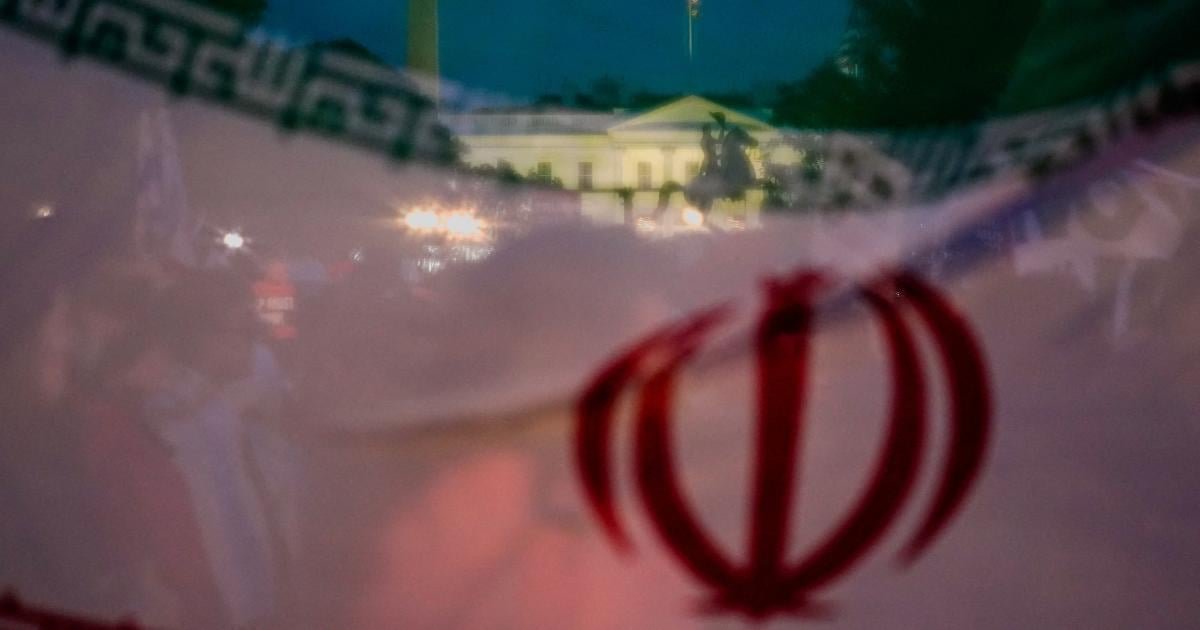
No sooner had the United States and Israel launched their joint war on Iran than observers began invoking a familiar historical analogy: that this Middle Eastern intervention echoed the fateful 2003 U.S. invasion of Iraq. As in 2003, Washington had initiated a war of choice against a long-standing adversary in the Persian Gulf, with the overt goal of toppling its regime. But for now, at least, that is where the parallel ends. Until the cease-fire announced on April 7, the United States largely confined its operations against Iran to the sky and the sea. President Donald Trump appears to have understood that a large-scale ground incursion—to say nothing of full-fledged military occupation—would invite another endless entanglement abroad and a political maelstrom at home.
If there are lessons to be learned from Washington’s misadventures in the Middle East, policymakers would do better to cast their gaze further back, to another Iraq war: Operation Desert Storm, the U.S.-led campaign in early 1991 to liberate Kuwait from Iraqi occupation. Then, the United States won one of the most decisive military victories in modern history, only to stumble into a decadelong trap of its own making. Washington destroyed Iraqi President Saddam Hussein’s army but left his regime in place. U.S. President George H. W. Bush encouraged a rebellion but neglected to assist it. Bush and his successor, Bill Clinton, demanded that Iraq dismantle its nuclear program but refused to consider reconciling with Baghdad—even if it complied with Washington’s demands.
The problem was not the battlefield outcome but the failure to align policy and strategy. Between 1991 and 2003, no U.S. president was willing to live with Saddam’s regime, but neither did they have a viable plan to overthrow it. The result was 12 years of simmering conflict, in which U.S. forces assumed the mantle of regional police. Washington’s heavy-handed efforts to contain Iraq alienated both allies and adversaries throughout the 1990s, steadily eroding international support for the policy of containment itself. At home, the stalemate generated mounting bipartisan pressure for regime change in Baghdad, which eventually led to President George W. Bush’s ill-fated decision to invade and occupy Iraq, in 2003.
The United States risks confronting a similar scenario in Iran today. U.S. officials have entirely backed away from their talk of overthrowing the Islamic Republic, a rhetorical turn formalized by the terms of the new cease-fire. The further negotiations required to truly end the war will likely result in a political settlement that leaves the regime in place. As in 1991, that regime will be weakened but still capable of threatening its neighbors anew, violently suppressing internal challenges to its rule, and mobilizing global opinion against overbearing U.S. containment. Trying to contain Iran, as the United States did to Iraq in the 1990s, will inexorably lead to repeated confrontations that tie up American forces and harm the international economy, eroding what little international support remains for U.S. policy in the region. Instead, Washington should offer Tehran a path to diplomatic and economic normalization in exchange for compliance with a clear set of demands, including giving up weapons of mass destruction, limiting its missile program, and ceasing support for terrorist proxies.
The critical error that Bush and Clinton committed in the 1990s was failing to come to terms with Saddam’s regime even after it had complied with American demands. If the United States is to avoid repeating past mistakes, its greatest challenge will lie not in wielding military power but in learning to live with a settlement that leaves the Iranian regime in place.
WHAT’S LEFT UNSAID
In their preparations for Desert Storm, George H. W. Bush and his advisers had in mind the ostensible lessons of the Vietnam War. To avoid a Vietnam-style quagmire, the administration never seriously considered marching on Baghdad and ousting Saddam. Rather, it aimed to reestablish a balance of power among Iraq, Iran, and the Gulf Cooperation Council—comprising Bahrain, Kuwait, Oman, Qatar, Saudi Arabia, and the United Arab Emirates. This required degrading Saddam’s military to the point that it could no longer threaten its neighbors, but not so much as to invite a regional power vacuum or the territorial fragmentation of Iraq.
Yet this strategy, rooted in realism, was fundamentally at odds with Bush’s idealistic aims in the Gulf. He was unwilling to accept a world in which the Iraqi dictator remained in power. A veteran of World War II, Bush took to comparing Saddam to Adolf Hitler, likening the invasion of Kuwait to German, Italian, and Japanese territorial aggression in the 1930s. “Half a century ago, the world had the chance to stop a ruthless aggressor and missed it,” Bush announced in August 1990. “I pledge to you: we will not make that mistake again.” In the president’s view, the stakes in Iraq were stark, pitting good against evil. He never quite determined whether Desert Storm was a pragmatic war to restore a regional balance of power or a righteous war to vanquish an evil tyrant.
What began as an effort to avoid deeper U.S. involvement in Iraq instead entrenched it.
Bush seems to have reconciled this strategic dissonance in his mind—if not in reality—by assuming that Saddam would not survive the humiliating defeat that the United States would inflict on him. Washington hoped that decimating Iraq’s army and critical infrastructure would inspire the Iraqi people to rise up against Saddam or motivate a more pliable figure from within the regime to take his place. Bush went so far as to call on the Iraqi people to “take matters into their own hands and force Saddam Hussein, the dictator, to step aside.”
As it turned out, Iraqis did rise up, believing that the United States would back them. Beginning in March 1991, popular uprisings swept the predominantly Shiite south and Kurdish north. But U.S. forces stood by as the remnants of Saddam’s security services slaughtered between 30,000 and 60,000 Shiites and around 20,000 Kurds. Under mounting domestic and international pressure to assist the Kurds, Bush spearheaded a series of improvised measures, including establishing a no-fly zone over northern Iraqi airspace in April 1991. Although originally conceived as a temporary measure to provide cover for U.S. personnel delivering humanitarian aid to the Kurds, the no-fly zone would remain in place permanently and was subsequently expanded to southern Iraq in August 1992. By indefinitely policing Iraqi airspace, the United States assumed responsibility for containing Saddam without toppling him—an approach that required constant enforcement, periodic escalation, and a sustained military presence in the region. What had begun as an effort to avoid deeper U.S. involvement in Iraq instead entrenched it.
CLINGING TO A FANTASY
After Desert Storm, the Bush administration crafted a cease-fire agreement that conditioned sanctions relief on Iraqi divestment of weapons of mass destruction. Initially, the Iraqi government attempted to hide its illicit weapons programs. But Saddam quickly learned that he could not outfox UN inspectors. By the end of 1991, he had secretly destroyed most of the illicit weapons that he was hiding—an act that would haunt him later when he could not prove that he no longer had them.
Yet Saddam was not solely responsible for the standoff over weapons of mass destruction. From the outset, the Bush administration gave the Iraqis no incentive to comply with UN inspections. U.S. officials made clear that Iraqi compliance would never lead to sanctions relief or diplomatic normalization. As Bush’s then secretary of state, James Baker, told his European counterparts in the spring of 1991, “No one—I repeat no one—should conduct any normal business with an Iraqi government headed by Saddam.” If, as Bush claimed, Saddam really was Hitler incarnate, the United States could hardly negotiate with him.
Clinton doubled down on the Bush administration’s flawed approach. Officially, he opted for containing Iraq. Unofficially, he would settle for nothing less than regime change. This policy proved to be self-defeating. Like Bush before him, Clinton maintained that there would be no end to sanctions as long as Saddam remained in power. This was all the more tragic since, as Iraqi archives show, Saddam initially held out hope that the new president’s election might offer a chance for reconciliation with the United States. “I believe that during [Clinton’s] reign, a change will occur,” Saddam told his advisers in January 1993. But Clinton rebuffed Iraqi overtures.
The United States could hardly negotiate with Saddam.
The Gulf states were militarily outmatched by their larger neighbors, so the onus for guaranteeing regional security fell on the United States. The previously minimal over-the-horizon U.S. naval presence in the Persian Gulf transformed into an archipelago of permanent military bases in Arab states. The United States reestablished the navy’s Fifth Fleet headquarters in Bahrain, constructed Al Udeid Air Base in Qatar, expanded ground and air facilities in Saudi Arabia and Kuwait, and sustained near-continuous aircraft carrier deployments in the Gulf.
The expanding U.S. military footprint in the region created its own set of problems. Perhaps the best known was the Islamist backlash that led the al-Qaeda leader Osama bin Laden to declare a jihad against the United States in 1996. But bin Laden and his ilk were hardly the only ones troubled by Washington’s posture in the Gulf. By the middle of the 1990s, sanctions were taking their toll on Iraqi society but not the regime. Food and medicine were scarce while Saddam and his inner circle lived in gilded palaces. U.S. allies in the Middle East and Europe were beginning to distance themselves from Clinton’s increasingly unpopular Iraq policy. In 1996, Saudi Arabia and Turkey refused to permit Washington to launch its next round of bombings of Iraq from bases in their territories. Later that year, France withdrew from the coalition enforcing the no-fly zones. And in 1998, when Washington and London launched four days of intense airstrikes on Iraq—known as Operation Desert Fox—protests erupted across Europe, the Middle East, and the Western Hemisphere. Moscow also recalled its ambassadors from Washington and London, for the first time since World War II.
Nevertheless, the Clinton administration continued to cling to the fantasy of regime change from afar, no matter the cost. Saddam was hardly trustworthy, to be sure, but compliance was never going to be enough for the United States. “We do not agree with the nations who argue that if Iraq complies with its obligations concerning weapons of mass destruction, sanctions should be lifted,” Secretary of State Madeleine Albright had said in 1997. Iraq needed to “prove its peaceful intentions.” Short of altogether surrendering power, the regime in Baghdad had no way of reaching this high bar. In 1998, Clinton signed the Iraq Liberation Act, making regime change official U.S. policy. Clinton, like Bush before him, was unwilling to live with Saddam in power but had no viable strategy to remove him. In the meantime, policing Iraq left the United States more isolated than ever before.
PAST NEED NOT BE PROLOGUE
After 1991, successive U.S. administrations fell under the illusion that they could contain Iraq, eschew a full-scale military occupation, and still promote regime change. The result was a tenuous and deeply unpopular status quo that required perpetual U.S. policing, progressively undermining U.S. legitimacy in the court of world opinion. A more sustainable approach would have been to make clear from the outset that Iraqi compliance with U.S. demands would create a pathway toward sanctions relief, the normalization of relations, and a more lasting peace.
The United States now faces a similar choice in Iran. Whatever the course of negotiations in the coming weeks, the current war will most likely end with the Islamic Republic weakened but intact. If the Trump administration abandons talks in the hopes that a continued air campaign and economic pressure will lead to regime change, it is likely to produce the destabilizing consequences that Bush confronted in Iraq in 1991, including popular upheaval, the prospect of territorial fracture, violent crackdowns, and a flood of refugees. To avoid that outcome, the Trump administration must do what presidents would not in the 1990s: find a way to live with the adversary’s existing government, however despicable it may be.
Trump must be prepared to take yes for an answer from Tehran.
The deal that finally ends the war will likely resemble the logic of the equivalent struck in 1991: in exchange for sanctions relief, Iran would agree to dismantle its nuclear program, limit its weapons development, and end its support for proxies, in addition to reopening the Strait of Hormuz. Trump will need to make clear to the American people and allies that if Iran complies with its demands, Washington will work to build trust and offer a path toward normalization for Tehran. This would be a tough sell politically, to be sure. In the 1990s, Bush and Clinton had painted themselves into a political corner. “If I weren’t constrained by the press, I would pick up the phone and call the son of a bitch,” Clinton candidly told British Prime Minister Tony Blair in 1998. “But that is such a heavy-laden decision in America. I can’t do that.” Trump will have to expend political and diplomatic capital to convince those at home and abroad who will only be satisfied with regime change. If there is a silver lining to Trump’s unpredictability, it is his unusual propensity to take unpopular stances when he deems them necessary. That gives him an advantage in navigating the political constraints that prevented Bush and Clinton from negotiating a diplomatic off-ramp with Saddam.
Whichever path it takes, the United States will face considerable challenges. Even at the height of its post–Cold War power, Washington failed to translate its militarily decisive war against Iraq into long-term regional peace and stability. Perhaps the most important difference between 1991 and today is that the United States no longer enjoys its status as the world’s sole superpower. A prolonged campaign to contain Iran after this war would lay bare the limits of U.S. power in an era increasingly defined by the capacity of its friends and foes to challenge it. To avoid repeating the disasters that followed the misguided policy toward Iraq, Trump must be prepared to do what leaders could not in the 1990s: take yes for an answer from even the most dislikable foe.
Loading…
