

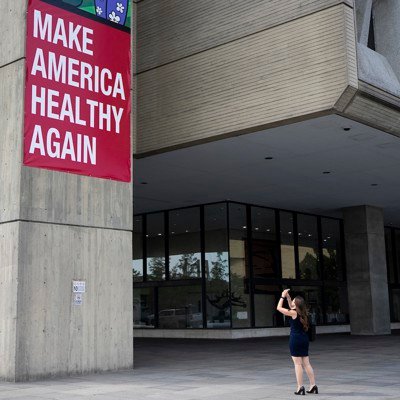
The Office of Personnel Management instructed insurers who participate in federal and postal workers’ employer-sponsored health benefits program last week to promote a series of “well care” initiatives as an effort to reduce costs as the companies prepare their offerings for this fall’s annual open season.
The notice took the form of OPM’s annual “call letter” to companies that participate in the Federal Employees Health Benefits and Postal Service Health Benefits programs. While proposals to reduce health care spending by focusing on preventative treatments are nothing new in this process, OPM’s self-described policy goals in its 2026 letter are noteworthy in how they relate to the Trump administration’s health care agenda under Health and Human Services Secretary Robert F. Kennedy Jr.
“In plan year 2027, OPM is expanding its vision for benefits with a stronger emphasis on the physical and mental wellness of the whole person,” the letter states. “This focus embraces individual autonomy, precision medicine and patient-centered care, and recognizes that the pursuit of mental and physical health should not be limited to the treatment of symptoms.”
Gone are cash incentives insurance companies offer families to ensure their children follow the recommended pediatric vaccine schedule. While FEHBP will still cover all “recommended” vaccines, the agency said it would put renewed emphasis on ensuring participants are informed of vaccines’ potential risks.
“Vaccination is a personal decision, and carriers must ensure that their policies do not prevent members from exercising independent judgment with respect to vaccination,” OPM wrote. “Carriers must require that providers comply with applicable informed consent laws. Providers may evaluate as to whether a vaccination is appropriate based on a patient’s medical condition or other relevant indications and discuss this with the patient as part of the informed consent process.”
On the cost front, the letter calls for insurers to require other interventions before patients may pursue GLP-1 drugs for obesity. Feds seeking a GLP-1 prescription would first have to participate in an obesity management program including intensive behavioral therapy. And OPM called for insurers to promote treatment for conception risk factors in addition to the limited assisted reproductive technology already covered by FEHBP and PSHBP.
“As part of OPM’s well care philosophy, emphasis should be placed on ensuring access to treatments for conditions that are recognized to adversely impact fertility, such as obesity, prediabetes, chronic reproductive health conditions to include male factor infertility and hypertension,” OPM wrote. “Improvement in men’s and women’s health enhances their likelihood of conceiving naturally and, for women, completing a healthy pregnancy. This approach demonstrates that low cost and health-conscious choices are often the most effective.”
John Hatton, staff vice president for policy and programs at the National Active and Retired Federal Employees Association, said it’s not unusual for administration’s to promote their health policy priorities—or to seek cost savings—via FEHBP. While the letter likely won’t lead to huge shifts in how insurers cover federal workers—or how doctors approach their patients—it does mark a noteworthy shift away from traditional medical interventions.
“There isn’t one thing that really stands out by itself as noteworthy, but combined the letter reflects a trend toward alternative treatments and expanding and encouraging the treatment of underlying causes rather than symptoms,” he said. “But it’s not like providers don’t already try to do that to begin with. This is a MAHA set of policies . . . but if you were expecting them to say ‘we’re banning vaccines,’ the letter is not doing that. But it does change the incentives.”
