

Whether it likes it or not, the Indo-Pacific region is being impacted by Israel’s and the USA’s ongoing war against Iran that kicked off on 28 February. The primary repercussion is oil and gas supplies being throttled by Iran in the Strait of Hormuz chokepoint.
On 15 March, Trump took to Truth Social to call on countries like China, France, Japan, South Korea and the UK to send warships to the Strait of Hormuz. His premise was that they depend on this waterway for energy supplies, and therefore they should share the responsibility for keeping it open.
However, the result has been less than enthusiastic. Australia declined, while Japanese Prime Minister Sanae Takaichi said, “No decision has been made whatsoever regarding the dispatch of escort vessels.”
Commenting on X, Dr. Malcolm Davis, Senior Analyst at the Australian Strategic Policy Institute, agreed with Australia’s decision not to send warships. “Meanwhile, China watches these events,” he explained, “and considers its options vis-à-vis Taiwan. If Beijing were to initiate aggression against Taiwan – or in the South China Sea – taking advantage of an opportunity as the US becomes increasingly diverted back to the Middle East, Australia would need all available Australian Defence Force units to protect its own interests.”
Nor is NATO willing to collude with Trump’s Operation Epic Fury. German Chancellor Friedrich Merz said, “There was never a joint decision on whether to intervene. That is why the question of how Germany might contribute militarily does not arise. We will not do so.” Berlin insisted it “has been clear at all times that this war is not a matter for NATO,” a defensive alliance.
It is ironic that the USA and Israel started this war without a clear strategic endpoint in mine without consulting any of its allies, but they now seem incapable of finishing it. Trump lit the fire, before demanding others – including the USA’s greatest strategic rival, China – to help extinguish it.
In the face of tepid responses to his calls for assistance, Trump backtracked, saying: “My attitude is, we don’t need anybody. We’re the strongest nation in the world, we have the strongest military by far in the world – we don’t need them. But it’s interesting – I’m almost doing it in some cases not because we need them, but because I want to find out how they react.”

It is doubly ironic that Trump has stood the USA’s National Security Strategy, a document released in November 2025, on its head. It stated, “Conflict remains the Middle East’s most troublesome dynamic, but there is today less to this problem than headlines might lead one to believe. Iran – the region’s chief destabilizing force – has been greatly weakened by Israeli actions since October 7, 2023, and President Trump’s June 2025 Operation Midnight Hammer, which significantly degraded Iran’s nuclear program.”
The strategy promised that “America’s historic reason for focusing on the Middle East will recede”. It added that “the days in which the Middle East dominated American foreign policy in both long-term planning and day-to-day execution are thankfully over – not because the Middle East no longer matters, but because it is no longer the constant irritant, and potential source of imminent catastrophe, that it once was. It is rather emerging as a place of partnership, friendship and investment – a trend that should be welcomed and encouraged.”
Just three months later, the USA is embroiled in a war it instigated in the Middle East.
Questions should also be asked about the planning and conduct of the war. The USA has understandably relied on airpower and naval assets to bomb Iran into submission, but is regime change ever achieved through aerial-bombing campaigns?
Nor will the USA be willing to put troops on the ground in Iran, for that would quickly become a bloody quagmire. However, it is peculiar that the US never moved any rapid-response troops into the Gulf region ahead of the attack.
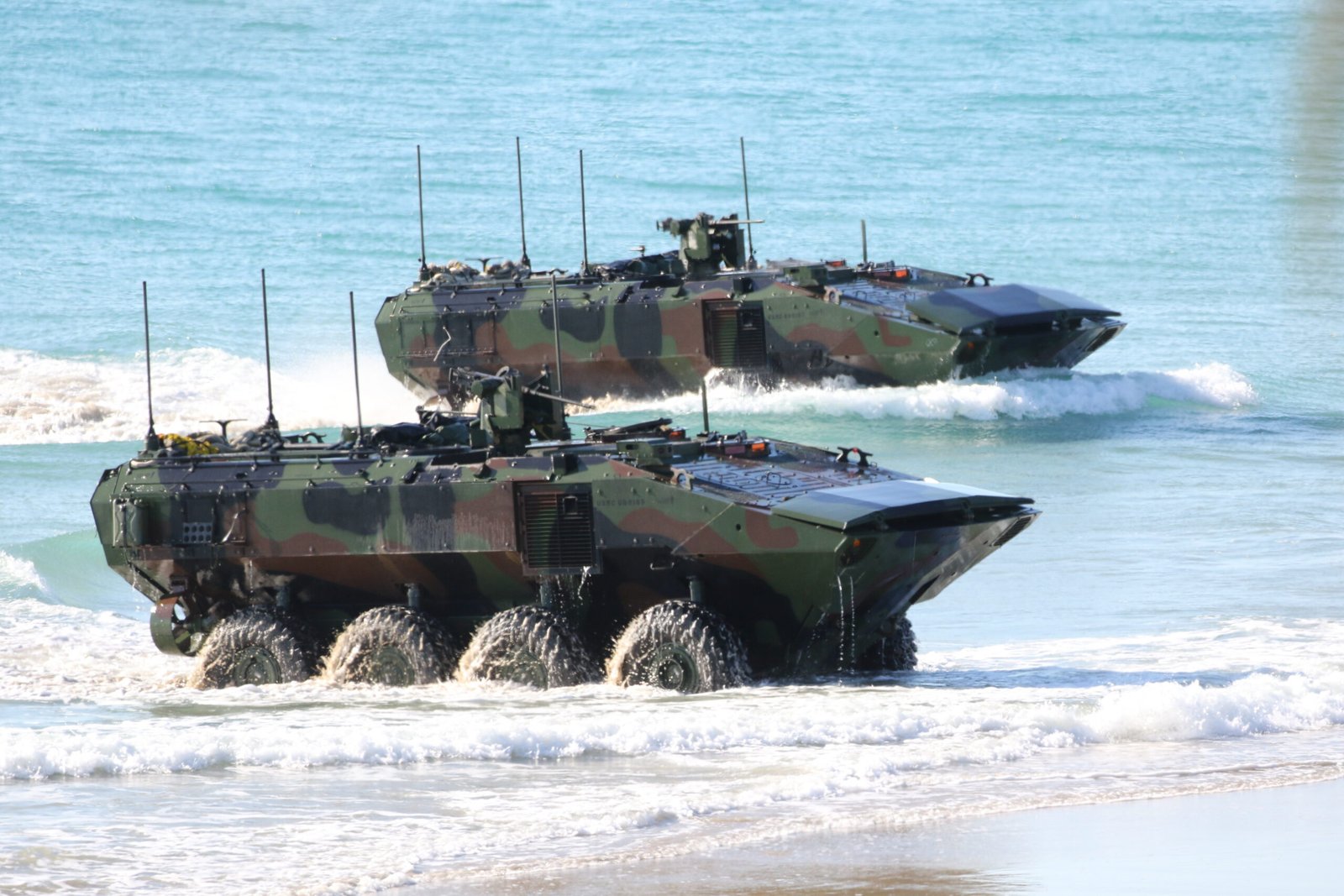
Belatedly, two weeks after war commenced, the USA decided to despatch the 31st Marine Expeditionary Unit (MEU) – a formation of around 2,500 ground troops, air combat and logistics marines normally located in Okinawa, Japan – to the Middle East for unknown purposes. Significantly, the USA is stripping troops from the Indo-Pacific theatre to bolster the Middle East.
The USS Tripoli Amphibious Ready Group with the embarked 31st MEU is currently in transit to the Middle East. In another case of irony, these ships will sail past a large group of “dark fleet tankers” – at least 50 of them – at anchor off eastern Johor in Malaysia. These tankers help move fuel to China. In fact, more than 80% of Iranian oil exports go to China, even though Iranian oil accounts for just 13.4% of Beijing’s overall oil imports by sea.

Another oddity in US military planning is that it withdrew two Littoral Combat Ships (LCS) fitted with mine-hunting equipment from the Gulf region, at a time when they are needed most.
As of 15 March, USS Tulsa and USS Santa Barbara were in Penang in Malaysia instead of their normal homeport in Bahrain. The whereabouts of the third mine-hunting vessel, USS Canberra, is unclear. These three LCS replaced four US Navy Avenger-class minehunters in Bahrain last year. Of course, these vessels cannot conduct mine-sweeping in a contested environment in any case.
Trump was taken aback that Iran decided to close the Hormuz Strait, when it was obvious Tehran was always going to play its asymmetric trump card. Traffic through the Strait of Hormuz has slowed to a trickle, and at least 20 commercial tankers and cargo ships have been struck so far.
Indeed, if Trump and his hawkish defence secretary Pete Hegseth spent less time boasting of their brilliance and had more strategic foresight, then perhaps their slapdash actions and policies would be far more coherent.
For sure, China and the People’s Liberation Army (PLA) are carefully examining US activities during this war. Davis remarked, “The Iran war is a learning laboratory for the PLA. Make no mistake, this is a valuable opportunity for China to gain more insight into the American way of war.”
Nor was China ever going to respond positively to Trump’s call for help opening the Strait of Hormuz. Ryan Hass, Director of the John L. Thornton China Center at the Brookings Institute, pointed out: “Beijing’s response to Trump’s comment makes clear China does not feel urgency or responsibility to clean up the mess in the Gulf. Rather, Beijing sees an opportunity to draw a contrast between PRC calls for de-escalation and US calls for a military solution in the Strait of Hormuz.”
by Gordon Arthur
