

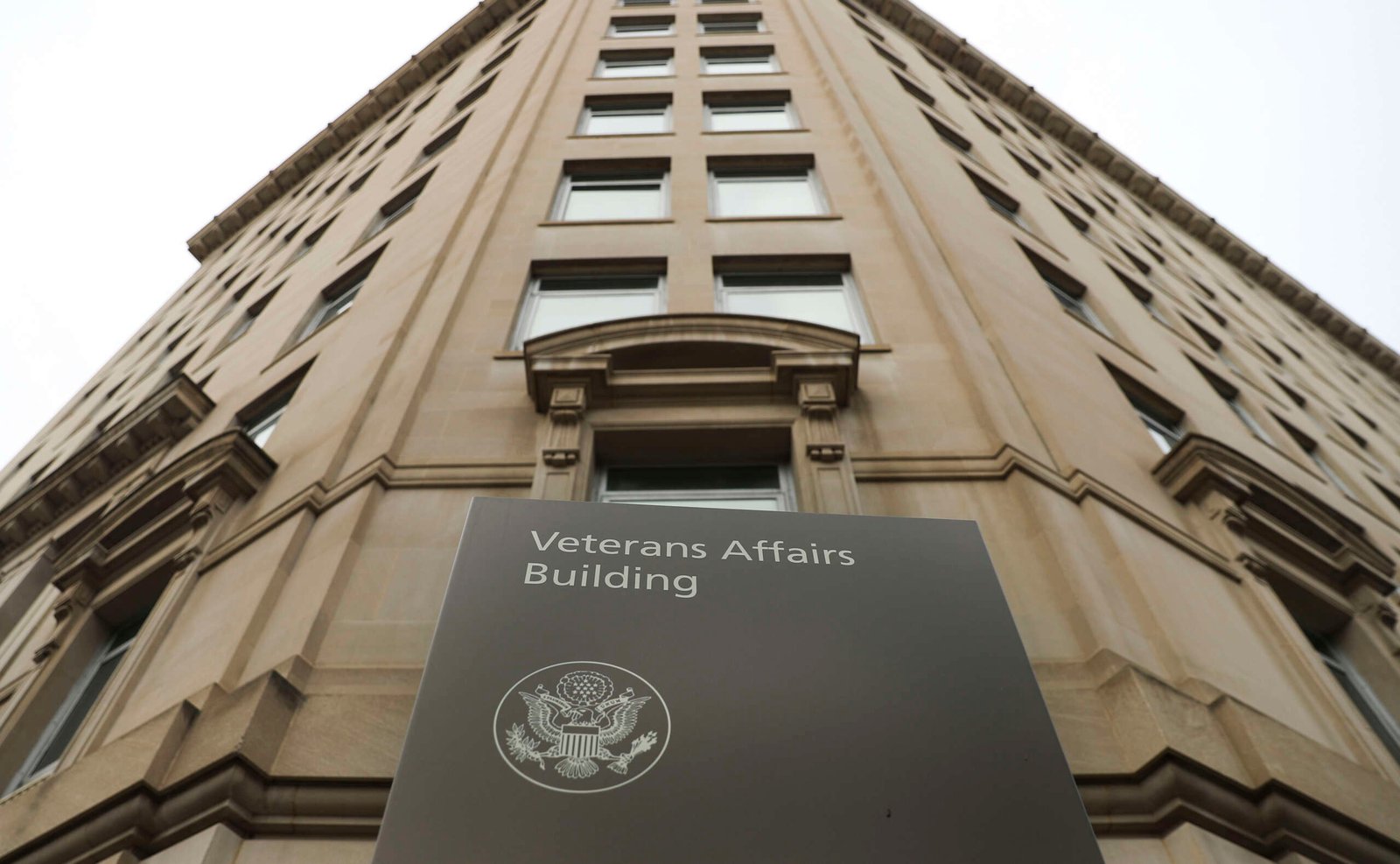
A federal judge in Rhode Island is ordering the Department of Veterans Affairs to restore its collective bargaining agreement with one of its unions while the case continues.
U.S. District Judge Melissa DuBose granted a preliminary injunction on Friday, requiring the VA to recognize the collective bargaining agreement with the American Federation of Government Employees’ National Veterans Affairs Council (AFGE/NVAC), which represents over 300,000 employees.
“The defendants shall reinstate the Master CBA — as well as any amendment, local supplemental agreements, and memoranda of understanding that were in place subsidiary to the Master CBA — or the remainder of the agreed-upon term provided in the Master CBA,” DuBose wrote.
The federal court’s ruling may be short-lived relief for the union. The VA is likely to appeal the decision, and an appeals court covering Western states recently panned similar retaliation claims by federal employee unions. Federal News Network has reached out to the VA for comment.
Last August, the VA terminated its contract with AFGE and four other unions — the National Association of Government Employees, the National Federation of Federal Employees, the National Nurses Organizing Committee/National Nurses United, and the Service Employees International Union.
President Donald Trump signed an executive order in March 2025 that greatly expanded the number of agencies exempt from collective bargaining, after deeming their work essential to national security. The VA was included in that executive order. Trump signed a follow-up executive order last August that exempted even more agencies from collective bargaining.
The 1978 Federal Service Labor-Management Relations Statute (FSLMRS) allows the executive branch to prohibit collective bargaining for agencies that work in national security. The VA was one of the first departments to terminate union contracts following the March 2025 executive order.
The Office of Personnel Management initially told agencies to hold off on terminating labor contracts with unions while legal challenges were still pending. But OPM reversed course last month, when it advised agencies to proceed with either amending or fully canceling their collective bargaining agreements.
DuBose wrote that VA Secretary Doug Collins “favored some unions over others,” when he exempted some unions from the Trump administration’s rollback of collective bargaining rights. The executive orders, she wrote, allow department heads to grant exceptions to the executive order, “on an agency or subdivision basis,” but not “union by union.”
By terminating some union contracts, but not others, DuBose wrote that VA workers in similar jobs “have different rights depending on the union to which they belong.” VA nurses in one facility, for example, are still covered by a collective bargaining agreement, but nurse practitioners are not.
AFGE/NVAC argued that VA’s rescission of its contract amounted to retaliation for speech covered by the First Amendment.
DuBose wrote that VA’s termination of the collective bargaining agreement “seems likely substantially motivated by the plaintiffs’ history and frequency of vocally opposing changes to labor policies.”
“AFGE has actively litigated against the Trump administrations,” she added.
The union has filed several lawsuits challenging President Trump’s policy targeting the federal workforce. Its lawsuits include a legal challenge to the governmentwide “Fork in the Road” offer to accept early retirement or voluntary separation incentives, the administration’s decision to shutter USAID and the mass termination of federal employees who were serving in their probationary periods.
DuBose wrote that AFGE’s National VA Council “has been publicly supportive of all the litigation and has filed a lot of national grievances against the VA.”
“The court cannot ignore the ample support the plaintiffs provide to show that the defendants’ termination of the Master CBA was motivated by retaliation for the plaintiffs’ advocacy on behalf of their membership,” she wrote.
DuBose wrote that the VA “provided little counterevidence to indicate the termination was not retaliatorily motivated.” She said a department press release and internal memo on the contract terminations didn’t address national security concerns, “highlighting instead the cost to the VA of its employees’ union representation as well as the difficulty the VA has had rewarding high performing employees and holding poorly performing employees accountable.”
VA’s Chief Human Capital Officer Tracey Therit told the court in a deposition that the master collective bargaining agreement “interfered with the VA’s ability to execute and implement the president’s initiatives related to national security,” and that unions were “unwilling to negotiate with the VA over the implementation of the initiative.”
Therit added that the contract “obstruct[ed] the VA’s ability to address employees with performance or conduct issues to “quickly terminat[e] employees with performance or conduct issues.”
DuBose wrote that “there is zero indication from the defendants that the termination decision would have been made or implemented without the retaliatory motive.”
An appeals court, however, recently rejected retaliation claims in a similar case led by several federal employee unions.
The Ninth Circuit Court of Appeals ruled last month that the Trump administration’s termination of collective bargaining agreements was not retaliatory, and that the White House would have issued these executive orders even if the plaintiff unions hadn’t spoken out against its policies or taken legal action.
The appeals court vacated a lower court’s preliminary injunction signed by a federal judge in San Francisco, who ruled in June 2025 that the unions’ retaliation claims were “plausible.”
DuBose wrote that her opinion did not determine whether the Trump administration exceeded its legal authority when it issued the executive orders. She said that final judgment in any of the cases directly challenging the legality of the executive orders “could be years away,” and that AFGE/NVAC “need not wait to adjudicate the [VA] secretary’s distinct, discrete action” of terminating its collective bargaining agreement.
“From the outset, the court wants to be clear that it is deeply mindful of the lane it is in and will stay in. This case is not about the constitutionality of the EO. The motion before the court is about whether the defendants’ termination of the Master CBA is unconstitutional,” she wrote.
AFGE NVAC President MJ Burke said in a statement that the union is “grateful for today’s court decision, but there is still work to do.”
“Despite this administration’s shameful and hostile attempts to silence VA workers and perpetuate falsehoods that they have ‘no union,’ the leaders and members of AFGE/NVAC stand together with a clear message: we are still here,” Burke said.
AFGE National President Everett Kelley said the VA “singled out AFGE and our members for retaliation because we refused to stay silent about cuts and changes at the VA that would harm veterans.”
“His decision to exempt other unions from the President’s executive order and then terminate AFGE/NVAC’s collective bargaining agreement made the retaliation impossible to deny,” Kelley said.
If you would like to contact this reporter about recent changes in the federal government, please email jheckman@federalnewsnetwork.com, or reach out on Signal at jheckman.29
Copyright
© 2026 Federal News Network. All rights reserved. This website is not intended for users located within the European Economic Area.
