

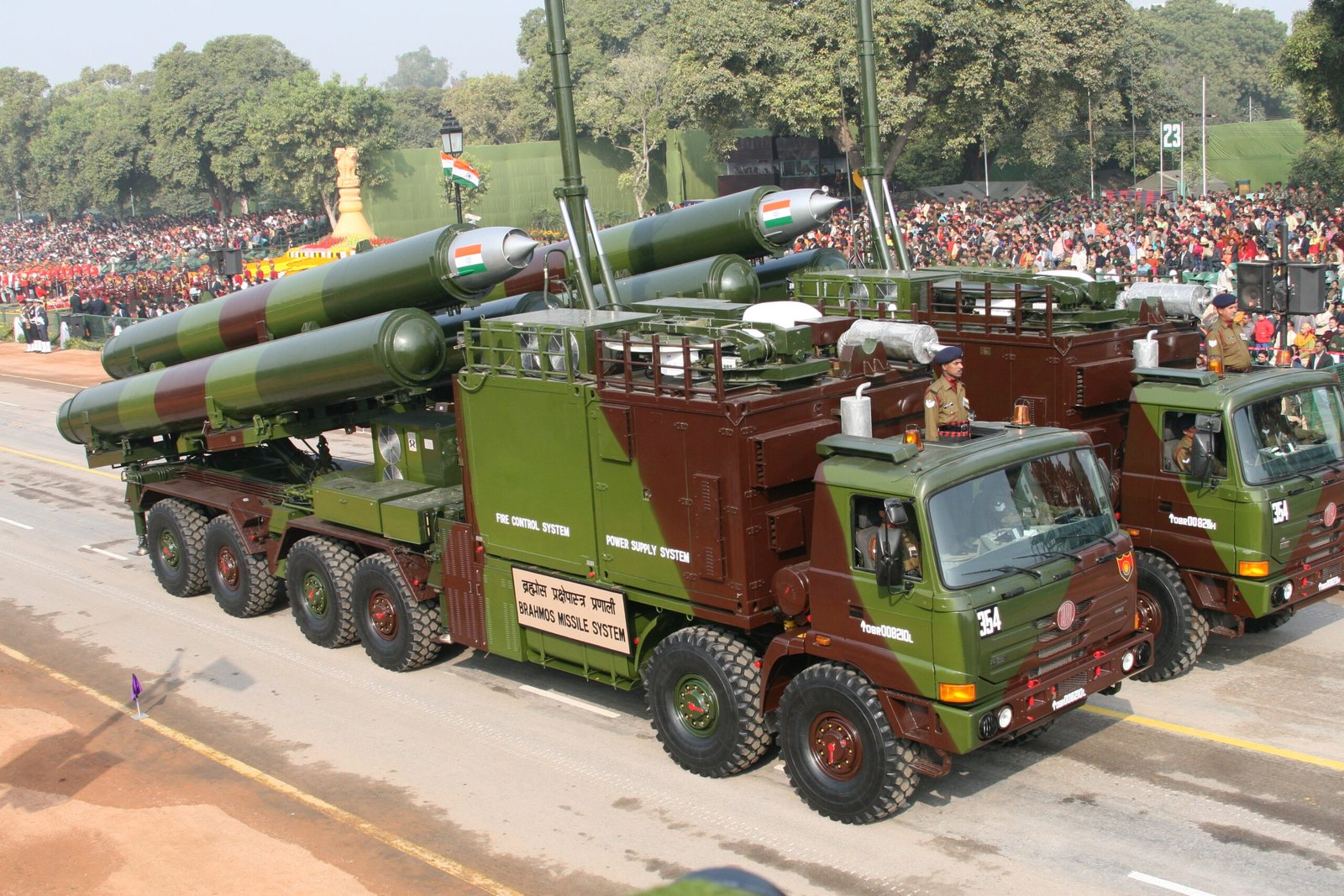
Indonesia’s Ministry of Defence (MoD) announced on 9 March that it had concluded an agreement to acquire BrahMos anti-ship cruise missiles from India.
MoD spokesperson Brigadier General Rico Ricardo Sirait shared, “Indonesia has partnered with India in the procurement of the BrahMos missile system. This is part of our efforts to modernise our weaponry, especially in beefing up our coastal defence.”
It was actually General Romeo Brawner Jr., the Chief of Staff of the Armed Forces of the Philippines, who first publicised the sale, even before this Indonesian confirmation.
Jakarta’s move finalises bilateral discussions that have reportedly been ongoing since 2023. Although the details and value of the procurement were not released by Indonesia’s MoD, online sources speculated it could be valued between US$300-450 million.
The order is expected to include launchers, radar and missiles, although details have not yet been released. Sources suggest the Indonesian contract is for the truck-launched version suitable for mobile operations.
The BrahMos is a ramjet-powered, Mach 2.8-capable missile available in air-, ground- and ship-launched versions. The missile has two stages, with an initial solid-fuel booster and a liquid-fuelled stage for cruise.
The ground-launched version has a range of around 290km. Guidance is provided by an inertial navigation system plus satellite guidance with active radar terminal homing. The missile uses a high-low attack profile and carries a 200+kg high-explosive/semi-armour-piercing warhead.

Indonesia joins India, and more recently the Philippines Marine Corps, in fielding the BrahMos.
In early 2022, the Philippines acquired three BrahMos missile batteries. The missile is considered “combat proven” after successful use in May 2025 in India’s Operation Sindoor against Pakistan. There the air-launched BrahMos demonstrated its high speed, precision and ability to evade air defences.
BrahMos missiles offer archipelago countries like Indonesia and the Philippines an ability to secure their vast territorial waters and land approaches using anti-access/area denial operations.
Indonesia has previously seen foreign vessels disrupt its energy exploration in the North Natuna Sea. The BrahMos offers a potential solution to this challenge, enabling it to establish maritime defence areas. Sirait said the new system is expected to “boost deterrence capabilities in safeguarding national sovereignty”.
The BrahMos will complement Indonesia’s French Exocet MM40 Block 3, Russian P-800 Oniks/Yakhont and Chinese C-705 anti-ship missiles. However, the BrahMos has a greater range, supersonic-strike capabilities and mobility, something considered essential in today’s environment.
Russia has a 49.5% stake in the BrahMos Aerospace joint venture with India.
by Stephen W. Miller
