Service Prepares to Declare the T-7 Ready for Production to Replace the T-39
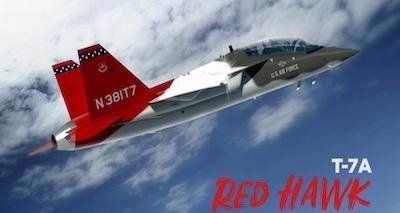
The US Air Force is reportedly getting ready to clear the Boeing T-7 Red Hawk for production, formally transitioning the program from very prolonged development into actual output. The decision, known as Milestone C, comes more than two years later than once projected.
The T-7 is the service’s bid to replace the aging Northrop T-38 Talon, which has trained fighter and bomber pilots since 1961. While the transition has been plagued by technical setbacks and schedule resets, Air Force officials are finally confident enough in the aircraft’s baseline design to give it a shot at scaling production.
“Milestone C is monumental,” said Rodney Stevens, the Air Force’s program executive officer for training. “Essentially, what we’re saying is, we’re confident in the design of the aircraft that we have, and that we’re ready to start proving that we can produce the aircraft at rate to meet the inventory needs of Air Education and Training Command.”
However, this so-called Milestone C will not bring in a flood of aircraft overnight. The Air Force has a phased production approach scheduled, approving initial lots sequentially while testing continues. Though that overlap has posed numerous complications for past defense programs, officials insist it will be tightly managed this time around.

That timeline puts initial operational capability on target for November 2027, defined as 14 aircraft ready to train new pilots. If that holds, students could begin flying the T-7 in 2028. With five aircraft from the 351-unit order delivered, 346 T-7s remain on the books.
“The T-7 today will offer so much more as it relates to what type of pilot [it] is going to produce starting in 2028, compared to the type of pilot that the T-38 produces today,” Stevens added.
Boeing is likely equally relieved to hear that the T-7 program is making progress. The manufacturer’s fixed-price contract has left it to absorb roughly $3.2 billion in losses on the program. That structure shields taxpayers from some cost growth, but at the same time, places intense pressure on Boeing to get performance and production under control.