

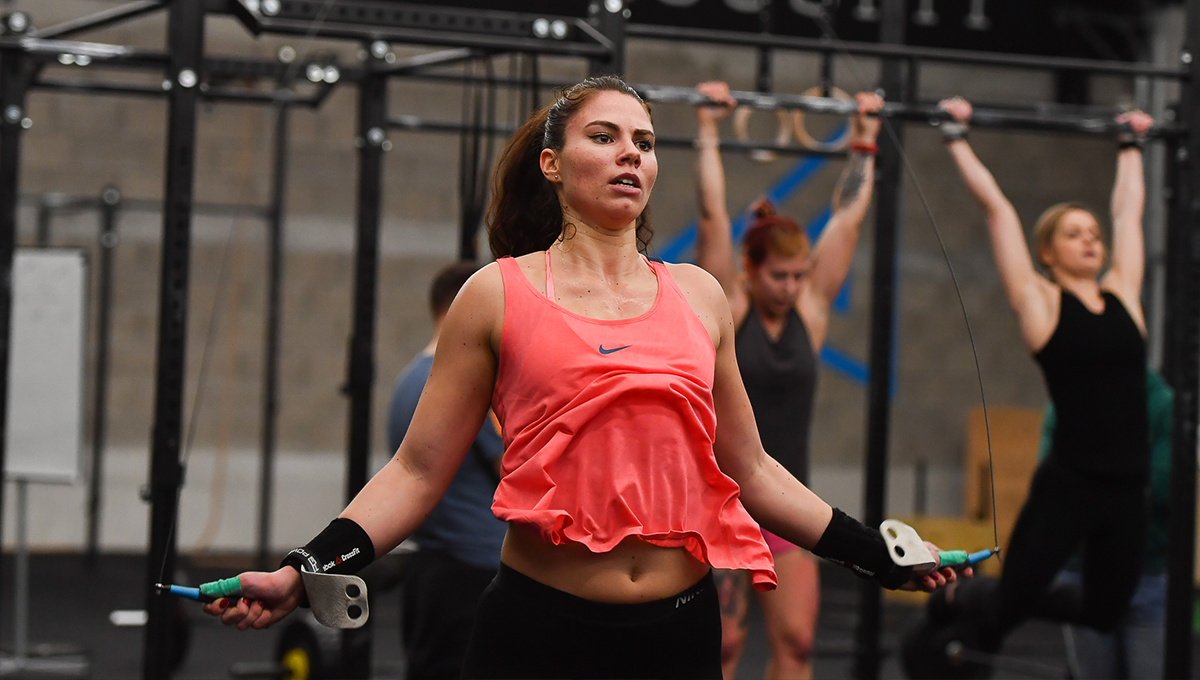
Double unders are a defining skill in CrossFit. They look simple: jump once while the rope passes under your feet twice. In practice, they expose weaknesses in coordination, tendon stiffness, aerobic capacity, rhythm, and mental control. During the CrossFit Open, double unders are often programmed under fatigue, in high-rep sets, and paired with demanding movements like thrusters, snatches, or wall balls.
If you want to perform well in the 2026 CrossFit Open, scaling double unders is not about “doing singles instead.” It is about understanding the biomechanics, physiology, and motor learning principles behind the movement and building a progression that develops the exact capacities required.
This article breaks down how to scale double unders using scientific evidence. You will learn how to build elastic efficiency, improve coordination, manage fatigue, and create a structured progression that actually transfers to Open-style workouts.
What Double Unders Really Demand
Before you scale double unders effectively, you need to understand what they require from the body.
Reactive Strength and Tendon Stiffness
Double unders rely heavily on the stretch-shortening cycle (SSC). The SSC is the rapid transition from muscle lengthening (eccentric phase) to shortening (concentric phase). When you jump, your calf muscles and Achilles tendon store elastic energy during landing and release it during takeoff.

Research shows that increased tendon stiffness and efficient SSC use improve reactive strength and jump performance (Kubo et al., 2007; Nicol et al., 2006). Stiffer tendons allow more effective energy storage and return, reducing metabolic cost and improving performance in repeated jumps.
This matters because double unders are essentially a series of low-amplitude, high-frequency reactive jumps. If your tendons and lower leg musculature are not conditioned for repeated elastic loading, you will fatigue quickly and lose rhythm.
Neuromuscular Coordination and Timing
Double unders require precise timing between upper and lower body. The wrists must rotate the rope at exactly the right speed while the lower body maintains consistent jump height.
Motor learning research shows that coordinated, rhythmic movements depend on well-developed intermuscular coordination and consistent practice under variable conditions (Schmidt and Lee, 2011). In other words, random practice and “just trying harder” are not enough. Structured repetition builds the neural pathways that automate timing.
Aerobic and Anaerobic Contributions
Double unders are often treated as purely “skill-based,” but they place meaningful demands on the cardiovascular system.
Repeated jumping increases oxygen consumption significantly, especially as frequency rises (Ebben et al., 2011). In Open-style workouts, double unders are frequently performed in sets of 50 to 100 or more, which places stress on both aerobic metabolism and anaerobic glycolysis.
If your aerobic base is weak, your heart rate will spike, and coordination will break down under fatigue.
Postural Control and Core Stability
Efficient double unders require a neutral spine, minimal excessive knee bend, and stable shoulders. Core stability supports efficient force transfer between the lower and upper body.
Research suggests that core stability contributes to improved force transmission and performance in athletic tasks (Hibbs et al., 2008). If your trunk collapses or your ribcage flares, rope timing becomes inconsistent.
Understanding these demands allows you to scale double unders strategically rather than randomly.
The Principles of Effective Scaling
Scaling double unders for the 2026 CrossFit Open should follow four evidence-based principles:
- Specificity
- Progressive overload
- Skill acquisition
- Fatigue management
Specificity
Training adaptations are specific to the imposed demands (Behm and Sale, 1993). If you replace double unders with slow single unders or rowing, you are not training the same reactive or coordination demands.
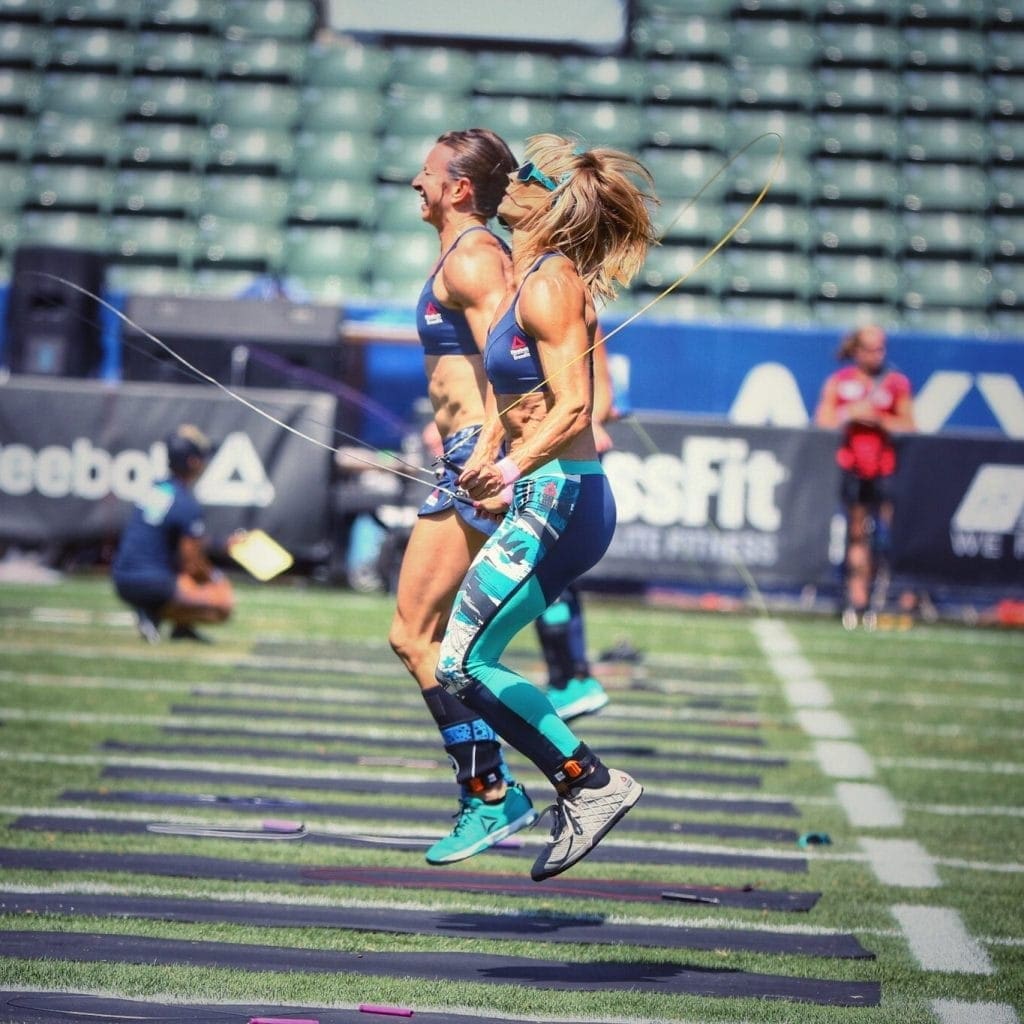
Effective scaling keeps the jump pattern and rope timing as similar as possible to true double unders.
Progressive Overload
Tendons, muscles, and neural pathways adapt gradually to increasing stress. Progressive overload, the gradual increase of training stress, is necessary to improve performance (ACSM, 2009).
With double unders, overload can come from:
- Increasing total volume
- Increasing set length
- Reducing rest intervals
- Adding fatigue before sets
- Increasing rope speed consistency
Skill Acquisition and Repetition
Motor learning improves with deliberate practice and feedback (Schmidt and Lee, 2011). Short, frequent practice sessions are often more effective than occasional high-volume sessions.
That means scaling double unders should include frequent exposure rather than one long “practice day” per week.
Fatigue Management
High volumes of plyometric activity increase the risk of overuse injuries, especially in the Achilles tendon and calf complex. Excessive load without recovery increases injury risk (Maffulli et al., 2003).
A smart scaling plan increases volume gradually and monitors soreness, stiffness, and performance drop-off.
Step-by-Step Progression to Scale Double Unders
Below is a structured progression grounded in biomechanics and motor learning science.
Step 1: Build Elastic Capacity
If you cannot perform 50 relaxed single unders without excessive fatigue, you do not have the elastic base for double unders.
Single Unders with Intent
Instead of casual singles, perform:
- Low knee bend
- Upright posture
- Fast wrist rotation
- Quiet landings
The goal is to train reactive stiffness in the ankle. Repeated low-amplitude jumps increase lower limb stiffness and improve SSC efficiency (Kubo et al., 2007).
Start with:
- 5 sets of 50 single unders
- 30 seconds rest
Progress to:
- 5 sets of 100 single unders
- 20 seconds rest
This builds local muscular endurance and tendon tolerance.
Low-Level Plyometrics
Add:
- Pogos (straight-leg jumps)
- Line hops
- Ankle hops
Plyometric training improves reactive strength and power output (Markovic and Mikulic, 2010). Keep volume moderate and focus on stiffness and rhythm.
2 sessions per week:
- 3 sets of 20 pogos
- 3 sets of 20 line hops
Step 2: Introduce Rope Speed Variability
Many athletes fail double unders because they cannot control rope speed.
Speed Singles
Perform single unders but rotate the rope faster than normal. Jump slightly higher without changing posture.
This trains coordination between wrist speed and jump height. Variable practice improves motor learning and adaptability (Schmidt and Lee, 2011).
Protocol:
- 10 rounds of 20 fast singles
- 20 seconds rest
Step 3: Single-Single-Double Progression
This is one of the most effective intermediate drills.
Pattern:
Single
Single
Double
Repeat continuously.
This drill allows partial exposure to double timing without overwhelming fatigue.
Motor learning research shows that breaking a complex skill into manageable segments improves acquisition (Schmidt and Lee, 2011).
Start with:
- 5 sets of 20 total reps (count each jump)
- Rest 60 seconds
Progress by:
- Increasing total reps
- Reducing rest
- Increasing percentage of doubles
Step 4: Controlled Double Unders in Small Sets
Once you can perform 5 to 10 consistent doubles, begin structured sets.
Protocol:
- 10 sets of 10 double unders
- 30 seconds rest
The goal is technical consistency, not max reps.
Short rest intervals maintain cardiovascular stress while allowing motor control.
Step 5: Fatigue Integration
The CrossFit Open rarely tests double unders in isolation.
Research shows that fatigue impairs neuromuscular coordination (Enoka and Duchateau, 2008). Therefore, you must train double unders under fatigue.
Example:
3 rounds:
- 10 burpees
- 30 double unders
Focus on maintaining relaxed shoulders and consistent jump height.
Gradually increase:
- Burpee reps
- Double under reps
- Intensity
Weekly Structure Leading Into the Open
A simple 12-week progression could look like this.
Weeks 1 to 4: Capacity Phase
Focus:
- Single under volume
- Plyometrics
- Small double attempts
Frequency:
- 3 rope sessions per week
- Low fatigue
Total weekly rope volume:
Weeks 5 to 8: Skill Consolidation
Focus:
- Single-single-double drills
- Structured double sets
- Moderate fatigue integration
Frequency:
Total weekly volume:
Weeks 9 to 12: Open Simulation
Focus:
- High-rep double under sets
- Pairing with thrusters, snatches, wall balls
- Reduced rest intervals
Frequency:
- 2 to 3 focused rope sessions
- Integrated into full workouts
Total weekly volume:
Progress gradually. Monitor calf tightness and Achilles discomfort.
Managing Injury Risk
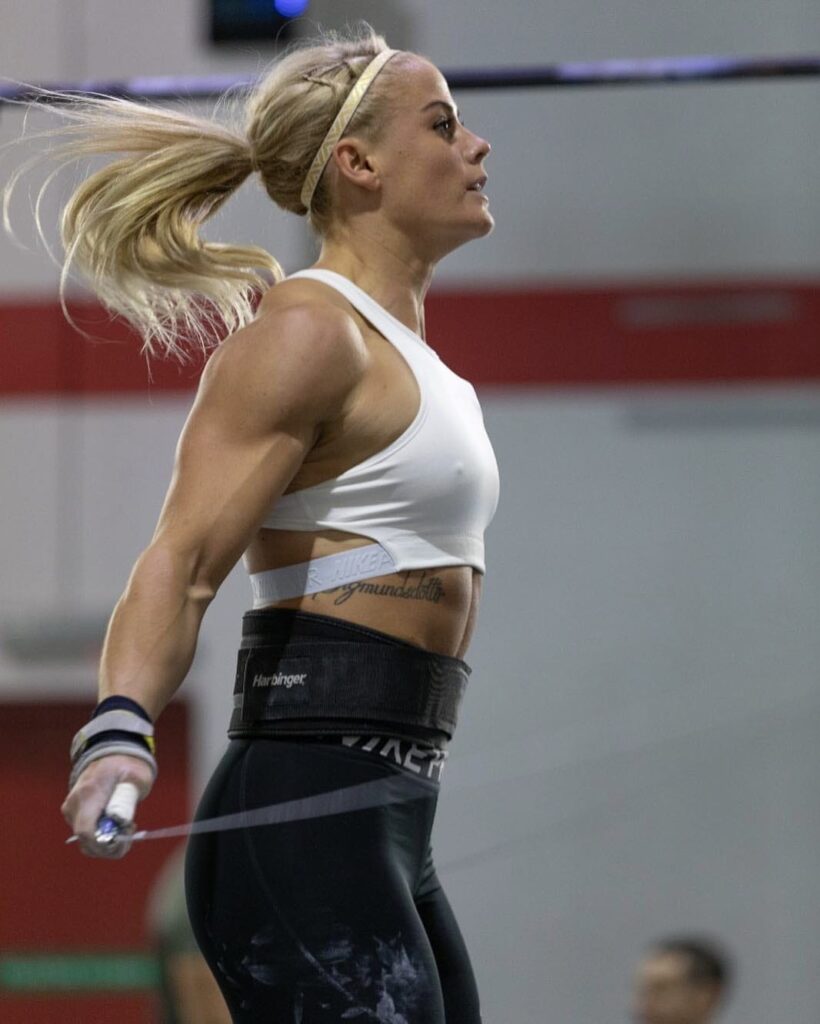
Double unders place repeated stress on the Achilles tendon. Achilles tendinopathy is associated with repetitive loading and inadequate recovery (Maffulli et al., 2003).
To reduce risk:
- Increase volume no more than 10 percent per week.
- Include calf strengthening, especially eccentric heel drops. Eccentric loading improves tendon health and function (Alfredson et al., 1998).
- Avoid sudden jumps in volume before the Open.
Calf Strength Protocol
2 to 3 times per week:
- 3 sets of 15 eccentric heel drops (straight knee)
- 3 sets of 15 eccentric heel drops (bent knee)
This builds tendon resilience.
Energy System Development for High-Rep Sets
High-rep double unders elevate heart rate quickly. Improving aerobic capacity helps maintain coordination under fatigue.
Aerobic training increases mitochondrial density and improves fatigue resistance (Holloszy, 1967).
Include:
- 20 to 30 minutes steady-state cardio once per week
- Interval training such as 30 seconds work / 30 seconds rest
Better aerobic fitness helps you recover between sets during Open workouts.
Psychological Control and Rhythm
Anxiety disrupts motor performance. Excess arousal impairs fine motor coordination (Yerkes and Dodson, 1908).
In the Open:
- Breathe through the nose before starting.
- Use a consistent cue such as “relaxed wrists.”
- Break large sets into internal mini-goals.
Mental rehearsal improves motor performance (Driskell et al., 1994). Visualize smooth, quiet jumps before workouts.
Technical Cues That Matter
Keep cues simple and evidence-based:
- Stay tall.
- Jump from the ankles.
- Keep elbows close.
- Rotate with wrists, not shoulders.
Minimal extraneous movement reduces energy cost and improves efficiency (Nicol et al., 2006).
Common Scaling Mistakes
- Replacing doubles with rowing. This removes SSC and coordination demands.
- Practicing only when fresh. The Open demands fatigue tolerance.
- Ignoring calf strength.
- Chasing max unbroken sets every session.
Skill improves faster with consistent, moderate practice rather than frequent max attempts (Schmidt and Lee, 2011).
Putting It All Together for 2026
To scale double unders effectively for the 2026 CrossFit Open:
- Build elastic stiffness.
- Develop rope speed control.
- Increase double exposure gradually.
- Integrate fatigue strategically.
- Support tendon health.
- Improve aerobic capacity.
- Practice consistently.
Double unders are not magic. They are trainable. When you approach them with structured progression and scientific principles, they become predictable.
Consistency over intensity wins.
Key Takeaways
| Principle | What to Do | Why It Works |
|---|---|---|
| Elastic Capacity | Build high-quality single unders and pogos | Improves tendon stiffness and SSC efficiency |
| Skill Progression | Use single-single-double drills | Enhances motor learning and coordination |
| Structured Sets | Perform small consistent double sets | Reinforces technique under mild fatigue |
| Fatigue Integration | Pair doubles with simple movements | Trains coordination under Open-style stress |
| Tendon Health | Add eccentric calf work | Reduces Achilles injury risk |
| Aerobic Base | Include steady-state and intervals | Maintains coordination under high heart rate |
| Gradual Overload | Increase volume slowly | Prevents overuse injuries |
References
- ACSM (2009) ‘Progression models in resistance training for healthy adults’, Medicine & Science in Sports & Exercise, 41(3), pp. 687–708.
- Alfredson, H., Pietilä, T., Jonsson, P. and Lorentzon, R. (1998) ‘Heavy-load eccentric calf muscle training for the treatment of chronic Achilles tendinosis’, The American Journal of Sports Medicine, 26(3), pp. 360–366.
- Behm, D.G. and Sale, D.G. (1993) ‘Intended rather than actual movement velocity determines velocity-specific training response’, Journal of Applied Physiology, 74(1), pp. 359–368.
- Driskell, J.E., Copper, C. and Moran, A. (1994) ‘Does mental practice enhance performance?’, Journal of Applied Psychology, 79(4), pp. 481–492.
- Ebben, W.P., Wurm, B., VanderZanden, T.L., Spadavecchia, M.L., Durocher, J.J., Bickham, C.T. and Petushek, E.J. (2011) ‘Kinetic analysis of several variations of plyometric push-ups’, Journal of Strength and Conditioning Research, 25(10), pp. 2891–2894.
- Enoka, R.M. and Duchateau, J. (2008) ‘Muscle fatigue: what, why and how it influences muscle function’, Journal of Physiology, 586(1), pp. 11–23.
- Hibbs, A.E., Thompson, K.G., French, D., Wrigley, A. and Spears, I. (2008) ‘Optimizing performance by improving core stability and core strength’, Sports Medicine, 38(12), pp. 995–1008.
- Holloszy, J.O. (1967) ‘Biochemical adaptations in muscle: effects of exercise on mitochondrial oxygen uptake and respiratory enzyme activity’, Journal of Biological Chemistry, 242(9), pp. 2278–2282.
