

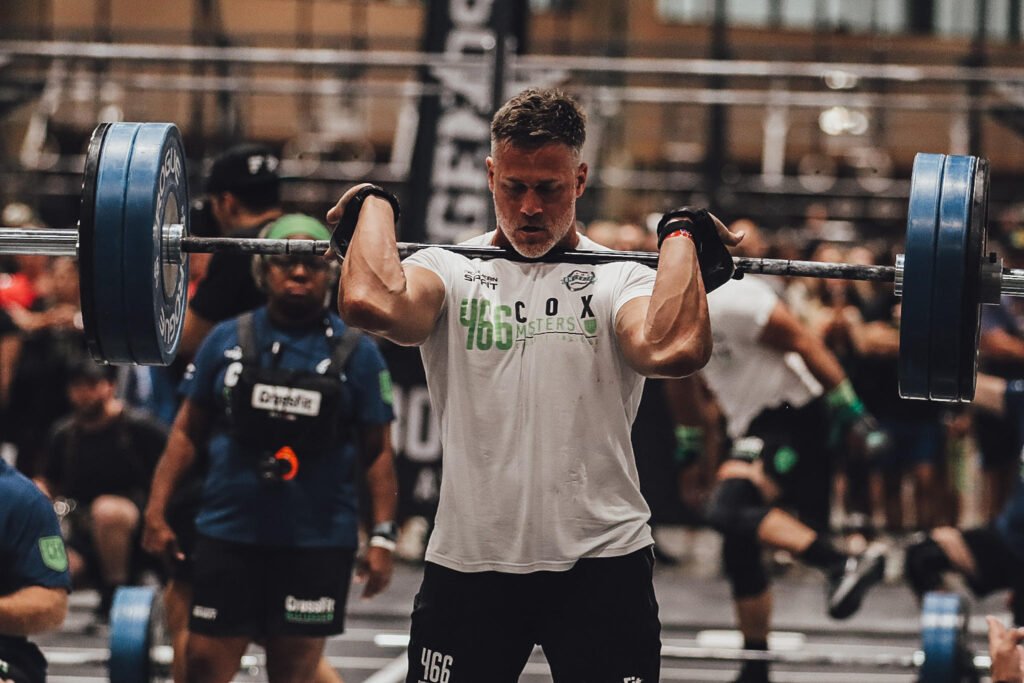
If you are over 35, you have probably noticed that training does not feel the same as it did in your twenties. Recovery takes longer. Strength is harder to build. Fat gain seems easier. Small aches linger.
But here is the good news: science shows that you can still build muscle, increase strength, improve power, and enhance mobility well into your 40s, 50s, and beyond. In fact, well-designed functional training may be one of the most powerful tools to maintain independence, athleticism, and metabolic health as you age.
Hack #1: Prioritize Progressive Strength Training (Especially Heavy Loads)
Why Strength Declines After 35
Starting around your 30s, muscle mass begins to decline gradually. This process, known as sarcopenia, accelerates with age. Research shows that adults can lose 3–8% of muscle mass per decade after age 30, with faster declines after 60 (Volpi et al., 2004).
Strength declines even faster than muscle size, partly due to changes in the nervous system and reduced motor unit recruitment (Mitchell et al., 2012). If you are not actively resisting this decline, it will happen.

The solution is not more cardio. It is structured strength training.
Heavy Loads Still Work (Even in Your 40s and 50s)
There is a persistent myth that lifting heavy is dangerous or ineffective after 35. The evidence says otherwise.
A landmark study by Fiatarone et al. (1990) demonstrated that even frail adults in their 90s significantly increased muscle strength and size after high-intensity resistance training. In middle-aged adults, progressive resistance training consistently increases muscle mass and strength (Peterson, Rhea and Sen, 2010).
Research comparing different intensities shows that lifting moderate to heavy loads (around 60–85% of 1RM) produces robust strength gains across age groups (Schoenfeld et al., 2017). Older adults respond well to progressive overload when training is properly programmed.
What This Means for Functional Fitness
If you want better performance in deadlifts, carries, jumps, and sport-specific movements, you need a strength base.
Key principles:
- Train 2–4 days per week.
- Focus on compound lifts: squats, deadlifts, presses, rows, carries.
- Work mostly in the 5–8 rep range for primary lifts.
- Gradually increase load over time.
Progressive overload is not optional. It is the main driver of adaptation.
Why It Matters for Longevity
Strength is strongly associated with reduced all-cause mortality. Research shows that higher levels of muscular strength are linked with lower risk of cardiovascular disease and premature death (Ruiz et al., 2008).
For athletes aged 35+, strength training is not just about aesthetics or performance. It is a health strategy.
Hack #2: Increase Protein Intake and Optimize Distribution
Aging Muscles Need More Protein
As you age, your muscles become less sensitive to protein intake. This phenomenon is known as “anabolic resistance” (Moore et al., 2015). In practical terms, this means that the same protein intake that worked in your 20s may no longer maximally stimulate muscle protein synthesis.
Research suggests that older adults require higher per-meal doses of protein to maximize muscle protein synthesis compared to younger individuals (Moore et al., 2015).
How Much Protein Is Enough?
The traditional Recommended Dietary Allowance (0.8 g/kg/day) is insufficient for active adults over 35.
A meta-analysis by Morton et al. (2018) found that muscle mass and strength gains were maximized at around 1.6 g/kg/day of protein during resistance training. Other experts recommend 1.2–1.6 g/kg/day for older adults to support muscle maintenance (Phillips and Fulgoni, 2016).
For a 180-pound athlete (about 82 kg), that equals roughly 100–130 grams of protein per day.

Distribution Matters
It is not just total intake. Distribution across meals also plays a role.
Research indicates that consuming around 0.4 g/kg of high-quality protein per meal maximizes muscle protein synthesis (Moore et al., 2015). For an 82 kg athlete, that is about 30–35 grams per meal.
Instead of:
- 10 g at breakfast
- 20 g at lunch
- 70 g at dinner
Aim for:
- 30 g at breakfast
- 30 g at lunch
- 30 g at dinner
- 20–30 g post-training or as a snack
This pattern helps counter anabolic resistance.
Functional Performance Benefits
Adequate protein supports:
- Lean mass retention
- Recovery between sessions
- Tendon and connective tissue remodeling
- Reduced injury risk
Combined with resistance training, higher protein intake amplifies strength gains in older adults (Morton et al., 2018).
If you are training hard but under-eating protein, you are leaving results on the table.
Hack #3: Train Power (Not Just Strength)
Power Declines Faster Than Strength
Power — the ability to produce force quickly — declines earlier and more rapidly than maximal strength with age (Reid and Fielding, 2012).
This matters because power is crucial for:
- Sprinting
- Jumping
- Olympic lifts
- Rapid changes of direction
- Preventing falls
If you only train slow, controlled lifts, you may maintain strength but still lose explosiveness.
Explosive Training Works in Middle Age
Studies show that power training (using moderate loads moved quickly) improves functional performance in older adults more effectively than traditional slow resistance training (de Vos et al., 2005).
Power training typically uses:
- 30–60% of 1RM for upper body
- 40–60% of 1RM for lower body
With maximal intended velocity on each rep.
In practical terms, this includes:
- Kettlebell swings
- Medicine ball throws
- Jump squats
- Olympic lift derivatives
- Short sprints
Research shows that this style of training improves rate of force development, mobility, and functional capacity (Reid and Fielding, 2012).
Why This Is Essential After 35
Functional fitness is not just about moving weight. It is about how quickly and efficiently you can move your body and external loads.
Power training helps:
- Maintain athleticism
- Improve neuromuscular coordination
- Reduce fall risk
- Enhance sport performance
The key is appropriate volume and recovery. One to two dedicated power sessions per week is often enough.
Hack #4: Prioritize Recovery as Aggressively as Training
Recovery Capacity Changes With Age
Hormonal profiles shift gradually with age. Testosterone and growth hormone levels decline, which can influence recovery and muscle remodeling (Vingren et al., 2010).
Additionally, connective tissues tend to become less resilient, and low-grade inflammation increases with age (Franceschi et al., 2007).

This does not mean you cannot train hard. It means recovery becomes more important.
Sleep Is Non-Negotiable
Sleep restriction impairs muscle recovery, strength performance, and metabolic health.
Research shows that sleep deprivation reduces muscle protein synthesis and increases muscle protein breakdown (Dattilo et al., 2011). It also negatively impacts glucose metabolism and testosterone levels (Leproult and Van Cauter, 2011).
For athletes over 35, 7–9 hours of quality sleep per night is a performance strategy.
Manage Training Volume Intelligently
More is not always better.
A meta-analysis by Schoenfeld et al. (2017) suggests that while higher training volumes can promote hypertrophy, there are diminishing returns and increased fatigue risk.
For masters athletes, moderate volume with high quality often produces better long-term progress than maximal volume.
Signs you need more recovery:
- Persistent joint pain
- Declining performance
- Elevated resting heart rate
- Poor sleep
- Irritability
Deload weeks every 4–8 weeks can help manage cumulative fatigue.
Active Recovery and Mobility
Mobility work and low-intensity aerobic activity can support circulation and tissue health.
Regular moderate aerobic exercise improves cardiovascular function and reduces systemic inflammation (Warburton, Nicol and Bredin, 2006).
In short: train hard, but recover harder.
Hack #5: Maintain Aerobic Fitness (Without Overdoing It)
VO2 Max Declines With Age
Maximal aerobic capacity (VO2 max) declines approximately 5–10% per decade after age 30 in sedentary adults (Fleg et al., 2005). However, trained individuals experience a slower decline.
Cardiorespiratory fitness is one of the strongest predictors of longevity. Higher VO2 max is associated with lower risk of cardiovascular disease and mortality (Kodama et al., 2009).
Aerobic Training Supports Functional Fitness
You do not need marathon-level mileage. But completely neglecting aerobic conditioning will hurt performance and recovery.
Benefits include:
- Improved work capacity
- Faster recovery between sets
- Enhanced mitochondrial function
- Better metabolic health
Research shows that both moderate-intensity continuous training and high-intensity interval training (HIIT) improve VO2 max in middle-aged adults (Weston et al., 2014).
The Sweet Spot
For functional athletes aged 35+:
- 2–3 aerobic sessions per week
- Mix of zone 2 steady-state work (30–45 minutes)
- 1 short HIIT session (10–20 minutes total work)
Importantly, balance aerobic volume so it does not interfere with strength gains. Excessive endurance training can impair strength and hypertrophy adaptations when not programmed properly (Wilson et al., 2012).
The goal is conditioning that supports performance — not conditioning that compromises it.
Putting It All Together
After 35, you cannot rely on randomness. You need strategy.
Here is the science-backed formula:
- Lift heavy with progressive overload.
- Eat sufficient protein, evenly distributed.
- Train power deliberately.
- Protect sleep and recovery.
- Maintain aerobic fitness intelligently.
None of these are flashy. All of them are effective.
Aging is inevitable. Physical decline is not.
Train smart, fuel properly, recover fully — and you can build functional strength, power, and resilience for decades to come.
Key Takeaways
| Hack | What to Do | Why It Works |
|---|---|---|
| Progressive Strength Training | Lift 2–4x per week, focus on compound lifts, use progressive overload | Preserves muscle mass, increases strength, reduces mortality risk |
| Higher Protein Intake | Consume 1.2–1.6 g/kg/day, distribute evenly across meals | Counters anabolic resistance and maximizes muscle protein synthesis |
| Power Training | Include explosive lifts 1–2x per week | Slows age-related power decline and improves functional performance |
| Prioritize Recovery | Sleep 7–9 hours, manage volume, schedule deloads | Supports hormonal balance, muscle repair, and long-term progress |
| Maintain Aerobic Fitness | 2–3 sessions per week (zone 2 + HIIT) | Improves VO2 max, recovery, cardiovascular health, and longevity |
References
- Dattilo, M., Antunes, H.K.M., Medeiros, A., Mônico-Neto, M., Souza, H.S., Tufik, S. and de Mello, M.T. (2011) ‘Sleep and muscle recovery: endocrinological and molecular basis for a new and promising hypothesis’, Medical Hypotheses, 77(2), pp. 220–222.
- de Vos, N.J., Singh, N.A., Ross, D.A., Stavrinos, T.M., Orr, R. and Fiatarone Singh, M.A. (2005) ‘Optimal load for increasing muscle power during explosive resistance training in older adults’, The Journals of Gerontology Series A: Biological Sciences and Medical Sciences, 60(5), pp. 638–647.
- Fiatarone, M.A., Marks, E.C., Ryan, N.D., Meredith, C.N., Lipsitz, L.A. and Evans, W.J. (1990) ‘High-intensity strength training in nonagenarians’, JAMA, 263(22), pp. 3029–3034.
- Fleg, J.L., Morrell, C.H., Bos, A.G., Brant, L.J., Talbot, L.A., Wright, J.G. and Lakatta, E.G. (2005) ‘Accelerated longitudinal decline of aerobic capacity in healthy older adults’, Circulation, 112(5), pp. 674–682.
- Franceschi, C., Bonafè, M. and Valensin, S. (2007) ‘Human immunosenescence: the prevailing of innate immunity, the failing of clonotypic immunity, and the filling of immunological space’, Vaccine, 18(16), pp. 1717–1720.
- Kodama, S., Saito, K., Tanaka, S., Maki, M., Yachi, Y., Asumi, M., Sugawara, A., Totsuka, K., Shimano, H., Ohashi, Y., Yamada, N. and Sone, H. (2009) ‘Cardiorespiratory fitness as a quantitative predictor of all-cause mortality and cardiovascular events’, JAMA, 301(19), pp. 2024–2035.
- Leproult, R. and Van Cauter, E. (2011) ‘Effect of 1 week of sleep restriction on testosterone levels in young healthy men’, JAMA, 305(21), pp. 2173–2174.
- Mitchell, W.K., Williams, J., Atherton, P., Larvin, M., Lund, J. and Narici, M. (2012) ‘Sarcopenia, dynapenia, and the impact of advancing age on human skeletal muscle size and strength’, The Journals of Gerontology Series A: Biological Sciences and Medical Sciences, 67(1), pp. 28–36.
