

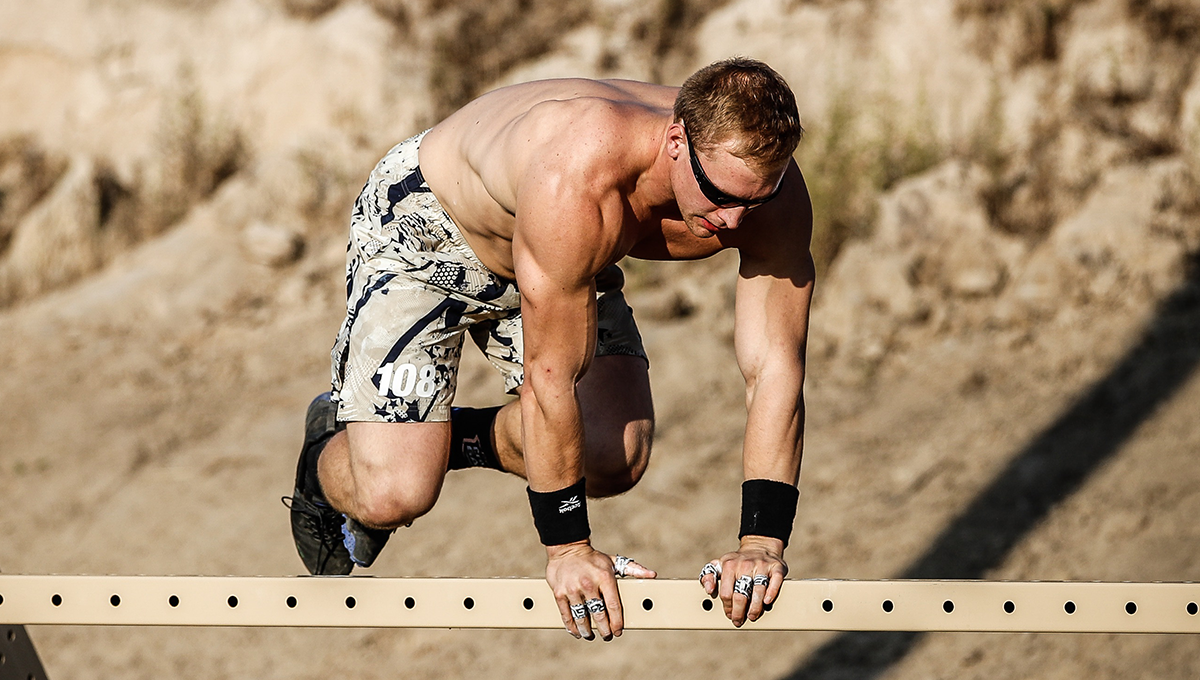
Burpees have a reputation for being brutally hard. They spike heart rate, burn the lungs, and seem to punish the whole body at once. That reputation is deserved—but it is also misleading. Burpees are not inherently “hard” because they are cruel or poorly designed. They are hard because they demand coordination, strength, power, mobility, and aerobic capacity all at the same time.
The good news is this: research from exercise physiology, biomechanics, and motor learning shows that burpees can feel significantly easier without making them less effective. By adjusting technique, sequencing, breathing, and training focus, you can reduce unnecessary fatigue while keeping (or even increasing) the training stimulus.
This article breaks down five science-backed hacks that make burpees easier in a meaningful way. These are not shortcuts or watered-down versions. They are efficiency upgrades based on how the human body actually moves, produces force, and manages energy.
Whether you are a beginner struggling through your first workout or an experienced CrossFit athlete trying to survive high-rep sets, these principles apply.
Hack 1: Slow Down the Way You Go Down
Most people make burpees harder than necessary before they even hit the floor.
The Problem With “Free-Falling” Burpees
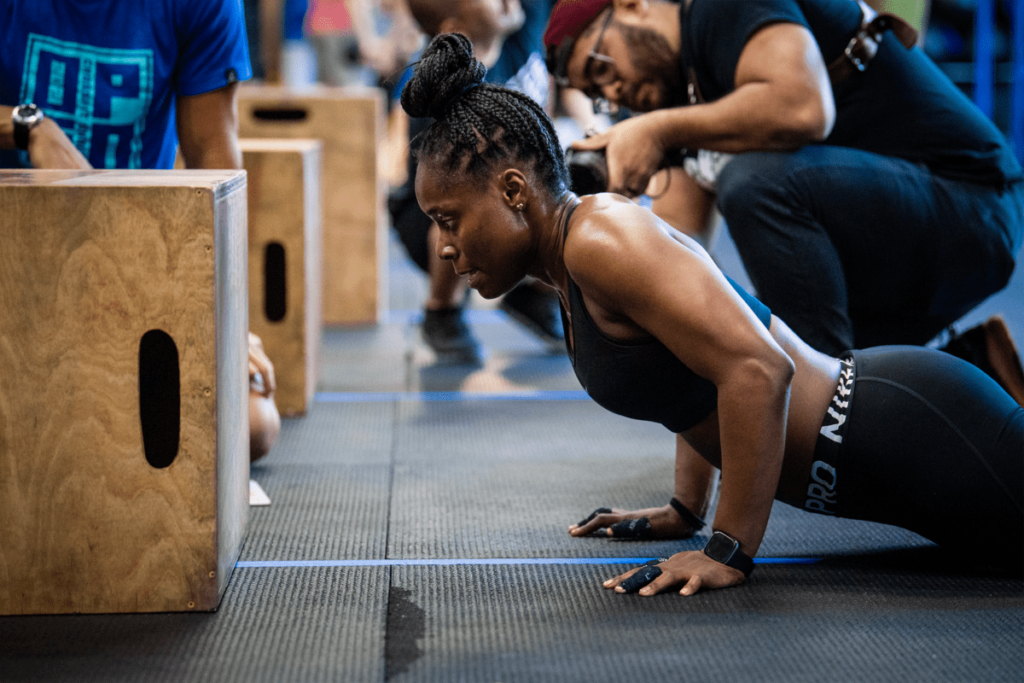
A common cue in workouts is “chest to the floor fast.” Many athletes interpret this as dropping aggressively into the bottom of the burpee. While this may look fast, it comes with a cost.
Eccentric muscle actions—where muscles lengthen under tension—require less metabolic energy than concentric actions, but they produce higher mechanical stress and greater muscle damage. Research consistently shows that uncontrolled eccentric loading increases delayed onset muscle soreness and fatigue in subsequent repetitions (Proske & Morgan, 2001).
When you collapse quickly into the bottom of a burpee, you lose muscular control and rely on passive structures like connective tissue and joints to absorb force. This increases local fatigue in the chest, shoulders, and core, making the push-up phase harder and more exhausting over time.
Why Controlled Descents Save Energy
By actively controlling the descent—hinging at the hips, stepping or lightly jumping the feet back, and lowering the chest with tension—you spread the workload across more muscle groups. This reduces peak stress on any single area.
Biomechanical studies on push-up and plank transitions show that controlled lowering improves force distribution and reduces joint loading at the shoulders and elbows (Ebben et al., 2011). Less joint stress means less protective muscle co-contraction, which lowers overall energy expenditure.
In simple terms: smoother equals cheaper.
How to Apply It
Instead of dropping:
- Hinge at the hips first
- Place the hands down with intention
- Step or lightly hop the feet back
- Lower the chest under control
You may feel slower initially, but over a full workout, this approach preserves strength and breathing capacity, making the burpees feel easier overall.
Hack 2: Use a Stepped Burpee Strategically (Yes, Even If You Can Jump)
Stepping instead of jumping is often viewed as scaling. Science says it is also smart.
Jumping Is Metabolically Expensive
Jumping both feet back and forward requires rapid force production and high neuromuscular demand. Studies comparing stepped versus jumped transitions show that jumping significantly increases oxygen consumption and heart rate, even when total movement time is similar (Chamari et al., 2015).
In high-rep burpee workouts, this extra metabolic cost adds up quickly.
Stepping Preserves Power Where It Matters
Burpees are not meant to test maximal jump height. They are meant to challenge conditioning. When you jump the feet back and forward every rep, you waste power that could be used to maintain rhythm and posture.
Motor control research shows that alternating limb movement (stepping one foot at a time) improves stability and reduces postural sway under fatigue (Granata & England, 2006). This means less energy spent “fighting” balance and more energy directed toward the task.
The Hybrid Approach
You do not have to step every rep forever. Many athletes benefit from:
- Stepping back
- Jumping forward
- Or stepping early, jumping late in the workout
This hybrid approach maintains intensity while managing fatigue. Studies on pacing strategies in high-intensity interval training show that athletes who self-regulate movement complexity last longer and produce higher total work output (Abbiss & Laursen, 2008).
Stepping is not quitting. It is pacing.
Hack 3: Fix Your Breathing Pattern (This Alone Can Change Everything)
Burpees feel harder than they “should” largely because breathing collapses under fatigue.
Breath Holding Is the Silent Energy Leak
Many people unconsciously hold their breath during the push-up or jump phase of the burpee. This triggers the Valsalva maneuver, increasing intra-abdominal pressure but also spiking blood pressure and limiting oxygen delivery (MacDougall et al., 1985).
Repeated breath holding during dynamic movements accelerates fatigue and increases perceived exertion, even when muscular demand stays the same.
Rhythmic Breathing Lowers Perceived Effort
Research on locomotor-respiratory coupling shows that synchronizing breathing with movement reduces oxygen cost and improves endurance (Bramble & Carrier, 1983). While burpees are not cyclic like running, they still benefit from consistent breath timing.
A controlled exhale during the descent or push-up and an inhale during the rise helps regulate heart rate and maintain oxygen flow.

A Simple Breathing Template
Try this:
- Inhale as you stand or prepare to descend
- Exhale as you lower to the floor
- Quick inhale at the bottom
- Exhale as you stand or jump
Studies on resistance training show that intentional exhalation during effort reduces perceived difficulty without reducing performance (Lander et al., 1992).
If burpees feel chaotic, your breathing probably is too.
Hack 4: Improve Hip Hinge Efficiency
Burpees are often treated like a push-up plus a jump. In reality, they are a hip-dominant movement.
The Hip Hinge Is the Engine
The hips are powered by the gluteus maximus, the largest and strongest muscle in the human body. Efficient hip extension reduces reliance on smaller muscle groups like the shoulders and quads.
Biomechanical analysis of burpee-style movements shows that athletes who hinge effectively at the hips generate more vertical force with less knee and shoulder strain (McGill et al., 2014).
When athletes squat straight down into a burpee instead of hinging, they increase knee flexion and spinal loading, which raises energy cost and fatigue.
Why Poor Hinge Mechanics Make Burpees Miserable
Limited hip mobility or poor hinge awareness forces compensations:
- Excessive lumbar flexion
- Forward knee travel
- Overuse of the shoulders during floor contact
All of these increase muscular co-contraction, which research shows raises metabolic demand without increasing output (Enoka & Duchateau, 2016).
Training the Hinge for Easier Burpees
Improving hinge efficiency does not require heavy lifting. Studies show that even low-load hinge patterning improves movement economy in compound exercises (Kiesel et al., 2011).
Helpful drills include:
- Romanian deadlifts with light loads
- Hip hinge wall drills
- Tempo kettlebell deadlifts
The better your hinge, the less your burpees cost.
Hack 5: Build Burpee-Specific Capacity Instead of Just “Suffering Through”
Burpees feel easier when your body is prepared for their exact demands.
Specificity Beats General Fitness
The principle of specificity states that adaptations are specific to the imposed demands. Research consistently shows that training movements similar to the target task improves performance more than general conditioning alone (Sale & MacDougall, 1981).
Running more does not necessarily make burpees easier. Neither does lifting heavier if you never practice transitions.
The Components Burpees Actually Stress
Burpees tax:
- Shoulder and chest endurance
- Core stiffness under fatigue
- Hip extension power
- Aerobic and anaerobic energy systems
Studies on circuit-style training show that improving local muscular endurance in involved muscle groups reduces cardiovascular strain during full-body movements (Paoli et al., 2012).
Smarter Assistance Work
Instead of just doing more burpees, target weak links:
- Tempo push-ups for pressing endurance
- Plank variations for core stiffness
- Low-impact aerobic intervals to improve recovery
Research on concurrent training shows that improving aerobic capacity lowers perceived effort during high-intensity bodyweight movements (Wilson et al., 2012).
When your weakest link gets stronger, burpees stop feeling like an ambush.

Why These Hacks Work Together
Each hack reduces a different source of unnecessary fatigue:
- Mechanical inefficiency
- Excessive eccentric stress
- Breathing disruption
- Poor force distribution
- Lack of specific capacity
Exercise physiology research shows that fatigue is rarely caused by one factor alone. It is the accumulation of small inefficiencies that overwhelms the system (Gandevia, 2001).
Fixing even one of these can help. Fixing all five transforms the movement.
Burpees will never feel easy in the way walking feels easy. But they can feel controlled, repeatable, and far less punishing. That is the difference between surviving workouts and training productively.
Final Thoughts
Making burpees easier is not about lowering standards. It is about respecting human physiology.
The athletes who perform burpees well are not tougher—they are more efficient. They waste less energy, breathe better, move cleaner, and manage fatigue intelligently. Science supports this approach, and the results show up quickly when applied consistently.
If burpees are currently your least favorite movement, that is not a character flaw. It is a technique and preparation issue—and those can be fixed.
References
- Abbiss, C.R. and Laursen, P.B., 2008. Describing and understanding pacing strategies during athletic competition. Sports Medicine, 38(3), pp.239–252.
- Bramble, D.M. and Carrier, D.R., 1983. Running and breathing in mammals. Science, 219(4582), pp.251–256.
- Chamari, K., Padulo, J. and Haddad, M., 2015. Lower limb explosive power, neuromuscular fatigue, and metabolic responses to jumping exercises. Journal of Strength and Conditioning Research, 29(6), pp.1628–1636.
- Ebben, W.P., Wurm, B., VanderZanden, T., Spadavecchia, M., Durocher, J.J. and Petushek, E.J., 2011. Kinetic analysis of several variations of push-ups. Journal of Strength and Conditioning Research, 25(10), pp.2891–2894.
- Enoka, R.M. and Duchateau, J., 2016. Translating fatigue to human performance. Medicine & Science in Sports & Exercise, 48(11), pp.2228–2238.
- Gandevia, S.C., 2001. Spinal and supraspinal factors in human muscle fatigue. Physiological Reviews, 81(4), pp.1725–1789.
