

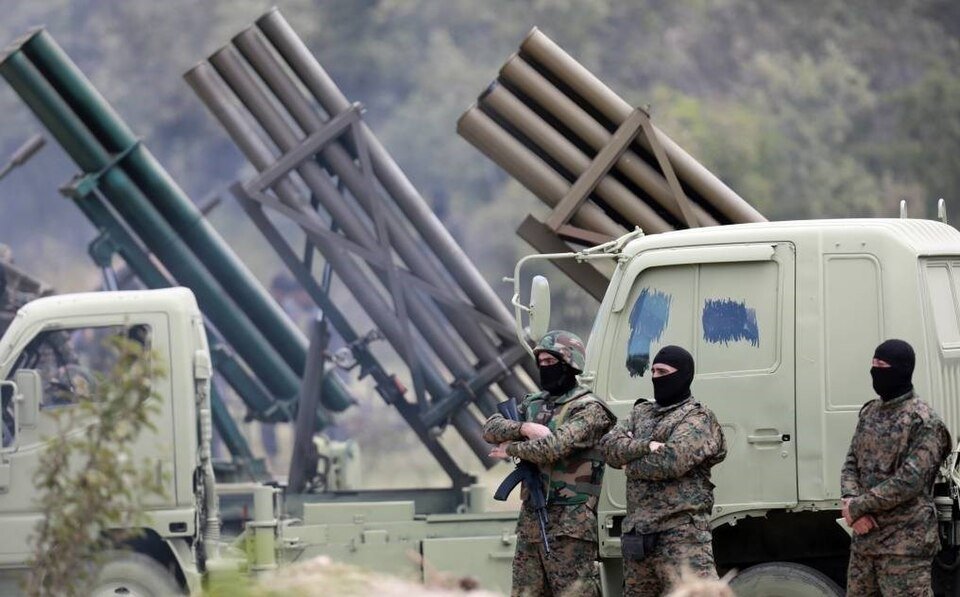
In Jan. 2025, Farzin Zandi wrote, “How Iran Lost Before It Lost: The Roll Back of its Gray Zone Strategy,” where he argued Iran’s proxy network and gray zone strategy had significantly eroded over time. A year later, amidst pressure from the United States and a weakened regime, we asked Farzin to revisit his argument. Image: MidjourneyIn your 2025 article, “How Iran Lost Before It Lost: The Roll Back of its Gray Zone Strategy,” you argued Iran’s gray zone strategy had significantly eroded. What is the status of Iranian-backed proxies today? If the regime’s ability to support their proxies continues to diminish, do you foresee these groups crumbling or finding new funding streams? In the aftermath of the 12-day war, the erosion of Iran’s aura of invulnerability has had direct consequences for its proxy network. As Iran’s deterrent credibility weakened, political pressure from host governments increasingly shifted onto Iranian-backed groups, producing a visible decline in morale and perceived deterrence. Many of these actors long assumed Iran was strategically insulated from serious costs; recent events have decisively shattered that belief.As with Iran’s oil-dependent economy, proxy financing remains closely tied to oil revenues. While Iran’s oil sales have experienced severe volatility — especially in recent months, when disruptions in oil-trading networks triggered sharp currency depreciation and fueled mass protests — the regime still maintains a sophisticated sanctions-evasion infrastructure. Through covert channels, it continues to provide financial, training, and logistical support, though arms transfers have become significantly more difficult, particularly under intense pressure on Hezbollah from both Israel and the Lebanese state.Nevertheless, as the Islamic Republic’s internal crisis deepens — marked by escalating protests, mass killings, and growing international consensus against Tehran, including the terrorist designation of the Islamic Revolutionary Guard Cops — these proxies face mounting structural constraints. This is compounded by aggressive regional competition,
Members-Only Content
This article is reserved for War on the Rocks members. Join our community to unlock exclusive insights and analysis.
In Jan. 2025, Farzin Zandi wrote, “How Iran Lost Before It Lost: The Roll Back of its Gray Zone Strategy,” where he argued Iran’s proxy network and gray zone strategy had significantly eroded over time. A year later, amidst pressure from the United States and a weakened regime, we asked Farzin to revisit his argument. Image: MidjourneyIn your 2025 article, “How Iran Lost Before It Lost: The Roll Back of its Gray Zone Strategy,” you argued Iran’s gray zone strategy had significantly eroded. What is the status of Iranian-backed proxies today? If the regime’s ability to support their proxies continues to diminish,
