

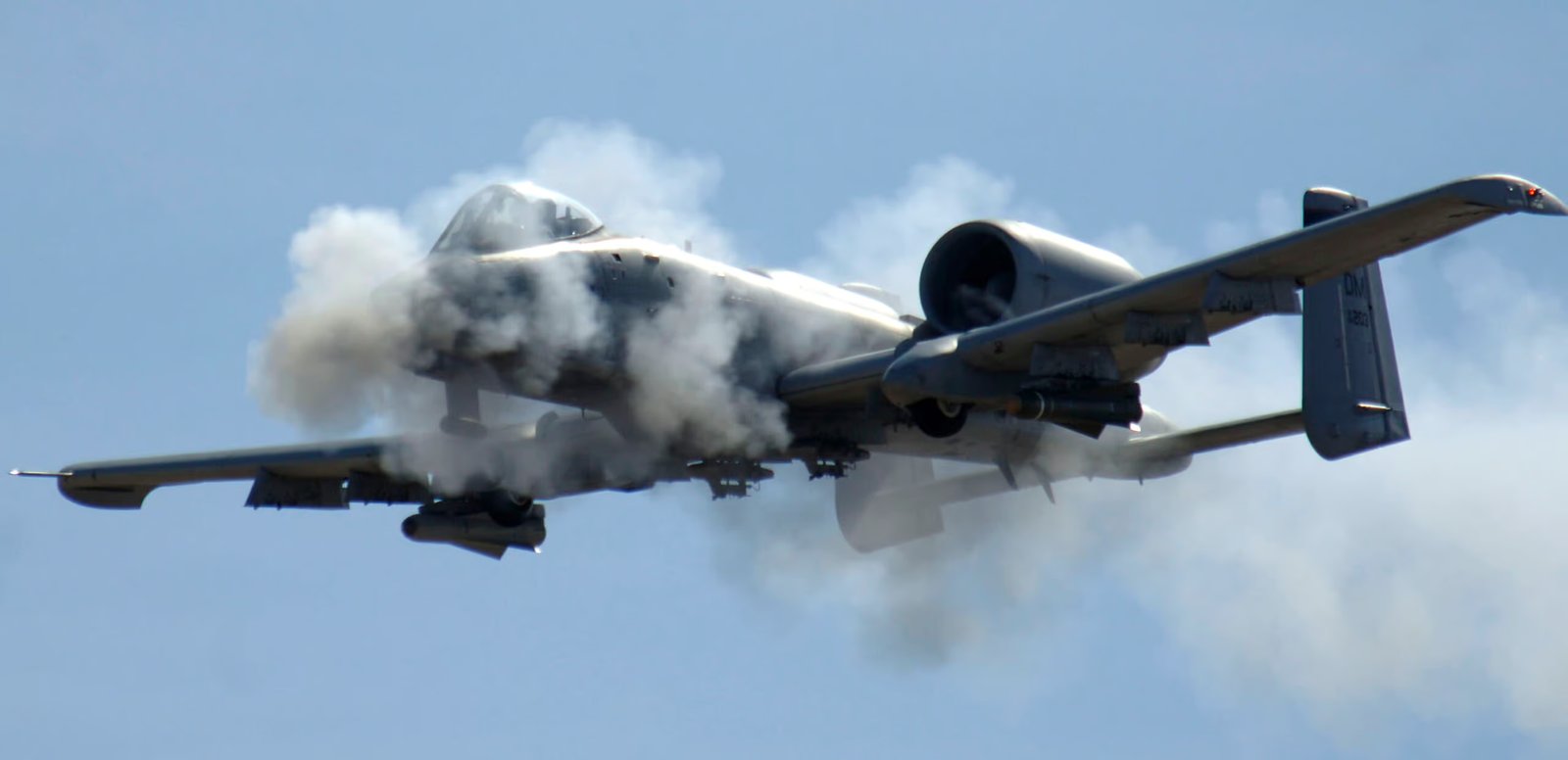

It is exactly 50 years since the first of 713 Fairchild A-10 Thunderbolt IIs entered service with the United States Air Force (USAF).
Designed to meet a 1967 USAF specification for a jet-powered close-support aircraft, the Fairchild A-10A first flew in May 1972. It was armed with a seven-barrel 30mm rotary cannon mounted in the nose, capable of firing 4,200 rounds per minute. Its eight underwing and three under-fuselage hardpoints can carry up to 16,000 lbs of ordnance. Powered by two 9.065 lb st General Electric TF34-GE100 turbofans, it has a maximum speed of 439 mph.
Having served with distinction in the Gulf, the Balkans, Afghanistan and Lydia, the Warthog has been continuously upgraded. In 2019, a modernisation roadmap for the Thunderbolt II was outlined, including a range of planned upgrades, from cockpit improvements to expanded sensor and communications capabilities and a new mission. Since 2007, Boeing has produced new replacement wings for 285 ungraded A-10Cs.
Since 2008, the USAF has repeatedly sought to retire the A-10, citing age and vulnerability in high-threat environments. However, the US Congress has pushed back its retirement dates over concerns about close air support gaps. By 2025, the Air Force, Air National Guard and Air Force Reserve units still operated more than 200 Warthogs, although limited retirements began in stages, with 39 aircraft removed from service that year.

Also in 2025, some were equipped with the Link 16 tactical data exchange system, designed to transmit and share information in near real time among network participants.
In February 2026, the USS Santa Barbara conducted live-fire maritime gunnery in the Arabian Gulf during Exercise “Killer Tomato”, with repeated close air support from USAF A-10Cs. The exercise reflected continued US joint air-maritime training in the US Central Command area, with the A-10C used for its sustained loiter and close coordination with naval forces.

With lessons learned from the Ukraine conflict, the A-10’s potential as a drone hunter has been recognised, but whether it continues flying into the 2030s depends on budget decisions and the US Air Force’s plans to find a replacement. The Warthog was created for a different era but continues to evolve in ways few expected fifty years ago.
by David Oliver
