


The Russia–Ukraine conflict has fundamentally reshaped the continent’s threat landscape, underscoring the urgent need for force readiness. European nations increasingly recognise that access to defence equipment alone is insufficient. Local production, sustainment, and upgrade capabilities are now strategic imperatives.
Ukraine’s army has had to rely on Soviet-era armoured fighting vehicles, with no modern Mine Resistant Ambush Protected (MRAP) vehicles until eighteen months ago, when Paramount Greece and Ukraine’s MAC HUB entered into a strategic defence partnership to develop and produce a range of new armoured vehicles.
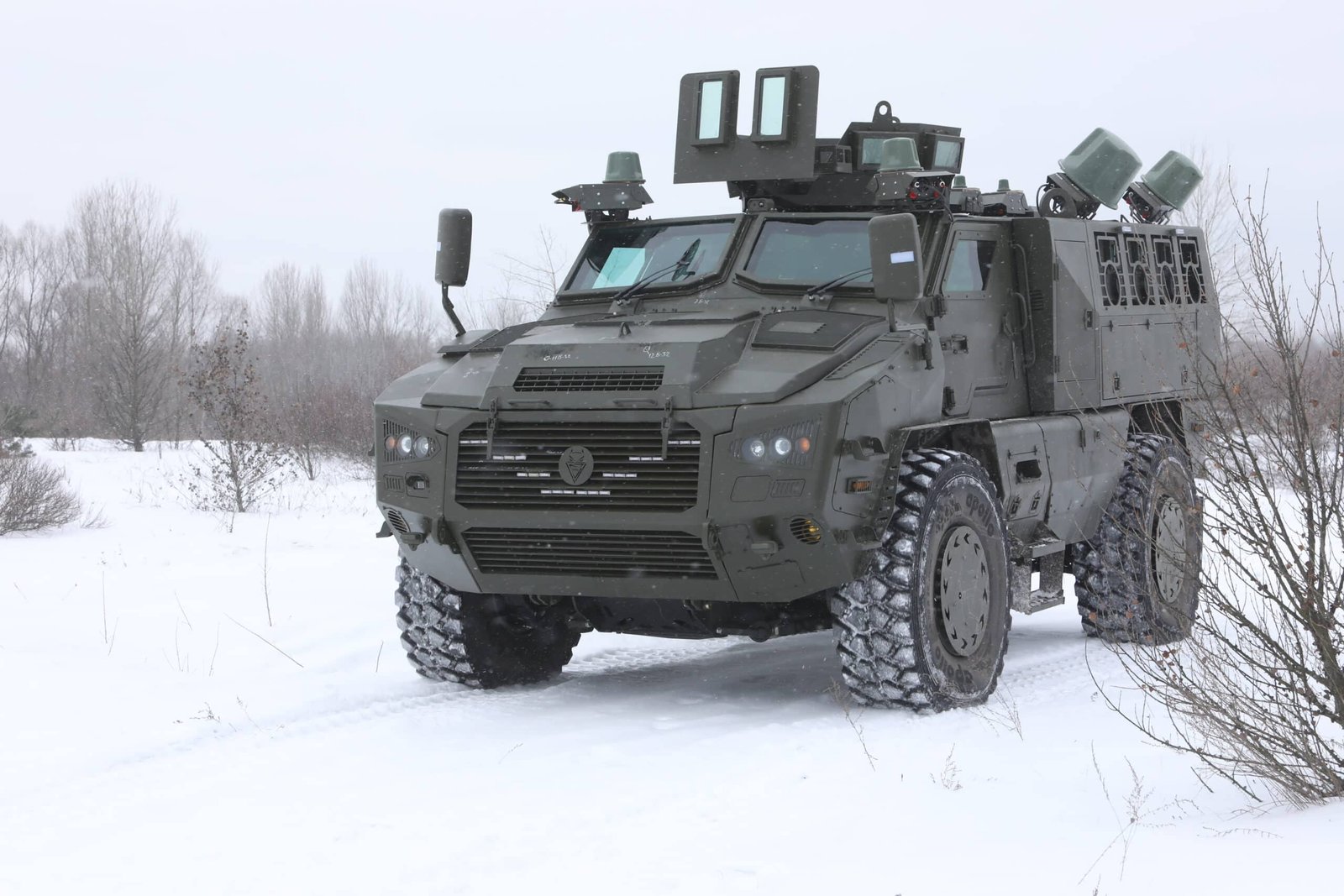
With Ukraine’s rapidly advancing defence manufacturing capability, the partnership is focused on the joint development and local production of advanced land platforms and systems, aligned with the evolving requirements of modern, high-intensity conflicts. This collaboration has resulted in the launch of a new MRAP vehicle, the MAC OWL, which has been extensively adapted by MAC HUB engineers to meet Ukrainian operational realities, terrain, and threat profiles.
Certified to STANAG 4569 Level 4a/4b mine protection, the vehicle is designed to withstand the detonation of a 10 kg explosive charge under both the wheel and the hull, a critical requirement in today’s mine- and IED-saturated operational environments. The 4×4 vehicle can reach a speed of 100 km/h and has a range of 800 km. With a curb weight of 14 tons, it can carry up to 2.2 tons of payload, including a weapons turret. A Cummins 8.9-litre turbodiesel engine producing 450 hp is coupled to a six-speed Allison transmission. The vehicle is designed for a crew of two and can carry up to eight dismounted troops.
For Paramount Greece, the partnership marks the company’s formal entry into the European defence market, reinforcing its role as a catalyst for regional industrial capability, innovation, and collaboration.
A spokesperson for MAC HUB said: “This partnership is about far more than a single vehicle. It is about building resilient defence ecosystems, transferring advanced capability, and ensuring that nations facing the most demanding security challenges have the tools, technologies, and industrial capacity required to defend themselves – today and in the future.”
by David Oliver
